Culture and Art
My imaginary personas... I date them at the cafe
Sometimes I imagine that everything written by authors and poets is merely a collection of crumbs of creativity scattered over cafe tables

Sometimes I imagine that everything writers and poets write is but a fragment of the crumbs of creativity scattered across the wooden tables of cafes. The cafe represents the most spacious room in the heart of the creative individual. It is their world, sometimes narrow, sometimes expansive. A fair alternative to their table at home, limited to four seats, which would already feel cramped with a fifth guest, even if the host's heart were to accommodate them. In the cafe, faces jostle with joy or frowns, traversing the corridors of your personal world without the need to ring the doorbell or ask permission to enter. Their departure without a word or their arrival without a greeting doesn't bother you at all. It's a private kingdom, its ownership shared by no one, despite its many owners. All the patrons are partners, each openly claiming it as their home, without feeling the need to defend their ownership. It's a kingdom that doesn't shrink with its multiple owners and kings, and every empty chair sharpens the desire for a new companion—a companion who vies with you, with the affection and ease of a true owner, for what you possess. Partners are a condition for your existence and a reason for your continued presence. It's a world where you don't choose the people. Indeed, its communal nature is the primary condition for savoring your individuality within it. It's a reason for the collapse of the justifications for the selfishness of private ownership, and an opportunity to restore the inherent generosity deep within our authentic selves, despite the capriciousness of time and materialism. It's a legitimate and unique alternative to the powerful desire for individuality and connection with others.
Regardless of its presence or geographical location, from one country to another, there are certainly common and constant elements that cannot be ignored. Cafés are spaces where the past interacts with the present, microcosms that allow us to observe the reality and lived experience of society. They are opportunities to gather memories and sharpen emotions in all their dimensions, from love to hate, passing through indifference. They are also repositories of anecdotes, jokes, and beautiful, innocent, or cunningly offensive stories. No café can be without patrons who sprinkle its atmosphere with the spices of stories and the salt of news—sometimes hurtful, but essential for greeting the following morning with greater experience, wisdom, and vitality. I don't believe a café has ever been too small for a poet with a generous heart. All the fleeting trifles and impulses do not harm the essence of the true artist's spirit, for they are part of it. They are indispensable fertilizer for the decomposition of the seeds of creativity within, despite their occasional stagnation.
Cafes have always been an inseparable link between reality and the world beyond their four walls. News is tamed within their walls, and the desires of both active intellectuals and the idle, indolent ones—those who find solace in cafe tables for their immediate or chronic failures—are channeled into the very essence of their lives. It is there that the soldiers of captivating, pristine narratives stand firm, ready to strike at the heart of silence and the misery of stillness. Writers, in general, are among the greatest beneficiaries of cafe spaces. Perhaps the most beautiful poems and stories are those etched in the memory of the companion before being inscribed on the blank page. The mingling of scents—bitter yet warm perfumes, the tangy and intense aromas of bodies—and the blending of voices, murmurs, and secrets, their diffusion preceded by the seductive plea, "Please, this is a secret," all contribute to this atmosphere. There is a daily sense of adventure. You never know who you will meet today. A wonderful companion who fills your heart with joy and gratitude, or another who muddies the waters of your mood. At home, you open your doors to whomever you please, but in a cafe, you are the host and the guest. Your space is enclosed by the boundaries of your table, yet simultaneously open for the same reason. That's how cafes have always been, wherever they are. The conditions of their existence are almost identical, despite their distribution. I don't even believe there's any fundamental difference between the cafe I frequent in Munich and the one I used to frequent in Moscow during my first year of university. There are superficial differences that deceive the uninformed, like the arrangement of chairs and tables, opening and closing times, the type of music played, the waiter's politeness, or the cleanliness of the place and the ashtray. But if you peel back the layers of superficiality, you'll find a similarity that's almost identical.
Ever since I was allowed to sit early in the cafes of Kairouan, I felt they were my true, dark home. Even years before that, as a child, I was avoided by the slightly older ones because I wouldn't shut up. I would throw my bicycle onto the sidewalk far from our house to steal a glance, fascinated by the heated, sulfurous discussions my father, may God have mercy on him, was involved in—even though he knew it. When my mother would later nag him about it and threaten, as usual, to go on a days-long silence—the harshest punishment for all the members of our household—he would say, "Cafes are for men." He would say it with a kind of pride that he later bequeathed to me, along with all the other debts I carried with me. My father was a brilliant storyteller, and I was amazed by his playful manipulation of words. When I frowned, he would promise me a drink of his milk from the udder of a smile, which I would drink before him, so that my lips would part. The truth is that my aunt actually has a one-eyed camel that is funny because of its stupidity when drinking water. We call it “The Smile” or we nickname it “The Smiling One” because the expressions on its one-eyed face always suggested extreme stupidity and the happiness of animals.
Then, as the first black veins began to prick the yellow down on my face, my early discoveries—predating Agatha Christie and Arsène Lupin—eagerly aroused by the rhymes of Al-Mutanabbi, Jarir, and Al-Farazdaq, I would venture far from the old quarters, watching with awe the poet Jaafar Majid waving his hands from afar, while the poet Nour El-Din Sammoud propped his green chin with his forefinger and thumb, his middle finger resting on his other hand. I couldn't hear the conversation, though I could have drawn closer, but I trembled with awe. I felt poetry was a jungle denser than the Amazon rainforest. The words had a fragrant incense, full of mystery and secrets. I felt that meanings were traps to ensnare the unwary. Therefore, I never dared to approach.
And to this day I remain haunted by the awe of cafes. Even when I return to the city of Kairouan, which in the meantime has lost most of the secrets of its sacred rituals for me, I avoid sitting at that table where the brother poets used to gather: Al-Shadhili Al-Alani, Muhammad Mazhoud, Jaafar Majid, and later Al-Munsif Al-Wahibi, Muhammad Al-Ghazi, Salah Al-Din Boujah, Hassouna Al-Misbahi, and others.
I carried the empty chair I never sat in at that café, at that table, with me all the time, in the bags of my memory, moistened with the honey of the Quran and the fresh milk of rhymes, and I took it with me to every city, whether filled with frost or vibrant colors. It often happened that my friends in Moscow missed me while I was wandering in foreign lands, searching for a secluded café. And I wrote my most beautiful texts, which I hold dearer than publishing, in such cafés. I did the same in Budapest, in the Balfie district of Paris, in the café of Place Gari Baldi in Italy, and in the cafés of Alexandria, Al-Hussein, Al-Azbakia, and Bulaq. Before all that, the first poem I wrote was in Tunis, the capital, as I settled into the first café whose location I admired after my Kairouanian wonder at the abundance of flower sellers in those days on what was then Habib Bourguiba Street: When the city waiter becomes familiar with me, I settle into a table at the café of the two streets, and silently watch the ashtray fill up….
In Munich, too, where I exercise my citizenship and strive to remain untainted despite my occasional yearning for vibrancy, the café was and will remain my home among the many homelands that reside within me. For many, many years, I have observed their swift passage with the flurry of fluttering words of my daughter and personal secretary, Yasmin. I have only changed cafés three times. The first was on Turkish Street, so named perhaps because it was the only street where you wouldn't encounter a single Turk. It was called Café Undsweyte, literally translated as "etc....usw." I frequented it for years in the company of the vagabond writer, Hassouna al-Misbahi. Those were the most beautiful and sweetest years. We would laugh like madmen, sing at the top of our lungs the songs of Sayha, Sheikh al-Afrit, and Baba Ali al-Riyahi, and wash our bodies with the foam of our beloved yellow Bavarian girl. And on its tables, I wrote the most beautiful stories that still make me laugh and cry to this day.
It's very rare that I write away from the café. At home, I listlessly type what I scribble in cafés onto blank paper. The kind waitress, Christina, has known for years how many lumps of sugar I like. My coffee is special. The milk, sugar, and coffee must be mixed perfectly. She makes me Lebanese coffee, which I buy at the beginning of every month from Afif al-Iraqi's shop at the end of the street. I get very upset when a waitress quits, and I intervene amicably when there's a disagreement between Homer, the Greek waiter, and Lara, the friendly Bavarian who's been working on her graduation thesis for eight years. She's embarrassed about graduating, she says, glancing slyly at Petra, who didn't go to university, a look that makes us laugh. Everyone knows the music that helps me write, and they all stand in awe when a drunk approaches me, commenting on my strange Arabic handwriting. They feel insulted when one of my friends makes a mistake and leaves them an exorbitant tip.
Three of them I taught to write the alphabet and some short, easy-to-memorize poems. The café I frequent is called Café Al-Alam (World Café) and is located right in the middle of Schwantala Street, to the right of the Catholic church that has been closed for years. It is my world, my home, and my refuge from my own inner turmoil, my troubled heart, and the cruelty of loved ones who mercilessly claw their sharp nails at my swollen heart. During the holy month of Ramadan, I change cafés because I prefer listening to the Quran at Ibrahim Al-Marouki's café in the southern district. I play cards and don't write. I argue with my companion about his slowness in throwing the cards, and we laugh loudly when one of us wins for a while, at which point Uncle Mukhtar Kamanja lets out his well-known cry whenever he loses something: "Ahhh! We're doomed!".
In Tunisia, I never write in cafes. The faces there are painfully etched into my soul. The constant tension and anxiety, the souls buried deep in the pipes of the civil service, are unbearable. I'm contemplating a new reconciliation with the cafes of Tunis and Kairouan. Perhaps I just need some time to find a formula for tranquility. I write with a nervous tension that is completely incompatible with the cellars of corners and the scents of incense and henna.
The time may come when I change my writing rituals. I love learning and open possibilities. Besides, I don't adhere to a specific style so much as I try to exhaust it in some way. Choosing a neutral city between Tunis and the ancient city of Kairouan might be the best solution to try. I'll give it a go when I feel ready.


Culture and Art
Hussein Fahmy settles the Palme d'Or controversy and Algeria: My remarks were spontaneous
Hussein Fahmy issues a statement clarifying the truth about his remarks regarding the Palme d'Or, denying any offense to Algeria and affirming his respect for the history of Algerian cinema and its global achievements.
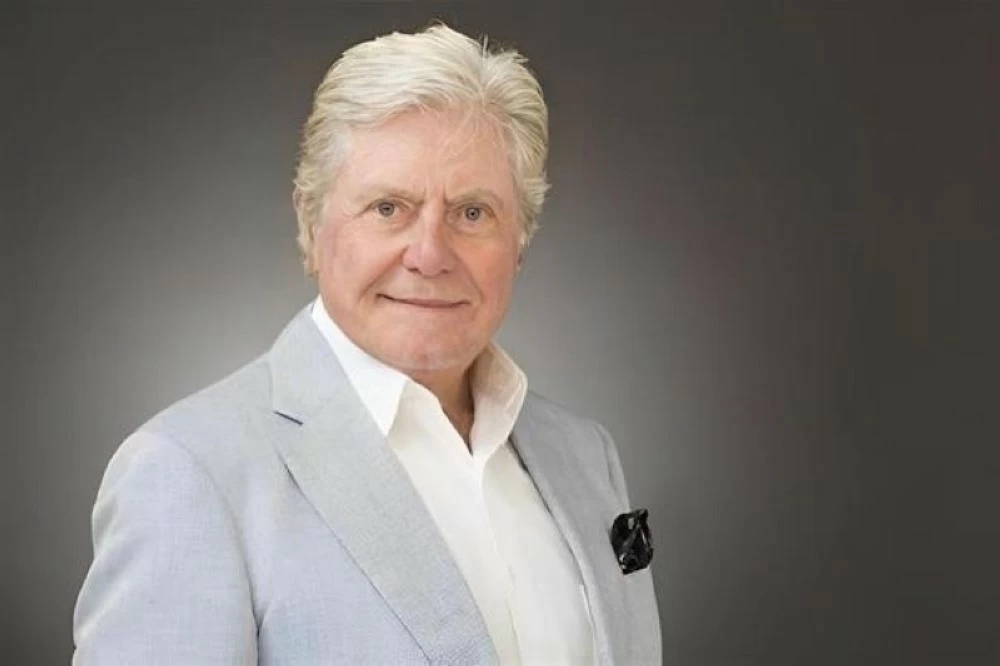
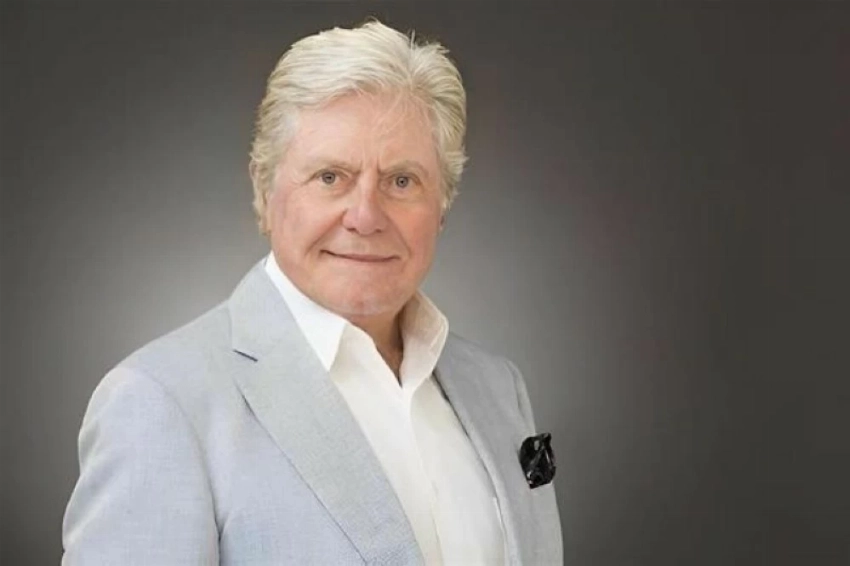
The renowned Egyptian actor Hussein Fahmy, president of the Cairo International Film Festival, has put an end to the widespread controversy that arose in recent days across social media and news outlets regarding his remarks about the Palme d'Or award and international film festivals. In a firm official statement, Fahmy asserted that his comments had been taken out of context, emphasizing that they were part of a general theoretical discussion about the inner workings of international judging panels.
Context of the conversation and denial of offense
Fahmy clarified that his remarks came during a casual conversation about how the decisions of judging panels at major festivals are sometimes influenced by political factors and the prevailing atmosphere at the time of the festival. He emphasized that he had absolutely no intention of questioning the merit of any country or artwork in receiving awards. He explained that his use of certain examples was spontaneous and involved an unintentional overlap between events, names, and political positions. He categorically denied any intention to offend or diminish the value of leading Arab artistic works that have won international awards.
Historical background and importance of Algerian cinema
This clarification comes at a time when the Arab public, and the Algerian public in particular, holds a deep sensitivity and affection for their rich cinematic history. It is well-known that Algerian cinema boasts a golden record on the international stage, with the Palme d'Or win at the 1975 Cannes Film Festival for "Chronicle of the Years of Embers" by director Mohammed Lakhdar-Hamina being a pivotal event in the history of Arab and African cinema, as it remains the only Arab film to have received this prestigious award. Therefore, any discussion of these achievements is met with great interest and scrutiny from both critics and the public.
A message of love and appreciation to the Algerian people
In a related context, the Egyptian artist reiterated his deep respect and sincere love for Algeria, its leadership, people, and art. Fahmy stated that the achievements and international successes of Algerian cinema remain a source of pride for every Arab citizen, and that its place is always cherished and appreciated in the hearts of Egyptians and all Arabs.

Art as a bridge for communication between peoples
The president of the Cairo International Film Festival concluded his statement by emphasizing the pivotal role of art in bringing people together, noting that cinema remains a universal language that unites rather than divides, and strengthens the bonds of brotherhood among Arabs. He expressed his gratitude to his large Algerian audience, appreciating their understanding of the spontaneous nature of his remarks, and affirming that the artistic relations between Egypt and Algeria will remain a model of fruitful cooperation and shared creativity that transcends any passing misunderstanding.
Culture and Art
Mai Kassab in Ramadan 2026: Details of the series "Noon Al-Neswa" and her new role
Learn about the details of Mai Kassab’s character in the series “Noon Al Neswa” for Ramadan 2026, the story of her rise from assistant to star, and the behind-the-scenes of her musical collaboration with Aziz El Shafei.

Egyptian artist Mai Kassab to enter the Ramadan 2026 season with a new and different dramatic experience through the series “Noon Al-Niswa” , a social work with a humanistic character consisting of 15 episodes, reflecting the modern trend in Egyptian drama towards short and intensive series.
Personal details of "Sharifa" and her journey to success
In the series, Mai Kassab portrays Sharifa, an ambitious young woman who begins her career behind the scenes of the celebrity world as an assistant to a major star, played by Simone . The plot thickens dramatically when Sharifa is given a golden opportunity to appear on screen after one of the leading ladies unexpectedly withdraws from the project. This sets her on her own journey in the world of art, amidst a series of challenges and human conflicts that reveal the secrets of this industry.
A return to musical roots with Aziz El Shafei
What distinguishes the "Nun Al-Niswa" experience is Mai Kassab's investment in her original talent as a singer. In press statements, she expressed her great enthusiasm for combining drama and singing in this work. Mai collaborated with the renowned composer Aziz El-Shafei to present a collection of songs accompanying the series, a move aimed at delivering a complete artistic experience that blends acting and vocal performance—an artistic style in which Mai Kassab has excelled since the beginning of her career.
The phenomenon of 15-episode series in Ramadan
The series "Noon Al-Niswa" reinforces the presence of 15-episode series during Ramadan seasons, a phenomenon that has become increasingly prevalent in recent years in Egyptian and Arab drama. This dramatic format allows for a faster pace of events and avoids drawn-out storylines, attracting a wide audience that prefers focused and concise narratives. This is what the creators are banking on to ensure the series' success amidst fierce competition.
The Stars Battalion and the Makers
The series boasts a stellar cast whose performances enrich the production. Alongside Mai Kassab and Simone, the cast includes Heba Magdi , the brilliant Ahmed Fahim , the comedian Mahmoud El-Leithy , Nada Moussa , and Ahmed El-Rafei . Produced by Sabah Ikhwan, one of the leading production companies in the Arab world, and written by Mohamed El-Henawy and directed by Ibrahim Fakhr, the series raises expectations for its artistic and directorial quality.
Expected impact and competition
The series "Nun Al-Niswa" is expected to make a significant impact on the 2026 Ramadan drama season, particularly as it addresses women's issues within a humanistic and social framework—a genre of drama that enjoys considerable popularity among Arab families. Furthermore, the combination of tragedy, a story of rising success, and musical elements lends the work diverse entertainment and artistic dimensions, potentially making it one of the most prominent contenders for viewership ratings.
Culture and Art
Artist Jamal Assaf killed in a security confrontation in Aleppo... Full details
Details of the killing of artist Jamal Assaf in a security clash in Aleppo, following a history of incitement and controversy. Learn about his arrest, his apology, and his fate in the Sheikh Maqsoud neighborhood.
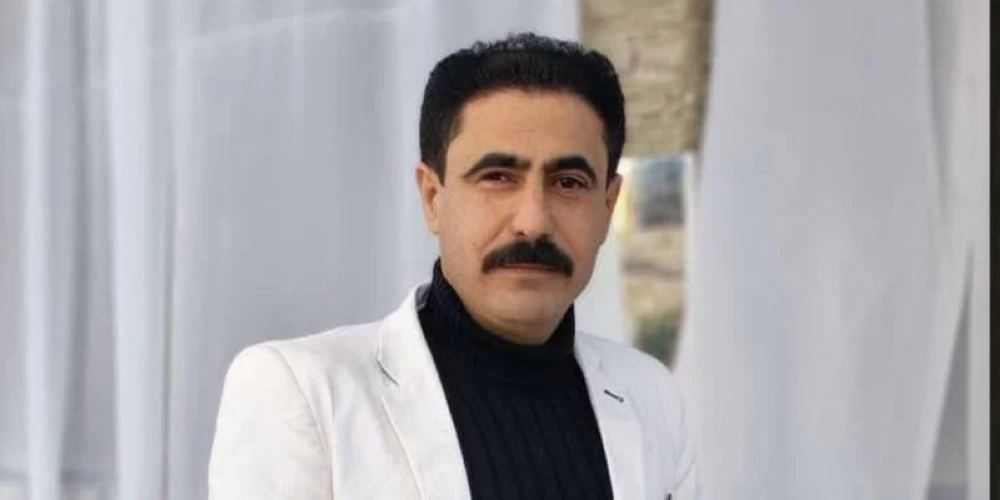
Security forces brought an end to the life of artist Jamal Assaf, who was killed in an armed confrontation, thus concluding a career that sparked widespread controversy in Syrian circles. Assaf was known for his staunch support of the Syrian regime, having transformed from a mere performer of popular songs into an instigator during the bloody conflict that engulfed the country, making his death a widely followed and closely watched event.
An artistic career in service of the conflict
Jamal Assaf was not just a passing artist; he was a prominent figure in what became known as "crisis songs," according to Syrian television and local media. Over the past few years, Assaf used his voice to attack the opposition with harsh lyrics, and his name became associated with songs bearing explicitly political and military themes. This trajectory reflects a phenomenon that emerged clearly during the Syrian war, where many artists became entangled in political alignment, often transforming art from a tool for peace into a means of mobilization and incitement—a context that placed Assaf at odds with a large segment of the Syrian population.
Calls for murder and boasting about weapons
Assaf's stances went beyond singing, reaching the point of direct incitement to violence. He sparked a massive wave of criticism and anger after posting statements on his personal social media accounts that included explicit calls for the use of barrel bombs against civilians in the city of Idlib in northwestern Syria. Not only that, but he also appeared on numerous occasions wearing military uniform and boasting about his participation in battles alongside the forces of the former regime, making him a target of legal and moral prosecution by human rights organizations and activists who considered his actions to be tantamount to incitement to murder.
Arrest and disappearance
The net began closing in on Assaf in late December 2024, when Syrian security forces announced his arrest in Aleppo. This followed intelligence reports confirming his hiding and constant movement between secret locations to avoid capture, in an attempt to evade legal consequences or settle internal scores. News of his arrest came as a shock to his supporters and a relief to his opponents, and it resonated widely across social media platforms, with some considering it the beginning of holding figures of incitement accountable.
The final chapter: An apology that did not absolve and a deadly confrontation
In a striking turn of events, leaked videos surfaced showing Jamal Assaf reappearing in January 2026 following his release. He offered a public apology to the Syrian people for his past actions, attempting to turn the page on the past. He then moved to the Ashrafieh and Sheikh Maqsoud neighborhoods of Aleppo, areas with complex security and demographic characteristics. However, this apparent reconciliation was short-lived; his life ended in a violent armed clash during another attempt by a security patrol to arrest him, bringing to a close the life of a figure who embodied the contradictions and dramatic transformations of the Syrian war.
-

 Culture and Art 6 days ago
The "Between and Between" exhibition in Jeddah: 5 artists reshape Saudi memory
-
Local News 4 days ago
Saudi Arabia's National Arabic Language Policy: 8 Principles to Promote Identity
-
Culture and Art, 1 week ago
Shakira's concert in Jeddah: Details of the international star's first concert in Saudi Arabia
-
Local News 3 days ago
Adopting the National Policy for the Arabic Language: Strengthening Identity and Vision 2030
-
Culture and Art, 1 week ago
The truth about Nancy Ajram's video and Epstein Island, and her legal response
-
Local News 4 days ago
The Riyadh-Rin-Bisha dual carriageway, spanning 559 km, has been completed
-
Local news one week ago
Launch of the new Dammam project with investments of 98 billion riyals
-
Culture and Art, 1 week ago
The truth about Wael Awni's conversion to Islam... The artist responds sarcastically to the rumors