Culture and Art
Hassan Al-Mustafa: Critical thinking and a civic vision curb the culture of death
Perhaps opening a space for dialogue with a friend of the stature and standing of researcher Hassan Al-Mustafa is enriching for the interlocutor before the reader, and even reassuring given what is happening

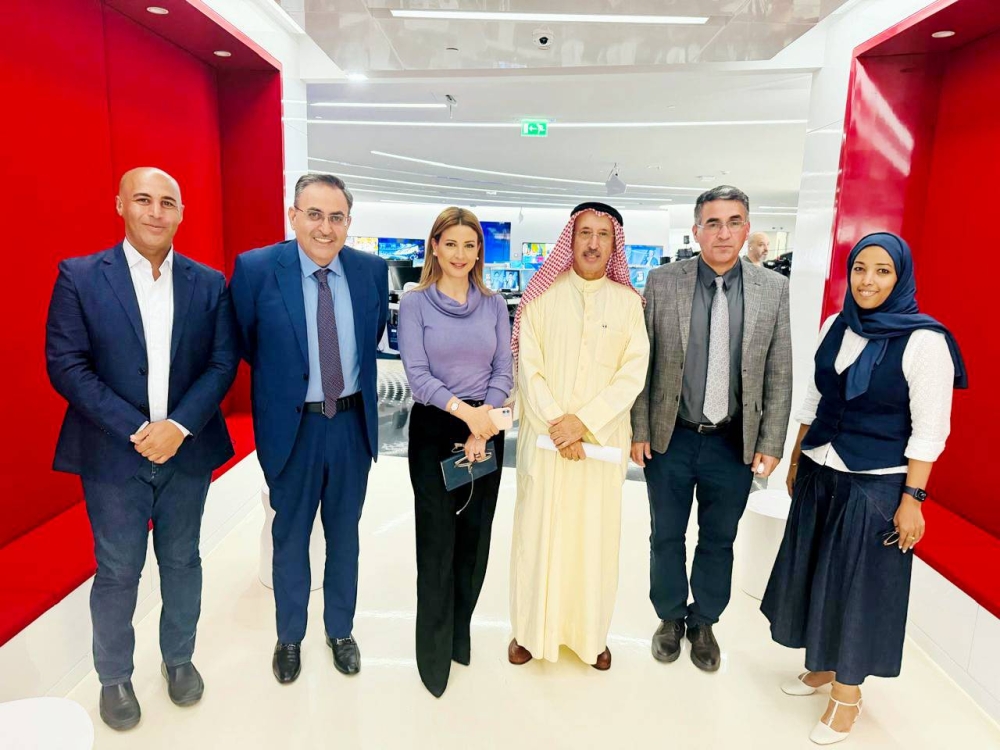
Perhaps opening a space for dialogue with a friend of the stature and standing of researcher Hassan Al-Mustafa is enriching for the interviewer even more than for the reader, and even reassuring, since what is going on in the mind is troubling until someone comes along to share it with you without suspicion. Here is an intellectual who only uses words appropriately and ensures that each word has a single meaning. Moreover, his journalistic sense, acquired through a distinguished period in the realm of journalism, removes any suspicion of the question or the questioner, and opens the doors of good faith to encourage the cultivation of more of the delightful field of answers. Here is a timely dialogue about central issues that encompass the interplay between religion and the state within a ceiling of freedom that is almost imperceptible. So, here is the text of the dialogue:
• Has national identity in the Arab world been affected by a ambiguity that has confused and misled it?
•• Identity in the Arab world suffers from great cognitive confusion, as it is always presented in a distorted and conflicting manner, as if Arabs are faced with a choice between opposing dualities, and that they must choose between one identity or another, otherwise the Arab individual will be without his identity!
This ambiguous understanding of identity is due to its modernity, as (national identity) in particular is a relatively new concept, and it has met with opposition from several currents: Islamist, nationalist, and populist, which has also made the concept of (homeland) confused for some, between those who believe in it in an isolationist way and those who reject it and present the concept of “the nation” instead.
Another thing is that identity is always presented as singular and rigid, whereas identity is a living entity that is formed and shaped by time, experiences, ideas, geography, and ideologies. That is, individual identity is a set of overlapping and composite identities, the result of which is collective and national identity. Therefore, there is an individual identity that is integrated with national identity, without a person needing to live in debate between his identities. Rather, he must know how to combine them, and at the same time how to elevate the status of (national identity), whose foundation is (comprehensive citizenship), which is one of the pillars of the modern civil state.
Why do individuals, and perhaps some societies, still struggle with more than one identity at a time?
•• There is no problem with having more than one identity, for example, being Muslim, Arab and Saudi at the same time.
Sub-identities based on religion, ethnicity, tribe, or region are not inherently problematic; they are cultural and social components, a source of richness and diversity. The issue arises when individuals experience conflict and contradiction between these identities, or when a narrow identity is prioritized over a broader, more inclusive one. Therefore, the foundation lies in the modern, evolving civil state, with its evolving identity that encompasses the diverse sub-identities it includes.
We must not forget that national identity has not been theorized scientifically in the Arab world, free from the burden of historical, ethnic, or sectarian conflicts. This has led to a state of conflict with other identities. Hence the need for a modern, flexible national identity, capable of uniting diverse components and transforming them into elements of strength, not division.
• Based on your objective reading of the stages of transformations, in which stage did the spirit of Saudi citizenship manifest itself?
•• In my opinion, the Saudi national spirit has been present since the establishment of the modern state, and the proof of this is the ability of the late founder, King Abdulaziz bin Abdul Rahman Al Saud, to unify the state, and the people’s rallying around him and their acceptance of his rule, because if we go back to history, we will find that some regions of the Kingdom were suffering from highway robbers, tribal conflicts, looting and attacks on caravans from time to time, and King Abdulaziz came to extend security over the vast land of the Kingdom, with its diverse cultures, customs and sects, and he dealt with the different regions with great awareness, preserving the identity of each city or human group, and this is a point of strength for the founding king and evidence of his foresight.
So, the Saudi national spirit has always existed. What is new is the Saudis' awareness of their identity, their view of it, and their desire to elevate its status. Also, there is a culture that has begun to spread clearly about the importance of establishing the rule of law, justice, equality, and the authority of the state. These concepts are mainly linked to (comprehensive citizenship), which, although it is a modern concept, is being discussed by Saudi writers, on television screens, and on social media.
Certainly there are some gaps in ideas and among the general public, and this is very normal, but the national spirit is growing day by day, and the most important thing is that it is formed in a conscious scientific way, far from reproducing the self in the manner of poets in the Arab conscience, which is sometimes more illusory than scientific!
• How do you see the future of those who rely on pre-state components (tribe, sect, region, doctrine)?
•• Pre-state components cannot form a modern civil state, nor can they establish a broad national consensus.
Tribe, sect, doctrine, and region are all respectable details and an undeniable reality. However, none of these sub-identities should take precedence over the homeland, because the homeland is the foundation, and the rest of the cultural and social diversity comes from under it and within the framework of its diversity.
What are the most prominent features of citizenship under Vision 2030?
•• The power of Vision 2030 has created a high national spirit, given hope to Saudis, and made them proud of themselves, a pride based on science, work, awareness, building a strong state, and participating in human civilization.
At the same time, the vision worked to consolidate equality and equal opportunities and prevented favoritism or tribal, regional or sectarian discrimination, and made everyone equal before the law; which means that it raised the value of (citizenship) in contrast to other distinctions!
• Where do developing countries get their strength from, and how did the Kingdom avoid all the problems that some tried to drag it into?
•• Development can only be achieved through an advanced education system, long-term economic plans, modern, flexible and transparent laws, a safe and stable environment, and also good governance of governmental and institutional work.
These details were emphasized in the Kingdom’s Vision 2030, and Crown Prince Mohammed bin Salman Al Saud spoke about them on more than one occasion, pointing to the importance of legislation and administrative reforms in the development of the state, and this is what made the Kingdom avoid stagnation or remaining hostage to government bureaucracy.
What is the secret behind the breaking down of all barriers between the Saudi people, and the decline or disappearance of the taming of segregation?
•• The answer, in simple terms, is that the secret lies in the frank and clear discourse of the Custodian of the Two Holy Mosques, King Salman bin Abdulaziz, and his Crown Prince, Prince Mohammed bin Salman, and their rejection of sectarian, regional, and racist divisions, and the emphasis of the Supreme Authority on the fact that Saudis are equal and there is no difference between them.
On the other hand, the Kingdom worked on enacting laws that criminalize hate speech and racism, and took steps to reform religious discourse, remove extremists from Friday pulpits, and criminalize sectarian speeches. All these steps fortified society and made it more aware of the importance of citizenship.
Don't you see that the Shiite component has succeeded in prioritizing the option of citizenship over all else?
The citizens of Qatif, Al-Ahsa, Medina, Najran, and all other regions are Saudis first and foremost. Their loyalty is to their homeland, they reject any tampering with its security and stability, and they are actively engaged in achieving the goals of the Kingdom's Vision 2030.
What made them succeed today is the strength of the (Vision) and its architect, Prince Mohammed bin Salman, who, according to his directives, has worked to purify the general environment of extremists and takfiris from various sects.
Now there is a great and widespread awareness among a broad public of citizens that they are Saudis first, and that their Saudi identity precedes their sectarian identity, whether Sunni or Shiite, and that these sectarian identities should not turn into an element of conflict or animosity, but rather everyone is a Saudi Muslim citizen equal in rights and duties, and that loyalty is to the homeland and its political leadership and not to any parties, movements or foreign countries.
What are the motives behind such cultural elevation?
•• The main motivation is the belief that the state is the one that protects citizens, and that the sect or tribe does not.
What protects citizens and brings them well-being is a strong and stable nation-state, based on institutions, the rule of law, and respect for cultural and social pluralism.
When did you feel that culture and awareness strengthened belonging to the homeland?
Culture always promotes national belonging, because it creates an awareness that difference is an element of richness, and diversity is an element of strength. Thus, these subcultures become sources of richness, and this is what we find now - for example - (the Saudi Ministry of Culture) working on through its various programs and bodies, whether through diversity in fashions, cuisines, dialects, or ways of writing and thinking.
• Have you experienced critical periods on a personal level because of your patriotic stance imbued with genuine emotion?
Instincts are easily aroused, which is why loud, sectarian, or monolithic voices have a wide reach; because emotions govern the collective mind. Therefore, what I strive to present—calm, rational, and patriotic ideas discussed openly without insults, contempt, or personal attacks—this calm, critical approach is disliked by many because it doesn't satisfy their instincts and because it presents itself above sect, doctrine, region, and tribe. Hence, it's natural that it often encounters objections from hardliners on multiple opposing sides! However, this shouldn't deter me or cause me to retreat, but rather to continue my national work, because the goal is reform, not destruction. The goal is to build a truly pluralistic and progressive society that fulfills the vision of the Kingdom's Vision 2030.
Between the instinctual nature of some and the sectarianism of others in our Arab world, how can they be convinced to unite around a common ground?
•• Frankly, the situation is very critical, especially in light of the current wars and crises in the Middle East. Therefore, I personally believe that we must now rally around our leadership in Saudi Arabia, strengthen our national unity, and be wary of bringing in crises from abroad. We must reject sectarian and racist rhetoric that some seek to incite in Saudi society, whether out of ignorance, intentionally, or for partisan purposes!
It is a blessing from God that we are in a strong, stable country, preoccupied with development and major economic and social projects, and governed by the rule of law. Therefore, these are elements of strength that must be preserved and strengthened.
• How do we reconcile the ideas of the great Persian philosophers (the Illuminati) with the policies of the regime, which are completely separate from those creative and humane ideas?
•• The first step is to separate the people and the civil intellectual scientists on one hand, and the ruling political system on the other.
Second: It is beneficial for our reading of events to be scientific and far removed from racist or ethnic perspectives, or preconceived interpretations.
Saudi Arabia's current foreign policy focuses on building positive relations with Iran, based on good neighborliness, non-interference in internal affairs, and the rejection of sectarian rhetoric. The Kingdom adopts a rational approach, avoiding negative confrontations and grounded in a long-term vision aimed at mitigating crises and reducing tensions. This policy requires considerable patience and cohesion, but it is effective and beginning to bear fruit.
The Kingdom’s experience is that Riyadh views the Iranian people with respect, as they are our neighbors, and at the same time seeks to address outstanding issues with the ruling regime through communication and frank and transparent dialogue, as well as building trust step by step, as it looks at actions and not just words.
What is your reading of the future of sectarianism in our Arab world?
Sectarianism in the Arab world, unfortunately, is flourishing due to ignorance, fanaticism, and its fueling by extremists. There are also intelligence agencies that want Arabs to remain in pointless, futile sectarian wars, and unfortunately, there are Arabs who carry out these hateful projects without awareness.
In Saudi Arabia, we have a bright spot: the state stands firmly against sectarian rhetoric, rejects it categorically, and holds those who promote it accountable. Furthermore, a large segment of society rejects sectarianism, and there is also a fear of the negative impact of sectarian conflicts on society. Therefore, Saudis strive to avoid importing crises from abroad.
Certainly there are sectarian voices within, but they are afraid to voice their opinion for fear of the law, and the broader process of change needs more time, but it has begun.
• How can we protect younger generations from the vaccine of the culture of death?
• More free critical thinking, a civic vision, and viewing religion as a mercy to the worlds and a cornerstone of social peace.
A frank review of fundamentalist discourses, the de-sanctification of symbols of violence, and the scientific dismantling of their discourse, without insults and without superficiality in dealing with it, all of this would create an awareness that prevents the spread of the culture of death, but it is certainly a long process that requires cumulative action and institutional work.


Culture and Art
The truth about Yara El Sokary's injury on Ramez Level the Beast and her fiery response
Yara El Sokary denied being injured on Ramez Level El Wahsh, confirming that she enjoyed the episode. Read the details of her response to the rumors, behind-the-scenes details of her participation with Ramez Galal, and her philosophy on remaining silent.

Young Egyptian actress Yara El Sokary has put an end to the recent controversy circulating on social media, categorically denying that she suffered any physical injuries while filming her episode on the popular prank show "Ramez Level the Monster." El Sokary confirmed that the reports about her physical harm were completely false, noting that everything went smoothly despite the prank's difficulty.
Behind the scenes of the episode: "I was humiliated and I enjoyed myself."
In response to the rumors, Yara El Sokary clarified that the episode ended on a very positive note, saying, "There were no injuries. On the contrary, the episode finished and we were all sitting around laughing and making fun of things that happened." Describing her experience on the show, whose episode aired yesterday, she added, "I was a bit rough around the edges, but I enjoyed it. There were no injuries, contrary to what was reported in the news. Nothing happened." This statement reflects the artist's good sportsmanship and her acceptance of the show's nature, which relies on excitement and big surprises.
Prank shows: Wide popularity and ongoing controversy
Yara El Sokary's participation in "Ramez Level the Monster" comes within the context of Ramadan programs that enjoy record viewership in the Arab world. Ramez Galal's programs are a fixed annual phenomenon that generates as much controversy as it attracts viewers. These types of programs are usually characterized by physical and psychological challenges for the guests, making rumors of injury a recurring theme that plagues many celebrities after their episodes air. Despite the criticism that sometimes arises regarding the severity of the pranks, the appearance of artists on these shows is an indicator of their strong presence in the art scene, guaranteeing them a place on trending topics and search engines, thus enhancing their local and regional fame and popularity.
The philosophy of silence in the face of rumors
On another note, Yara El Sokary discussed her approach to dealing with the rumors that periodically circulate about her. During her appearance on the program "Secrets of the Stars" with journalist Inji Ali, she explained that the rumors no longer bother her; rather, she views them as evidence of her success and influential presence.
Al-Sukkari, expressing her maturity in dealing with social media, said, "I wasn't bothered by the rumors that circulated, and I said things were going well." She continued, explaining her philosophy: "I don't get upset by these things. I'm a patient person, and I always say, 'Give me some time, and everything will become clear.'" She emphasized that silence is her strongest weapon, adding, "I've always been calm, and I've never responded, but as I've grown older, I've learned more, and silence has never let me down. I deal with the noise with complete silence; there's strength in silence in some matters." This approach reflects an awareness of the importance of focusing on artistic work rather than getting caught up in digital squabbles.
Culture and Art
Yasmine Abdel Aziz attacks social media and reveals details of the series "We Forget What Was"
Yasmine Abdel Aziz describes social media as a destroyer of homes and reveals changes in her personality and details of her new series, "We Forget," which was scheduled to be shown in Ramadan 2026 with Karim Fahmy.

In bold statements reflecting a hidden aspect of the stars' suffering with the virtual world, Egyptian star Yasmine Abdel Aziz a scathing attack on social media platforms, describing them as "the worst thing in life," and considering that they have turned into a "tribulation" that has caused the destruction of homes and the ruin of human relationships.
Social media: A professional necessity and a psychological burden
During her recent interview with MBC Shahid, Yasmine didn't hesitate to express her deep dissatisfaction with the pervasive influence of social media on daily life. With her characteristic candor, she said, "Personally, I don't like it, but one has to deal with it for work." She added, with a hint of nostalgia, "I wish things could go back to the way they were.".
These statements come amid a growing global and local debate about the impact of social media on mental health and individual privacy, particularly for celebrities who find themselves constantly under scrutiny. Yasmine Abdel Aziz's remarks reflect a growing desire among a wide range of artists to reclaim the privacy that has been violated by smartphone cameras and hurtful comments, as separating personal and professional life has become a daily challenge for A-list stars.
Personal transformations: from excessive frankness to caution
On a personal level, Yasmine revealed new facets of her personality that have matured over time and through experience. In response to a question about trusting others, she confirmed that she no longer gives her trust as easily as she once did, saying, "Not anymore, it used to happen to me." She also explained that she has abandoned her previous "excessive frankness," preferring silence and careful word choice to avoid problems and misunderstandings.
Regarding the artistic work, Yasmine described the experience of absolute stardom as "sweet and beautiful," while emphasizing the importance of artistic "chemistry" among the team, as she described working with friends as a unique experience that allows for quick understanding and the exchange of ideas, which is reflected positively on the quality of the final artistic work.
Ramadan 2026 marathon and the series "We Forget What Was"
Artistically, Yasmine Abdel Aziz continues her intensive preparations for the Ramadan 2026 drama season with her new series, "We Forget What Was ." This work is considered one of the most anticipated, given Yasmine's immense popularity in the Arab world and her ability to present works that blend social drama with human touches.
The series boasts a stellar cast, reflecting the scale of the production. Alongside Yasmine Abdel Aziz, the cast includes Karim Fahmy, Sherine Reda, Menna Fadali, Khaled Sarhan, Edward, Mohamed Lotfy, Mahmoud Hafez, Elham Wagdy, Cynthia Khalifeh, Lina Sofia, Laila Ezz El Arab, Dareen Haddad, Yara Kassem, Mahmoud Azab, Ahmed El Tohamy, Omar Sharqi, Asmaa Suleiman, Gihan Khairy, and Aya Abdel Razek. Written by the acclaimed writer Amr Mahmoud Yassin and directed by Mohamed El Khibiri, the series promises a strong drama season and fierce competition.
Culture and Art
Filming has wrapped on the series "Al-Set Mona Lisa" starring Mai Omar: Full details
Writer Mohamed Sayed Bashir announced the completion of filming for the series "Al-Set Mona Lisa." Learn more about the project, the cast led by Mai Omar, and the plot of the 15-episode series.

Egyptian writer and screenwriter Mohamed Sayed Bashir officially announced the end of filming for the series “Al-Sit Mona Lisa”, bringing to a close one of the anticipated dramas that brings together a selection of Egyptian drama stars, after an intensive period of work that lasted for several months in different filming locations.
The moment of "breaking up" and celebrating the end
Author Mohamed Sayed Bashir shared a behind-the-scenes photo from the final day of filming on his official social media accounts, expressing his joy at completing the project. Bashir captioned the photo, "Thanks to God's grace and generosity, the series 'Mona Lisa' has wrapped," a common expression in the artistic community to announce the completion of all scenes and the entry of the final editing and mixing stages in preparation for broadcast.
List of the series' cast and crew
The series "Al-Set Mona Lisa" boasts a distinguished cast of stars, blending experience and youth. Leading the cast is Mai Omar, alongside Ahmed Magdy, Injy El Mokaddem, the veteran actress Sawsan Badr, Wafaa Amer, and the comedian Shaimaa Seif, among others. The series is written by Mohamed Sayed Bashir and directed by the acclaimed director Mohamed Ali, who has a long and successful track record of television dramas.
The phenomenon of 15-episode series
The series "Al-Sit Mona Lisa" belongs to the genre of 15-episode dramas, a format that has come to dominate the Egyptian and Arab drama market in recent years, both during Ramadan and outside of it (off-season). This trend comes in response to changing viewing habits among audiences, who now prefer fast-paced, action-packed series free of drawn-out scenes and unnecessary embellishments. This is precisely what these types of shows offer, often streamed on modern digital platforms and achieving high viewership ratings.
A suspenseful social framework
The series unfolds within a suspenseful social framework, a widely popular dramatic genre that blends human issues and complex social relationships with elements of mystery and intrigue. It is expected to generate significant buzz upon its release, given the immense popularity of its stars, particularly Mai Omar, who has achieved consecutive successes in recent drama seasons, leaving audiences eagerly anticipating her new dramatic role as "Mona Lisa.".
-

 Local News 4 days ago
Saudi Arabia approves regulations for the continued presence of Gulf vehicles: duration and penalties
-
Local news two days ago
Jeddah Airport alerts for travelers due to airspace closure and flight disruptions
-
Local news one week ago
The Ministry of Interior begins procedures for a royal pardon for common law prisoners
-
Local News 6 days ago
The deadline for property registration in Hail and Riyadh is Thursday
-
Sports one week ago
Tickets for the Al-Ahli vs. Al-Hilal King's Cup match postponed: New date
-
Local News 7 days ago
Under the patronage of the Minister of Information, an agreement was signed between the Ministry of Information and Waves Marketing Company
-
Local news one week ago
Saleh Al-Maghamsi appointed Imam of the Prophet's Mosque: Details of the Royal Decree
-
Culture and Art 5 days ago
The Devil's Prisons series was halted: The full story of "The Emperor's" being moved to YouTube