
Culture and Art
Hani Mehanna was banned from the media after his remarks about Umm Kulthum and Shadia
By decision of the Supreme Media Council, musician Hani Mehanna has been banned from media appearances due to offensive remarks he made about iconic figures of Egyptian art such as Umm Kulthum, Faten Hamama, and Shadia. Learn more about the crisis.


A decisive decision from the Supreme Council for Media Regulation
Egypt's Supreme Council for Media Regulation, headed by Khaled Abdel Aziz, issued an official decision referring musician Hani Mehanna to the Federation of Artistic Syndicates, headed by director Omar Abdel Aziz, for appropriate disciplinary action. This decision came in response to statements Mehanna made on a television program, which the Council deemed offensive and an attack on several prominent figures in Egyptian art, sparking widespread anger in artistic and public circles.
Temporary suspension pending completion of investigations
The decision mandates that all visual, audio, and print media outlets subject to the provisions of Law No. (180) of 2018 temporarily refrain from hosting or featuring musician Hani Mehanna. This ban will remain in effect until the Federation of Artistic Syndicates completes its examination of the incident, investigates its circumstances, and issues its final decision. The council's decision was based on reports from the General Directorate of Monitoring, in addition to recommendations from the Complaints Committee, headed by media figure Essam El-Amir, the council's deputy.
The historical context of Umm Kulthum's statements
The crisis began when Hani Mehanna spoke about the period following the 1967 defeat, claiming that the legendary singer Umm Kulthum was facing financial difficulties and that the Egyptian state had organized her famous concerts abroad to support the war effort. These statements sparked widespread outrage, with many considering them a distortion of history and a belittling of Umm Kulthum's immense national role. During that critical period in Egypt's history, Umm Kulthum's concerts, such as her historic performance at the Olympia in Paris, served as a national fundraising campaign, with all proceeds going to support the Egyptian army. This cemented her status as a national icon, no less important than her artistic contributions.
The importance of art symbols and the impact of the crisis
Muhanna's statements didn't stop there; they extended to include a fabricated story about an alleged feud between two giants of Egyptian cinema, Faten Hamama and Shadia. During his appearance on the program "Kalam El Nas" (People's Talk), he referred to an incident in which Faten Hamama reportedly refused to work with Shadia, using inappropriate language. These stories touch upon artistic figures who represent an integral part of the cultural memory not only in Egypt but throughout the Arab world. The stature of "The Lady of the Arab Screen," Faten Hamama, and "The Darling of the Screen," Shadia, transcends their artistic roles; they are part of the national heritage, and any attempt to tarnish their image is an attack on the rich history of Egyptian art. This led to angry reactions, most notably from Nahed Shaker, Shadia's niece, who described Muhanna's remarks as "nonsense.".
Reactions and Hani Mehanna's defense
Faced with widespread criticism, musician Hani Mehanna quickly defended himself, asserting that he did not intend to offend any artistic figures and that his statements had been taken out of context and distorted. He explained that any insult to his fellow artists was a personal insult to him, emphasizing his respect and appreciation for their history and stature. However, this clarification was insufficient to quell the anger, prompting regulatory bodies to intervene decisively to protect the value of national icons and prevent the dissemination of inaccurate accounts that could tarnish their legacy.


Culture and Art
Threats to kill Sulaf Fawakherji after the death of Huda Shaarawi spark controversy
Actress Sulaf Fawakherji faces a campaign of incitement and death threats following the death of Huda Shaarawi. Learn details of the online attack and the supportive reactions from Sameh Askar and Khaled Montaser.

Syrian actress Sulaf Fawakherji a vicious online campaign that goes beyond artistic criticism to dangerous levels of direct incitement and death threats, following the announcement of the death of veteran actress Huda Shaarawi, known for her role as "Umm Zaki." These attacks stem from Fawakherji's recent stances and opinions, which have sparked widespread controversy on social media platforms.
Details of direct incitement
In the past few hours, offensive posts have circulated online, including a picture of actress Sulaf Fawakherji accompanied by explicitly inflammatory and threatening messages wishing her death and making unjustifiable connections to the recent passing of a colleague in the entertainment industry. This shocking link prompted the actress's fans and supporters to launch a counter-campaign expressing their strong condemnation of this level of discourse and declaring their full solidarity with her against what they described as "cyber terrorism.".
Human rights and media action
In response, writer and political analyst Sameh Askar, via his official Twitter account (formerly known as "X"), called on the relevant security authorities and human rights organizations to intervene immediately. Askar demanded that the sources of these publications be traced and those responsible apprehended, emphasizing the danger of complacency regarding calls for violence and murder targeting public figures, and asserting that remaining silent about them could lead to dire consequences.
For her part, Sulaf Fawakherji responded to this support, expressing her deep gratitude to Sameh Askar and the supportive public. She described those behind these campaigns as people lacking the most basic moral standards and human decency, asserting that this type of discourse reflects a decline in values and has no connection whatsoever to awareness.
Background of the event and its impact
This campaign coincides with the grief that has enveloped the Syrian artistic community following the passing of actress Huda Shaarawi , an icon of Syrian drama, renowned throughout the Arab world for her role as "Midwife Umm Zaki" in the popular series "Bab Al-Hara." Exploiting the loss of such a prominent figure to direct threats at another artist reflects a dark side to the use of social media, where public events are manipulated to settle personal or ideological scores.
Commenting on the phenomenon, Egyptian journalist and physician Khaled Montasser revealed a noticeable and systematic escalation in incitement campaigns against Fawakhirji. Montasser described what is happening as an organized effort led by "specific gangs," or what is known as "electronic flies" (online trolls), targeting the Syrian actress based on her recent intellectual and political stances. He warned that character assassination could be a prelude to physical harm if laws deterring cybercrimes are not enforced.
This incident reopens the debate about the need for stricter legislation to regulate cyberspace and protect celebrities and individuals from organized hate campaigns, which have become a real threat to social peace and freedom of expression in the Arab world.
Culture and Art
Details of Huda Shaarawi's murder: The maid's confessions and the secret of the letter
The family of artist Huda Shaarawi revealed shocking details about her murder, denying the involvement of a third party. Learn about the story of the Ugandan maid's letter, the attempted arson of the house, and the course of the investigations in Syria.
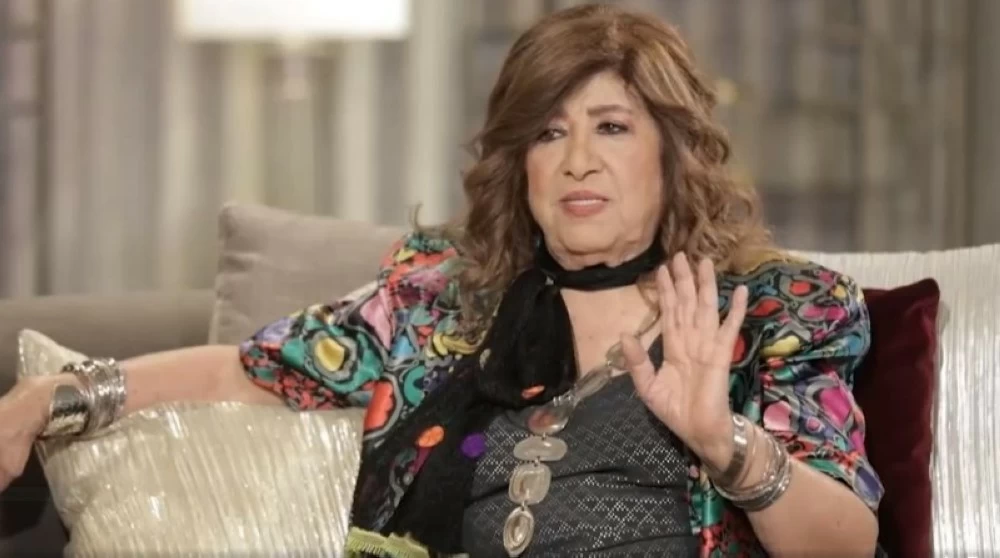
In a new development in a case that has shaken public opinion and the artistic community, the family of the late Syrian artist Huda Shaarawi broke their silence to put an end to the circulating rumors, revealing detailed and horrifying information about the murder that claimed her life. These statements categorically denied the involvement of any third party or mastermind behind the crime, pointing the finger, with conclusive evidence, at the housemaid.
Refuting the third-party theory
The family of the late artist, represented by her son-in-law, Mr. Ghassan Hariri, and her grandson, Ahmed Hariri, confirmed that security and criminal investigations have proven beyond any doubt that the Ugandan maid was the sole perpetrator of the crime. The family clarified that the perpetrator acted alone, without assistance or instigation from any external party, thus closing the door on speculations that attempted to link the incident to other motives or potential accomplices.
The secret of the message and the premeditated intention of treachery
In details revealing the horrific nature of the planning, the family explained that the investigation uncovered crucial physical evidence: a handwritten letter from the maid written before the crime. This letter was considered conclusive proof of premeditation and intent to kill, ruling out the possibility that the crime was a spontaneous act of anger. The family expressed their shock at this treachery, especially since the maid was treated kindly and considered a member of the family. She also had no history of mental or psychological disorders and had undergone all necessary medical examinations before being hired.
Brutality of the execution and attempt to cover up evidence
The family recounted harrowing details of how the crime was committed. The perpetrator used a blunt instrument (a mortar) to inflict fatal blows to the head of the deceased artist, shattering it. Not content with this, the perpetrator then attempted to set fire to the house in a desperate effort to conceal the crime and obstruct justice, demonstrating meticulous planning and cold-blooded execution.
Legal path and judicial sovereignty
In a related context, Ghassan Hariri denied rumors that the maid had been deported to her home country of Uganda to complete the investigation. He affirmed in his statements that the crime occurred on Syrian soil, and therefore the Syrian judiciary has jurisdiction over the case. He emphasized the family's complete confidence in the integrity of the Syrian judiciary and its ability to bring the perpetrator to justice and restore the rights of the deceased artist, stressing that justice will take its natural course within Syria in accordance with applicable laws.
Culture and Art
The death of Hadish Jaban Al-Almai... The passing of an icon of the mizmar in Asir
Asir bids farewell to Hadish Jaban Al-Almai, nicknamed Uncle Hadish, one of the most prominent figures of the mizmar and folk songs in Rijal Alma, after a career full of preserving the authentic southern heritage.
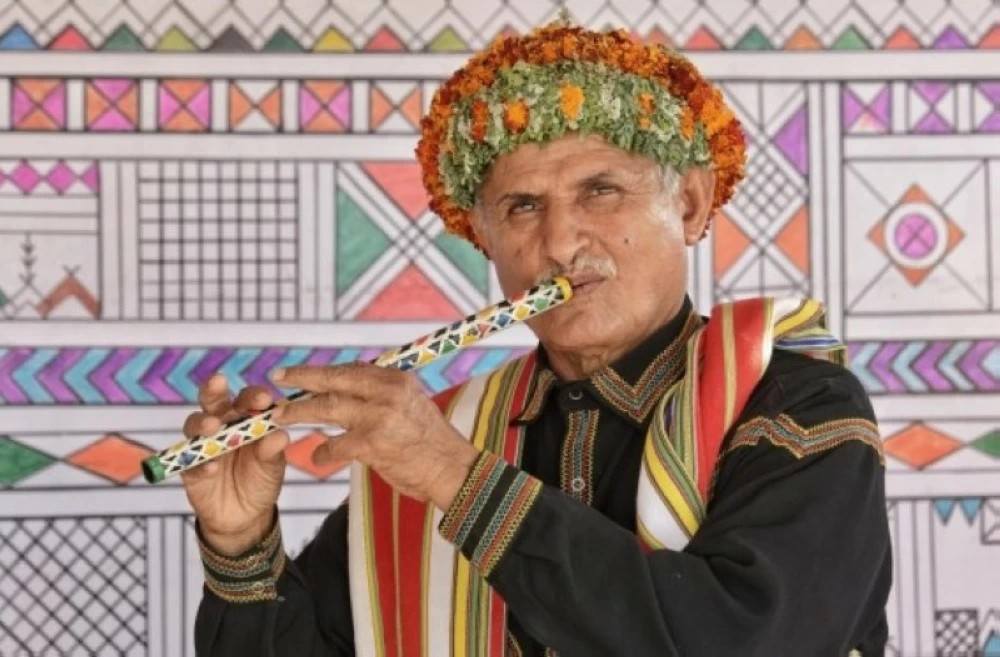
A pall of grief descended upon the cultural and popular circles of the Asir region, particularly in the Rijal Alma'a governorate, following the announcement of the death of renowned flute player and folk singer Hadish Jaban Al-Alma'i , affectionately known to his fans as "Uncle Hadish." He passed away from a sudden heart attack, bringing to a close a prolific artistic career spanning decades, during which his name became synonymous with the collective memory of the region and the authentic musical heritage of southern Yemen.
A symbol of the men of Al-Almaa
The late Hadish Jaban Al-Almai was one of the most prominent artistic figures who contributed to shaping the popular art scene in the Rijal Alma'a Governorate. He was not merely a passing musician, but a faithful guardian of the region's heritage, his very being intertwined with the mizmar, one of the most challenging and expressive folk instruments, capable of conveying the sorrow and joy of the people of southern Yemen. His presence was a defining feature of social occasions, where his voice and playing were an integral part of the region's celebratory rituals.
The Asiri flute: Identity and history
It is impossible to speak of the passing of "Uncle Hadish" without mentioning the importance of the art he dedicated his life to. The Asiri Mizmar is considered one of the oldest musical arts in Saudi Arabia, differing in its structure and melodies from the Hijazi Mizmar. In the south, it relies on long breaths and soulful tunes that evoke the nature of the towering mountains. This art was traditionally practiced at major celebrations, festivals, and harvest seasons, and it forms a fundamental pillar of the cultural identity of the Asir region, which constantly strives to preserve its intangible heritage from extinction.
A leading role in preserving oral heritage
Haddish was distinguished by his unique playing style and masterful performance of rare folk songs, making him a living authority on this art form, which relies entirely on oral transmission and continuous practice. Amidst the rapid changes in the arts, the late Haddish served as a bridge between the older generation and the younger generation, ensuring these melodies remained alive in the collective memory of the community.
A national presence and a lasting legacy
The deceased's presence was not limited to small, local events in villages and rural areas; rather, he served as an ambassador for his region's heritage at numerous major cultural and national events celebrating Saudi folk arts. His participation helped introduce a wide audience outside the region to the beauty of the Al-Alma'i mizmar, affirming that folk art is a universal language reflecting the history and civilization of peoples.
With the passing of Hadish Jaban Al-Almai, the popular music scene in the Kingdom, and in Asir in particular, has lost a great artistic figure and a rare musical treasure. The echo of his flute will remain in the hearts of all who heard it, and his life will continue to be a lesson in loyalty to heritage and belonging to the land.
-

 Local news one week ago
Landslide in Riyadh: Details of the incident in Al-Sahafa neighborhood and containment efforts
-
 Local news one week ago
The death penalty was carried out against a citizen who stabbed another to death in Tabuk
-
 Culture and Art, 1 week ago
Haifa Wehbe's absence in Riyadh: A photo crisis or a strained relationship with the media?
-

 Local news one week ago
Riyadh collapse: Emergency plans to secure water after a main pipeline burst
-
 Culture and Art, 1 week ago
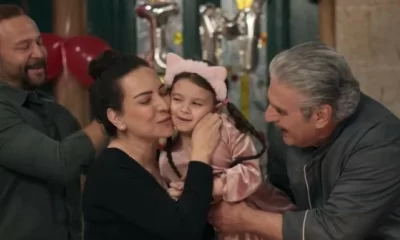
City Kitchen series: A drama of conflict and the middle class during Ramadan
-

 Culture and Art, 1 week ago
The series "Kasra": Dawood Hussein in a moving social drama this Ramadan
-

 Local news one week ago
Applying for the 1447 Opportunities Program for Teachers via the Fares System
-

 Local News 5 days ago
Ramadan 2026 discounts in Saudi Arabia: Offers valid for 54 days