Culture and Art
Ghada Abdel Razek reveals details of her 20-year psychological treatment
Ghada Abdel Razek announces her recovery from depression and obsessive-compulsive disorder after a 20-year treatment journey, revealing the tragic incident that changed her life and the impact of artistic roles.

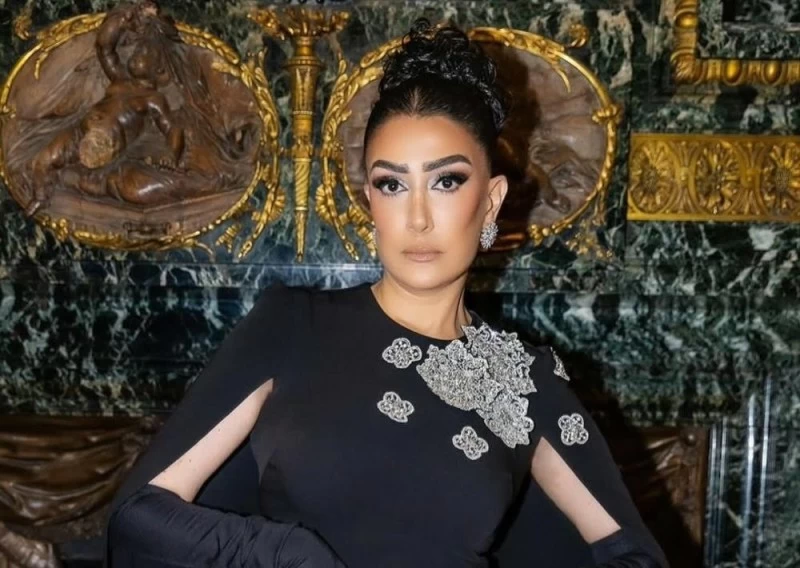
In a bold confession reflecting remarkable courage in confronting herself and her audience, Egyptian star Ghada Abdel Razek poignant and detailed accounts of her long journey with psychotherapy, which spanned nearly two decades. This announcement shed light on a hidden aspect of the life of one of the most prominent actresses in Arab drama, as she declared her complete recovery and success in discontinuing the tranquilizers she had relied on for many years.
Turning Point: An Unforgettable Tragic Incident
Ghada Abdel Razek attributed the root cause of her deep psychological crisis to a tragic incident she witnessed years ago, which deeply traumatized her. In recent television interviews, the actress recounted the details of the scene that changed the course of her life: witnessing a woman fall from a building while driving her car. This horrific scene was not just a fleeting event, but rather a nightmare that haunted her for years, leading her to seek psychiatric help and tranquilizers to try to overcome the trauma and cope with the resulting psychological pain.
The price of fame and playing complex roles
The tragic incident wasn't the only factor in Ghada Abdel Razek's suffering; she indicated that the nature of her artistic work played a significant role in exacerbating her condition. Ghada is known in the artistic community for choosing complex and psychologically challenging roles that require complete immersion in the character's details. This constant embodiment of characters suffering from severe social disorders or problems cast a heavy shadow on her psychological stability, leading to symptoms of obsessive-compulsive disorder and depression, and a prolonged loss of her sense of psychological security.
The importance of recognition and its societal impact
Ghada Abdel Razek's confession carries special significance that transcends the personal; celebrities speaking out about their mental health helps break the silence and social stigma surrounding mental illness in the Arab world. When a star of Ghada's stature speaks about her need for treatment and medication, she sends a message of reassurance to thousands of people suffering in silence, affirming that seeking professional help is not shameful and that recovery is possible, no matter how long the suffering lasts.
Turning the page on pain and overcoming medication
Ghada Abdel Razek concluded her remarks by affirming her victory in this long battle, noting that she was recently able to completely stop taking psychiatric medication after her condition stabilized. Although the memory of the traumatic incident remains etched in her mind, she emphasized that its impact no longer controls her life or hinders her progress, thus closing a chapter of 20 years of internal struggle and beginning a new phase characterized by psychological peace and artistic and personal maturity.


Culture and Art
Talal Al-Sadr apologizes to Hassan Asiri: Details of the reconciliation and ending the dispute
Talal Al-Sadr publishes an official apology to the artist Hassan Asiri in compliance with the Ministry of Information’s decision, acknowledging his pioneering role in Saudi drama after previous disputes and mutual accusations.

Social media platforms in Saudi Arabia witnessed widespread interaction following artist Talal Al-Seder's announcement, via his official account on the "X" platform, of a formal and public apology to artist and producer Hassan Ahmed Asiri. This action comes in compliance with a decision issued by the Primary Commission of the Ministry of Media, bringing to a close a legal and media dispute between the two parties, thus affirming the rule of law and the importance of adhering to professional ethics in the artistic community.
Details of the reconciliation and apology decision
In his post, Al-Sadr explained that this apology comes in compliance with Decision No. (233) in the lawsuit filed against him by Hassan Asiri. The decision stipulates the implementation of the terms of the settlement agreement, which includes Al-Sadr offering a clear apology for his actions, along with full recognition of Asiri's artistic stature. The apology reads as follows:
"I, Talal Marzouq Mishaan Al-Sadr Al-Otaibi, apologize to the esteemed actor Hassan Ahmed Asiri for the offense I committed against him. I acknowledge his pioneering work throughout his career, which has left a clear mark on Saudi drama and contributed to the development of the artistic scene."
In compliance with the terms of the agreement, Al-Sadr indicated that this post will be pinned to his account for fifteen days, in a step that reflects the seriousness in ending the dispute and implementing the rulings issued by the competent authorities.
Background of the conflict: From scathing criticism to the courts
To understand the context of this apology, we must go back a little, to when Talal Al-Seder launched a scathing attack on Hassan Asiri in a series of tweets and posts. These criticisms included accusations that Asiri was "tampering with Saudi drama" and holding him responsible for what Al-Seder described at the time as the weakness of the drama industry. In his earlier attack, Al-Seder focused on the fact that Asiri's production style relied on monopoly and repetition, which emptied artistic works of their creative content and emotional depth. This prompted Asiri to resort to the courts to protect his moral and intellectual property rights.
Hassan Asiri: An influential artistic career in Gulf drama
Al-Sadr's acknowledgment of Hassan Asiri's "pioneering work" in his apology reflects an undeniable truth in the history of Saudi drama. Hassan Asiri is one of the most prominent figures who shaped the dramatic landscape in the Kingdom and the Gulf for decades, both as an actor and as a producer through his company, Al-Sadaf. Asiri contributed to dozens of works that tackled bold social issues and played a pivotal role in discovering many young talents who later rose to prominence on screen. Recognizing his contributions and stature in the apology restores the value of a long history of effort in establishing a competitive Saudi drama industry.
The importance of the decision and the role of the Ministry of Information
This event carries implications that extend beyond a mere personal dispute between artists; it underscores the active role of the judicial committees within the Saudi Ministry of Media in regulating the media and artistic landscape. This decision reinforces the principle of responsibility in online publishing and clarifies that freedom of expression does not extend to personal attacks or defamation. Furthermore, it strengthens the artistic work environment in the Kingdom, guaranteeing creators their rights and establishing clear legal frameworks for resolving disputes, thus contributing to a healthy climate conducive to the development and flourishing of Saudi drama, free from personal squabbles.
Culture and Art
Behind the scenes of Abla Kamel's return in a Ramadan advertisement: conditions and surprises
Discover the behind-the-scenes story of Abla Kamel's appearance in the Ramadan advertisement alongside Menna Shalaby and Yasmine Abdel Aziz. Learn the secret behind her acceptance after a long absence, her relationship with the director, and the details of her conditions.
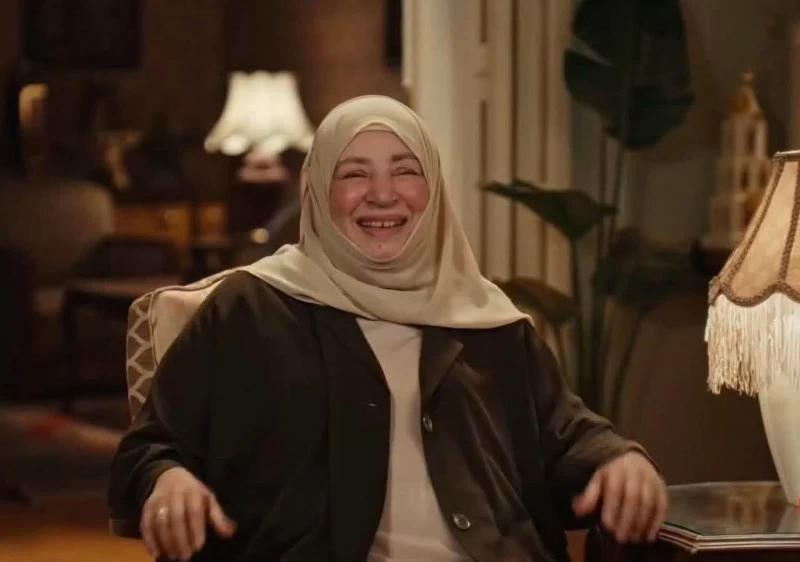
Abla Kamel sparked widespread joy and celebration across social media and in the Egyptian public following her surprise appearance in a Ramadan advertisement for a major telecommunications company. This appearance comes after years of complete absence from the artistic and media scene, making her return a significant artistic event that has captured the attention of the Arab audience.
Abla Kamel's conditions for agreeing to return
The renowned actress's agreement to appear in the advertisement was not easy, as she set specific conditions related to the content and message of the project. According to sources close to her, Abla Kamel stipulated that the advertisement must carry a noble humanitarian message reflecting the values of social cohesion and family warmth, far removed from mere commercialism. This was achieved in the advertisement's concept, which focused on the importance of communication and bridging the gap between loved ones.
Nostalgia brings her together with Menna Shalaby and Yasmine Abdel Aziz
One of the most notable aspects of this project is the selection of Abla Kamel to appear alongside two stars with whom she shares a special artistic and historical relationship: Menna Shalaby and Yasmin Abdel Aziz . This choice was not arbitrary, but rather a deliberate evocation of artistic memories etched in the minds of viewers.
- Her relationship with the artist Yasmine Abdel Aziz to 1998, when they achieved resounding success in the series "A Woman from the Time of Love," which was a strong launch for Yasmine.
- As for her relationship with the artist Menna Shalaby , it brings back memories of the film “Kalem Mama” which was produced about 23 years ago, and witnessed a high level of artistic chemistry between them.
A tribute to director Mohamed Shaker Khodair
the scenes, a touching human side of Abla Kamel's acceptance of the role was also revealed, related to the advertisement's director Mohamed Shaker Khodeir . The actress expressed her happiness at working with him, acknowledging her close relationship with his late father, who had been her professor at the Higher Institute of Theatrical Arts. Furthermore, she expressed her deep admiration for the series "Grand Hotel," directed by Khodeir, considering it one of her favorite works, which she follows with great enthusiasm.
The impact of the comeback and the status of Abla Kamel
Abla Kamel's appearance in the advertisement is more than just a commercial; she is considered an icon of Egyptian and Arab drama, enjoying immense popularity thanks to her roles that authentically and spontaneously reflected the realities of Egyptian families. She concluded her appearance with a touching voice message: "Don't let anything separate you from what you miss... As long as we're together, Ramadan shines brightly with us," a statement that encapsulates her philosophy of life and reaffirms her status as one of the most important stars of Arab cinema.
Culture and Art
Sarah Baraka: The Saudi audience is exceptional, and behind the scenes of the Ali Clay series
Sarah Baraka speaks to Okaz about the success of the play "Saman Ala Asal" in Riyadh Season, and reveals the reasons for her apprehension about the Ali Clay series with Ahmed Al-Awadi and her projects with Mahmoud Hamida.

Young Syrian actress Sarah Baraka expressed her immense happiness and pride in her first artistic experience in Saudi Arabia, praising the warm reception she received from the Saudi audience during the performance of the play "Saman Ala Asal" (Ghee on Honey). In exclusive statements to the Okaz newspaper, Baraka affirmed that the atmosphere provided by Riyadh Season for Arab artists is a fertile ground for creativity. She also commended the tremendous efforts exerted by the General Entertainment Authority, led by His Excellency Advisor Turki Al-Sheikh, which have transformed Riyadh into a global destination for art and entertainment.
Echoes of "Samman Ala Asal" and Riyadh Season
Speaking about the play, which was part of the season's events, Sarah explained that despite its lighthearted comedic nature, the production required extensive preparation and considerable physical and artistic effort due to its numerous dance numbers. She noted her deep passion for performing arts, which made the experience "delightful and enjoyable" despite the fatigue. This performance comes at a time when the Kingdom is witnessing unprecedented cultural and artistic activity, with Saudi theater becoming a platform that brings together stars from across the Arab world, thus strengthening cultural and artistic exchange between Arab countries.
Artistic chemistry with Moatasem Al-Nahar and the stars
Regarding her experience working with her colleagues, Sarah Baraka singled out her fellow Syrian star, Moatasem Al-Nahar, for special praise, describing him as a "humble star" and noting that they have shared a strong friendship for years, which positively impacted their on-stage chemistry. She also expressed her delight at working alongside a distinguished group of Arab stars, including Jumana Murad, Ayman Reda, Shukran Murtaja, and the Egyptian artist Ahmed Abdel Wahab, emphasizing the strong team spirit that prevailed among the cast and crew.
The challenge of Egyptian drama in "Ali Clay"
Regarding television drama, Sarah discussed her upcoming role in the Egyptian series "Ali Clay," starring Ahmed El-Awady. She revealed that she will appear in the final third of the series, noting that this role represents a new and different challenge in her career. Baraka admitted that she initially felt very apprehensive about accepting the role, attributing this to her lack of familiarity with the details and culture of the "folk hero" in Egyptian drama—a genre that enjoys immense popularity and requires a particular mastery of dialect and behavioral nuances.
She added that the support of star Ahmed El-Awady and director Mohamed Abdel Salam played the biggest role in encouraging her to embark on this artistic adventure, reflecting the importance of Egyptian-Syrian artistic cooperation that has long enriched Arab screens with timeless works.
New cinematic and dramatic steps
Sarah Baraka concluded her remarks by revealing her future projects. After Ramadan, she will begin filming a new series titled "90 in Clothes." This project marks a significant milestone in her career, as it reunites her with the renowned actor Mahmoud Hamida for the first time, where she will portray his daughter. The series is directed by Shadi Fouad, and Sarah has high hopes for it to solidify her position in Arab drama, benefiting from working alongside an artist of Mahmoud Hamida's stature.
-

 Culture and Art, 1 week ago
The "Between and Between" exhibition in Jeddah: 5 artists reshape Saudi memory
-
Local News 6 days ago
Saudi Arabia's National Arabic Language Policy: 8 Principles to Promote Identity
-
Culture and Art, 1 week ago
Shakira's concert in Jeddah: Details of the international star's first concert in Saudi Arabia
-
Local News 6 days ago
Adopting the National Policy for the Arabic Language: Strengthening Identity and Vision 2030
-
Local News 6 days ago
The Riyadh-Rin-Bisha dual carriageway, spanning 559 km, has been completed
-
Local news two days ago
Human Resources sets the date for the 2026 Founding Day holiday for both sectors
-
Culture and Art, 1 week ago
Ramez Level the Monster: Details of Ramez Galal's program in Ramadan 2026
-
Local News 5 days ago
The Supreme Court calls for the sighting of the crescent moon of Ramadan 1447 on Tuesday evening