Culture and Art
Cynthia and Ahmed El-Fishawy begin filming the movie “The Tagamoa Killer”
Cynthia Khalifa storms into Egyptian cinema with the film "The Tagamoa Killer" alongside Ahmed El-Fishawy, in an exciting experience filmed in just five days!

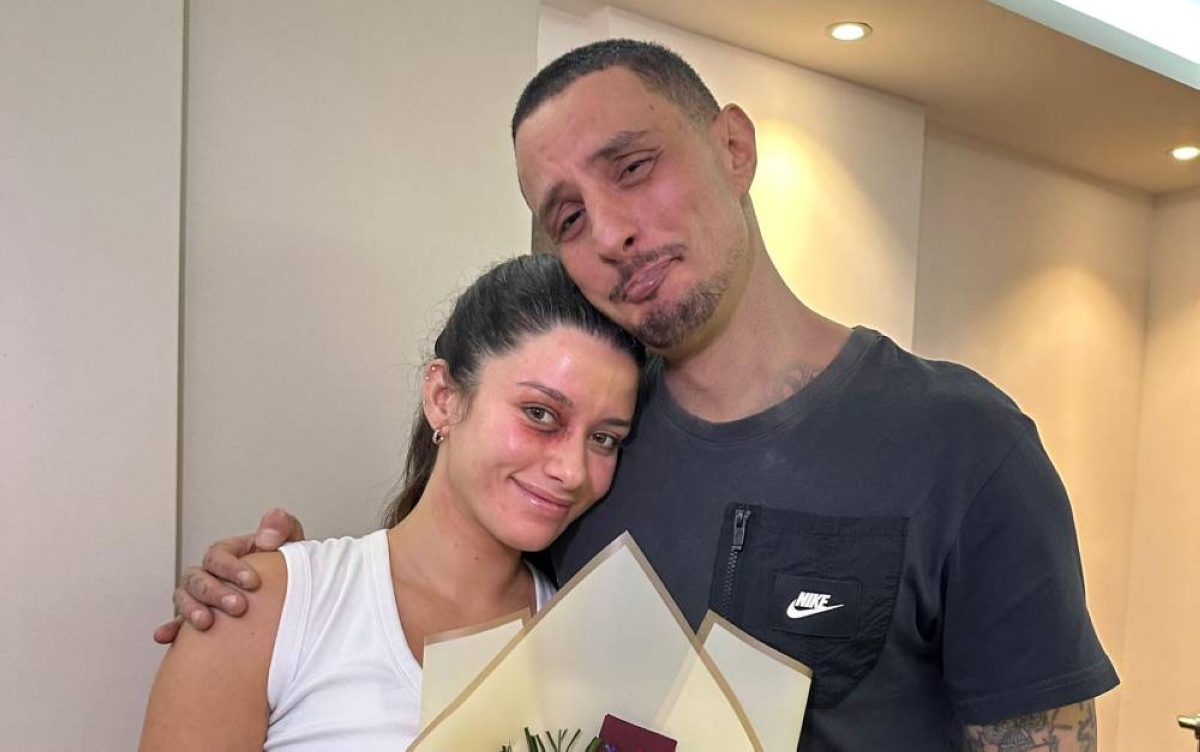
Cynthia Khalifeh: A Lebanese star breaks into Egyptian cinema
In a bold and exciting move, Lebanese actress Cynthia Khalifeh filming her first scenes in the movie "Safah El Tagamoa," marking her first leading role in an Egyptian film. Imagine Cynthia sporting a completely new look, alongside Egyptian star Ahmed El Fishawy, inside an apartment in the Dokki district of Cairo. Can you imagine the excitement?
Cynthia is expected to finish filming her role in just five days! Yes, only five days to make her mark on the Egyptian film scene. The film is written and directed by Mohamed Salah El-Azab and produced by Ahmed El-Sobky, promising a unique cinematic experience.
Unparalleled artistic revival
The film "The Tagamoa Killer" comes as part of Cynthia Khalifa's current artistic resurgence. She is not just an ordinary actress; she is a star who participates in numerous Egyptian and international dramas. Her latest venture was her role in the series "Ibn El Nady" alongside Egyptian star Ahmed Fahmy, where she portrayed a comedic character for the first time in Egypt.
Global impact and shared championships
But wait! Do you think that's all? Of course not! Cynthia also made her mark on the global stage with her starring role in the film "White Mars," alongside Lucy Hale and Luke Newton. She also appeared with Canadian actress and model Sabrina Elba, wife of actor Idris Elba.
And let's not forget her continued global presence with the American horror-thriller film "Borderline," in which she co-stars with British actor Lucien Lovescount, star of the series "Emily in Paris." It seems Cynthia Khalifa knows no bounds when it comes to achieving success!
Cynthia Khalifeh : a name that resonates between Cairo and Hollywood, and between comedy and horror. It's truly an experience worth following for all art and cinema lovers.


Culture and Art
Abdulrahman Al-Shubaili's daughter responds to Saad Khader: My father was not racist
A heated debate has erupted following artist Saad Khader's account of the late Abdulrahman Al-Shubaili. Al-Shubaili's daughter and other intellectuals have responded, refuting the story and emphasizing the late artist's distinguished career in Saudi media.


The remarks of veteran Saudi artist Saad Khader widespread controversy in the Kingdom's cultural and media circles after he recounted a historical narrative dating back more than fifty years. His account included veiled accusations of racism and arrogance directed at the late Dr. Abdulrahman Al-Shubaili, . These remarks did not go unnoticed; rather, they prompted a firm response from the family of the deceased and a number of intellectuals who considered his statements a defamation unbecoming of a symbol of Saudi media.
Al-Shubaili's daughter: My father was a school of refinement
In a swift and angry response, Shaden Al-Shubaili , the deceased's daughter, categorically refuted Saad Khader's account. Shaden described the circulated information as "nonsense and slander," emphasizing that her father, known for his refined character and impeccable speech, could never have exhibited the vulgar or racist behavior portrayed in the account. She pointed out that her father's long career was marked by his support for young talent and his fight against all forms of discrimination, stressing that the pursuit of "trending" and controversy should not come at the expense of the reputation of the deceased, who have no right to respond.
Intellectuals and media figures: Eyewitness accounts refute the narrative
The family wasn't alone in defending Al-Shubaili's reputation; a number of writers and intellectuals also stepped forward to protect it. Writer Idris Al-Drees that everyone who knew or interacted with Al-Shubaili was fully aware that he was a paragon of virtue, and that the circulating account contradicted the very essence of his character. For his part, academic Dr. Abdulwahid Al-Humaid that his acquaintance with the deceased, which spanned more than forty years, was marked only by integrity and impeccable character, considering the story told to be inconsistent with the refined conduct for which Al-Shubaili was known throughout his life.
Abdulrahman Al-Shubaili... a symbol of Saudi media and an indelible history
To understand the reasons behind this widespread anger, one must consider the historical context of Dr. Abdulrahman Al-Shubaily's life. He is not merely a former official; he is considered the "godfather of Saudi media" and the first Saudi to earn a doctorate in media studies. Al-Shubaily contributed to the establishment of Saudi television and radio, was an active member of the Shura Council, and was known for his meticulous documentation of biographies and the oral history of the Kingdom. This background makes any attack on his reputation a matter of public concern, as many consider him a moral and professional authority who contributed to shaping cultural awareness in the Kingdom and the Gulf region.
Ethics of historical narrative and the sanctity of the dead
This controversy has opened a debate about the ethics of recounting the stories of the deceased in talk shows. Observers believe that narrating undocumented individual incidents dating back half a century, and leveling accusations against figures who have passed away, presents a major ethical dilemma. The responsibility is compounded when discussing national figures, as a belated, personal account clashes with a long and documented history of national service and a sterling reputation, placing the speaker in a predicament of credibility with the public, some of whom have demanded that the artist Saad Khader issue a formal apology to the family and fans of the deceased.
Culture and Art
The truth about Abla Kamel's illness and retirement: Ashraf Zaki settles the debate
Ashraf Zaki reveals the truth about Abla Kamel's serious illness, and explains the reasons for her refusal of the honor and her insistence on retiring and staying away from the limelight, denying rumors of her exorbitant salary.

Dr. Ashraf Zaki, head of the Actors Syndicate in Egypt, put an end to the widespread controversy that recently arose regarding the health condition of the veteran artist Abla Kamel, and the truth about her final retirement from art, in televised statements that put an end to the rumors circulating on social media platforms.
The truth about Abla Kamel's serious illness
In a decisive response to reports claiming that actress Abla Kamel's health had deteriorated and that she was suffering from a serious illness, the head of the Actors' Syndicate categorically denied these rumors. Zaki emphasized that he knew nothing about these claims, stressing that her recent appearance in a Ramadan advertisement was clear evidence of her stable health, as she appeared to be in good health, reassuring her large fan base in Egypt and the Arab world.
Insistence on distancing oneself and refusal to return
Regarding her return to the art scene, Ashraf Zaki revealed details of his ongoing communication with the "Queen of Spontaneity," explaining that he tried to persuade her to reconsider her decision to step away from the spotlight on more than one occasion, but she met these attempts with firm refusal. He indicated that Abla Kamel currently prefers to enjoy her private life away from the limelight and cameras, adhering to her decision to remain in the shadows after a career brimming with contributions.
A noble stance: refusing honors and financial support
In a related context, the head of the syndicate revealed a poignant aspect of the renowned artist's character, explaining that she declined all official honors at art festivals. She also categorically refused any form of financial or medical support, whether from the syndicate or other entities, affirming her conviction that her income should be solely the product of her own efforts—a stance that further enhances the public's respect for her.
Clarification regarding Ramadan advertising fees
Zaki addressed the astronomical figures circulating regarding her fee for the recent advertisement, denying the accuracy of those exaggerated sums. He emphasized that her participation involved minimal effort and was compensated fairly, contrary to what some pages had claimed, thus confirming that she prioritizes preserving her artistic integrity over financial gain.
An enduring artistic career and an indelible influence
The public's interest in news about Abla Kamel stems from her exceptional place in the history of Egyptian drama. She left an indelible mark through iconic roles, most notably her portrayal of Fatima Koshary in the series "I Will Not Live in My Father's Robe," her role in "Raya and Sakina," and the "Silsal El Dam" series. Despite her absence from the screen, Abla Kamel remains a powerful presence in popular culture and across social media platforms, where her facial expressions and lines of dialogue have become "icons" shared by the younger generation, reflecting an artistic influence that transcends mere physical presence on screen.
Culture and Art
Al-Nahda Association revives the heritage of Al-Hawama on its founding day
In a heritage atmosphere, the Renaissance Association revived the popular Hawama heritage coinciding with the founding day, with broad community participation to promote national identity and support productive families.

In a cultural scene reflecting the depth of belonging to the roots, and coinciding with the Kingdom of Saudi Arabia’s celebrations of its precious national occasions, the Renaissance Association revived the old Najdi folk heritage known as “Al-Hawamah,” in a huge celebration that blended the authenticity of the past with the aspirations of the future, aiming to instill the values of national identity in the hearts of the emerging generations.
Al-Hawamah: A Window into the History of Fathers and Grandfathers
“Al-Hawamah” is one of the most prominent traditional social customs in the Najd region of central Saudi Arabia. It was a festive ritual preceding Eid, during which children would roam the alleyways of old neighborhoods chanting special songs, asking their neighbors for sweets and simple gifts. This tradition is not merely a recreational activity; it carries profound social significance, strengthening neighborly bonds and social solidarity. This is what Al-Nahda Association sought to revive through this event, introducing the new generation to the simple yet value-filled lives of their ancestors.
Linking the present to the past on the founding day
The CEO of Al-Nahda Association, Muzna Al-Omair, explained that reviving the "Hawamah" festival this year coincided with the celebration of the association's founding day, stemming from its firm belief in the importance of taking pride in Saudi history and authentic cultural identity. Al-Omair noted that the association makes it a point to provide a range of community services annually, as the holy month of Ramadan and the Eid holidays approach, starting with providing Eid clothing and culminating in activities that bring joy to children. She emphasized that "Hawamah" has returned to serve as a bridge connecting children to their history.
Heritage events and economic empowerment
The event did not stop at chanting, but transformed the association's halls into a vibrant heritage square, which included:
- Traditional games: such as the game of “tug of war”, which brought back the physical enthusiasm of children away from electronic games.
- The storyteller's corner: where stories from the Saudi heritage were narrated to reinforce noble values.
- The Good Old Shop: which showcased sweets and old products, along with handicrafts such as henna engraving and Sadu weaving.
In the context of economic empowerment, the association allocated spaces for beneficiaries to display their products. Dr. Muzna emphasized that supporting productive families and giving them the opportunity to showcase the quality of their work is a fundamental pillar in the association’s strategy to move towards self-reliance, in line with the objectives of the Kingdom’s Vision 2030.
Effective community partnership
The event witnessed remarkable community solidarity, as the association appreciated the efforts of its partners in success, including Kudu Restaurant and Tim Hortons for providing food support, in addition to the outstanding voluntary participation of students from Oasis of Knowledge Schools in operating the heritage corners, and members of the Student Club “Kas” from Alfaisal University, who contributed their efforts in organizing the event and bringing joy to the hearts of visitors, reflecting the spirit of social responsibility among institutions and Saudi youth.
-

 Local News 6 days ago
Saudi Arabia approves regulations for the continued presence of Gulf vehicles: duration and penalties
-
Local news one week ago
The Ministry of Interior begins procedures for a royal pardon for common law prisoners
-
Local news one week ago
The deadline for property registration in Hail and Riyadh is Thursday
-
Local news one week ago
Under the patronage of the Minister of Information, an agreement was signed between the Ministry of Information and Waves Marketing Company
-
Culture and Art 7 days ago
The Devil's Prisons series was halted: The full story of "The Emperor's" being moved to YouTube
-
Local News 5 days ago
Saudi Energy: A new identity for electricity that aligns with Vision 2030
-
Local News 5 days ago
The Food and Drug Administration is recalling Bebelac and Aptamil milk due to potential contamination
-
Local news one week ago
Registration is now open for domestic pilgrims for the 1447 AH season: Dates and conditions via Nusuk