
Culture and Art
Ashraf Zaki's condition for completing the filming of the series "Rouh OFF" and excluding Umm Jasser
The Actors' Syndicate has suspended the series "Rouh OFF" due to blogger Umm Jasser. Learn about Ashraf Zaki's conditions for resuming filming and the details of the crisis surrounding the employment of non-syndicate members during Ramadan.

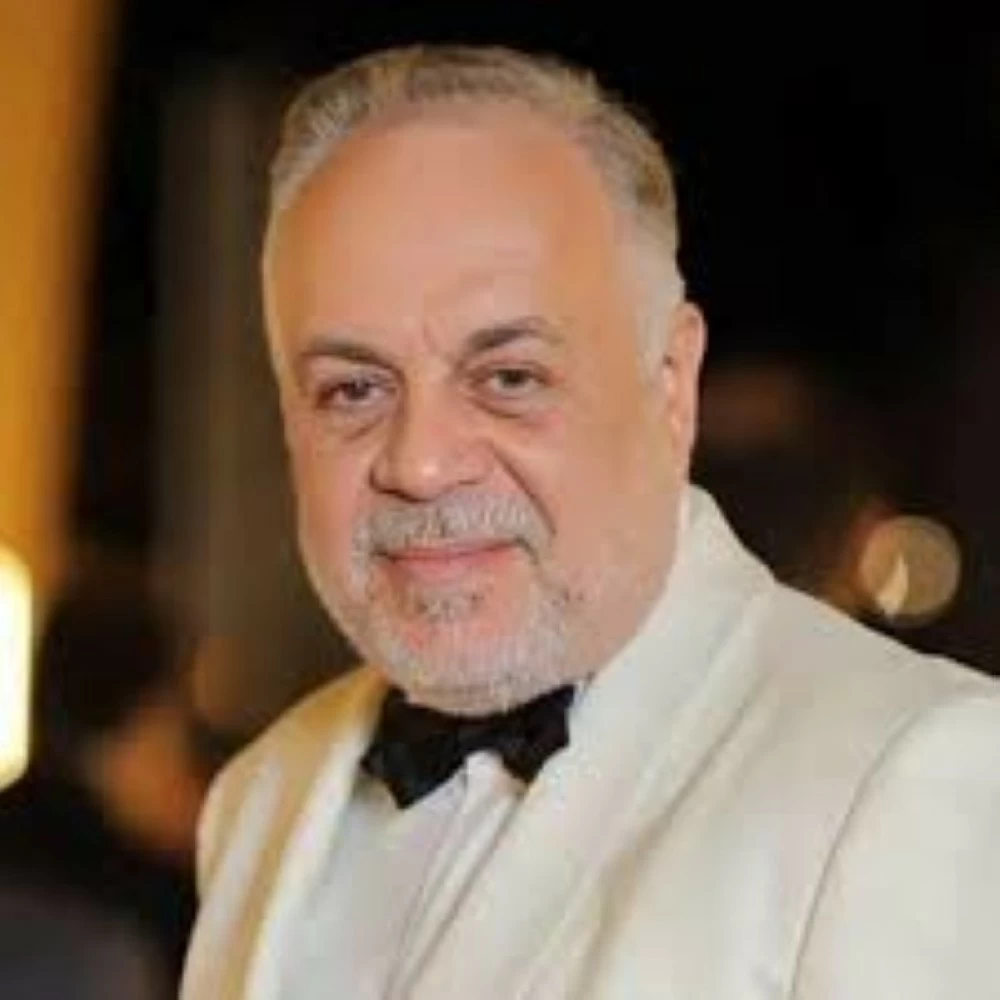
Dr. Ashraf Zaki, head of the Actors' Syndicate, revealed the latest developments in the "Rouh OFF" series crisis, clarifying the syndicate's final stance regarding the possibility of resuming filming. Zaki emphasized that the syndicate does not obstruct any artistic project nor is it hostile to production companies, but it insists on full compliance with the regulations and laws governing artistic work in Egypt. He stressed that the exclusion of the blogger known as "Umm Jasser" is a fundamental and non-negotiable condition for allowing the cast and crew to resume filming and for cameras to start rolling again immediately.
Details of the crisis and the suspension decision
These statements came in response to the decisive decision issued by the Actors' Syndicate to halt filming of the series and prevent its airing during the upcoming Ramadan season. The main reason behind this escalation was the circulation of a video on social media showing the producer of the series officially signing a contract with "Umm Jasser" to participate in the show. The syndicate considered this a blatant challenge to its previous decisions and repeated warnings prohibiting the employment of non-members without obtaining the necessary legal permits.
The context of protecting the profession and the regulatory laws
This incident comes amidst the ongoing and tireless efforts of the Actors' Syndicate to regulate the artistic scene in Egypt and protect it from chaos. Historically, the syndicate has played a pivotal role in safeguarding the rights of academically trained artists registered with it. Its internal regulations and bylaws stipulate that anyone practicing acting who is not a member of the syndicate must obtain prior work permits and pay the required fees.
These strict laws aim to maintain the quality of dramatic content presented to the public, and to ensure that the profession does not turn into an open arena for amateurs without technical controls, which harms the principle of equal opportunities for graduates of the Higher Institute of Dramatic Arts and specialized colleges who suffer from a lack of opportunities.
The phenomenon of bloggers and its impact on drama
The controversy surrounding the series "Rouh OFF" has reignited the debate about a growing phenomenon: the practice of some producers employing social media influencers (bloggers and TikTokers) in television dramas and films in pursuit of viral trends and high viewership. Critics and industry professionals believe that the Syndicate's intervention in this matter is crucial for protecting Egyptian artistic identity, as the haphazard reliance on non-professionals leads to a decline in the artistic quality of productions.
Dr. Ashraf Zaki’s recent stance confirms that the syndicate will not compromise on enforcing the law to ensure that Egyptian drama remains a professional industry that respects its audience and its long history, and that digital fame alone is not a justification for practicing the acting profession without real talent or legal cover.
The fate of the artwork
The union concluded its statement by emphasizing that the ball is now in the production company's court. If the company immediately complies with the decision to exclude "Umm Jasser" and follows the legal procedures to obtain permits for the rest of the crew, filming can resume immediately. However, if the company persists in violating the regulations, the suspension will remain in effect and final, in order to preserve the union's prestige and the rights of its members, and to uphold the rule of law within the artistic community.


Culture and Art
The death of Thuraya Qabil: The passing of a pioneer of Saudi lyric poetry and journalism
Saudi poet and media personality Thuraya Qabil, known as the "Voice of Jeddah," has passed away, leaving behind a lasting cultural and artistic legacy. Learn about her pioneering career in Saudi poetry, journalism, and song.
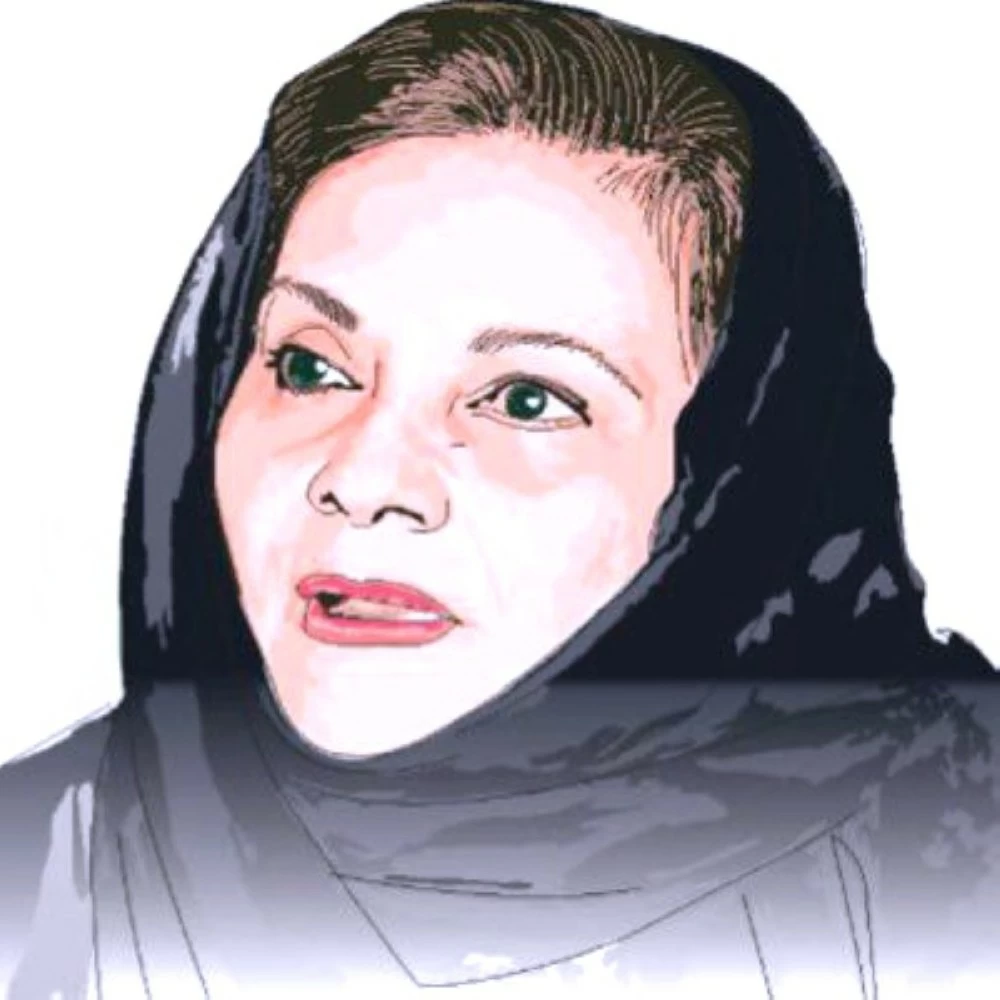
On Wednesday morning, February 4, 2026, the curtain fell on the life of a towering literary and media figure in the Kingdom of Saudi Arabia, as the esteemed poet and journalist Thuraya Qabil away in a Jeddah hospital after a battle with illness. With her departure, the Gulf and Arab cultural scene loses the melodious "Voice of Jeddah," the woman who transformed the pulse of the ancient alleyways into timeless poems that resonate on the lips of lovers and echo in the memory of generations.
Born in the heart of historic Jeddah
The late poet was born in the heart of old Jeddah, specifically in the Al-Mazloum neighborhood in 1940, an environment rich in social and cultural details that shaped her early consciousness. That neighborhood was not merely a place to live; it was the first school that nurtured Thuraya Qabil's taste through the rhythm of the mashrabiya windows, the voices of the vendors, and the spontaneous conversations of the people. This deep connection to the place was later reflected in her poetic vocabulary, which was characterized by a warm, effortlessly elegant Hijazi flavor, capable of distilling complex emotions into simple and sincere words.
Literary leadership and social boldness
Thuraya Qabil is a true pioneer in the history of Saudi women's literature. In 1963, she made a significant impact with the publication of her collection "Al-Awzan Al-Bakiyah" (The Weeping Meters), historically the first collection of classical Arabic poetry published by a Saudi woman under her own name. This step was a quiet cultural revolution at the time, breaking down the barriers of fear and the customs that forced women to write under pseudonyms. She studied at the National College in Beirut and returned to the public sphere armed with awareness and culture.
An indelible mark in journalism and media
Qabil did not limit herself to poetry; she also had a long and distinguished career in the press. She entered journalism through advocating for women's and societal issues, becoming a powerful and influential voice. She oversaw the editing of the "Sweet Half" page in Al-Bilad newspaper and wrote for major publications such as Okaz, Quraish, and the Lebanese newspaper Al-Anwar. Her media career culminated in the founding and editorship of Zeina magazine in the mid-1980s, setting a precedent for Saudi women leaders in the media field.
Artistic twinning and the Saudi song industry
Artistically, Thuraya Qabil formed an exceptional duo with the late Fawzi Mahsoum , and her lyrics contributed to shaping the identity of modern Saudi song. Among her timeless masterpieces are "Min Ba'd Mazh wa La'b" (After Joking and Playing), "Bishweesh 'Atabni" (Gently Reproach Me), and "La La Wa Rabbi" (No, No, By God), which was sung by the renowned Arab artist Mohammed Abdu, in addition to "Jani Al Asmar" (The Dark-Skinned One Came to Me) by the late Etab. Her poems were distinguished by their ability to capture genuine human emotions, free from affectation, which led great artists like Talal Maddah to sing her heartfelt lyrics that resonated directly with listeners.
The passing of Thuraya Qabil is not merely the closing of a chapter in her life, but the loss of a living memory that documented the transformations of Saudi society through words and music. Despite her absence, her poignant songs and timeless melodies will remain open windows through which Thuraya Qabil's spirit can reach her admirers, affirming that creative individuals never truly leave, but rather leave their mark as enduring as art and beauty themselves.
Culture and Art
Heritage and Antiquities in Arabic Literature: Poetic and Historical Evidence
Explore the presence of heritage and antiquities in Arabic literature through the poems of Al-Mutanabbi and Al-Sharif Al-Radi. An analytical reading of the symbolism of ruins and cultural identity throughout history.
The connection between humanity and its heritage is timeless, transcending the boundaries of time and place. It is not merely a material relationship with the remnants of the past, but a deep-seated emotion that forms an integral part of the human psyche. This emotion is clearly manifested in moments of nostalgia or when recalling history, as heritage represents the bridge connecting the present to the roots of ancestors, granting individuals and society a sense of belonging and identity.
Ruins: The Historical Gateway to Antiquities in Poetry
Before delving into the direct implications, it is essential to point to the historical context of Arabic literature, where the phenomenon of "standing at the ruins" in the pre-Islamic odes and poems constituted one of the earliest attempts at poetic documentation of ruins. The Arab poet would not pass by the ruined dwellings of loved ones without pausing to address the stones and sand, thus making Arabic poetry, from its inception, a repository that preserves the geography of places and the features of bygone civilizations.
In keeping with tradition, artistic creativity in its various forms, whether through painting or photography, serves to document the memory of place. However, literature, and poetry in particular, has remained the primary vessel that has preserved heritage both directly and indirectly, transcending superficial description to reach profound symbolic and philosophical meanings.
Al-Mutanabbi and the Philosophy of Intangible Heritage
Among the most prominent literary examples that addressed this concept are those found in the poems of Abu al-Tayyib al-Mutanabbi, the greatest Arab poet of the Abbasid era. Al-Mutanabbi referred to heritage in the context of comparing material and spiritual value, saying:
Even if all heritage were to perish except for glory… he would target the enemies with his long spears
Here, Abu al-Tayyib uses the phrase "the annihilation of heritage" to symbolize the depletion of money and material possessions, which are consumed by generosity and giving, emphasizing that what remains and endures is "exaltation" and glory. Elsewhere, he affirms his indifference to the source of glory, whether inherited or acquired, as long as the ultimate goal is achieved
And I no longer care, after attaining the highest level… whether what I have consumed was an inheritance or an acquisition
He also praises Sayf al-Dawla al-Hamdani in his famous verse in which he distinguishes between imitation (following traditions) and creativity and innovation:
The noble follow in the footsteps of others… but you create and invent what you come up with
Religious and social symbolism of monuments
The discourse on heritage shifts from personal pride to sacred religious symbolism with Al-Sharif Al-Radi, who employed the term "heritage" to claim the relics of prophecy, saying:
Return Muhammad's legacy, return it... The staff and the cloak are not yours
Here he refers to the possessions of the Prophet, may God bless him and grant him peace, such as the staff and the cloak, which may refer to the cloak of Ka’b ibn Zuhair, thus giving these relics a spiritual and legal value that transcends their material value.
From a social perspective reflecting self-respect, we find the story of Sa'd ibn Nashib al-Tamimi during the Umayyad era, when the judge of Basra ordered the demolition of his house. The poet did not see the destruction of the building as the end of his legacy, but rather responded with a poem of pride beginning, "I will wash away the shame with the sword," culminating in his words:
If they treacherously destroy my home, it is a noble legacy that will not be deterred by the consequences
This is an affirmation that the legacy of the generous man lies in his reputation and his positions, which are untouched by the tools of destruction.
The importance of literary documentation of heritage
The significance of these artifacts lies in their being historical documents that confirm that Arabs did not view antiquities as silent stones, but rather as living entities that speak of history and values. This close connection between literature and antiquities strengthens cultural identity and preserves the collective memory of the nation from oblivion.
In conclusion, the verse inscribed in gold on the cover of Ibn Jubayr's travelogue remains the best expression of this timeless relationship:
These are our traces that bear witness to us… so look after us at the traces
Culture and Art
Suad Abdullah cries over Hayat Al-Fahad's situation: I visited her and she didn't even notice me
Suad Abdullah reveals touching details about her visit to artist Hayat Al-Fahad in the intensive care unit, emphasizing the depth of their friendship and their shared artistic history in Kuwaiti drama.
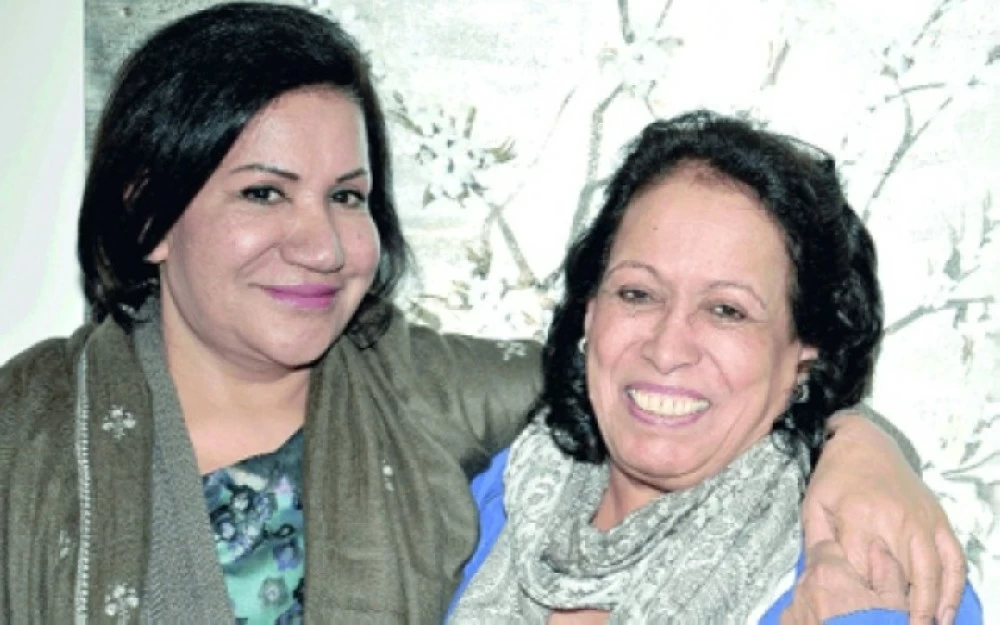
In a touching and humane moment that captivated the Gulf and Arab audience, the iconic Kuwaiti actress Suad Abdullah her silence to reveal the details of her painful visit to her longtime friend, the esteemed actress Hayat Al-Fahad , who is currently in intensive care at a Kuwaiti hospital, amidst prayers from her fans for her speedy recovery.
Details of the touching visit: “One of my family”
During a phone interview on Marina FM radio, Souad Abdullah spoke with deep sadness and sorrow about her colleague's health, describing her as "one of the family." Abdullah said, "Hayat Al-Fahad is not just a colleague; she is like a sister to me, a member of the family. Our relationship goes back to the 1960s. We appeared together and were associated with the black and white works that shaped the memory of Gulf drama.".
With words choked with emotion, Suad recounted the details of her visit to the hospital, saying: “It is never easy for me. I went to her in the hospital and sat talking with her, but she did not feel my presence. The image of her on the recovery bed is linked to my mind and it pains me.”.
A history of loyalty and deep friendship
These words were not merely an expression of a fleeting sentiment, but a reflection of decades of camaraderie and friendship between the two leading ladies of Gulf television. Souad Abdullah highlighted the loyalty they shared, recalling Hayat Al-Fahad's support during her previous health crisis in London. She added, "She always inquired about me and was a trusted confidante, keeping my secrets from anyone. This is true loyalty. We are from the same generation, and a deep spiritual and artistic bond exists between us that cannot be erased by minor disagreements that might occur in any family.".
Pillars of Gulf drama and their artistic influence
This news has sparked concern among the Kuwaiti and Gulf public, given the immense popularity of these two stars among Arab viewers. Souad Abdullah and Hayat Al-Fahad formed a golden duo, enriching the Arab cultural landscape with timeless works that boldly addressed societal issues with dark humor and sophisticated drama. Hayat Al-Fahad's illness today is not merely entertainment news; it is an event that touches the memories of generations raised on the creativity of these pioneers who established the artistic movement in the Gulf region, prompting an outpouring of prayers for the recovery of "Umm Suzan" (a nickname for Hayat Al-Fahad).
Developments in Hayat Al-Fahad's health condition
On the medical front, the Al-Fahad Foundation issued an official statement clarifying the latest developments, confirming that the esteemed artist is under close medical observation in the intensive care unit in Kuwait. This decision followed her return from a treatment trip to London that did not achieve the desired results due to the severity of her stroke.
The statement explained that the supervising medical team decided to complete the treatment within the country, while preventing visits at the present time in order to preserve her safety and provide the utmost comfort, amid the public’s anticipation of any promising news that will bring back the smile to lovers of authentic Gulf art.
-

 Culture and Art, 1 week ago
Haifa Wehbe's absence in Riyadh: A photo crisis or a strained relationship with the media?
-
 Culture and Art, 1 week ago
City Kitchen series: A drama of conflict and the middle class during Ramadan
-

 Culture and Art, 1 week ago
The series "Kasra": Dawood Hussein in a moving social drama this Ramadan
-

 Local news one week ago
Applying for the 1447 Opportunities Program for Teachers via the Fares System
-

 Local news one week ago
Ramadan 2026 discounts in Saudi Arabia: Offers valid for 54 days
-
 Culture and Art 6 days ago
The death of artist Huda Shaarawi “Umm Zaki” and her funeral in Damascus
-

 Technology 6 days ago
ICAN 2026 Conference Conclusion: Initiatives to Enhance Saudi Arabia's Leadership in Artificial Intelligence
-

 Local news one week ago
Saudi Arabia halts perennial fodder cultivation to conserve groundwater