
Culture and Art
Amr Mahmoud Yassin defends Yasmine Abdel Aziz over "We Forget What Was"
Amr Mahmoud Yassin responds to the controversy surrounding the cancellation of the opening credits of the series "We Forget What Was," denying Yasmine Abdel Aziz's involvement and confirming that the decision was collective, amid anticipation for the show to be broadcast during Ramadan.


Egyptian screenwriter and artist Amr Mahmoud Yassin broke his silence to strongly defend star Yasmine Abdel Aziz, following the widespread controversy that recently arose on social media platforms regarding the cancellation of the opening credits of the series “We Forget What Was,” which is scheduled to compete in the upcoming Ramadan season. This coincided with singer Rami Sabry’s apology for not performing the song.
The reality of interference in technical decisions
In a decisive clarification of the behind-the-scenes workings, Amr Mahmoud Yassin asserted that attempts to hold Yasmine Abdel Aziz responsible for artistic and production decisions are completely untrue. He emphasized that television drama production is a complex process that relies on teamwork, where the writer, director, producer, and specialized technical departments all participate in decision-making. He denied that decisions are subject to individual whims or the absolute authority of the star of the show.
Background of the collaboration and the importance of the upcoming work
The series “We Forget What Was” is gaining special importance in the anticipated Ramadan season, as it witnesses the return of the successful artistic collaboration between Yasmine Abdel Aziz and screenwriter Amr Mahmoud Yassin, as well as star Karim Fahmy, the trio that achieved overwhelming popular success in the series “We Love Again, Why?” in 2020. This previous success has placed the new work under the microscope of criticism and anticipation even before its airing, which makes any change in its artistic elements, such as the “title credits,” a rich topic for public discussion.
Settling scores and social media pressure
Yassin indicated that the attacks against Yasmine fall under the category of "settling scores," explaining the difficult position an artist faces: whether to respond to rumors or ignore them. In his defense, he said, "We're not amateurs; we work, and everyone respects their role and expertise. We consult with each other to reach the best decisions for the project." He considered the attack on the lead actress to be, in essence, an attack on the entire artistic project, praising Yasmine's ability to confront these crises with her characteristic wit and humor.
The importance of Ramadan series opening credits
TV series theme songs are an integral part of Ramadan culture in Egypt and the Arab world, playing a significant role in marketing the show and attracting viewers from the very beginning. Therefore, any change in the singer or the replacement of the song with a soundtrack or other format often raises questions from the audience, especially when it involves big names in the music and acting worlds.
The cast and crew of the series "Let's Forget What Was"
The series boasts a stellar cast, including Yasmine Abdel Aziz and Karim Fahmy, alongside Mohamed Lotfy, Sherine Reda, Menna Fadali, Edward, Ingy Kiwan, Elham Wagdy, Omar Sharqi, Cynthia Khalifa, Mahmoud Hafez, and Laila Ezz El Arab. Written by Amr Mahmoud Yassin and directed by Mohamed Khibiri, the series is expected to be a major contender in the upcoming Ramadan drama season.


Culture and Art
Dalia Fouad released after being acquitted of rape drug charges
Details of TV presenter Dalia Fouad's release in the GHB drug case. Learn the details of her acquittal on trafficking charges and the truth about her involvement in the rape drug case.

The past few hours have witnessed a significant development in the case that has recently captivated Egyptian public opinion, as the competent judicial authorities decided to release blogger and broadcaster Dalia Fouad in connection with the case known in the media as the "GHB date-drug" case. This decision came after a series of legal procedures and a review of the details of the verdict and the evidence attached to the case file.
The grounds for the verdict and acquittal on charges of trafficking
The First Settlement Criminal Court (Circuit 20) had previously sentenced Dalia Fouad to only one year in prison for drug use , while acquitting her completely of the more serious charge of possessing GHB with intent to distribute. The court based its acquittal on the insufficiency of evidence proving the defendant's involvement in promoting or selling these substances, which drastically altered the course of the case in her favor.
Background of the case and moment of arrest
The incident dates back to an earlier time when security forces arrested the broadcaster at her villa in the First Settlement area of New Cairo. Initial investigations at the time revealed the discovery of quantities of substances suspected to be narcotics, including gamma-hydroxybutyric acid (GHB), hashish, and pregabalin. The Public Prosecution initially charged her with possession of these substances with intent to distribute, a charge later refuted by the final investigations and the court ruling.
What is GHB and why is it controversial?
This case gained significant media attention due to its connection to GHB , known globally as the "date rape drug." This substance is a central nervous system depressant, and its danger lies in its colorless and odorless nature, making it easy to slip into drinks without the victim's knowledge. It causes temporary loss of consciousness and amnesia, making it a common tool in sexual assault crimes worldwide. Egyptian authorities are striving to tighten controls on the distribution of this substance due to its social and security risks.
Legal and social dimensions of the ruling
The verdict in Dalia Fouad's case affirms the Egyptian judiciary's commitment to rigorous standards of justice, clearly distinguishing between drug use and trafficking. While trafficking penalties can reach life imprisonment or the death penalty, drug use penalties are less severe and often aim at rehabilitation. The decision to release her after serving her sentence or fulfilling legal procedures reflects respect for the rights of defendants when they are found innocent of the serious charges, while maintaining legal accountability regarding the drug use charge for which she was convicted.
Culture and Art
Nancy Ajram responds to accusations of Freemasonry in the music video "Sidi Ya Sidi"
Nancy Ajram denies the Freemasonry accusations in the "Sidi Ya Sidi" music video and clarifies the truth about her attendance at a private party, confirming that she will legally pursue those spreading the rumors through her media office.

Lebanese star Nancy Ajram has put an end to the recent controversy on social media platforms that linked her name to the promotion of Freemasonry through symbols used in the music video for her song "Sidi Ya Sidi." Nancy categorically denied these accusations, asserting that the claims are completely baseless and have no connection to reality, and that the artwork does not contain any hidden meanings as some have suggested.
Strategy for dealing with rumors
In an interview with the program "ET Bil Arabi," Nancy Ajram explained her philosophy on dealing with the rumors that constantly plague her as one of the most prominent stars in the Arab world. She indicated that she usually adopts a policy of ignoring them, believing that responding to every rumor might give it more importance than it deserves. However, she emphasized that her silence has its limits, and that she is forced to break her silence and respond directly when these rumors cross red lines or harm her reputation and dignity.
Professional crisis management
The Lebanese artist explained that she doesn't concern herself with following every detail written about her, as she has delegated this task to a professional and specialized team that monitors what is circulating in the media and on social media. This team assesses the situation, and if necessary, takes the appropriate decision, whether through a media clarification or by resorting to legal action to pursue those spreading false news, reflecting a high level of professionalism in managing her public image.
The truth about the private party and the legal action
In a related development, Nancy Ajram's media office issued a strongly worded statement denying reports that she attended a controversial private party with a group of celebrities. The statement asserted that dragging Nancy's name into such matters is a desperate attempt devoid of any factual basis. The office emphasized that these reports are part of a systematic campaign aimed at damaging the artist's reputation, and announced that it has begun taking legal action against anyone found to be involved in publishing or promoting these false claims.
The tax of fame and conspiracy theories
This incident comes within a broader context plaguing the global and Arab art scene, where artistic symbols and set designs used in visual works are often misinterpreted and linked to conspiracy theories or secret societies like Freemasonry. Nancy Ajram, with her long artistic career and beloved image that appeals to all age groups, is a frequent target of such unsubstantiated interpretations, reflecting the darker side of fame in the age of open skies and the rapid spread of misinformation.
The importance of combating fake news
Nancy Ajram's legal action carries significant implications that extend beyond this individual case, as it reinforces the principle of responsibility and accountability in the digital sphere. With the proliferation of "trending" phenomena based on fabricated scandals, resorting to the judiciary becomes an urgent necessity to protect the personal rights of artists. This firm stance underscores that freedom of expression does not mean violating the privacy of others or fabricating accusations against them, potentially serving as a future deterrent to rumor-mongers.
Culture and Art
Al-Shadi: The Saudi national anthem is the most influential in the Arab world
The Jeddah Culture and Arts Association is hosting Dr. Saleh Al-Shadi in an evening entitled “The Song and its National Message” to discuss the role of Saudi song in promoting identity and its Arab influence.
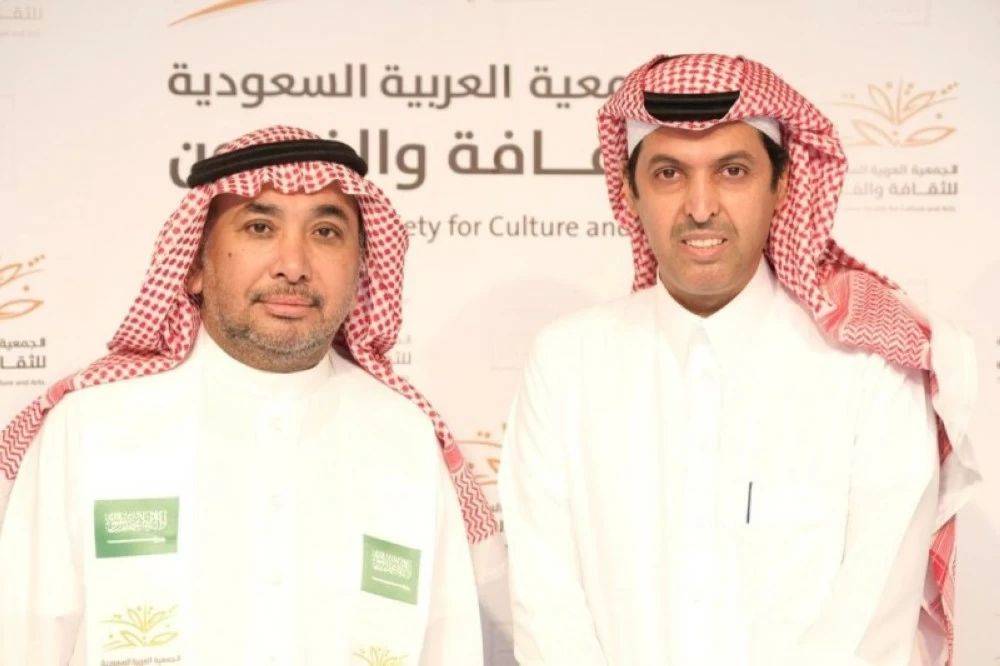
In the context of the growing cultural movement in the Kingdom of Saudi Arabia, and in affirmation of the role of the arts in shaping national consciousness, the Jeddah Culture and Arts Association organized a distinguished cultural and artistic evening entitled "The Song and Its National Message." The evening, skillfully moderated by media personality Mahdi Al-Zahrani, hosted a prominent poet and academic, Dr. Saleh Al-Shadi, with generous support from the "Madeed" program launched by the Literature, Publishing and Translation Commission, aimed at empowering the non-profit sector and enhancing cultural presence throughout the Kingdom.
A renewed cultural context and an ambitious vision
This event comes at a time when the Kingdom is experiencing a comprehensive cultural renaissance under the umbrella of Vision 2030, which has given considerable attention to the culture and arts sector as a cornerstone of quality of life and the nation's soft power. The evening highlighted the pivotal role of sung words in shaping the collective consciousness, as national songs are no longer merely fleeting works of art, but have become historical documents and timeless messages that transcend the present moment to reside in the memory of generations, reinforcing values of belonging and loyalty.
Al-Shadi: The poem is the soul and the essence
During his talk, Dr. Saleh Al-Shadi delved into the concept of the national song and its historical transformations, emphasizing that the poem remains the backbone and essence of the musical work. He affirmed that sincere, heartfelt lyrics are what give the melody its value and ensure its enduring legacy. Al-Shadi reviewed aspects of his extensive experience spanning many years in writing national operettas and songs performed by leading stars from the Kingdom, the Gulf, and the Arab world, noting that these works have directly contributed to solidifying feelings of belonging and enhancing the prominent presence of Saudi music on the Arab scene.
Review of national masterpieces
The evening also featured a vibrant display of patriotic songs, with more than ten patriotic songs written by Al-Shadi being performed, eliciting enthusiastic responses from the audience. Among the highlights were the masterpiece "We Are Abu Fahd's Men," performed by the renowned Arab artist Mohammed Abdu, and the song "I Pledge Allegiance and Extend My Hand, This Is the Crown Prince," sung by the esteemed artist Talal Salama. These works, and others, exemplified the organic and complementary relationship between eloquent lyrics and authentic melodies in expressing love for the homeland and loyalty to its leadership.
The making of memory and the Arab dimension of Saudi song
The evening addressed a crucial theme: the role of national songs in shaping collective memory and their remarkable ability to document major transformations and construct a mental image of the nation in the Arab consciousness. The discussion also touched upon the art of operetta as a unifying artistic event that evokes emotions and reflects the dynamism of Saudi Arabia's cultural movement—an art form in which the Kingdom has distinguished itself and which it has presented to the Arab world as a model for national celebrations.
Important messages were also directed to young poets about the need to adhere to artistic honesty and keep pace with the great transformations that the nation is experiencing, while maintaining a balance between the national message and artistic beauty, so that the song reaches the audience smoothly and without rhetorical affectation.
Widespread praise and continued support
The evening witnessed a remarkable and distinguished attendance from an elite group of intellectuals, artists, and those interested in cultural affairs. It included rich interventions that emphasized the status of the national song as a refined art that contributes to raising public taste and promoting the Saudi place and memory.
At the conclusion of the evening, Mr. Mohammed Al-Subaih, Director of the Jeddah Culture and Arts Association, expressed his deep gratitude to the Literature, Publishing and Translation Commission, represented by the “Madeed” program, for its ongoing support. He emphasized that this empowerment enables cultural associations to present high-quality initiatives that promote aesthetic values and national identity. He concluded by affirming that Saudi song has become a distinctive landmark on the map of Arab art, thanks to its eloquent lyrics, authentic melodies, and golden voices that have risen to the forefront of Arab music.
-

 Local news one week ago
Agreement to regulate and empower street vendors in Jeddah: Details and objectives
-
Local news one week ago
The Spears of Victory 2026 military exercises concluded in Saudi Arabia with international participation
-
Culture and Art 4 days ago
The "Between and Between" exhibition in Jeddah: 5 artists reshape Saudi memory
-
Culture and Art, 1 week ago
Ahmed Dawood in Ramadan 2026 with the series "Baba and Mama Jiran"
-
Culture and Art 5 days ago
Shakira's concert in Jeddah: Details of the international star's first concert in Saudi Arabia
-
Culture and Art 7 days ago
The truth about Nancy Ajram's video and Epstein Island, and her legal response
-
Culture and Art, 1 week ago
Rawan Bin Hussain's first appearance after her imprisonment and deportation from Dubai
-
Culture and Art, 1 week ago
Sarah Al-Wadaani without a hijab ignites social media and tops the trending list


