
Culture and Art
Controversy over comparing Amr Diab to Abdel Halim: The Nightingale's family responds to Ibrahim Eissa
Ibrahim Eissa's statements about Amr Diab's superiority over Abdel Halim Hafez sparked widespread controversy. Learn about the Nightingale's family's response and the details of the cultural clash between the two generations.

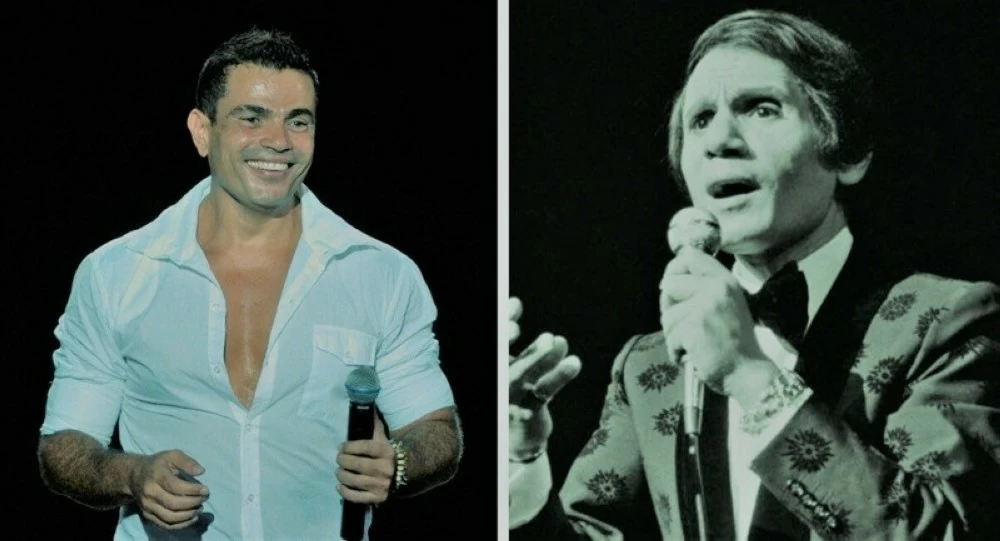
Writer and media personality Ibrahim Eissa sparked widespread controversy in Egyptian and Arab cultural and artistic circles after his remarks in which he preferred singer Amr Diab to the legendary Arab singer Abdel Halim Hafez. In a swift and decisive response, the family of the "Dark-Skinned Nightingale" described the comparison as "laughable" and a "joke," emphasizing Hafez's inviolable historical status.
A decisive response from the Nightingale's family
Mohamed Shabana, the nephew of the late artist, took on the task of responding to Issa, asserting in press statements that "Abdel Halim Hafez passed away nearly 50 years ago, yet he remains at the pinnacle of Arabic song." Shabana added that the comparison was inappropriate, pointing out that "Amr Diab himself, a highly respected artist, has expressed on numerous occasions his deep love and artistic influence from Abdel Halim Hafez, considering him a role model and an artistic school in himself." The family maintains that Hafez's legacy is not merely songs, but rather an integral part of the Arab nation's consciousness and history.
Historical context: A comparison between two different eras
The challenge of comparison lies in the differing historical and cultural contexts of each artist. Abdel Halim Hafez emerged during the "golden age" of Arabic song, the period following the July 1952 revolution, when art was an integral part of the Arab nationalist project. Hafez sang of patriotism, love, and revolution, collaborating with giants of composition and poetry such as Mohamed Abdel Wahab, Baligh Hamdi, Kamal El Tawil, and Nizar Qabbani. His songs expressed the sentiments of an entire generation, and his voice became intertwined with the major events that swept the region, granting him a symbolic status that transcended his role as a mere singer.
In contrast, Amr Diab emerged in the late 1980s and 1990s, in a completely different era characterized by the rise of music videos, the ascendancy of pop music, and the influence of Western styles. Diab spearheaded a revolution in the form of the Arabic song, presenting modern, fast-paced music that resonated with a new generation. His success was linked to his ability to constantly reinvent himself, keep pace with technological advancements, and achieve global recognition through awards like the World Music Awards, thus representing a model of a successful "commercial artist" in the age of globalization.
The impact of the controversy and its timing
Critics believe that Ibrahim Eissa's statements, coinciding with the announcement of his new novel "Amr... Where He Is Alone," which chronicles the life of "El Hadaba" (Amr Diab), may be part of a promotional campaign for the book. This timing has raised questions about the objectivity of the argument, with some considering it an attempt to generate media buzz to benefit the literary work. Media professor Mohamed Fathi Younis pointed out that "the comparison is flawed because it overlooks the fact that Abdel Halim Hafez sang about national values and authentic artistic expression, while Amr Diab sang about commercial identities and media consumption," emphasizing that Eissa's statements lack impartial critical standards.
Ultimately, the debate remains open between those who see Amr Diab as a symbol of global success and innovation, and those who cling to Abdel Halim Hafez as an immortal artistic icon and part of the collective Arab memory, stressing that each of them has an indelible mark on the history of Arab music.


Culture and Art
The death of Huda Shaarawi: Damascus bids farewell to Umm Zaki of Bab Al-Hara with a solemn funeral
Shocking details emerge about the murder of Syrian actress Huda Shaarawi (Um Zaki) in her Damascus home. This report covers her funeral, her illustrious artistic career, and her impact on Arab drama.

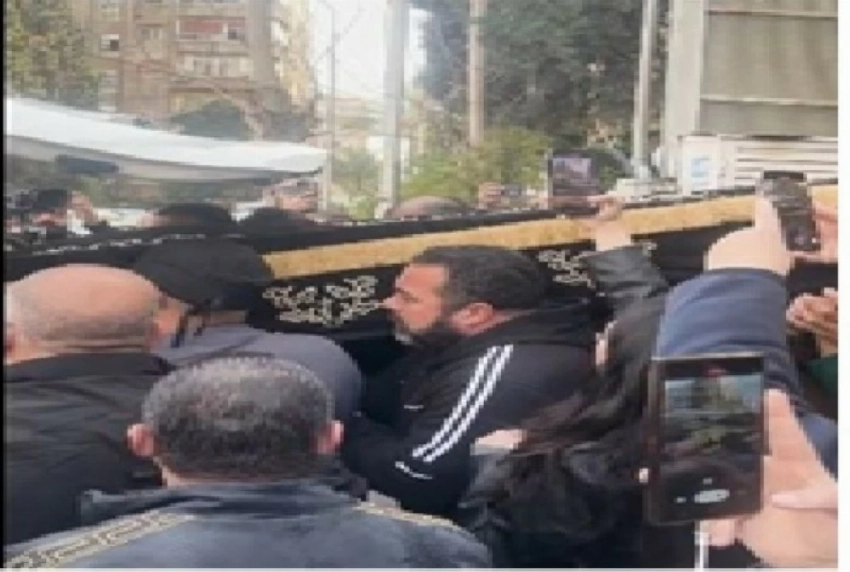
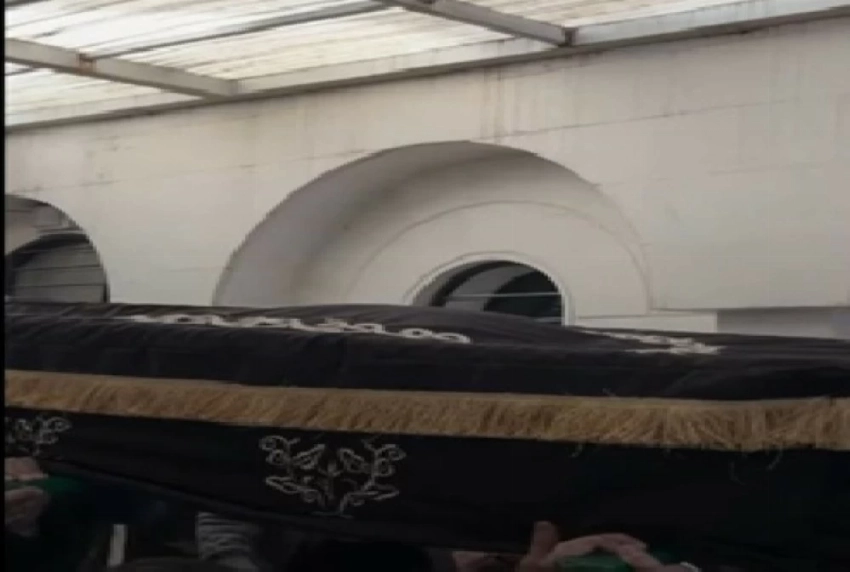
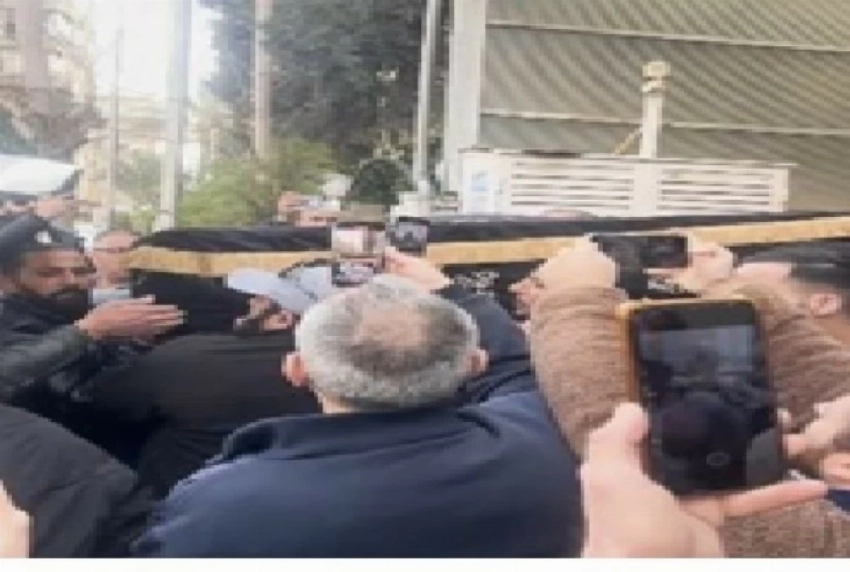
In a somber scene that enveloped the Syrian capital, Damascus bid farewell today (Friday) to one of the icons of Syrian drama, the esteemed actress Huda Shaarawi, known for her role as "Umm Zaki" in the popular series "Bab Al-Hara." Her body was laid to rest in a solemn funeral procession that departed from the city hospital, one day after she was found murdered in her home, an incident that sent shockwaves through the artistic and public circles in Syria and the Arab world.
The funeral procession began after Friday prayers, with the funeral prayer being held at the Sheikh Badr al-Din al-Husseini Mosque, before the body was taken for burial in the historic Bab al-Saghir Cemetery, which contains the remains of many prominent figures in Damascus' history. A large crowd of artists, intellectuals, and fans of the late artist attended the funeral, their faces reflecting grief and shock at the tragic loss of such a prominent figure in the arts.
A prolific artistic career and a tragic end
Huda Shaarawi, whose artistic career began by chance, is considered one of the pillars of Syrian drama. Her journey spanned more than five decades, leaving an indelible mark on the memory of Arab viewers. She was famous for her roles embodying the authentic Damascene woman, and her role as "Umm Zaki," the midwife and wise woman in "Bab Al-Hara," was the most memorable for audiences, becoming an iconic character in the series.
Her career wasn't limited to television; it also encompassed theater, film, and radio, and she presented timeless works such as "Ayyam Shamia," "Awdat Ghawar," and "Al-Shams Fi Yawm Ghaim." She was also a founding member of the Syrian Artists Syndicate, reflecting her pioneering role in building and developing the artistic movement in her country.
But this remarkable career came to a shocking end, as initial reports indicate she was found murdered in her home in the historic Bab Sreijeh neighborhood of Damascus. Preliminary investigations have identified her maid as the prime suspect after she attempted to flee, and authorities are continuing their investigation to uncover all the circumstances and motives behind this heinous crime.
Regional impact and shock in the Arab world
The death of Huda Shaarawi was not merely local news; it resonated widely throughout the Arab world. Syrian drama, particularly those set in the traditional Damascene environment, enjoys a large following, and the character of "Umm Zaki" was an integral part of the cultural fabric for millions of viewers. Arab artists and artistic unions were quick to mourn the late actress, expressing their deep sorrow at her loss and condemning the brutal manner in which her life was ended.
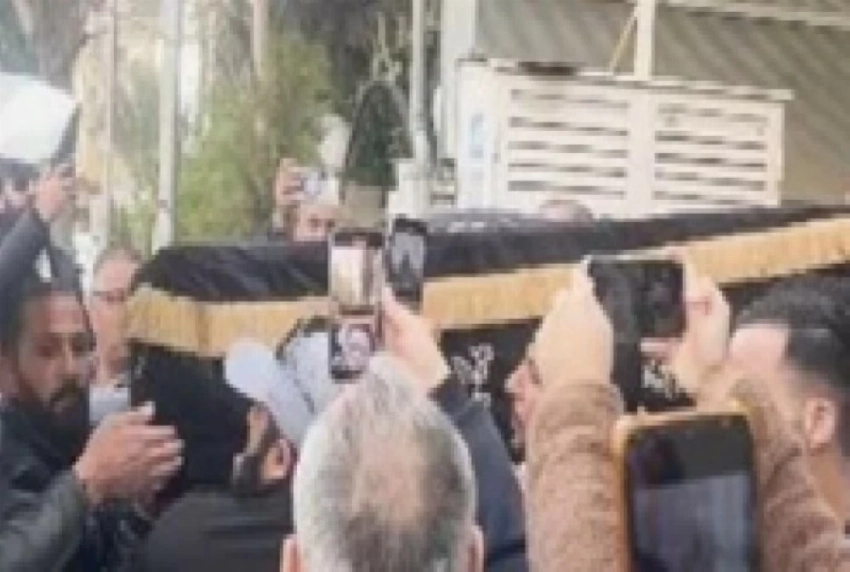
For its part, the Artists Syndicate in Syria mourned the deceased in an official statement, and announced the times for receiving condolences for men on Saturday and Sunday from 6 to 8 pm, and for women from 3 to 5 pm, in designated halls in the capital Damascus, to receive condolences for the people’s artist who passed away and left a great artistic legacy and deep sorrow in the hearts of her fans.
Culture and Art
Ahmed Helmy's mother's health crisis and his silence spark controversy
The sister of artist Ahmed Helmy revealed their mother's health crisis, asking for prayers, while his silence raised questions from the public about how he deals with family crises.

Dr. Sally Helmy, sister of Egyptian star Ahmed Helmy, worried his fans and followers after revealing that their mother had suffered a sudden health crisis. In a heartfelt post on her personal Facebook account, Sally asked the public to pray for her mother's speedy recovery, expressing her immense importance in her life and the lives of her family.
Sally Helmy wrote touching words reflecting the depth of her bond with her mother, saying, "I owe my mother until my last breath. I pray to God to grant her a complete and lasting recovery." In her post, she emphasized that a mother's grace extends far beyond pregnancy, childbirth, and raising children; it encompasses every moment in their lives. She explained that "the warmth of her words and breath" is a source of security and peace for the entire family. Her post garnered widespread attention from her followers, who quickly offered their heartfelt prayers for the artist's mother's speedy recovery.
Ahmed Helmy's silence raises questions
In contrast to his sister, actor Ahmed Helmy maintained complete silence on his official social media platforms. This silence sparked surprise and questions among his large fan base, especially since it came at a critical time when followers expected the star to reassure them or join his sister in asking for prayers. Instead, Helmy simply posted a video clip from his famous film "Keda Reda," accompanied by a humorous comment about Valentine's Day, which some considered an unexpected disregard for the family crisis.
Background and significance of the event
Ahmed Helmy is known as one of the most prominent comedy stars in Egypt and the Arab world. Over the years, he has cultivated a positive image as an artist close to his audience and a devoted family man, especially given his stable marriage to actress Mona Zaki. This context makes his personal life a constant focus of media and public attention. Consequently, his handling of his mother's health crisis, whether through silence or public announcement, carries different meanings for his followers. Some interpreted his silence as a desire to keep family matters out of the spotlight and maintain their privacy, while others saw it as a cold stance that didn't reflect the level of concern his sister had raised.
Expected impact and public reaction
This situation reflects the varying ways individuals cope with personal crises in the digital age. Some prefer to share their experiences publicly, seeking emotional support and prayers, while others choose isolation and private dealings. Regardless of the reasons behind Helmy's silence, the public has shown immense sympathy for his family, with his and his sister's social media pages overflowing with supportive comments and heartfelt prayers. This underscores the special place the artist and his family hold in the hearts of their fans in Egypt and the Arab world.
Culture and Art
Details of Sawsan Badr's emergency surgery and its impact on her artistic work
The Actors' Syndicate announced that actress Sawsan Badr underwent emergency surgery after fracturing her foot. Learn about the latest developments in her health and the status of her upcoming projects.
The Actors' Syndicate's statement reassures the public
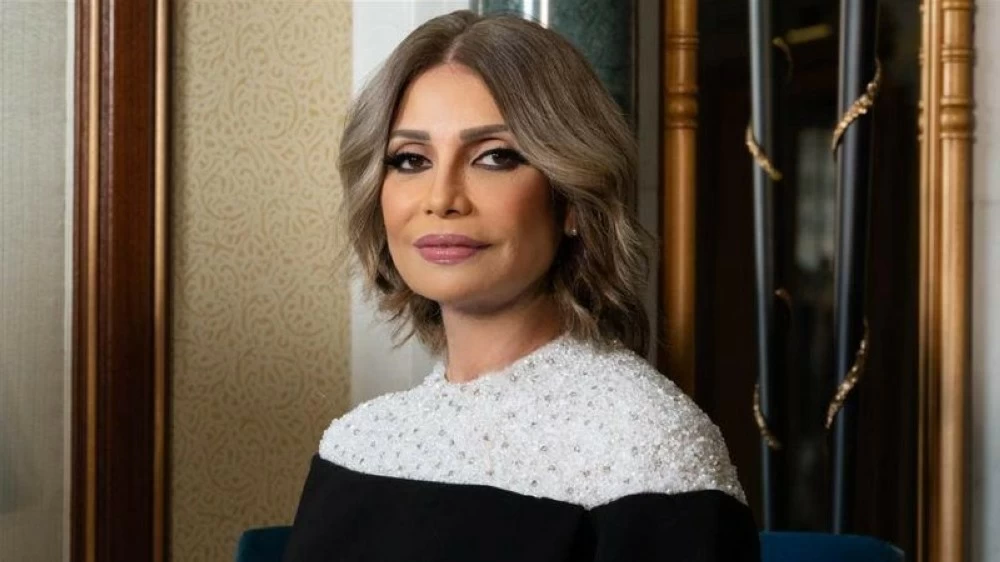
The Egyptian Actors' Syndicate, headed by Dr. Ashraf Zaki, announced that the renowned actress Sawsan Badr suffered a health crisis requiring urgent surgery. In an official statement, the syndicate reassured fans of the "Nefertiti of Egyptian Cinema," confirming that her health is completely stable and that she is in high spirits despite her recent illness.
The statement explained that actress Sawsan Badr suffered a fracture in one of her legs, necessitating delicate surgery this evening at a major hospital in the Mohandessin district. The surgery aims to stabilize the fracture and ensure a swift recovery, allowing her to return to her normal life and artistic activities as soon as possible.
Background on a prolific artistic career
Sawsan Badr is one of the most prominent stars of her generation and subsequent generations in Egypt and the Arab world. She began her artistic career in the late 1970s, quickly capturing attention with her authentic Egyptian features and exceptional talent. The late director Shadi Abdel Salam dubbed her "the Nefertiti of Egyptian Cinema" after casting her in the lead role of his unfinished film "Akhenaten." For over four decades, Sawsan Badr has performed hundreds of diverse roles in film, television, and theater, demonstrating her remarkable ability to embody a wide range of characters, from historical and complex roles to social and comedic ones, making her a widely respected and admired artistic icon.
The expected impact on her artwork
This incident comes at a time when actress Sawsan Badr is involved in several important artistic projects. She recently joined the cast of the series "El Faransi" (The Frenchman), starring Amr Youssef and featuring a stellar cast including Gamal Soliman and Ahmed Fouad Selim. The necessary recovery period following her surgery is expected to temporarily postpone filming her scenes, which may affect the production schedule.
On the Gulf front, Sawsan Badr is participating in the second season of the hit series "Al-Baa'a Tahtaha Nuqta" (The Letter Baa' Under a Dot), scheduled to air during Ramadan 2026. This follows the immense success of the first season, making her participation highly anticipated by Gulf audiences. The Actors' Syndicate confirmed that it is closely monitoring her health to ensure she receives the best possible medical care, expressing its wishes for her speedy recovery and swift return to her illustrious artistic career.
-

 Local News 5 days ago
Landslide in Riyadh: Details of the incident in Al-Sahafa neighborhood and containment efforts
-
 Local News 6 days ago
The death penalty was carried out against a citizen who stabbed another to death in Tabuk
-
 Culture and Art, 1 week ago
Ramez Galal in Ramadan 2026: Details of the bloody prank show
-

 Local news one week ago
First birth on the Riyadh train: A heartwarming story at Andalus station
-
 Culture and Art 5 days ago
Haifa Wehbe's absence in Riyadh: A photo crisis or a strained relationship with the media?
-
 Local News 5 days ago
Riyadh collapse: Emergency plans to secure water after a main pipeline burst
-
 Culture and Art 5 days ago
City Kitchen series: A drama of conflict and the middle class during Ramadan
-

 Culture and Art 5 days ago
The series "Kasra": Dawood Hussein in a moving social drama this Ramadan