Culture and Art
Al-Ghadhami and the Philosophy of the Text
“Analysis came to emphasize the value and importance of the text, and that it is the focus of attention, to the point that Derrida said: There is nothing outside the text.” (Abdullah)

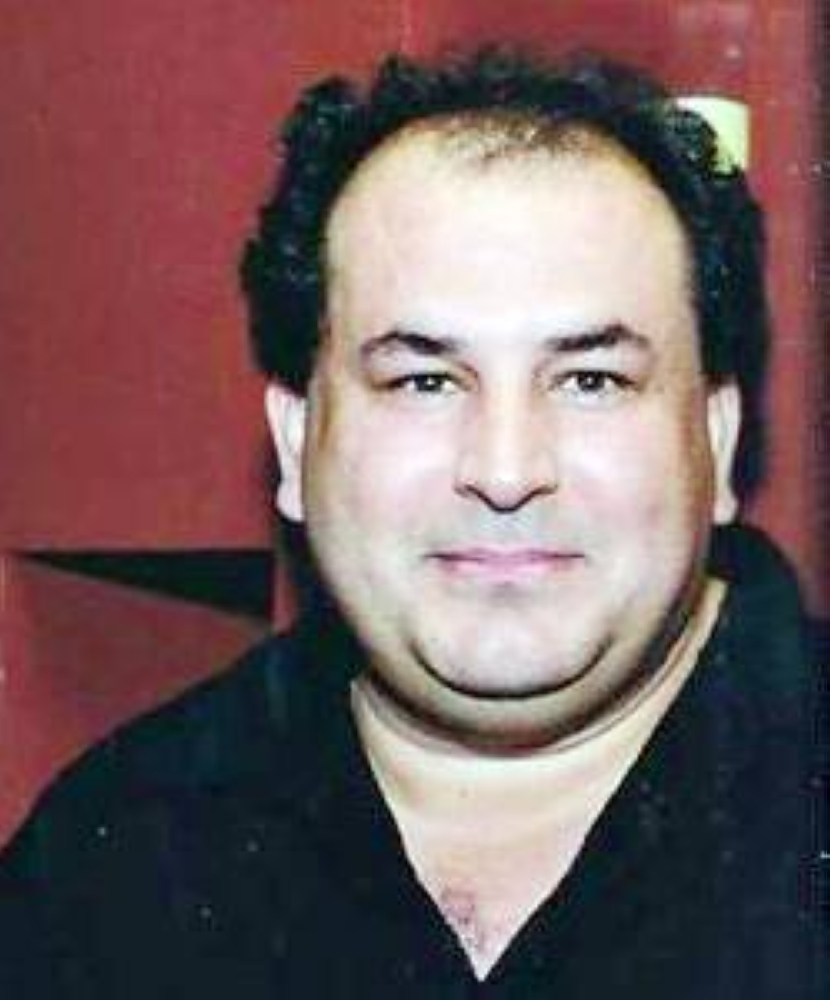
“Analysis came to emphasize the value and importance of the text, and that it is the focus of attention, to the point that Derrida said: There is nothing outside the text.” (Abdullah Al-Ghadhami, Sin and Atonement)
Recourse to the text was a choice, a vision, and even a critical ideology practiced among structuralists in the modern era and deconstructionists in the postmodern era in the West. However, in the Arab world, we saw Arab critics, some of whom sided with the text, and some of whom stood against the concept of recourse to the text, and remained believing in the critical triad of the literary work (author, text, reader). Among the Arab critics who sided with the philosophy of the text was Dr. Abdullah Al-Ghadhami.
Between Al-Ghadhami and Roland Barthes
If Dr. Abdullah Al-Ghadhami dubbed Roland Barthes the "Knight of the Text"—and he is undoubtedly the knight of the text in the European world—then I call Dr. Abdullah Al-Ghadhami the knight of the text in the Arab world. Barthes established a comprehensive vision of the philosophy of the text, which remains a reference for all students of literary theory and criticism, and he remains its undisputed champion. In this regard, Barthes says: "He writes starting from the language he inherited from his predecessors, and from his style, which is a network of verbal acquisition, with a special, almost conscious character. Writing, or literary taste, is something the writer adopts; it is a function the writer assigns to language. It is a coherence of established conventions within which the efficacy of writing can create its own existence." (Source: Culler, Structuralist Poetics, p. 13)
However, Al-Ghadhami deconstructed and dissected this vision, convincingly linking it to the Arab critical heritage to give Arab critics a leading role in the concept of the philosophy of the text. He did this by reviewing the concept of the text in the works of Abd al-Qahir al-Jurjani, Hazim al-Qartajani, Ibn Sina, al-Farabi, and Ibn Rushd, and then applying it practically to critical models. This demonstrated his bias towards the philosophy of the text. Therefore, I consider a comparison between these two critics necessary, even crucial, for understanding the philosophy and dialectic of the text. Roland Barthes is the only critic who moved from modernism, with its structuralism, to postmodernism, with its death of the author and the pleasure of the text. In these two books, his entire focus was on the text, and the text alone. In doing so, he officially ended the modernist triad (author, text, reader), making the text the sole orbit around which modern critical theory revolves, with nothing outside of it. In this, he agreed with his friend Jacques Derrida—both critics of the journal TelQuel, which focuses on criticism—on two concepts that I consider the most dangerous developments of postmodern criticism: the displacement of the author and the opening of the text to the horizons of the reader. This theory Al-Ghadhami picked it up and adopted it, having dug into the Arab heritage to find what corresponded to it among Arab philosophers such as Ibn Sina, Al-Farabi, and Ibn Rushd. He found the concept of imagination in Hazem Al-Qartajani and the concept of arrangement in Abdul-Qahir Al-Jurjani. These are two Arab heritage theories that focused on the philosophy of the text before Roland Barthes or Jacques Derrida. The wonderful comparison he made between Jakobson’s concept in communication theory and Al-Qartajani’s approach is nothing but evidence of a prior knowledge, critical, and analytical approach that adds to the record of a unique critic with his dialectical arguments and his sound method of research.
Al-Ghadhami and the Philosophy of the Text
Dr. Abdullah al-Ghadhami is considered the most prominent Arab critic in favor of the philosophy of the text. Anyone who follows his books and critical works will acknowledge that he mobilizes all his conscious and unconscious resources in interpreting texts. He exerts considerable effort to enrich his texts with interpretations and explanations that even the author himself never considered. This is because he simply excludes the author and focuses solely on the text, offering each image and each passage interpretations that leave the reader to grapple with interpreting or explaining what resonates with their own understanding. In his book, *Sin and Atonement*, al-Ghadhami defines the text as: “The text is the axis of literature, which is a linguistic activity that has deviated from the conventions of custom and tradition.” (See Abdullah al-Ghadhami, *Sin and Atonement*)
By acknowledging that the text is the axis of literature, indeed a linguistic activity, he argues that the text must have a means of understanding its movement. Al-Ghadhami identifies this means, stating: “The best way to examine the movement of the literary text, and the means of its liberation, is to begin with its linguistic source.” (See Abdullah al-Ghadhami, Sin and Atonement)
Jakobson identified six essential elements for linguistic communication: the sender and the receiver, corresponding to the context, the message, the code, and the communication medium. Communication occurs through feedback, the return of the message to the sender. Al-Ghadhami brilliantly connects this to Hazem al-Qartajani's theory of linguistic communication, stating: "I note that the brilliant critic Hazem al-Qartajani alluded to some elements of linguistic communication and their relationship to literature seven hundred years before Jakobson. Hazem died in 1285." (See Abdullah al-Ghadhami, Sin and Atonement)
Herein lies Al-Ghadhami's brilliant interpretation of Al-Qartajani's theory of communication, through his identification of four elements of Al-Qartajani's theory and its counterpart in Jakobson's: "that which pertains to the utterance itself, or that which pertains to the speaker, or that which pertains to the subject of the utterance." (Hazim Al-Qartajani, Minhaj Al-Bulagha' wa Siraj Al-Udaba')
He then linked al-Qurtajani's theory of imagination by saying: "Imagination is when the listener perceives, through the words, meanings, style, or structure of the imaginative speaker, an image or picture that arises in his imagination, causing him to react emotionally to it, or to imagine something else through it, without deliberation, to a state of either expansion or contraction." (See al-Qurtajani, Minhaj al-Bulagha' wa Siraj al-Udaba')
An application of Al-Ghadhami's textual analysis
Let us take as an example the way Al-Ghadhami deals with analyzing his texts by referring to the text, which is nothing but his own philosophy of the concept of the text; In his brilliant and controversial book, *Writing Against Writing*, Abdullah al-Ghadhami introduced an innovative and unusual concept regarding the problem of modern criticism: "raiding the text and overturning its balance" (see *Writing Against Writing*). This concept, "raiding," refers to surprising the text. The author, having crafted a text according to his vision and talent, might consider it a perfect creation. Here, "perfection" means reading it exactly as the author intended. However, for al-Ghadhami to raid the text and overturn its balance to reveal hidden aesthetics within its folds is something that would never have occurred even to the author himself. Thus, he surprises both the text and its author by making "depth the surface" (see *Writing Against Writing*). His pursuit of these hidden aesthetics within the text aims to uncover further meanings, interpretations, and the magic distributed throughout its layers. This is why he borrowed the concept of magic: "the unveiling of magic and the exposure of what was concealed" (*Abdullah al-Ghadhami*, *Writing Against Writing*). I paused at his analysis of Ghazi's poem Al-Qusaibi, this text that Al-Ghadhami attacked with a dangerous and deliberate awareness, but we see the shock and astonishment that it left on the author of the text himself, as he used the word “lamp” which is used according to custom to illuminate or to liken the beloved to light or radiance, and this is what the heritage and prevailing poetic and critical custom have conveyed to us, but this custom that Al-Ghadhami attacked to turn the content of the text over, and reveal its secrets and leave the reader and the author with astonishment and wonder of the analysis, so Al-Ghadhami’s interpretation of the lamp was unexpected, as he interpreted it as a ray of love, meaning that the rays emitted by the lamp were transformed by the critic into love messages, but he interpreted them as a ray of love or the light of hope or the dawn of the meeting, this is the concept of attacking the text, and thus the ray sent from the lamp was transformed into a message from a lover to his beloved, and in this interpretation of Al-Ghadhami we cannot say that he likened the lamp to the beloved because there is no tool of comparison, and the closest interpretation to it is a distant pun, which the critic was able and skillfully employed in his analysis of the poetic verse; In other words, the text lacks certain tools, whether metaphorical or rhetorical devices. However, we see that the approach has succeeded in ways the author never intended, beyond his own conscious intention. What applied to the lamp also applies to the ring, which he likened to a shackle, because it is a customary tradition suggesting a formal commitment, such as marriage. The second interpretation is the concept of a permanent bond. As long as the ring is on the finger, it sends a message that its owner is officially bound, thus transforming into a permanent shackle, its existence dependent on the continuation of this formal relationship. As for comparing the ring to a star of happiness, it speaks of marital bliss or the joy of marriage. Thus, it is a star, alluding to captivating romance and suggesting intimacy. Finally, he likens the rug to a nest, a metaphor signifying simplicity and also the concept of dwelling. The rug adorns the house, whether in a city or a town; it is what we sit on, eat on, and use as a bed. All of this points to a single meaning: the home or the marital nest. These shifts Interpretive interpretation is difficult for a poet to conceive, as it consists of immediate semantic suggestions that emerge for the critic during their analysis of the poetic verse. Thus, we are faced with a genuine intrusion and surprise into the text. For this reason, Al-Ghadhami paved the way for these surprises by introducing Scholes' definition: "Texts refer to other texts, meaning that the intertextual text seeps into another text to embody meanings, whether the writer is aware of it or not" (Abdullah Al-Ghadhami, Writing Against Writing). This was done to soften the blow for the excluded author, the surprised reader, and the unexpected text itself, leaving Ghazi Al-Qusaibi in a state of astonishment, murmuring with genuine shock at what he had said: "And how profound was his astonishment when he interpreted the lamp as a ray of love, the light of hope, or the dawn of reunion; and interpreted the ring as a bond, a permanent commitment, or a star of happiness; and interpreted the rug as a nest, a marital home, or a homeland" (Abdullah Al-Ghadhami, Writing Against Writing). In doing so, Al-Ghadhami transformed the text into fields of meaning. With shifts arising from the hidden fabric of textual and partial structures, all of which were harmoniously linked, the author of the text was astonished and made to believe that this was not the text he had written. Al-Qusaibi, in an attempt to abstract the reader, said: “Our friend imagined more than once, while reading the study, that the critic was talking about another poem by another poet. The reason is simple: the dimensions were drawn in the critic’s imagination, not in the poem’s realm or the mind of its author” (Abdullah Al-Ghadhami, Writing Against Writing). Note his statement: “in the critic’s imagination, not in the poem’s realm or the mind of its author.” However, this is not accurate. Rather, it is part of the reaction of a poet whose text was taken by surprise by a skilled critic, leaving him bewildered and searching for a logical, or at least acceptable, explanation to alleviate his astonishment. Ultimately, it is the interpretation of a poet caught off guard, regarding the way his text was entered—by raiding it rather than asking permission. The truth that can be deduced from this interpretation is that the idea of the text led to a semantic split, which in turn led to multiple shifts. These are nothing but innovative, instantaneous interpretations that have no relation to the critic's mind. These deviations have turned into suggestive structures that were secluded in the focal points of the textual cells. Digging into the text turned them into kinetic meanings that fragmented into multiple meanings, surprising both the author and the reader. This is the philosophy of the text, which distinguished Al-Ghadhami's critical analyses, and even turned into the vision of a unique critical school. This is exactly what he did with Ghazi Al-Qusaibi's text, where he penetrated the inner core of the text to explore its depths and reveal its beauty, which is hidden within the secrets of this text. This is the philosophy of the text according to Dr. Abdullah Al-Ghadhami.


Culture and Art
Nidal Al-Shafei's mother passed away months after the death of his wife
Artist Nidal El Shafei is experiencing another tragedy with the death of his mother after a battle with illness, just months after the passing of his wife. Details of the funeral and the artist's illustrious career.

Tragedy strikes artist Nidal Al-Shafei again
In news that saddened the Egyptian artistic community and the public, actor Nidal El-Shafei announced the death of his mother after a recent health crisis. This tragic loss comes just months after the passing of his wife, Hind Mohamed Ali, leaving the actor to grieve the loss of two of his loved ones in such a short period.
On his official Facebook page, Nidal El Shafei shared the news with his followers, posting a touching message mourning his mother and asking everyone to pray for her mercy and forgiveness, and that God grant her paradise. The post received a wide response from his fellow artists and the public, who quickly offered their condolences and sympathy.
Funeral and burial details
Al-Shafi'i explained in his post that the funeral prayer for his late mother will be held after the noon prayer today at the Al-Bahgat Mosque in the Dreamland area. She will be laid to rest in the family cemetery located on the Oasis Road in Cairo, where family and friends will gather for a final farewell.
The context of successive sorrows
This tragedy brings to mind the profound sorrow that befell artist Nidal El Shafei in April 2024, when he lost his wife and life partner, Hind Mohamed Ali, after a long battle with kidney disease. Her death was a devastating blow to him and his family, as she had been a fundamental support in his personal and professional life. Today, he faces renewed grief with the passing of his mother, compounding his pain and prompting a great outpouring of support from his fans during this difficult time.
A rich artistic career and humanitarian stances
Nidal El-Shafei is one of the most prominent actors on the Egyptian art scene, having delivered many memorable performances in film, television, and theater throughout his career. He began his artistic journey after graduating from the Higher Institute of Theatrical Arts, quickly attracting attention with his powerful performances and the diversity of his roles. Among his most notable works are television series such as "Tamer and Shawqia" and "Critical Moments," and films like "The Island" and "The Dealer," where he demonstrated his ability to brilliantly portray a wide range of characters. On a personal level, he is known for his deep connection to his family, which is why his recent tragedy has garnered widespread sympathy.
Latest artworks
On the professional front, actor Nidal El Shafei's last dramatic appearance was in the series "Al-Amira Dhal Heita" (Princess, the Shadow of a Wall), which aired recently. The 15-episode series starred a number of prominent actors, including Yasmine Sabri, Nicolas Mouawad, Wafaa Amer, Hala Fakher, and Maha Nassar. It was written by Mohamed Sayed Bashir and directed by Sherine Adel. Despite his busy schedule, the difficult family circumstances he recently faced have been the subject of concern and prayers from everyone.
Culture and Art
Yasmine Abdel Aziz and the series "Elli Maloush Kebeer" | A Ramadan drama success story
An analysis of the success of the series 'Elly Maloush Kbeer' starring Yasmine Abdel Aziz and Ahmed El Awady, and how the promo and famous phrases such as 'No one has hurt me as much as you' sparked widespread controversy.
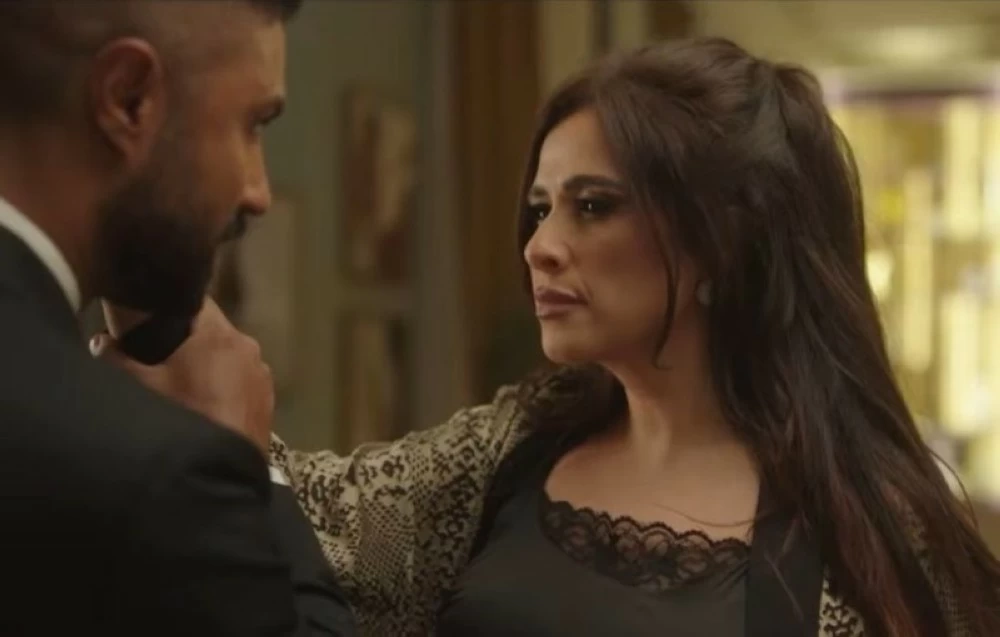
The “He who has no elder” controversy: How did Yasmine Abdel Aziz’s phrase become a trend?
The teaser trailer for the series "Elli Maloush Kbeer" (He Who Has No Big Shot) caused a sensation before its premiere during Ramadan 2021, captivating audiences with scenes that blended action, drama, and romance. However, a single line uttered by star Yasmine Abdel Aziz in one of the most poignant scenes—"No one has hurt me as much as you"—was enough to ignite social media platforms, becoming a memorable line that continues to resonate today and encapsulates the profound psychological struggle experienced by her character, Ghazal, throughout the series.
Background to Yasmine Abdel Aziz's dramatic transformation
The series “Elli Maloush Kbeer” (He Who Has No Big Shot) marked a significant turning point in Yasmine Abdel Aziz's artistic career. After years of dominating the box office in cinema with light comedic roles, she began in recent years to shift towards more complex and profound dramatic roles on television. While she successfully portrayed a romantic and social character in the 2020 series “We Nehabb Tani Leh” (Why Do We Fall in Love Again?), earning critical and popular acclaim, “Elli Maloush Kbeer” showcased her ability to powerfully embody action and suspense roles, portraying a strong female character who defies the difficult circumstances imposed upon her.
The importance of the series and its regional impact
The series' success wasn't limited to being a local hit; its impact extended to becoming a pan-Arab phenomenon during Ramadan. The on-screen chemistry between Yasmine Abdel Aziz and her then-husband, actor Ahmed El Awady, who portrayed "Saif El Khedive," created a unique level of audience engagement in Egypt and the Gulf region. Phrases like "Ala Allah Hekaytak" (God knows your story) and "Wahsh El Kon" (The Beast of the Universe) became part of everyday slang, reflecting the show's deep resonance with Arab viewers. The series tackled sensitive social issues such as domestic violence, forced marriage, and class conflict, all within a compelling and engaging framework that captivated a wide audience.
A story of struggle and power
The series revolves around Ghazal (Yasmine Abdel Aziz), who is forced by her father to marry a wealthy and cruel businessman (Khaled El Sawy) many years her senior. She endures a life filled with oppression and both physical and emotional humiliation. The phrase "No one has ever hurt me as much as you have" is uttered during her confrontation with him, expressing the depth of her suffering. Her life takes a dramatic turn when she meets Saif El Khedewy (Ahmed El Awady), a strong young man with whom she embarks on a love story fraught with challenges and dangers. In him, she finds the protection and support she has always lacked.
Integrated team
The success of "Elli Maloush Kbeer" (He Who Has No Master) is due to the combined efforts of a distinguished team. The series was written by Amr Mahmoud Yassin, who excelled in crafting complex characters and a cohesive plot, and directed by Mustafa Fikry, who delivered a modern visual style and masterful action sequences. The cast included a constellation of stars alongside Yasmine Abdel Aziz and Ahmed El Awady, including Khaled El Sawy, Dina Fouad, Iman El Sayed, and Badria Tolba, each of whom delivered a remarkable performance that contributed to the series' strength and resounding success.
Culture and Art
The Release Series: Amr Saad's Story in Ramadan Drama | Details and Cast
Discover all the details of the series "Efrag," the latest Ramadan project starring Amr Saad. A gripping revenge story, a talented cast, and a major transformation for actor Hatem Salah. Will it be a hit in the competition?

“Efraj” series: Amr Saad returns with a revenge epic in the Ramadan drama race
With the most important drama season in the Arab world approaching, the production company behind the series "Efraj" has released the first teaser trailer, marking the return of Egyptian star Amr Saad to the forefront of the Ramadan competition. The trailer offers a glimpse into a major drama centered on a revenge story filled with challenges and difficult situations, placing the series among the most anticipated shows by audiences.
General context: The fierce Ramadan competition
The Ramadan drama season is the most prominent arena for television productions in Egypt and the Arab world, with major production companies vying to present works that attract millions of viewers. In this context, Amr Saad stands out as one of the stars who has achieved consecutive successes this season, relying on his unique charisma and ability to portray complex characters from the working class, which resonate widely with audiences. His return with the series "Efrag" confirms his continued commitment to this genre of drama in which he has excelled.
A journey of revenge and suspense in “Release”
The teaser trailer reveals that the 30-episode series revolves around the protagonist, played by Amr Saad, as he embarks on a grueling journey of revenge. The story appears steeped in suspense and action, as the hero faces escalating challenges and conflicts with powerful figures. This genre, blending popular social drama with action, has proven highly successful in recent years, and "Efrag" seems poised to follow in the footsteps of such hits, adding a unique touch through the vision of the "Molouk" writing workshop, which is handling the script.
The main characters and dramatic twists
The series doesn't just star Amr Saad; it also features a stellar cast that adds significant weight to the production. One of the biggest surprises revealed in the trailer is the participation of Hatem Salah, known for his comedic roles, in a serious role completely removed from comedy. This presents a major challenge for him, and the audience eagerly anticipates it. The cast also includes Tara Emad, the veteran actor Abdel Aziz Makhyoun, Sama Ibrahim, Safwat, Ahmed Abdel Hamid, Mohsen Mansour, Alaa Morsi, and Sarah Baraka, promising artistic harmony and high-caliber acting.
Importance and expected impact
The series “Efraj” is expected to have a significant impact both locally and regionally. Its airing on MBC Egypt, one of the largest television platforms in the region, guarantees it a wide viewership. Furthermore, the show's success will solidify Amr Saad's position as one of the leading stars of Ramadan dramas. On a social level, series about revenge and personal justice often spark extensive discussions about injustice and the law, which could make “Efraj” a hot topic of discussion on social media throughout Ramadan.
Amr Saad's journey with popular drama
The series “Efrag” comes as a continuation of Amr Saad’s illustrious career, filled with works that have left a lasting impression on Arab viewers. His most recent notable work during Ramadan was the series “Al-Ajhar,” which achieved great success, preceded by series such as “Tawbah” and “Muluk Al-Gada’ana.” Saad’s works are distinguished by their ability to touch upon the social realities of working-class neighborhoods, presenting a popular hero who confronts injustice and strives to achieve justice in his own way, creating a strong sense of empathy and connection between the character and the audience.
-

 Reports 6 days ago
Achievements of Saudi government sectors in 2025
-
Local news two weeks ago
FDA warns of contaminated Nestle infant formula | Recall details
-
Technology 4 weeks ago
Artificial intelligence regulations in Saudi education and student data protection
-
Technology 4 weeks ago
US ban on drones: reasons and consequences
-
Technology 4 weeks ago
SRMG and Snapchat partnership: The future of digital media in the Middle East
-
Technology 4 weeks ago
Saudi Arabia's Ministry of Islamic Affairs is employing artificial intelligence in public speaking
-
Sports 4 weeks ago
Salah leads Egypt to a thrilling comeback against Zimbabwe in the Africa Cup of Nations
-
Sports 4 weeks ago
Napoli win the Italian Super Cup in Riyadh for the third time (2025)