
Culture and Art
Ahmed Saad reveals the truth about his dispute with Mohamed Ramadan over 'Wasa Wasa'
Singer Ahmed Saad denied any conflict with Mohamed Ramadan, clarifying that the song "Wasa Wasa" was not directed at him. Learn more about his statements and the context of the rivalry in the music scene.


Singer Ahmed Saad has put an end to the controversy surrounding a supposed feud between him and fellow artist Mohamed Ramadan, which was fueled by speculation from the public and some media outlets following the release of his hit song "Wasa' Wasa'". In recent statements, Saad affirmed that his relationship with Ramadan is characterized by mutual respect and friendship, categorically denying that the song was directed at his colleague in the entertainment industry.
Details of the statement and ending the controversy
During his interview with journalist Anas Bukhash on his popular program "ABtalks," Ahmed Saad clarified that many interpreted the lyrics of his song "Wasa Wasa" as a veiled message to Mohamed Ramadan, known as "Number One," and his songs that convey a sense of pride and self-importance. Saad stated, "Everyone thought when the song was released that it was directed at Mohamed Ramadan, but that's not true." He added, emphasizing the depth of their friendship, "Mohamed is a dear friend of mine, and sometimes he listens to the songs before they're released," thus closing the door on any future rumors about tension between the two stars.
Background of competition in the art scene
These rumors arise amidst the fierce competition in the Egyptian and Arab music market, where artists' work is often interpreted as responses to one another, especially among top stars. Mohamed Ramadan has built a significant part of his artistic identity on the idea of being "number one," making any successful song with a challenging tone, such as "Wasa' Wasa'," fertile ground for interpretation and analysis by the public and critics. However, Saad's statement puts things in perspective, confirming that success can be a self-generating force and not necessarily directed against others.
The importance and impact of the declaration
Ahmed Saad's denial of this dispute carries significant weight on both artistic and media levels. Locally, this clarification helps to calm tensions between the fan bases of both artists, who often engage in online clashes. It also reinforces a positive image of the artistic community, demonstrating camaraderie and mutual respect among the stars, far removed from the wars of rumors. Internationally, millions in the Arab world follow the news of both stars, and statements like this contribute to maintaining their professional image and focusing attention on their artistic work rather than personal conflicts.
Continued artistic successes
This controversy comes at a time when both artists are enjoying a period of peak artistic success. Ahmed Saad has achieved a string of massive hits with songs like "Aliki Oyoun" and "Sayrina Ya Donya," culminating in the global phenomenon "Wasa Wasa." Meanwhile, Mohamed Ramadan continues his success in both acting and singing. Recently, Saad released the song "Zay Zaman" as a duet with the star Assala, which garnered significant success and widespread acclaim, confirming the continuation of his successful artistic career.


Culture and Art
Hani Mehanna: The truth about Halim and Souad's marriage and my assessment of Sherine and Amr Diab
Musician Hani Mehanna reveals the behind-the-scenes details of his relationship with Sherine Abdel Wahab, presents his vision of Amr Diab's career, and puts an end to the controversy surrounding the marriage of Abdel Halim Hafez and Souad Hosny.
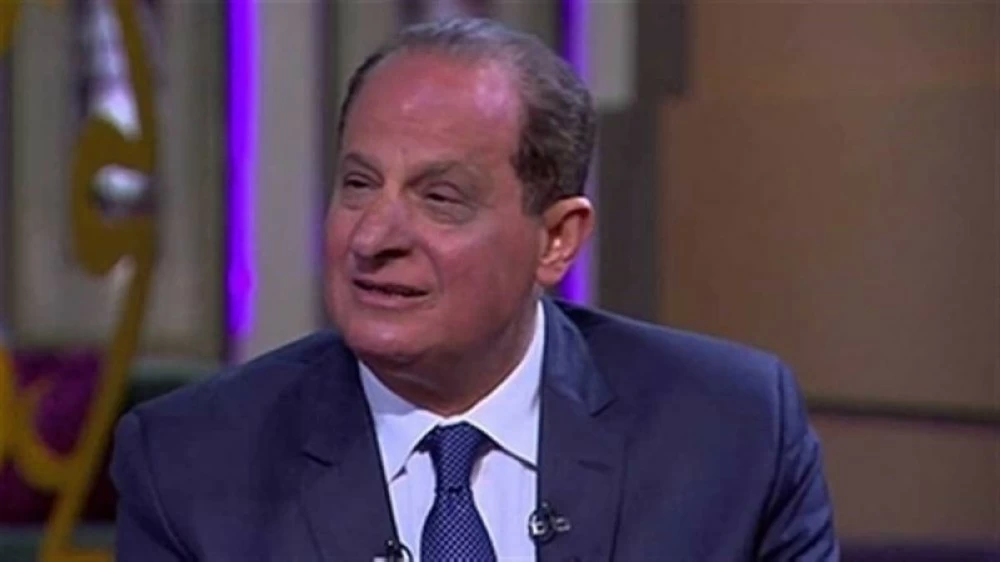
Controversial statements by musician Hani Mehanna
In a frank and bold interview, the great Egyptian musician Hani Mehanna opened his box of artistic and personal secrets, revealing behind-the-scenes details of his meetings with singing stars in Egypt, and presenting his vision that sparked widespread controversy regarding the career of artist Sherine Abdel Wahab, and the phenomenon of Amr Diab, in addition to settling one of the most famous romantic stories in the history of Arab art, which is the relationship of the dark-skinned nightingale Abdel Halim Hafez with the Cinderella Souad Hosny.
Sherine Abdel Wahab: A genuine popular voice and a turning point
Mohanna reminisced about his first meeting with the artist Sherine Abdel Wahab, admitting that he was surprised by the power of her voice and the sincerity of her innate emotion. Despite this initial fascination, Mohanna stated that he did not see Sherine as a singer in the classical sense. During his interview with journalist Yasmine Ezz on the program "Kalam El Nas" (People's Talk), he explained: "I told Sherine frankly that she wasn't suited to being a singer in the traditional sense, and that popular music was the broader field in which she could truly shine." Mohanna attributed his opinion to the nature of her powerful and direct voice, which possesses a unique ability to easily touch the hearts of a wide audience, a characteristic that distinguishes Egyptian popular music.
He noted that the song "Garh Tani" (Another Wound) was a pivotal turning point in her career, solidifying her artistic identity and opening the doors to stardom wide for her. He emphasized that her strong artistic personality and commanding presence contributed to the widespread popularity of her work, making her one of the most important female voices in Egypt and the Arab world over the last two decades.
Amr Diab: Exceptional artistic intelligence reminiscent of Abdel Halim
In his assessment of Amr Diab's career, Mohanna expressed his deep appreciation for him, describing him as one of the most important figures in contemporary music and the owner of a unique artistic experience that has remained at the forefront of the scene for decades. However, he surprised many by saying, "Amr Diab reminds me of Abdel Halim Hafez, even though he's not a singer." Mohanna explained his view by saying that Diab possesses exceptional artistic intelligence that compensates for any artistic shortcomings, just as Abdel Halim Hafez did. He added, "He's very clever; he fills in a singer's artistic deficiencies with his intelligence, and he's one of those stars who have a long life.".
He explained that his concept of a "singer" is linked to the ability to improvise and deliver pure, captivating music, something he believes Amr Diab embodies with intelligence and a well-thought-out approach, rather than relying on traditional methods. He emphasized that this doesn't diminish Diab's value; on the contrary, it highlights his profound understanding of the tools for success and his rare ability to innovate and keep pace with the times, making him a natural continuation of the school of great masters, but with his own unique style.
The truth about the marriage of Abdel Halim Hafez and Souad Hosny: The doctor had his say
Hani Mehanna addressed one of the most controversial issues in the history of Egyptian art: the truth about the marriage of Abdel Halim Hafez and Soad Hosny. Mehanna categorically denied the rumors confirming their marriage, stating, "Abdel Halim and Soad Hosny had a love affair, but they did not marry." He revealed the real reason behind the marriage not taking place, explaining, "The doctor forbade Abdel Halim from marrying due to his health condition.".
Muhanna's statement adds a new dimension to this story that has captivated public opinion for decades. It is well known that Abdel Halim Hafez suffered throughout his life from schistosomiasis and its serious complications, which significantly impacted his personal life and decisions. Muhanna's testimony, as someone close to many stars of that era, confirms that the Nightingale's critical health condition was the primary obstacle to his formal marriage to the woman he loved, leaving their love story as one of the most famous unfulfilled romances in Arab memory.
Culture and Art
The film "Al-Sit" by Umm Kulthum: Declining revenues threaten its withdrawal from cinemas
The film “Al-Sit” starring Mona Zaki, which tells the story of Umm Kulthum, is facing the risk of being withdrawn from theaters after a sharp decline in its daily revenues despite critical and popular acclaim.

A shocking decline threatens the film's future in theaters
The film "El Sett," which tells the life story of the legendary Egyptian singer Umm Kulthum, faces a significant challenge that could lead to its withdrawal from Egyptian cinemas. This threat comes after a sharp and sudden decline in its daily box office earnings. The film, starring Mona Zaki, recorded its lowest figure ever, with revenues on one recent day not exceeding 13,500 Egyptian pounds from the sale of only 99 tickets. This shocking figure contrasts sharply with the film's strong start, during which it grossed millions of pounds. This puts its producers and distributors in a difficult position and makes its removal from cinemas imminent, to make way for other films that are attracting larger audiences.
Umm Kulthum: An artistic icon and a cinematic challenge
Umm Kulthum, or "The Star of the East," is considered one of the most prominent artistic and cultural icons in the history of Egypt and the Arab world. Her influence has spanned decades, and her songs and voice remain an integral part of the Arab consciousness. Therefore, presenting her life story in a film represents a tremendous challenge and a significant artistic responsibility. The film not only tells the story of a successful singer but also documents an entire historical era and reintroduces a figure who influenced millions and became part of the region's cultural identity, which explains the great interest the film has garnered since its announcement.
Widespread controversy and subsequent praise
From its very first moments, the film sparked controversy, primarily concerning the physical resemblance between actress Mona Zaki and the legendary Umm Kulthum. However, this controversy quickly subsided with the praise Mona Zaki received for her performance. Critics and audiences alike lauded her ability to embody the spirit of "The Lady" and her complex human and artistic dimensions. The film also enjoyed significant support from the late singer's family, which gave it a major boost at the start of its run and contributed to its initial success before the box office fortunes shifted.
An artistic and human journey with a distinguished team
The film "El Sett" (The Lady), directed by Marwan Hamed and written by Ahmed Mourad, explores various aspects of Umm Kulthum's life, showcasing her artistic and personal journey that shaped her enduring legend. The film boasts a stellar cast, including Mohamed Farag, Ahmed Khaled Saleh, Sayed Ragab, and Tamer Nabil, along with special appearances by prominent actors such as Ahmed Helmy, Amr Saad, Karim Abdel Aziz, Nelly Karim, and Amina Khalil, reflecting the scale and significance of the production. This impressive ensemble cast makes the film's box office decline all the more surprising and invites deeper analysis into the reasons behind the audience's sudden disinterest in this important work.
Culture and Art
The truth about Ahmed Ezz's financial support for Zeina and their children, according to official figures
The lawyer of artist Zeina denies rumors that she receives millions monthly from Ahmed Ezz, and reveals the real figures for expenses and her suffering with the difference in the exchange rate of the British pound.

Zeina's lawyer denies rumors of millions and reveals the real figures
Lawyer Moataz El-Dakr, representing Egyptian actress Zeina, categorically denied reports circulating about his client receiving 2.5 million Egyptian pounds monthly in alimony from actor Ahmed Ezz. During a phone interview on the program "Kol El Kalam," El-Dakr asserted that these figures circulating on social media are baseless and intended solely to stir controversy and mislead public opinion in a case that has captivated the nation for years.
The lawyer explained that the actual amounts awarded by the court are far less than the rumored figures. The monthly child support includes 60,000 Egyptian pounds, in addition to 35,000 pounds for housing and 5,000 pounds for childcare. Annual school fees are estimated at around 700,000 pounds. He emphasized that these official figures are the only ones that reflect the legal reality and are far removed from the alleged millions.
The currency exchange problem: paying in pounds sterling and receiving payment in Egyptian pounds
The lawyer highlighted a significant financial challenge facing actress Zeina, one that many overlook. He pointed out that his client is obligated to pay her children's school fees in British pounds because they attend international schools. In contrast, the law requires actor Ahmed Ezz to pay these fees in Egyptian pounds, according to the exchange rate in effect when the court rulings were issued several years ago. This places a heavy burden on Zeina due to the devaluation of the Egyptian pound, forcing her to cover the difference from her own funds. This directly contradicts the image some try to portray of her as easily acquiring vast sums of money.
Background of the dispute: A legal battle to establish paternity
The roots of this case lie in years of legal and media conflict between the two stars, which began when Zeina announced her marriage to Ahmed Ezz and the birth of their twins, Zein El-Din and Ezz El-Din, a claim Ezz vehemently denied. Zeina resorted to the courts in a protracted battle to establish the paternity of her children, culminating in a final ruling from the Family Court confirming Ahmed Ezz as the father of the twins. Following this ruling, a series of lawsuits ensued to determine various expenses, including food, clothing, housing, and school fees, a saga that continues to this day.
The societal impact of the issue and the role of the media
The case of Zeina and Ahmed Ezz is particularly significant as it sheds light on personal status issues in Egypt and the challenges women face in securing their children's rights. It also reveals the complexities of the legal process, which the lawyer described as lengthy and exhausting, with each case taking years to resolve through the courts of first instance and appeal. He criticized what he called the "quagmire" of social media, which contributes to exaggerating figures and creating fabricated narratives, negatively impacting not only the parties involved but also distorting the image of family law cases and creating societal discord based on misinformation.
-

 Local news one week ago
Landslide in Riyadh: Details of the incident in Al-Sahafa neighborhood and containment efforts
-

 Local news one week ago
The death penalty was carried out against a citizen who stabbed another to death in Tabuk
-
 Culture and Art 7 days ago
Haifa Wehbe's absence in Riyadh: A photo crisis or a strained relationship with the media?
-

 Local news one week ago
First birth on the Riyadh train: A heartwarming story at Andalus station
-

 Local news one week ago
Riyadh collapse: Emergency plans to secure water after a main pipeline burst
-

 Culture and Art 7 days ago
City Kitchen series: A drama of conflict and the middle class during Ramadan
-

 Culture and Art 7 days ago
The series "Kasra": Dawood Hussein in a moving social drama this Ramadan
-

 Local News 6 days ago
Applying for the 1447 Opportunities Program for Teachers via the Fares System