Culture and Art
Abdulaziz Khoja at Jeddah Arts: A night where poetry and music embraced
The Jeddah Culture and Arts Association is organizing an evening of classical Arabic songs with Dr. Abdulaziz Khoja, showcasing the aesthetics of sung poetry and supporting the Madid program for Saudi cultural activism.

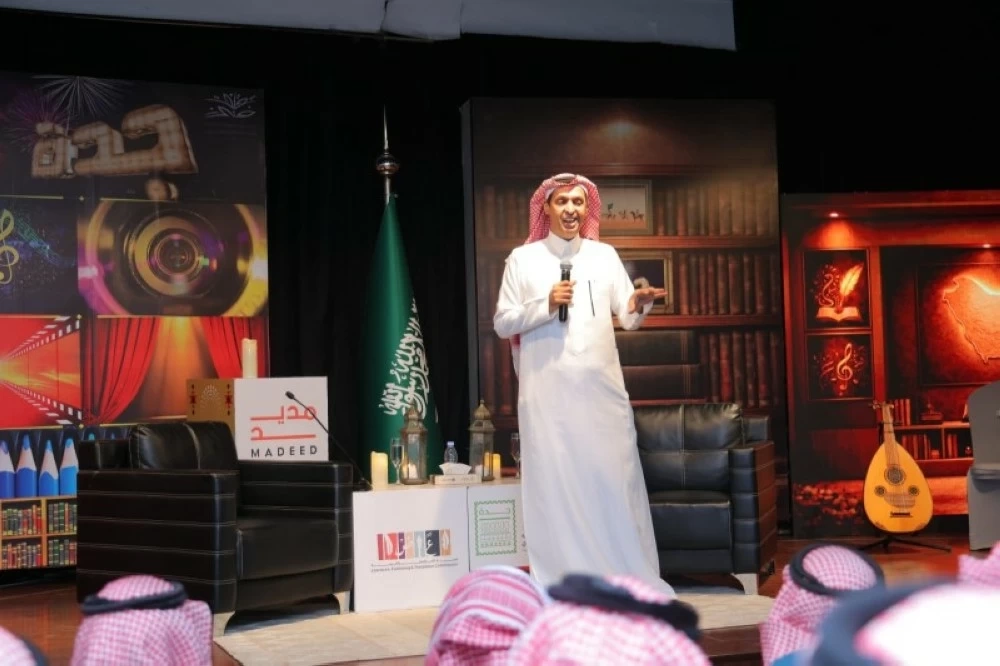
On a cultural evening where the magic of eloquence blended with the sweetness of melodies, the Jeddah Culture and Arts Association organized a unique event entitled "Classical Arabic - The Song of the Soul," hosting the distinguished literary and diplomatic figure, Dr. Abdulaziz Khoja. The evening, skillfully moderated by Dr. Zaid Al-Fadhil, was part of a vibrant cultural movement in the Kingdom, supported by the "Madid" program of the Literature, Publishing and Translation Commission, aimed at strengthening the presence of Classical Arabic in the artistic landscape and solidifying the status of poetry in the public's aesthetic consciousness.
Abdulaziz Khoja: The poet, diplomat, and human being
This evening was more than just a fleeting event; it was a tribute to the long and distinguished career of Dr. Abdulaziz Khoja. Khoja is one of the most prominent figures in the Saudi and Arab cultural scene, combining political acumen as a former Minister of Culture and Information and ambassador to several major capitals with the sensitivity of a poet who crafts words to resonate deeply. His participation is particularly significant given his pioneering role in bridging the gap between classical Arabic poetry and modern musical taste, making his texts a rich source of inspiration for leading composers and singers.
The sung poem: an artistic memory that transcends borders
During the enriching dialogue, the audience delved into the experience of the sung poem, as Dr. Khoja and Dr. Al-Fadhil explored the journey of poetic texts that transformed into iconic songs. Dr. Khoja pointed out that when a poem is sung, it acquires new life and reaches a wider segment of the Arab audience. This was evident in the list of renowned artists who have performed his words, such as Wadih El Safi, Sabah Fakhri, Mohammed Abdu, Abadi Al-Johar, Karima Al-Saqli, and Hiba Qawas. This geographical diversity of artists confirms that Saudi poetry possesses the qualities of universality and the ability to influence the Arab consciousness from the Atlantic to the Gulf.
Vision 2030 and supporting cultural activism
This event is a direct reflection of the significant cultural transformation underway in the Kingdom under Vision 2030, which has given unprecedented attention to culture and the arts as pillars of quality of life and soft power. In this context, Mohammed Al-Subaih, Director of the Jeddah Culture and Arts Association, emphasized that refined music and singing represent a civilized face of society, praising the institutional support provided by the "Madeed" program, which empowers non-profit cultural organizations to offer high-value content that strengthens national identity and belonging.
Lively interaction and elite input
The evening wasn't limited to theoretical discussions; it also featured a practical application of the aesthetic interplay between poetry and music. The audience experienced a captivating performance by artist Mohammed Hashem, accompanied by musician Dr. Madani Abadi on the qanun, in a beautiful display that embodied the elegance of the lyrics and the sweetness of the melody. The closing event was enriched by insightful contributions from prominent figures, including Ambassador Osama Naqli, Dr. Abdullah Dahlan, journalist Saad Zuhair, and poet Badia Kashgari, lending the evening the air of a distinguished literary salon and reviving Jeddah's historical cultural prestige.


Culture and Art
Mustafa Gharib in his first leading role in the series "Heya Kimya" during Ramadan
Mustafa Gharib is preparing for his first leading role this Ramadan in the series "Heya Kimya" (She's Kimya). Learn about the character Sultan, behind-the-scenes details of working with writer Mohab Tarek, and the series' captivating storyline.
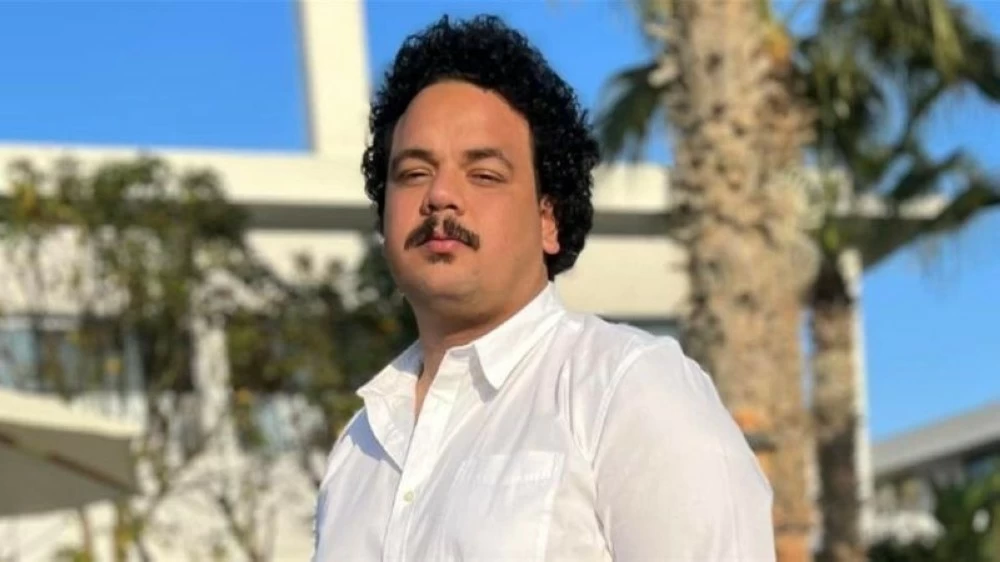
Young Egyptian actor Mustafa Gharib a new and different artistic challenge in his career, as he prepares to star in his first leading role in the upcoming Ramadan drama series "Heya Kimya" (She's Kimya) . This step comes as a culmination of Gharib's successive successes in recent years, where he has captured attention with his natural talent and commanding presence, especially in the comedic roles he has played, most notably the character "Al-Atra" in the "Al-Kabir Awi" series, making him one of the most prominent rising young stars in the Egyptian art scene.
Behind the scenes of approval and confidence in the text
In discussing his decision to join the project, Mustafa Gharib revealed in a press statement that his enthusiasm stemmed from the high quality of the writing and the thorough preparation. He explained that the writer, Mohab Tarek him at the time, informing him that half of the series' episodes had already been written before filming began. Gharib emphasized that having a well-written and clearly defined script gave him a significant sense of confidence and security, reducing the tension and risk that typically accompany an actor's first leading role, thus encouraging him to make the decision and move forward with the project.
Preparing for the character of "Sultan" and the performance methodology
Regarding his readiness to dominate the drama scene, the young actor emphasized that he follows a methodology based on focusing entirely on the quality of his work, rather than being preoccupied with competition or ranking among stars. He indicated that he is currently meticulously and deeply studying the character of "Sultan," whom he portrays in the series. This study includes a careful reading of the scripts to grasp the psychological and social dimensions of the character, as well as determining the physical appearance that best serves the role. He also noted his commitment to creating opportunities for thoughtful improvisation that adds dynamism to the scenes, in close coordination and continuous consultation with the director and writer to ensure the best possible performance.
Series synopsis: Thriller and mystery in the world of crime
The series "Heya Kimya" unfolds within a framework of suspense and intrigue, departing somewhat from the pure comedy in which audiences are accustomed to seeing Ghareeb. Mustafa Ghareeb portrays Sultan, a simple young man whose circumstances lead him to find himself embroiled in a mysterious and perilous world. Events force him to become entangled in a complex web of dubious relationships, where his primary goal becomes survival and uncovering the mystery behind what happened to his brother. As the plot thickens, Sultan gradually draws closer to realms of violence and corruption, presenting viewers with a dramatic experience full of twists and turns.
Betting on youth in the Ramadan marathon
The series "Heya Kimya" reinforces the recent trend in the Egyptian drama industry of giving opportunities to young stars to take center stage and shoulder leading roles, especially in productions aired during Ramadan, the most important and widely watched season in the Arab world. This work reflects the growing confidence of producers in the ability of the new generation to attract audiences and deliver compelling and engaging dramas capable of competing with the major productions of veteran stars.
Culture and Art
The death of journalist Abdullah Al-Qubai'i... a distinguished career in the world of journalism
Saudi journalist Abdullah Al-Qubai'i has passed away, leaving behind a significant professional legacy. Learn about Al-Qubai'i's life, from his beginnings in Jeddah to his editorship of Ru'a magazine and his experience in the Middle East.
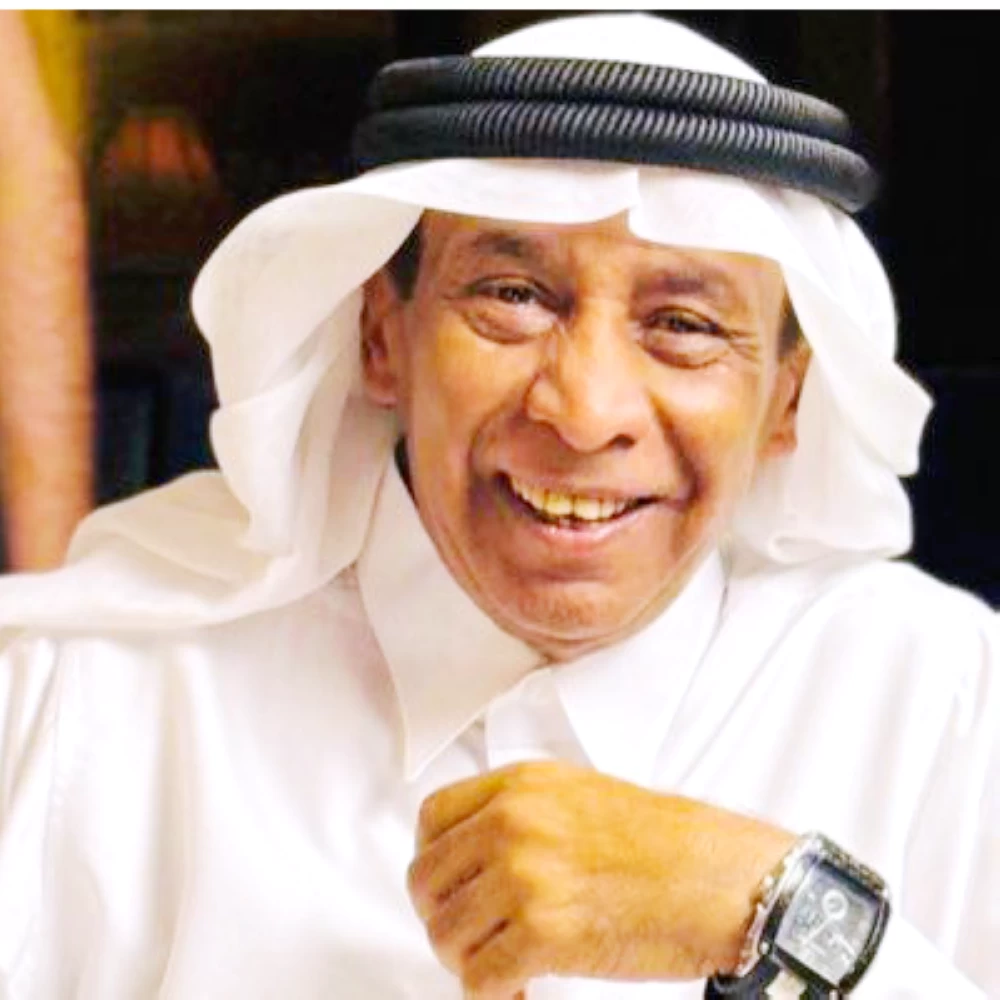
The Saudi and Arab media community has lost one of its most prominent figures who dedicated his life to serving the honest word, with the passing of colleague and professor Abdullah Al-Qubai’, who died suddenly, leaving behind a professional legacy spanning decades, and a fragrant biography that tells a story of struggle and passion that began as a hobby and ended at the top of the journalistic pyramid.
Beginnings in Jeddah... a passion that defies difficulties
The deceased was born in Jeddah in 1959, and it was in its alleyways that his earliest dreams took shape. His entry into the world of journalism was not easy; rather, it came at a time when the profession demanded immense perseverance and patience. Al-Qubai'i earned a Bachelor of Social Sciences degree from King Abdulaziz University in 1980, but his true passion led him to the "Royal Press." He began his journey as a simple amateur, armed with an overwhelming love for writing, skillfully and persistently progressing from a field reporter chasing news to the head of the arts section at Al-Madina newspaper, establishing a new era of serious art criticism.
The London School: Refining the Experience in the "Middle East"
Abdullah Al-Qubai’s time in London marked a pivotal turning point in his career, as he moved to work for the international newspaper Asharq Al-Awsat. At that time, London was the capital of the Arab diaspora press and a training ground for leading Arab journalists. There, Al-Qubai rose through the ranks to become managing editor, gaining international experience and high professional standards, and contributing to shaping the Arab media landscape from the heart of Europe, thus acquiring a comprehensive vision that transcended local boundaries.
Return and leadership: Envisioning the future of media
Al-Qubai’s success wasn’t limited to daily journalism; he was also a pioneer in anticipating media transformations. He assumed the editorship of “TV Arabia,” the first publication specializing in satellite media, keeping pace with the satellite channel boom in the region. Upon his return to his homeland, he was a natural choice to become deputy editor-in-chief of Al-Watan newspaper, contributing to the establishment of a modern and bold journalistic school in the Kingdom. He crowned his career with the editorship of “Ru’a” magazine, published by the Okaz Foundation, where he made his mark on entertainment and society journalism.
Between literature and the screen... multiple talents
The late author's creativity wasn't confined to paper and ink; it extended to the silver screen, where he participated in the production of high-quality television programs, including literary and cultural programs on MBC and sports programs on ART channels, reflecting his encyclopedic knowledge and exceptional professional versatility. On the literary front, his book "My Letters to You" revealed another facet of Al-Qubai'i: that of a sensitive, romantic soul, blending the professionalism of a journalist with the emotional depth of a writer.
Goodbye, noble one
Abdullah Al-Qubai, a father of four and a friend whose colleagues unanimously praised his gentle nature and kind heart, has passed away. He departed quietly, as was his character, without fanfare or complaint, after fulfilling his mission with utmost integrity and dedication. His life will remain a lesson for young generations of journalists, demonstrating that true professionalism is built gradually, patiently, and with respect for the reader.
The editorial team of "Okaz" and the media community extend their sincere condolences and sympathy to his family and relatives, asking God to have mercy on him.
Culture and Art
Bilal Sabri refuses to change the poster for the series "The Victims" after Nada Bassiouni's objection
A crisis has erupted between Nada Bassiouni and producer Bilal Sabry over the poster for the series "The Victims." The producer insists it is the company's prerogative and refuses to make any changes, while the actress expresses her dissatisfaction with her appearance in the poster.
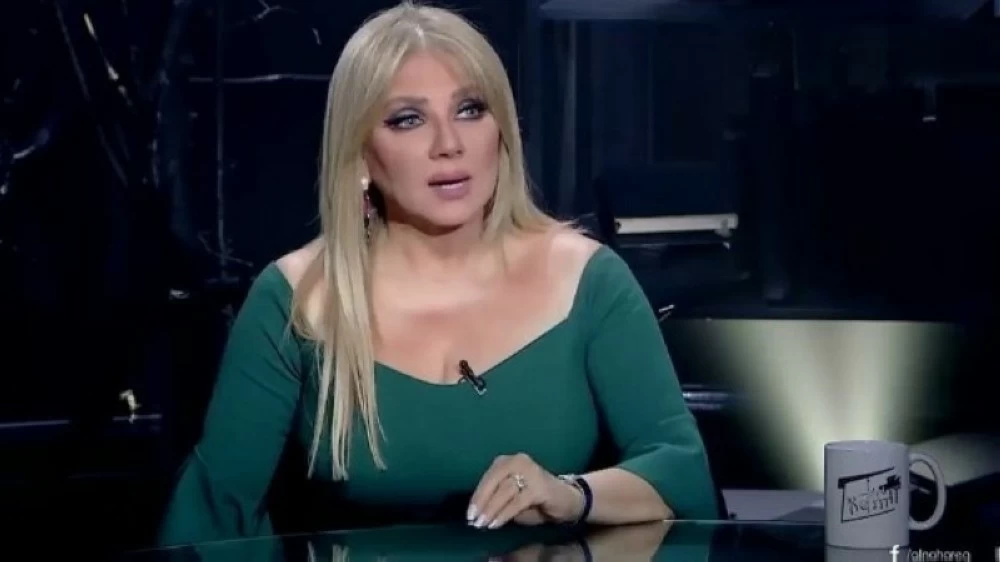
The past few hours have witnessed a state of controversy within the artistic community, specifically among the Ramadan drama producers, after a public dispute arose between the artist Nada Bassiouni and the producer Bilal Sabri, regarding the promotional materials for the series “The Victims,” which is scheduled to be shown in the second half of the holy month of Ramadan.
Crisis details and product response
The story began when actress Nada Bassiouni strongly objected to her image being used on the official poster for the series. However, producer Bilal Sabry responded decisively, insisting on the current design. In his statements, Sabry explained that the poster design is the sole prerogative of the production company, according to artistic conventions, and that artists have no right to interfere as long as it serves the dramatic vision of the work. He also noted that the other cast members had not voiced any objections.
Sabri addressed Bassiouni directly via Facebook, saying, "Sorry, all the artists liked the post. You're like a sister to me, Nada, but the post belongs to the production company." Sabri justified the actress's appearance by explaining that the series revolves around death, adding, "Why fear death? We're all going to die... that's the essence of the series, and I won't change the poster.".
Nada Bassiouni's dissatisfaction
For her part, Nada Bassiouni did not hide her displeasure, writing on her personal account: "Of course, I'm working on the series 'The Victims,' produced by Bilal Sabry, who is my brother, but I completely object to the poster idea." She questioned indignantly why she was being portrayed in this way without her consent, describing the image as "absolutely awful.".
The importance of posters in dramatic marketing
This incident opens the door to a discussion about the importance of promotional posters in the drama industry, as the poster is the primary means of visual communication between the work and the audience. Amidst the fierce competition of the Ramadan season, production companies strive to use designs that express the essence of the story, even if they sometimes appear shocking, to attract attention and pique curiosity. This seems to be the approach adopted by the creators of "The Victims" to reflect the atmosphere of mystery and death that pervades the events.
The story of the work and its heroes
The series "The Victims" unfolds as a suspenseful and thrilling drama centered on the character of "Sultan," shrouded in an aura of death and mystery, where a series of deaths befall anyone who approaches his world. The work portrays a complex psychological struggle between good and evil within the human psyche.
The series features a stellar cast including Salah Abdullah, Mirna Walid, Wafaa Salem, Amr Ramzy, Sherif Desouky, Randa El Beheiry, Aida Riyad, Enas Mekky, Nayera Aref, Hossam Helmy, Mohamed El Maabdy, and Mahga El Ghandour. It is written and directed by Hatem Salah El Din.
-

 Culture and Art 5 days ago
The "Between and Between" exhibition in Jeddah: 5 artists reshape Saudi memory
-
Culture and Art 6 days ago
Shakira's concert in Jeddah: Details of the international star's first concert in Saudi Arabia
-
Local News 3 days ago
Saudi Arabia's National Arabic Language Policy: 8 Principles to Promote Identity
-
Local news two days ago
Adopting the National Policy for the Arabic Language: Strengthening Identity and Vision 2030
-
Culture and Art, 1 week ago
The truth about Nancy Ajram's video and Epstein Island, and her legal response
-
Local News 3 days ago
The Riyadh-Rin-Bisha dual carriageway, spanning 559 km, has been completed
-
Fashion one week ago
Sneaker Con Jeddah 2026: The largest gathering for sneaker culture and fashion
-
Local news one week ago
Launch of the new Dammam project with investments of 98 billion riyals