
Culture and Art
Abdul Latif bin Yusuf: I am not a great poet, nor do I aspire to be a legend!
The dialogue about poetry with Abdul Latif bin Yusuf is very enjoyable, because it takes him out of the narrow circle of understanding and into broader creative horizons

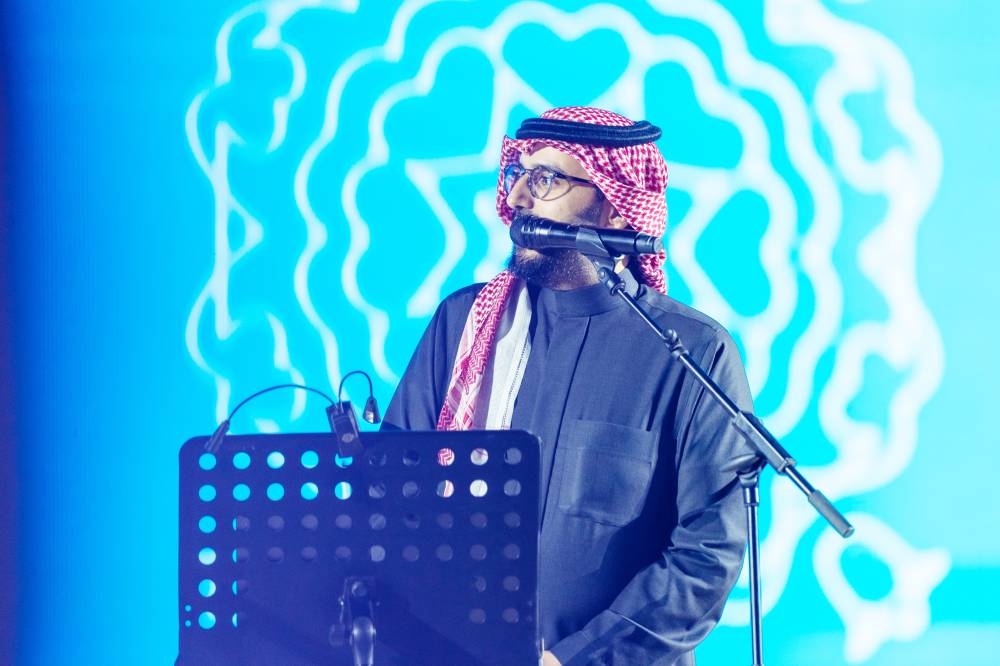
The dialogue about poetry with Abdul Latif bin Yousef is very enjoyable, because it takes him out of the narrow circle of understanding to greater creative horizons. As he said, life may be wasted while we search for the first spark that ignited this poem or that.
Writing is a pleasure for him, but this pleasure is not in the destination but in the journey, in the style not in the subject, in the composition not in the image.
This dialogue contains many questions and answers.
• Let's start with your relationship with poetry... how did it begin?
•• In truth, I do not know, because poetry erupts in the heart suddenly, and we may spend our whole lives trying to understand what sparked the first flame, and how this ember was formed, but what I do know is that this fire of the poem needed all the fuel of a lifetime, and what remained of memories and early sources of knowledge, in order to remain alive.
There is no wine in the words
I poured myself out on its borrowing
It became intoxicating
Poetry is not derived from feeling, but rather
It is the moment of realization that we feel
It is for singing to surprise us with an idea
It crossed the mind of the universe as it pondered
Words live on through us, even if we die for them
From the stab of the pens
The notebook is born
• The last text... what does it mean to you?
•• What truly amazes me in every writing experience is the proliferation of Arabic vocabulary, and the strange relationship I have encountered since childhood between words that agree in pronunciation but differ in meaning, just as the meaning agrees in multiple words, although I understood very late Al-Shafi’i’s saying that only a prophet can fully comprehend the language. Since then I stopped my search for perfection, and I became content with little. Therefore, my poetry collections came with less quantity and greater confusion, like someone entering a maze. I entered the poem, and nothing but intuition guides me to the best way out, and it usually gets lost among the symbols of Al-Khalil and the seduction of rhyme that moves the meaning towards what it wants, not what you want. There, inside the maze, beats accelerate and adrenaline is ignited by desire and fear of what will happen and may not happen, when your options diminish and you see all the vocabulary you have amassed standing in a state of complete inability to wear the garb of an opening or an ending, when you find that the rhythm you created turns into laughter mocking you. So what kind of creator are you when you create a fabric whose edges you cannot grasp except by what the pegs of prosody and the reasons for the sound have permitted you?.
It is not about training and practice, for every time you get out of the maze by sheer chance, and it is not talent that increases and decreases, that glows and fades by an unknown inspiration, which is not brought about by water, greenery, or a beautiful face, but rather by divine favor, which gets you out safely, and it is the same that puts you back in it again, and each time the maze gets bigger, and things become more mysterious and vague, and the most painful thing is that you cancel all the reliable paths for fear of repetition, redoing, and boredom, so that you might find the difficult way out, and the path full of the unexpected, because you realize that every end is the beginning of another wandering, and the only pleasure you find is in the journey and not in the arrival, in the style and not in the subject, in the composition and not in the image.
• The future of poetry... how do you view it?
•• From the beginning of the question of poetry and the emergence of the beginnings of literary criticism, there were those who were classified as people of words or people of meaning, as Ibn Sallam’s classes came with classifications of poetic prowess or lack thereof, and then Al-Amidi and Al-Marzuqi came and spoke about the pillar of poetry, and Al-Amidi expelled Abu Tammam from the pillar of poetry because he was one of those who did not work on the principles and rules of poetry and preferred Al-Buhturi over him, until we reached our present time and the question of modernity and traditionalism and other currents and waves, and for me, I do not consider myself concerned with all of that except as a heritage from which I benefit, and that I, along with the rest of my colleagues with the diversity of their approaches and choices, are nothing but the last poet who takes the path of poetry and on top of it that historical burden, and tries to reach a new way of approach and a way of looking at things and creating a cunning narrative of the strictness of the classical poetic situation, and going to the summit of creativity and linguistic and poetic innovation, which, by the way, I see as being spacious enough for everyone.
• Creativity and culture in Saudi Arabia... how do you see it today?
•• I will begin with what His Highness the Minister of Culture, Prince Badr bin Abdullah bin Farhan - may God protect him - said: “Promoting culture is a fundamental necessity, and preserving it is a civilizational responsibility.” He continued, “Our country deserves to flourish with all kinds of culture, to enrich the individual’s lifestyle, contribute to strengthening national identity, and encourage cultural dialogue with the world.” We feel and sense these words today in all literary and cultural activities, and we are living through an exceptional period in our cultural history. I would like to illustrate that culture and the arts were separate islands until the blessed vision came to bring these islands together on solid ground and into one system that interacts with each other. The poet now has the opportunity to benefit from his musician brother, the filmmaker now has a place in the novelist’s mind, and the theater has returned as the father of the arts, bringing everyone together on its stage. The artist’s brush has embraced the philosopher’s mind in a pivotal historical moment.
What about the relationship between poetry and philosophy?
•• What is certain for us is that poetry today is no longer far from the questions of philosophers, but poetry, when it uses metaphor, does not work with the mechanisms of philosophical logic, and it may go into the possibilities of imagination to take the philosopher to wider horizons. Philosophy is also an important tributary to the poetic experience in terms of freeing it from used ideas, and returning it to contemplating the obvious and thinking about it, which restores the possibility of wonder to the poet again. Although I am hesitant about these approaches, I say that poetry always needs to employ rational thinking, just as rational thinking needs poetics in order to be able to raise the limits of logic to open the gateway of intuitions.
• Three published poetry collections, awards and a remarkable literary presence, what have you gained from all this, and what have you lost?
•• I am not a great poet, nor do I aspire to be a legend of poetry, a prophet of poets, a pinnacle of poetry, or any other such grand titles. I am merely that boy who feared participating in the school radio broadcast, until the phoenix's claw snatched me up and carried me with its flames to the ends of the earth... And what then?!... He said: You return... And I returned... As I am... A man who reads to you what he can of his losses... Those losses that made him win all this priceless love... Your friend who grew up before your eyes from the pages of forums to the clips of TikTok, and before he leaves this world, he will not ask you to hang his words as medals or make him a cry in your chests... For he was not wealthy or rich... But he gave what he had.
• Given the similarity of poetic voices today, how can one distinguish between one poetic experience and another?
•• I will borrow the words of the late Prince Badr bin Abdul Mohsen: “Nothing in poetry appeals to me anymore except poetry itself.” Poetry that cannot be defined, and which gives us that margin of freedom and metaphorical compensation for our constant inability to change anything in the reality around us, is what makes us sail in a language whose horizons are wider than the laws that limit our harmony with our human existence. It is the constant attempt to discover ourselves and to stand seriously before the mirror of ourselves. It is true that poetry must master the tools of rhetoric, name all things, conjure virgin meanings, give voice to the absent, and be the anthem of those who have no anthem. It must be the saying that is different from the ordinary saying. But we must also not forget that poetry is the joy stolen from the whirlpool of time, and that poetry is a resort for pleasure and play, and a permanent friendship with trees, stones, animals, and humans, and not a cockfight on a stage, despite the importance of the existence of festivals and competitions, as they are stimuli for developing the experience and interacting with other experiences.
• What is your relationship - as a poet who writes in classical Arabic - to colloquial or Nabati poetry?
•• Colloquial, popular, Nabati, spoken, or vernacular poetry is, as Dr. Saad Al-Suwayan says, “the taste of the people and the authority of the text.” I am not ashamed or hesitant to say that my memorization of popular poetry exceeds what I memorize and recite of classical poetry. As Dr. Salah Fadl, may God have mercy on him, said: “Popular literature is a manifestation of the genius of peoples. We even go further than that and find that some examples of popular literature have nourished classical Arabic and its arts with their styles and patterns, and some of them have infused Arabic with hot, fiery blood that has given it a great amount of vitality.” It is that vitality and fervor from which I always benefit, and I believe that it is a cultural treasure that cannot be wasted on the grounds that it does not rise to the level of high literature. Perhaps I should add here to poetry folk tales, legends, narratives, and mothers’ lullabies, all of which, in my opinion, are important tributaries of the experience of Arabic poetry that have an impact on my formation and taste.
• Does writing later in life take away from the creator or give him a more unique and distinctive experience?
The Arabs used to call this genius, and Arabic poetry has witnessed more than one such genius. It is rare for poetry to emerge with such vitality in later life, but this confirms that poetry is both impossible and possible in anyone's life, though only some of us succeed in capturing its essence. Age itself may not be the most important factor in creativity; rather, it is the feeling of aging that matters. Those who preserve their inner child will always stand before the river of imagination, while those who succumb to feelings of old age will find everything around them dying, even dreams. Poetry is a perpetual childlike state, even if it emerges at the end of life.
• How did your relationship with Abdul Aziz bin Saud Al-Babtain begin?
•• It is not just my relationship, but generations of poets who emerged from the mantle of the poet and noble man Abdulaziz bin Saud Al-Babtain, and whoever does not thank people does not thank God.
The messenger of the benefactors came to me and singled me out
Thanks to those who are blessed, and you know best
I have not forgotten, O Lord of the poor, that she
Your hands are kind to me, and your gentleness flows towards me
And I did not thank myself for a fleeting joy
But it is God's right that we should give thanks abundantly
And thanking the Lord of mankind means thanking His servants
Blessed is he who has attained reward through generosity
And now my heart is filled with gratitude and joy
May God protect the one upon whose palm good tidings flow
May God have mercy on Abdulaziz bin Saud Al-Babtain, who embraced us when we were young and gave us the opportunity to appear and present what we have through the platforms and awards he presented in a long career of literary, cultural and social work. I do not forget my first appearance and my first poetry recitation at the Spring Poetry Festival at the Al-Babtain Library, and after that the doors of the East and West opened for me, and he was the best enabler and supporter, and his support did not stop at the first moment only, but continued until I was able to achieve the award for the best poetry collection for the year 2017 AD with an honor from this generous departed Abdulaziz bin Saud Al-Babtain - may God forgive him -.
What is your opinion on making money from poetry?
•• To begin with, let's agree that poetry is not the best path to fame and money, although there are some exceptions. However, a distinction must be made between media issues, interaction, and circulation, and poetry, arts, and other things. This is because, as they say, the art market is completely different from art itself. But since you asked me, I will try to be brief and begin by saying that our local and Gulf culture is experiencing major transformations, whether in terms of lived culture or cognitive and artistic culture. This revolution in cultural work has produced great results, and even potential for sustainable growth in various cultural sectors. Moreover, it has become possible for you to be a creative person who is free to create, and your sustenance is your creativity and passion, so you do not have to work, jobs, and other things. Rather, culture may be economically viable, and that is greater than the dreams of all intellectuals and creators.
What about the stranger in face, hand, and tongue? What about poetry then? It is the most closely tied to our identity, and it is the art that has managed to continue for more than 1500 years without interruption, according to what we claim. But we also know that, according to the standards of the creative market, it is a material that is not capable of creating a viable economic cycle, nor of creating a consumer product that achieves a return worthy of investment. This type of thinking may be supported by statistics such as the study published by an American newspaper about poetry. From 1992 to 2012, the number of its followers decreased from 17% to 6.7% of Americans. This decrease made poetry (popular art) less popular than opera (very elitist art). The newspaper simply says that poetry does not die, poetry becomes extinct.
In another reading of another region of the world such as Britain, poetry will achieve the highest level of book sales in the year in which the Brexit problem escalates, 2018, which has been witnessing an escalation since 2012. Does this mean that poetry thrives in crises? Perhaps, but at this peak, after selling 1.3 million books, it reached approximately $15 million in revenues, which cannot be compared to a digital tablet that sold for more than $60 million. Therefore, whoever tried to use poetry to achieve fame or money, I think he has gone astray. Poetry is only sought for its own sake.
• You are from the forum generation, what did those sites add to your generation’s experience that differed from the rest of the poets?
•• “And endear to men their homelands… playgrounds where youth spent their time.” But what is surprising is that my generation of poets did not have real poetic homelands, but rather virtual ones, and unfortunately most of them have faded away or disappeared and no longer exist in the spaces. So, whether we like it or not, we are the children of that pivotal technological moment, the children of internet cafes, the children of slow connections and that strange sound that comes from the computer the moment of connecting to the World Wide Web, as we used to call it. We are the children of pseudonyms and in-depth dialogues with those we do not know, the children of electronic roses and emoji symbols, email groups and electronic blogs and other things that the dialogue does not have the capacity to mention.
That stage embodied the spirit of cultural decentralization through the infinite pages, and the concept of (Hyperlink) that makes you move in an endless browsing between multiple worlds and strange cultures that you are seeing for the first time. It was truly amazing, and that was before the algorithms that have come to determine what you read through applications managed by global companies and you cannot get out of their perceptions of the content being circulated. That decentralization produced a generation with different and multiple interests, and what I really care about is the creative impact. Despite the modernists’ dominance of the paper media platforms, the Internet was a resort for everyone interested, from the traditionalists who are steeped in traditionalism to the most extreme modernists who are burning, and we had the opportunity of the bee that moves between flowers by means of (Hyperlink) and a new page.
What did she add? I don't know the truth, but we still find her output in various cultural disciplines. She emerged from those spaces, and the Saudi cultural scene is witnessing a great maturity in which those talents contribute within the framework of unprecedented governmental support from the cultural system, which makes observers of the scene see that the future of literary, artistic and cultural styles is no longer limited to certain forms, but is open to every innovation and creativity.
• Why is the "I" so prevalent in your poetry and the poetry of your generation? •• In an age of multiple identities, you can only rarely be yourself, and even in this rarity, you find yourself becoming others. Deep down, you are no one; you are open to every possibility, and every personality is capable of possessing you, as the Buddhist sage says. But he didn't practice Arabic poetry, and he didn't understand how the singular can take on a plural form.
There is nothing but that in the moment of poetry I feel that I am all those I have not been, and that I long for them. In the moment of poetry I do not try to understand reality because I feel that I can invent new possibilities for a parallel reality, and unlike daily life full of ready-made words and canned questions and answers, in poetry every letter and every word comes as a mysterious desire, whether by mental intention or by a folded intuition, and both make people afraid of this unexpected and free self that derives its authenticity from the fact that it records what we remain silent about or what we do not say.
• Did your reading of Mahmoud Darwish change your opinions and convictions?
•• There is no doubt that reading, whether of Mahmoud Darwish or the prominent poets of the twentieth century, has left a great impact on the course of Arabic poetry, and it is diverse from the Egyptian revival movement to the group of poets who influenced our experience as poets of the millennium and beyond. It certainly had imprints on my personal experience, starting with Badr Shakir al-Sayyab, from whom I learned for the first time the method of writing in free verse, to Mahmoud Darwish, who opened the poem to all human sciences in a language that no one had ever used before. But the most important impact for me still comes from the place and from the first voices and the first songs. The poems that my grandmother Fatima bint Sheikh Abdul Latif al-Afaleq used to recite are still the most inspiring to me, and the narratives of my uncle Sheikh Ahmed bin Ali al-Mubarak, the sheikh of the writers of Al-Ahsa, have the greatest contribution to my taste, and the reviews and observations of my uncle Dr. Rashid al-Mubarak shaped my critical perceptions and my way of dealing with texts.


Culture and Art
14 Syrian songs in my upcoming work... Asala: I'm preparing a new Gulf album
Syrian artist Asala confirmed that her new album, sung entirely in the Syrian dialect, is nearing completion. She described it as a unique work that may be her first and last in this dialect. At a press conference held on the sidelines of her recent concert in Sharjah, she announced that the album features 14 Syrian songs, each with its own distinct musical, visual, and costume choices, aiming to deliver a comprehensive and engaging artistic experience. She anticipated the album's release between the two Eid holidays, noting that it incorporates folk songs from various Syrian provinces with musical updates to appeal to the younger generation. Regarding her other artistic endeavors, Asala confirmed that after finishing the Syrian album, she will begin preparing a new Gulf-style album as part of her upcoming artistic plans. She also clarified that her singing of the theme song for the series "Al-Qaysar - La Zaman Wala Makan" (The Caesar - No Time, No Place) will be her only musical contribution to drama this year, and it will have an emotional tone reflecting the series' sad and poignant nature.

Syrian artist Asala confirmed that she is nearing completion of her new album in the Syrian dialect, describing it as a distinctive work that may be her first and last in this dialect.
14 songs
At a press conference held on the sidelines of her recent concert in Sharjah, she announced that her new album includes 14 Syrian songs, each with its own unique focus on music, photography, and fashion choices, to present a comprehensive and attractive artistic experience.
She suggested that the album would be released between the two holidays, noting that it combines folk songs from various Syrian governorates with musical developments that suit the tastes of the new generation.
Gulf album
Regarding her new artistic projects, Asala confirmed that after she finishes the Syrian album, she will begin preparing a new Gulf music album, as part of her upcoming artistic plans.
Asala also explained that her singing of the theme song for the series “Al-Qaysar – No Time, No Place” will be her only musical work in drama this year, and it will have an emotional character that reflects the sad and moving nature of the work.
Culture and Art
Officially, Syria is the guest of honor at the Riyadh International Book Fair 2026
Minister of Culture Prince Badr bin Farhan announced that Syria has been chosen as the guest of honor for the Riyadh International Book Fair 2026, in a move that reflects the depth of cultural relations and supports the goals of Vision 2030.
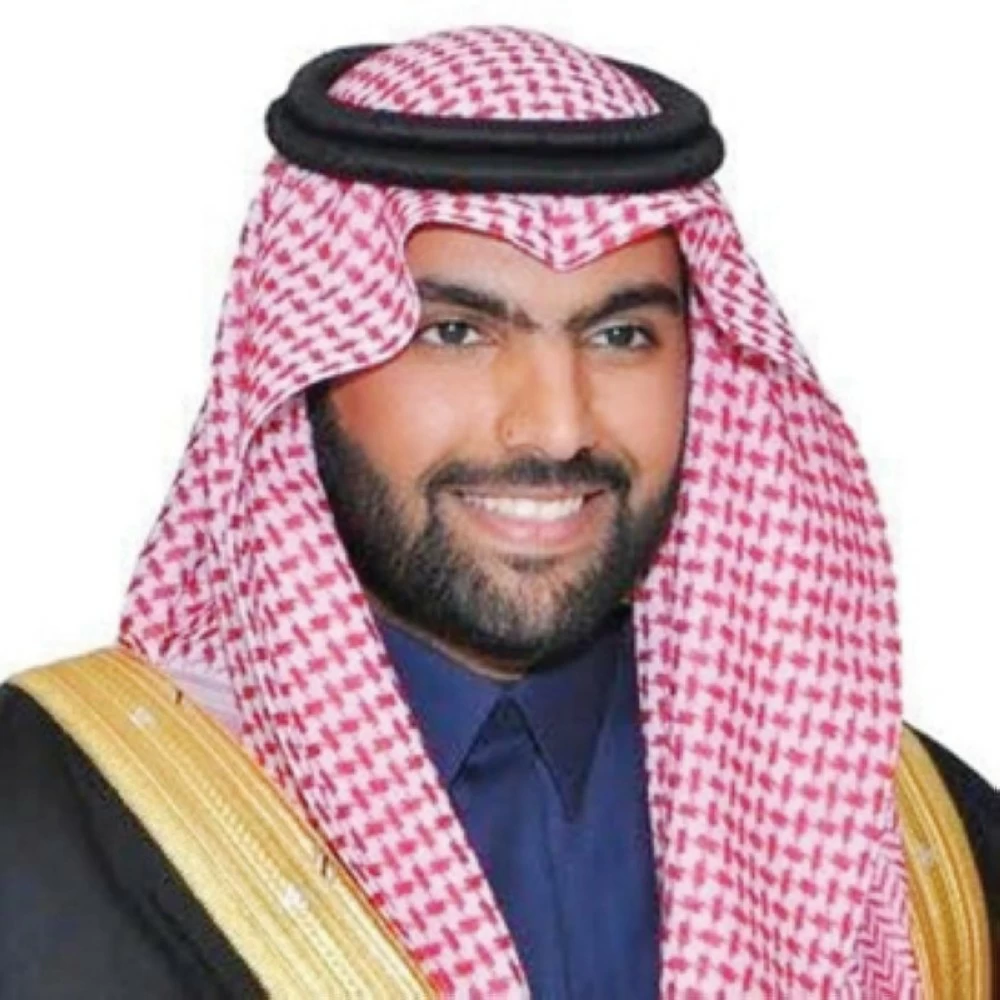
His Highness Prince Badr bin Abdullah bin Farhan, Minister of Culture and Chairman of the Board of Directors of the Literature, Publishing and Translation Commission, announced that the Syrian Arab Republic has been chosen as the guest of honor for the next edition of the Riyadh International Book Fair in 2026. The fair is scheduled to be held next October, under the direct organization and supervision of the Literature, Publishing and Translation Commission, in a step that reflects the growing cultural movement that the Kingdom is witnessing.
Cultural bridges and strategic partnership
In announcing the selection, the Minister of Culture affirmed that this choice embodies the deep-rooted cultural ties between the Kingdom of Saudi Arabia and the Syrian Arab Republic, ties built on solid foundations of partnership and mutual respect. His Highness noted that this step stems from the Kingdom's unwavering commitment to fostering cultural exchange, a cornerstone and objective of the National Cultural Strategy, which is itself a key component of the Kingdom's Vision 2030. The Ministry has placed particular emphasis on opening channels for constructive dialogue between peoples and exchanging knowledge and expertise, thereby solidifying the Kingdom's active and influential role in the cultural landscape, both regionally and internationally.
The status of the Riyadh exhibition and the history of Syrian culture
The Riyadh International Book Fair is one of the most important and largest cultural platforms in the Arab world, serving as an annual window through which readers and intellectuals can view the latest intellectual and literary works. The selection of Syria as guest of honor adds a qualitative dimension to the fair's events, given the rich cultural heritage and diverse intellectual landscape of Syrian society. Damascus, long known as one of the capitals of Arab literature and art, possesses a vast reservoir of creativity in poetry, novels, criticism, and visual arts, which will enrich the fair's halls and offer the Saudi public and visitors an exceptional cultural experience.
Dimensions of the choice and its expected impact
This selection is expected to foster a broad and vibrant interactive space between the Saudi and Syrian publics, as well as between the intellectual elites of both countries. The guest of honor program will provide an opportunity to highlight the intellectual and creative output of Syrian intellectuals through panel discussions, poetry readings, and artistic performances that reflect Syria's rich heritage. This decision also reflects the general trend toward strengthening Arab unity through the soft power of culture, emphasizing that books and knowledge remain the best means of bridging distances and building lasting bridges of communication between brothers, thus enhancing the shared Arab cultural presence on the international stage.
Culture and Art
Heba El-Sisi begins chemotherapy treatment for cancer and asks for prayers
Artist Heba El-Sisi announces the start of her first chemotherapy treatment sessions to fight cancer, and reveals details of her serious surgery and her moving message to the public after her health crisis.
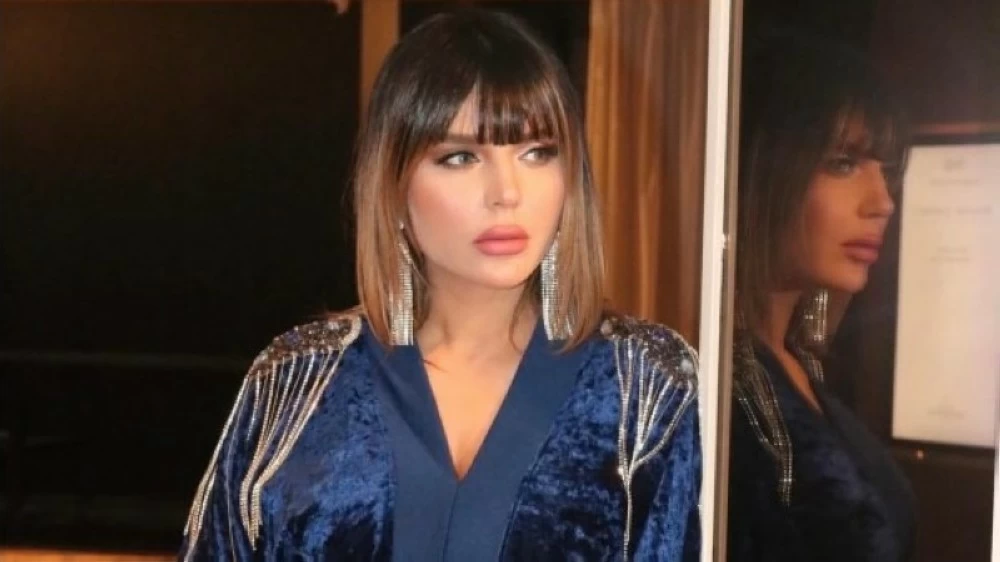
Egyptian artist and former Miss Egypt, Heba El-Sisi, has begun a new and crucial phase in her cancer treatment journey, sharing touching moments from inside the hospital with her fans and announcing that she has undergone her first chemotherapy session, amid a wide wave of sympathy and prayers for recovery.
Heba El-Sisi posted a photo of herself on her official Instagram account, showing her receiving intravenous fluids for her treatment. She captioned the photo with a brief but hopeful message: "Today I received my first chemotherapy dose." The post garnered significant attention from her followers and colleagues in the entertainment industry, who quickly posted messages of support and encouragement, wishing her a speedy recovery from this health challenge.
Details of the dangerous surgery and the silent suffering
The chemotherapy session wasn't the first chapter in Heba El-Sisi's battle with illness; she had previously revealed that she underwent a delicate surgical procedure. During her recent media appearance on the "Miss Egypt" program, which she hosts on Al-Shams TV, El-Sisi shared details of her suffering, which she had kept out of the public eye for some time.
In her moving address, El-Sisi said, "Today is my first episode after a very difficult period of treatment following my cancer diagnosis and major surgery. But thank God, I recovered well." She explained that this ordeal changed her perspective on many things, especially regarding the value of emotional support, adding, "I want to reassure everyone who asked about me, worried about me, and prayed for me from the bottom of their hearts that, thank God, I'm doing well now. But the past period has made me realize what a sincere prayer from the heart truly means, and what it means to have such wonderful people standing by me unconditionally.".
Who is Heba El-Sisi? (Artistic background)
Heba El-Sisi is a familiar face in the Egyptian beauty and entertainment world, having gained widespread fame after being crowned Miss Egypt in 2004. This title opened doors for her in the arts, leading to roles in several films and television dramas, most notably her participation in the film "Katakout" alongside star Mohamed Saad, which marked a significant milestone in her career and established her connection with Egyptian and Arab audiences. Her recent illness has once again highlighted the human side of celebrity life and how illness can strike at any age.
The importance of psychological support in the treatment journey
Doctors and specialists consistently emphasize that a cancer patient's psychological state plays a pivotal role in their response to treatment, a fact clearly demonstrated by Heba El-Sisi's words of gratitude for the prayers of her loved ones. Celebrities bravely announcing their illnesses helps break down the barrier of fear among the public, promotes a culture of early detection, and reveals the artist's human side beyond the spotlight, fostering a sense of community solidarity and the moral support that patients need on their arduous journey to recovery.
-

 Local News 5 days ago
Launch of the city's shuttle bus service in Ramadan 1447 AH: Routes and stations
-
Local news one week ago
Rabigh inaugurates the world's largest water innovation oasis and enters the Guinness World Records
-
Culture and Art 6 days ago
The series "Rouh OFF" was permanently canceled by a decision of the Actors' Syndicate
-
Culture and Art 5 days ago
Yasser Galal and Radwa El Sherbiny: Details of a new artistic project that brings them together
-
Local news one week ago
Schedule of Taraweeh and Tahajjud prayers at the Two Holy Mosques for Ramadan 1447 AH
-
Local News 5 days ago
The Ministry of Education revokes the licenses of 74 private schools due to safety and quality violations
-
Local News 7 days ago
Saudi Arabia weather: Rain in Riyadh, the Eastern Province, and Qassim, and dense fog
-
Local News 5 days ago
Mohammed Al-Rasasmeh appointed as official spokesperson for the Ministry of Municipalities and Housing


