Culture and Art
Ilham Al-Fadala banned from traveling
A Kuwaiti court ordered Kuwaiti artist Elham Al-Fadala to pay 8,253 Kuwaiti dinars in material and moral compensation to producer Khalil


A Kuwaiti court ordered Kuwaiti artist Elham Al-Fadala to pay 8,253 Kuwaiti dinars as material and moral compensation to producer Khalil Al-Tamimi, the artist's ex-husband. The court also issued a decision to prevent Al-Fadala from traveling due to her conviction in the defamation case filed against her by Al-Tamimi.
Media personality Mai Al-Aidan published details of the ruling through her accounts, which sparked controversy about whether the ruling was the reason behind Elham Al-Fadala’s absence from the Joy Awards 2025 ceremony.
She stated that the court obligated the artist to pay 8,253 Kuwaiti dinars as material and moral compensation to Khalil Al-Tamimi.
She added that the travel ban could have been lifted immediately if the money had been paid at the airport without the need for the judge's signature, expressing her surprise that this procedure was not followed.


Culture and Art
Melhem Zein defends Fadel Shaker: He's innocent and the case is baseless
Melhem Zein sparked controversy with his statements regarding Fadel Shaker's innocence in the Abra events, revealing a new artistic collaboration between them on the song "Tala'at Shams" (The Sun Has Risen). Details of the situation and the history of the case are available here.

Lebanese star Melhem Zein has brought the case of retired and wanted singer Fadel Shaker back into the spotlight in Lebanon with recent fiery statements declaring his complete and unwavering solidarity with Shaker. Zein asserted his firm belief in his compatriot's innocence of the charges against him, describing the legal case as "empty" and based on inaccurate information, at a time when the issue continues to deeply divide Lebanese society.
A desperate defense and an artistic gift
Melhem Zein didn't just express sympathy; he addressed the core issue decisively, denying Shaker's involvement in any acts of violence or murder. Zein used a striking phrase, saying, "Fadl Shaker wouldn't even shoot an ant," indicating that he possesses detailed information about the events, which makes him confident in his position. In a related matter, Zein revealed an artistic surprise: his new song, "Tala'at Shams" (The Sun Has Risen), explaining that it's a gift and a special melody from Fadl Shaker. He described it as having a "special flavor" that reflects the depth of a friendship spanning approximately 26 years, predating Zein's rise to fame.
Background to the events in Abra: Historical context
To understand the dimensions of this controversy, it is necessary to go back, specifically to the bloody events of June 2013 in the Abra area of Sidon (southern Lebanon). Violent clashes erupted between the Lebanese army and armed groups affiliated with Sheikh Ahmad al-Assir, who was one of Fadel Shaker's closest associates at the time, following his retirement from music. These battles resulted in the martyrdom of a number of Lebanese army officers and soldiers, leading to widespread legal proceedings against al-Assir, Shaker, and a large number of their supporters.
Legal status and societal division
Legally, the Lebanese Military Court issued several in absentia sentences against Fadel Shaker, including lengthy prison terms with hard labor, on charges related to forming an armed gang and attacking the military establishment. Despite these sentences, some Lebanese, including Melhem Zein, believe that Shaker was a victim of certain circumstances and did not actually participate in fighting against the army, demanding a fair retrial. Conversely, another group, particularly the families of fallen soldiers, rejects any talk of a settlement or acquittal, insisting that justice must take its full course.
Melhem Zein’s statements come to throw a stone into stagnant waters, and bring back into focus a thorny issue that combines art, politics, and security, thus opening the door to a new round of discussions about the possibility of resolving the issue of Fadel Shaker or maintaining the status quo inside the Ain al-Hilweh camp where the latter is taking refuge.
Culture and Art
The court rejects the release of Fadel Shaker: Details of the new trial
The military court rejected the release of Fadel Shaker in four cases. Details of the Abra events case and the date of the trial for the attempted murder of Hilal Hammoud before the Beirut Criminal Court.
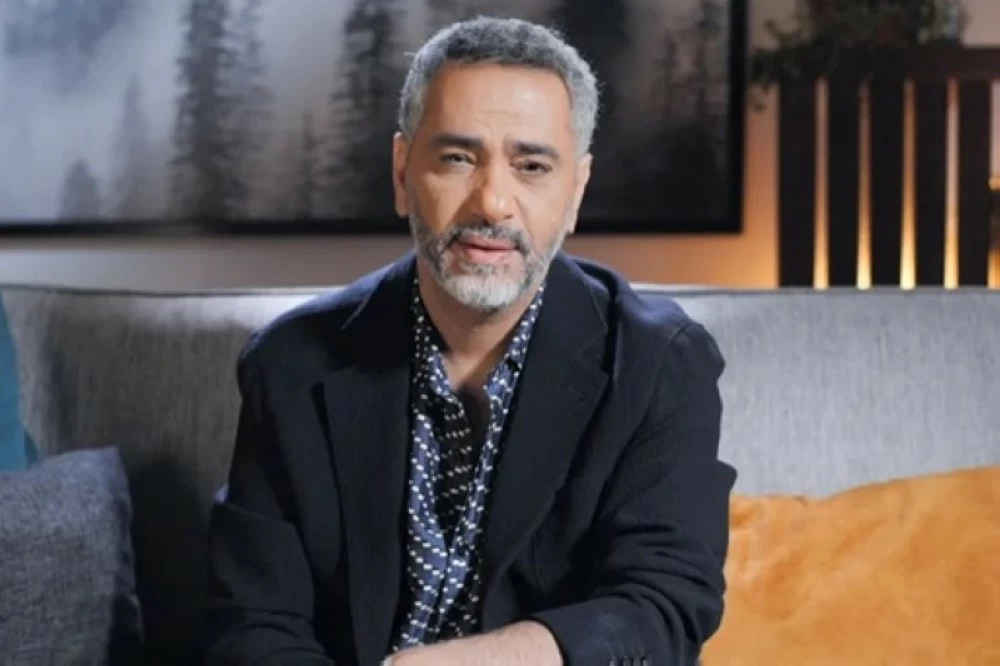
The case of the fugitive Lebanese artist, Fadel Shaker, has returned to the forefront of the judicial and media scenes in Lebanon, following rapid developments in the corridors of the military court, where all requests for his release submitted by his defense lawyers in the four cases against him were rejected.
Shock among the defense and family circles
Sources close to the family of artist Fadel Shaker reported that the recent court ruling came as a shock to his family and legal team. Expectations had been that a legal breakthrough, even a partial one, was possible in two specific cases considered less complex than others: the case of "insulting a sister nation" and the case of "possession of military weapons." However, the military court's decision was decisive, temporarily closing the door on these efforts. This prompted the legal team to mobilize and draft new legal requests in various forms in an attempt to alter the current legal course.
Details of pending cases and the date of the next session
The complications don't end with the refusal to release him; the defense team is currently considering submitting an additional request related to the "threat against Hilal Hammoud" case. This case is particularly sensitive due to its direct connection to the bloody events that took place in Sidon, the repercussions of which continue to this day.
In a related development, the Beirut Criminal Court has set April 24 as the date for a new hearing in the trial of Fadel Shaker, who is being tried in absentia along with Sheikh Ahmad al-Assir and several other defendants. This hearing will focus on the 2013 attempted murder of Hilal Hammoud, a case considered one of the most serious in Shaker's legal record.
Background of events: From "The King of Romance" to the events of Abra
To understand the complexities of the current situation, we must look back a little. The transformation of Fadel Shaker from an artist dubbed the "King of Romance," enjoying immense popularity in the Arab world, to a wanted man, came as a major shock to the public. The story began to unfold with the outbreak of the Syrian crisis and the emergence of Sheikh Ahmad al-Assir in Sidon, where Shaker became involved with this movement, ultimately leading to the infamous Abra events of June 2013.
The battle between supporters of the prisoner and the Lebanese army resulted in the deaths of soldiers, transforming the issue into a highly sensitive matter of national security and public opinion. Since then, Shaker has remained in hiding within the Ain al-Hilweh Palestinian refugee camp, and several in absentia sentences of lengthy prison terms with hard labor have been issued against him on charges related to forming an armed group and carrying out terrorist acts.
The impact of the case and its future
This case has acquired significance that transcends the personal legal dimension; it touches a sensitive chord in Lebanese society, which is divided over the Abra events. While some believe the harshest penalties must be applied out of respect for the blood of the army martyrs, others see the possibility of a legal settlement that separates political stances from direct criminal acts.
With each new judicial decision, whether rejecting or postponing, Fadel Shaker's fate remains suspended between the walls of the Ain al-Hilweh camp and the corridors of the Lebanese courts, awaiting what the next round of trials will bring in April.
Culture and Art
Trial of those accused in the dog attack on Zeina and Ahmed Ezz's children
Details of the referral of actress Zeina's neighbor to criminal trial after a dog attacked her children with Ahmed Ezz. The prosecution acquits Zeina and reveals the defendants' negligence in controlling the animal.

The Egyptian courts have witnessed a significant development in the case that recently captured public attention, concerning the attack on the children of actress Zeina and actor Ahmed Ezz by a vicious dog inside a high-end residential compound. The Public Prosecution issued a decisive decision to refer the actress's neighbor and relative (the actual owner of the dog) to urgent criminal trial, charging them with negligence and failure to take precautions in supervising a dangerous animal, thus endangering the lives of the children.
Details of the horrifying incident
The incident unfolded on a quiet day that suddenly turned into chaos and panic inside a five-a-side football pitch for children. While twins Ezz El-Din and Zein El-Din were playing football, a large, unmuzzled dog, unleashed, charged at them and began a vicious chase. The attack resulted in one of the boys falling to the ground and sustaining bruises from the impact as he tried to escape, while the other suffered minor scratches and cuts. The onlookers, stunned and screaming, rushed to the scene to intervene.
Prosecution investigations and conclusive evidence
Investigations conducted by the Public Prosecution, supported by reviewing CCTV footage from the area surrounding the playground and eyewitness testimonies, revealed that the dog was with the neighbor's son and that control over it was completely lost at the critical moment. The investigations also established that the accused failed to take the necessary precautions to control the animal in a public space designated for children's play. Surprisingly, the investigations revealed that the second party initially attempted to deny ownership of the dog, but the security investigations resolved the matter and identified the actual owner, thus placing full legal responsibility on him and the father of the child who was with the dog.
Zeina's innocence and the background of the conflict
In a related development, the prosecution decided to dismiss the complaint filed by the other party against the artist Zeina, in which he accused her of slander, defamation, and assault. The investigation revealed that the artist's reaction stemmed from a natural maternal instinct and a legitimate act of self-defense for her young children immediately following the incident, thus invalidating the charges against her.
Context of the crisis and its societal significance
This incident takes on special significance beyond being merely a quarrel between neighbors, for several reasons. First, it brings renewed attention to the twins of Zeina and Ahmed Ezz, whose lives have long been the subject of media scrutiny due to their protracted legal battle over paternity, making any harm they face a major topic of public discussion. Second, this incident comes at a time of escalating debate in Egypt regarding the "law on the possession of dangerous animals and dogs," particularly after repeated dog attacks in upscale residential compounds. This has recently prompted the Egyptian legislature to increase penalties for owners of aggressive animals that cause harm to others.
The referral of the accused to trial in this case is a deterrent judicial message confirming that living in upscale areas does not grant immunity from the law, and that the safety of children in common spaces is a red line that cannot be compromised, thus turning an incomplete children's game into a judicial precedent awaiting the court's final word.
-

 Culture and Art, 1 week ago
The "Between and Between" exhibition in Jeddah: 5 artists reshape Saudi memory
-
Local News 6 days ago
Saudi Arabia's National Arabic Language Policy: 8 Principles to Promote Identity
-
Culture and Art, 1 week ago
Shakira's concert in Jeddah: Details of the international star's first concert in Saudi Arabia
-
Local News 5 days ago
Adopting the National Policy for the Arabic Language: Strengthening Identity and Vision 2030
-
Local News 6 days ago
The Riyadh-Rin-Bisha dual carriageway, spanning 559 km, has been completed
-
Culture and Art, 1 week ago
Ramez Level the Monster: Details of Ramez Galal's program in Ramadan 2026
-
Local news one week ago
Launch of the new Dammam project with investments of 98 billion riyals
-
Local News 4 days ago
The Supreme Court calls for the sighting of the crescent moon of Ramadan 1447 on Tuesday evening