Culture and Art
Mohammed Zayed Al-Almai... Searching for the lost soul of a troubled man
Mohammed Zayed Al-Almai studied arid land agriculture, believing he would reconnect with the land he had left since childhood and reclaim it

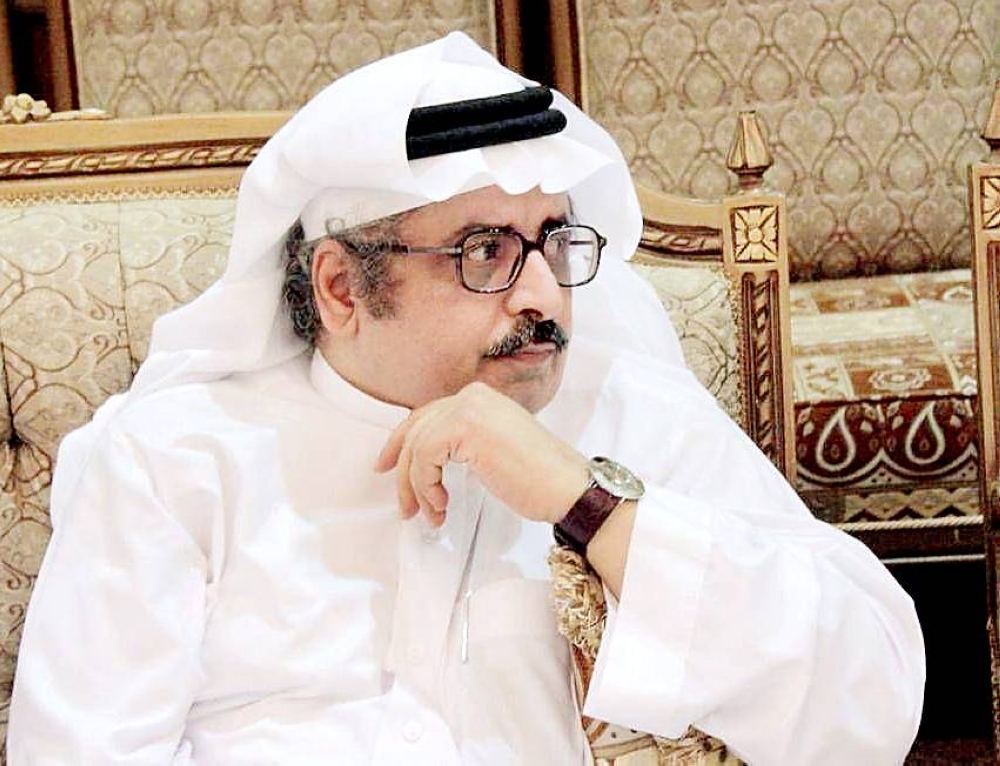
Mohammed Zayed Al-Almai studied arid land agriculture, believing he would reconnect with the land he had left as a child, reclaiming its essence by mastering its tools and reviving the lives of those who lived there with such innocence and love. However, he found no fulfillment for his restless soul—the soul of a true poet—except in journalism and cultural work. Thus, his name became associated from the beginning as the editor of the cultural pages in Al-Bilad newspaper, while his activities with colleagues at the Abha Literary Club, where he later briefly chaired its board, resulted in the founding of Bayader Literary Magazine. Its first issue was published in 1986 and included contributions from prominent poets and novelists of the modernist generation in the Kingdom, including Mohammed Al-Ali, Ali Al-Dhamini, Mohammed Al-Dhamini, Mohammed Obaid Al-Harbi, Abdulaziz Mashri, Raja Alam, and others. Through it, the modern creative cultural movement took its place and advanced to the forefront of our literary scene. Of course, Muhammad Zayed made a significant contribution, leaving a clear and undeniable mark. In another aspect of his journalistic work, his name is associated with the founders who contributed to the establishment of Al-Watan newspaper, which was founded in Abha in 1998 and published its first issue on September 30, 2000. At that time, our poet served as the editor and head of the cultural section. But amidst this enduring passion for engaging with culture, particularly in its journalistic aspect, he never neglected his distinguished public contributions. He participated in numerous poetry, literary, and intellectual events and seminars both within the Kingdom and across the Arab world. It was through these experiences that his personality was firmly established in the cultural sphere, first as a poet and then as a thinker. Didn't he himself say, "Always a poet, sometimes a writer," a telling indication that his compass points only to poetry? And if he wished to rest a little from the relentless pursuit of that goal, we would find him under the shade of the tree of thought, contemplating, questioning, searching for his own humanity, and invoking his inner worlds, as if rebuilding what had been shattered within him. He says in the opening lines of his poem, "Pleas for the Death of the Other":
I would give my life for you, O master who lives in my blood
I am now torn apart by your gaze... and I swear that no one but you can tear me apart
When I take refuge on my cold forehead
You are part of me
Except that I am repelled by you
And who would see someone who is repelled by his own blood?
I'll tear my face off you
But when I get closer
I see you're following what I'm doing
Then she strangles me with tears, incantations, and murmurs.
How many domes of weeping have we inhabited?
And how much do we bow down to our ungrateful idea?
If the poet's own self, the one hidden deep within him, is not the one being addressed here as "the master," then what could it possibly be?!
Perhaps Muhammad Zayed, in many places in his poems, gives poetry a degree of manifestation under the names of many words, the most prominent of which is “the boy.” The apparent meaning of the word does not mean its inner meaning, but it also does not constitute for him a poetic symbol as we see it for the rest of the poets of his generation. Rather, it is an obsession that presses upon him if poetry presses upon him, which he draws from the world of his childhood and from his conscience that constantly motivates him to see the world with innocent eyes like a child, so that he can reshape the world. He says:
The purest boy taught me
The crazy boy
The happiest and the most miserable
To suggest dark skies
mysterious
I arranged them as stars
Star
And I impregnate her with lightning
Barqa
Teach me:
To cling to the first questions
In order to stay,
He said:
Increased rejection
It gets deeper!
Mohammed Zayed continued to protect his poetry from falling into the trap of intellectual rigidity, defending it against the rigidity of grand ideas, which he saw as lacking the human sensitivity that had swept away most of the modernist poets' experiences in the Arab world. For Zayed, the enduring power and fluidity of his poetry lie in his spiritual experience, not merely in his abstract thought and existential awareness, though he does employ both. This application, however, imbues human feeling with greater depth and clarity of meaning and significance. He says:
I always stumble over trivial things
Poetry is not worth it
Things that resemble the weariness of the idea
The weariness of decadent times
They are crazy people who are stoning passersby
They complain to the graves of their fathers
From highway robbers
They take away their tears
They recite Al-Fatiha.
I always find them eroding
And it grows in their soil
trumpery
It's not worth the poetry!
The trivial things that don't deserve poetry are not expressed by Muhammad Zayed from a preconceived position he calls "the weariness of thought and decadent times," but rather according to what he imbues with an intense feeling that arises only from the self's experience of life: the acts of stumbling and finding them unworthy are tributaries of this feeling, supported in turn by the poetic image that deepens the experience of this feeling: madmen pelting passersby…
Therefore, what is not worthy of poetry hides behind it what should be said, and what should seep to the surface of the poem so that we may feel the trivialities of things.
This is how Muhammad Zayed takes control of his poem, turning it over on the embers of internal conflict between what his conscience boils with and what his mind and consciousness see, until it has matured and ripened without one side prevailing over the other, so its scent wafts and its skin ripens and it prepares itself for the recipient in the best possible way.
This is just one example among many others that we can draw from his experience, to confirm to us that his poetry goes deep into life to capture its truth and extract its hidden treasures in the earth, all while driven by his conscience and his consciousness, which are intertwined like two Siamese children.
Related News


Culture and Art
Mohamed Youssef Ozo reveals his rare illness after the series "Sahab Al Ard"
Artist Mohamed Youssef Ozo breaks his silence and reveals his diagnosis of ankylosing spondylitis after criticism of his appearance in the series "Sahab Al Ard", explaining the details of his treatment and suffering.

In a poignant moment of candor that put an end to many questions, Egyptian artist Mohamed Youssef, known artistically as “Ozo,” broke his silence to reveal to the public the truth about his health condition, following the controversy surrounding his obvious hunched back during his outstanding performance in the series “Sahab Al Ard,” which aired during the 2026 Ramadan drama season. This appearance, which attracted attention, was not just an acting performance, but rather concealed a real story of pain.
The nature of the disease: What is ankylosing spondylitis?
Ouzo explained via his official Facebook account that he is battling a rare autoimmune disease known medically as ankylosing spondylitis. Medically, this disease is a chronic type of arthritis that primarily affects the spine, causing inflammation and stiffness of the vertebrae. Over time, this can lead to some vertebrae fusing together, which explains the changes in posture and difficulty moving that the public has noticed.
The young artist confirmed that he is currently undergoing an intensive treatment program based on “biological therapy”, which is one of the latest medical protocols used to control the activity of the immune system, with the aim of stopping the deterioration of the condition and stabilizing the disease at its current level, to ensure that he can continue to practice his professional and personal life.
Behind the scenes of the medical trip and the role of the union
In a related context, Mohamed Youssef revealed his persistent efforts to find radical solutions, noting that he did not hesitate to explore both cosmetic and therapeutic surgery options to improve the appearance of his spinal curvature. He was accompanied on his search by Dr. Ashraf Zaki, head of the Actors' Syndicate, a gesture reflecting the syndicate's ongoing support for its members during health crises. Despite his strong desire to undergo surgery, the specialist advised postponing the procedure for a full year due to the complexities of his medical condition, even though the typical recovery period for such surgeries does not exceed six months.
Despite these obstacles, Ozu showed great determination to complete his treatment journey, confirming his intention to consult another doctor who has a vision that balances the cosmetic necessity and the precise medical considerations of his complex condition.
A message of awareness and apology to the public
Away from the cameras, Ozu emphasized that his decision to conceal his illness for so long stemmed from his desire to avoid seeking public sympathy, preferring to endure the excruciating pain with patience and silence. He noted that he resorts to assistive methods such as hydrotherapy and manual therapy to alleviate the stiffness and daily pain.
He concluded his speech with a noble message in which he apologized to everyone who criticized his appearance or the way he walked in the series without knowing the truth about his illness, stressing that what people see as a superficial difference is in fact a daily battlefield that he silently wages, thus highlighting the importance of societal awareness of the invisible suffering of others, and the need to be patient before passing judgment on the outward appearance of artists and public figures.
Culture and Art
Updates on Hani Shaker's health condition after he was admitted to intensive care
Details of artist Hani Shaker's health condition after undergoing emergency surgery and being transferred to intensive care. His manager reveals to Okaz the cause of the bleeding and the latest updates on his medical condition.

Recent news regarding the health condition of the great Egyptian artist Hani Shaker, nicknamed “Prince of Arab Singing”, has sparked widespread concern in artistic and public circles, after the announcement that he was urgently transferred to intensive care following a sudden health crisis that required immediate surgical intervention.
Details of the health crisis and surgical intervention
In an exclusive statement to Okaz newspaper, the manager of artist Hani Shaker revealed the precise details of the crisis, confirming that the artist suffered a sudden and severe hemorrhage in his colon, which necessitated his immediate transfer to the hospital and an emergency surgery to stabilize the situation. He explained that Shaker is currently in the intensive care unit, where he is under close and continuous medical supervision by a team of senior doctors to ensure the stability of his vital signs.
Relative stability and precautionary monitoring
Regarding the developments in his condition, the business manager indicated that there is a noticeable gradual improvement in the health condition of the Prince of Arab Singing, but the medical team preferred not to rush his exit from intensive care, preferring to keep him under observation for an additional period as a precautionary measure to ensure that no complications occur and to make sure that the wound heals and the bleeding stops completely before transferring him to a regular room.
Union support and a prolific artistic career
In a related development, the Egyptian Musicians Syndicate has been closely monitoring the condition of its former head. Nadia Mustafa, a board member and the syndicate's official spokesperson, called on fans and the Arab public to pray for the renowned artist's speedy recovery, emphasizing that the syndicate is following all details concerning his health condition closely and wishing him a swift recovery and return to entertaining his audience.
Hani Shaker is considered one of the most prominent figures in classical and contemporary Arabic music, boasting a decades-long artistic career during which he presented hundreds of works that have shaped the consciousness of the Arab public. This crisis serves to highlight his immense popularity among his fans, as his name trended on search engines and social media platforms immediately after the news broke.
Previous health challenges and artistic determination
It's worth noting that this isn't the first time Hani Shaker has faced health challenges recently. He previously performed a huge concert in the United Arab Emirates, his first public appearance after undergoing delicate spinal surgery. He appeared seated while singing, a scene that reflected his strong determination to fulfill his artistic commitments and his respect for his audience despite the pain. He also delivered a moving message to the audience, expressing his gratitude for their support, which he considers an essential part of his recovery journey.
Culture and Art
Diab refuses to work with Ghada Abdel Razek and chooses Mona Zaki to star in his film
Diab sparks controversy in Ramadan 2026 with his statements about Ghada Abdel Razek, and reveals his ideal partner and details of his new series, "Kimia" with Mustafa Gharib.

Egyptian artist Diab widespread controversy in artistic circles and on social media platforms following his recent bold statements, in which he revealed his firm decision not to collaborate artistically again with star Ghada Abdel Razek . This came during his appearance on the prank and talk show "Ramez Level the Monster," which aired during Ramadan 2026, where Diab opened up to the public, speaking candidly about his career choices and relationships within the artistic community.
Past conflicts and their impact on the future
Diab explained that his decision not to work with Ghada Abdel Razek again stemmed from a previous experience they shared, which he described as unsatisfactory both professionally and personally. These statements highlight the importance of chemistry and compatibility between actors in dramatic works, as harmony behind the scenes is a crucial factor in the success of any artistic endeavor. Disagreements or discomfort on set often negatively impact the quality of the final product, prompting artists to make crucial decisions about their future partners to ensure a healthy and creative working environment.
Mona Zaki... the dream partner
In another context, when asked which leading actress he would most like to co-star with in a film, Diab didn't hesitate to choose the renowned actress Mona Zaki , preferring her to other options such as Mai Ezz El-Din, Mai Omar, and Mai Kassab. This choice reflects Diab's appreciation for Mona Zaki's considerable talent, a true icon of Egyptian cinema. He sees her as the ideal partner for delivering a work of art with significant dramatic weight, highlighting Diab's ambition to create films that rely on powerful acting and a well-crafted plot.
Comedy and competition in Ramadan 2026
With great candor, Diab praised the talent of the young artist Mustafa Gharib , emphasizing that he possesses a remarkable ability to make audiences laugh, surpassing even his own personal capacity. He expressed his profound admiration for Gharib's spontaneous comedic style. This praise comes at a time when the artistic community is witnessing the rise of a new generation of comedians who are making a significant impact on both television drama and film.
The series "She Kimia" and skin transformation
In the current Ramadan 2026 season, Diab presents a completely new face to his audience through the series "Heya Kimya" (She's Kimya) . In this work, Diab decides to break away from the villainous roles he excelled in for years, presenting a comedic character that showcases hidden facets of his talent. The series stars a distinguished cast, most notably Mustafa Gharib, Mariam El Gendy, the veteran actor Sayed Ragab, Mohamed Abdel Azim, and Michel Milad. Written by the talented writer Mohab Tarek and directed by the creative Islam Khairy, the series is expected to achieve great popular success due to its exceptional artistic ensemble.
-

 Local News 3 days ago
Jeddah Airport alerts for travelers due to airspace closure and flight disruptions
-
Local News 5 days ago
Saudi Arabia approves regulations for the continued presence of Gulf vehicles: duration and penalties
-
Local news one week ago
The Ministry of Interior begins procedures for a royal pardon for common law prisoners
-
Local news one week ago
The deadline for property registration in Hail and Riyadh is Thursday
-
Sports one week ago
Tickets for the Al-Ahli vs. Al-Hilal King's Cup match postponed: New date
-
Local news one week ago
Under the patronage of the Minister of Information, an agreement was signed between the Ministry of Information and Waves Marketing Company
-
Culture and Art 6 days ago
The Devil's Prisons series was halted: The full story of "The Emperor's" being moved to YouTube
-
Local news one week ago
Saleh Al-Maghamsi appointed Imam of the Prophet's Mosque: Details of the Royal Decree