
Culture and Art
Ali Al-Hazmi is building a sanctuary of unity
In his poetry collection (A Lonely Branch for Singing), published by Adab Publishing and Distribution House, first edition 2023, Ali Al-Hazmi was able to provide

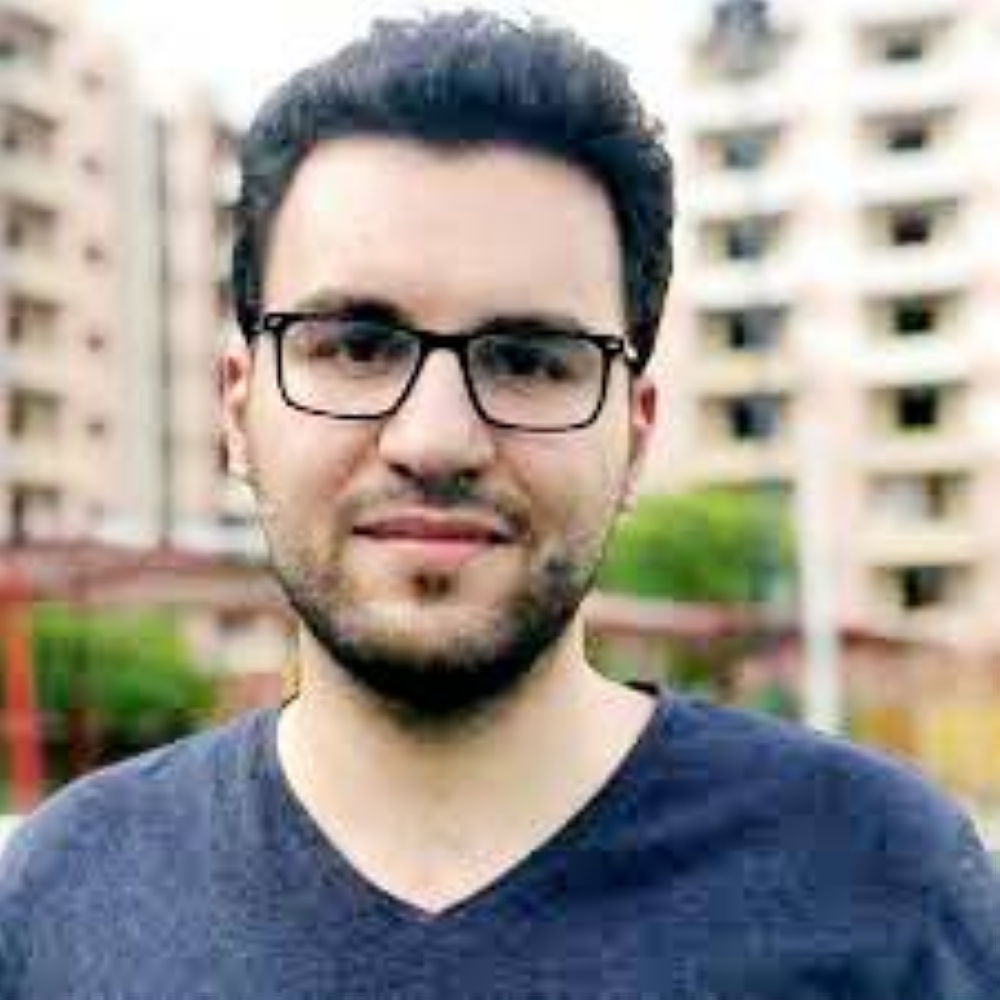
In his poetry collection, "A Lonely Branch for Singing," published by Adab Publishing and Distribution in its first edition in 2023, Ali Al-Hazmi successfully creates a poetic atmosphere for solitude. The poet expresses his gratitude for this solitude through song, while simultaneously revealing his inner torment through it. Beginning with the title, "A Lonely Branch for Singing," the reader can discern the poet's desire for communion and self-expression. The branch, a part of the whole (the forest), is granted, through the act of singing, an energy that makes it independent of trees, people, and the surrounding world as a whole. This same theme is further clarified in the poems of the collection, which are imbued with both internal and external musicality, ranging from existential to exploratory to lyrical. This leads us to the following question: How does Al-Hazmi depict solitude? And to what extent does the metrical system serve his poetic context?
Unity... the gateway to salvation and destruction
Loneliness manifested itself in a few of Al-Hazmi's poems as a gateway that propelled him towards self-discovery and self-awareness, transforming existing things from objects consumed by objectification into entities that require interpretation and definition. In his first poem of the collection, "Residing in the Echo," the poet begins with sadness, loneliness, and brokenness, reaching the first thresholds of the self. This places us before a kind of transcendence and elevation above the repetitive, materialistic human feeling: "And I did not ask about those who shared my wandering dream, about those who called out in the pulse of my wounded song" (p. 9). The use of the negative form ("I did not ask") harmonizes and aligns with the poet's attitude towards life, expressed directly: "I listen to the melody of life…" (p. 9). It indicates the psychological readiness and preparation of the self to take the step of detaching itself from the surroundings and the collective, and delving into the labyrinths of the ego. This abandonment and desire for exploration appeared in another part of the poem when Al-Hazmi unconsciously maintained the value of belonging: "From the ancestors, in my language, I was born." (p. 11) He hastens to this declarative form with an interjection that reveals his inclination towards uniqueness, self-construction, and drawing a special identity: “But I never bowed down / to the gentleness of a passing cloud” (p. 11). The cloud comes as a symbol far removed from its classical connotation (sadness/difficult times/worry…), to indicate tradition, custom, the obvious, and the followed, which serves the poet’s goal of searching for himself.
In this poem, loneliness comes as a model of a door that Al-Hazmi knocks on in search of salvation, but another poetic model has shown how loneliness has become a curse or a place of destruction for the poet. In the poem (The Wall of the Wind), the psychological factor reveals the extent to which loneliness rebounds on the poet in a negative way: “I called to my sleep as loudly as I could / And my eyes did not answer in the anxiety of the mirrors except the turning of silence…” (p. 19). In the poem (Your Absence Guards Me), loneliness drives the poet to search for community and memories with the other: “And you run in the wildernesses of your forgotten yesterday / Asking in the wildernesses of the unseen / About a dawn that returns to your union” (p. 29). The word (wildernesses) added to the added word (the unseen) a kind of psychological alienation that the poet experiences after he directly expressed what is stirring in his unconscious of anxiety.
For Ali Al-Hazmi, love was linked to pain and the past, crowning loneliness with its rejection and the search for a way out represented by confession: “O love…we tied you to a flute in the night of our pains in absence / So prepare for us / On the paths of reaching you a foot” (p. 92).
Rhythmic movement and lexical level
The metrical system adopted by the poet throughout his poems allowed the texts to progress towards the reader in various rhythmic forms, beginning with the balance of the poetic lines: “I called out from my sleep / With all my might” (p. 19), and the repetition that specifically included prepositions, the jussive particle (lam), and rhyme: “The passion of roses swept her / And her perfume the fragrance of existence” (p. 29). Repetition even reached the lexical level, where words like “unseen,” “shawl,” “eyelashes,” and “tears” recurred in more than one poem. This repetition contributed to building the identity of the collection as a whole, giving it, alongside the meter, a cohesive musical and linguistic level. However, the metrical system imposed its own conditions, or perhaps verbal constraints, on the poet. For example, in the poem “The Wall of Wind,” the following simile appears: “…Like the sun in the shawl of absence / The eyelashes of those who rushed fell” (p. 17). Wouldn't it have been more appropriate for the context to carry the phrase “Like the sun’s rays in a shawl”? Absence…?” Did the poet’s weight prevent him from including a phrase that balances a part of the sun and the eyelashes? Or did the poet choose to innovate in terms of imagery? The same two questions apply to what was mentioned in the poem (They find reasons), “…burdened with illusion and the wounded night” (p. 23). Does the night, in its wounded state, add a burden to the individual? Or is it a source of burden towards himself?
Ali Al-Hazmi’s collection came as a launch to build a different and new world that begins with self-discovery and does not end with understanding and getting to know unity. Indeed, sorrow, in its rhythmic and semantic aspects, helped the poet to build the sanctuary of unity and maintain the thematic unity specific to the collection.


Culture and Art
Details of a lawsuit against the TV series "Immunity" starring Hend Sabry
A legal crisis is engulfing the TV series "Immunity," starring Hend Sabry. The family is suing the show's producers and has issued a warning to the Actors' Syndicate, alleging a breach of privacy. Here are the full details.

The artistic scene witnessed a new legal escalation in recent hours that threatens the stability of the upcoming drama season. Lawyers Mohamed Abdel Moneim and Ahmed Saeed, representing the family of the "Mana'a" family, filed an urgent lawsuit in the Economic Court against the producers of the series, which stars Hend Sabry. Not content with resorting to the courts, the defense also issued a formal warning to the Actors' Syndicate, a move reflecting the seriousness of their objection to what they described as a blatant violation of the family's privacy.
Details of legal action and defense of rights
The family's legal team explained that this action is a necessary measure to defend their clients' moral and intellectual property rights. The lawsuit is based on the fact that the series delves into intimate details of the family's life without prior authorization or legal consent, which constitutes a clear violation of intellectual property and personal rights laws. The lawyers pointed out that the drama includes allusions and dramatic treatment that directly harm the family's reputation, exposing its members to significant material and moral damages. They demanded that the series be taken off the air and that those responsible be held accountable if the harm is proven.
The creators' response: Between reality and dramatic imagination
In contrast, the production team of the series "Immunity" has maintained official silence regarding the legal proceedings. A source within the production stated that they are unaware of the details of the lawsuit. However, screenwriter Amr El-Daly, the series' author, had previously settled the debate surrounding the nature of the story, asserting that the events of the series belong entirely to "dramatic fiction." El-Daly explained that the only resemblance to reality lies in a single plotline inspired by a true event, while the remaining details, characters, and dramatic structure bear no relation to the original story. This is a defense commonly employed by drama creators to distinguish between real-life inspiration and artistic interpretation.
The recurring debate between drama and reality
This incident opens a thorny issue that recurs frequently in Egyptian and Arab drama: the age-old conflict between artistic freedom and the individual's right to privacy. Works inspired by true stories or that touch upon the lives of well-known figures often provoke the ire of heirs or families, placing economic courts in the complex task of distinguishing between the author's inherent right to create fiction and what constitutes a violation of others' privacy. These cases have a significant impact on the entertainment industry, potentially leading to the postponement of major productions or the complete revision of scripts to avoid legal action.
The role of the union and the expected impact
The warning issued to the Actors' Syndicate takes on particular significance in this context, as the syndicate typically plays a mediating role to bridge differences before crises escalate and reach the courts, thus disrupting production. This issue is expected to spark widespread debate regarding the ethical and legal standards of adapting real-life events, especially given the involvement of a star of Hend Sabry's stature. This will undoubtedly bring significant media and public attention to the series even before its release, and this legal controversy could either translate into free publicity for the project or pose a genuine obstacle that threatens its very existence.
Culture and Art
Bassem Samra rejects "The Giants 3" and attacks fake stardom
Bassem Samra reveals in “Secret Ink” the reasons for his refusal to participate in the third part of the series “Al-Atawla”, criticizes paid stardom via social media, and comments on Ahmed El-Sakka’s separation.

In bold statements reflecting the current state of the art scene, the esteemed Egyptian artist Bassem Samra asserted that the standards of true stardom have been distorted for some, stressing that survival belongs to the fittest and to works of high artistic value, not to those who possess electronic armies on social media platforms.
Stardom: Between talent and trend
During his appearance on the program "Secret Ink" with journalist Asma Ibrahim, Samra addressed a sensitive issue plaguing drama and film producers: the phenomenon of "paid stardom." He explained that the reliance of some rising stars, or even established ones, on social media "committees" to inflate their success is a false notion that means nothing to him. These statements come at a time when the artistic community is witnessing widespread debate about the impact of fake follower counts and views on production companies' choices, which could be unfair to genuine talents who deserve opportunities based on their acting abilities, not their digital engagement.
The future of "the old guard" and the rejection of repetition
Regarding the popular drama series "Al-Atawla," which resonated widely with Egyptian and Arab audiences by bringing together stars like Ahmed El Sakka and Tarek Lotfy, Bassem Samra revealed a surprising stance on the show's continuation. Samra bravely admitted that the overwhelming success of the first season wasn't replicated with the same momentum in the second, attributing this to technical reasons that might be related to a change in the writer and a shift in the dramatic vision.
Out of concern for his artistic legacy, he categorically refused to participate in a third season of "Al-Atawla," explaining that the series would become "mere repetition," lacking spirit and novelty. This stance reflects an artistic awareness of the importance of timing in concluding drama series before they lose their appeal, a dilemma faced by many Arab productions that fall into the trap of "stretching and prolonging" to capitalize on commercial success at the expense of artistic quality.
The lives of artists... a red line
On a personal note, Samra addressed the recent separation of his friend and colleague, actor Ahmed El Sakka, from media personality Maha El Saghir, describing it as "fate and destiny." Samra used this occasion to deliver a strongly worded message against the violation of celebrities' privacy, condemning the obsession with photographing artists during moments of vulnerability or personal crises. He pointed out that an artist's life is not the idyllic luxury the public imagines, but rather full of pressures and challenges, which necessitates respecting their personal space and not turning their private lives into fodder for gossip.
Culture and Art
Ghada Adel on Ramez Level: Beauty Secrets and a Clash with Magdy El Hawary
Watch the details of Ghada Adel's episode on Ramez Level the Monster, where she revealed the use of Mongaro injections for weight loss and embarrassed Ramez Galal because of a question about her ex-husband Magdy El Hawary.

Ghada Adel topped search engines and social media platforms following her controversial appearance on the popular prank show “Ramez Level the Monster,” where the episode featured a mix of bold confessions and tense situations between her and the show’s host, Ramez Galal.
Bold confessions about beauty and weight loss
In a move characterized by candor and transparency, Ghada Adel revealed during the episode that she had undergone cosmetic procedures, confirming that she had two surgeries, one of which was on her face. She didn't stop there, but also discussed the secret to her recent weight loss, mentioning her use of the well-known medical injections "Mongaro" to aid in weight loss. This reflects a growing trend among celebrities to reveal their beauty and medical secrets to their fans, moving away from the denial that was previously prevalent.
Clash with Ramez Galal over personal life
The episode witnessed moments of clear tension when Ramez Galal tried to delve into the details of Ghada Adel's personal life. He posed a sensitive question about her relationship with her daughter, asking, "Are you refusing to let your daughter get married because you don't want to be a grandmother?" Ghada categorically denied this, asserting that the claim was completely unfounded.
The conversation escalated when Ramez brought up her relationship with her ex-husband, director Magdy El Hawary, asking, "Who will be happier for you, Magdy El Hawary or his wife?" He then followed up with a more personal question about rumors of her marriage, saying, "I heard there are two weddings, and you'll be the new bride." At this point, Ghada Adel decided to put an end to these questions, responding firmly, "You have no right to ask me that question," reflecting her desire to keep her personal life private.
The context of Ramez Galal's program and its impact
Ramez Galal's show is a Ramadan staple eagerly anticipated by Arab audiences each year, as it relies on luring celebrities and placing them in unexpected situations. The appearance of Ghada Adel as the ninth victim this season confirms the show's continued appeal to prominent figures in the worlds of art and sports, despite occasional criticism regarding the nature of the questions or the pranks.
The public's interest in Ghada Adel's statements about "Mongaro injections" reflects the significant influence of celebrities on health and beauty trends in society, as these medical techniques have become the talk of the town globally and locally in the field of weight loss.
List of victims of "Ramez Level the Monster"
Ramez Galal opened the episode with his usual sarcastic introduction, humorously commenting on Ghada Adel's personal life. This year's "Ramez Level of the Monster" features a long list of stars, including: Ahmed El Sakka, Ghada Abdel Razek, Hana El Zahed, Asmaa Galal, Aya Samaha, Yara El Sokary, Shaimaa Seif, Rahma Mohsen, and festival singers Essam Sasa and Hamo Beka.
The list also includes Rogina, Maged El Masry, Razan Gamal, Caroline Azmy, Diab, Mostafa Gharib, Lekaa El Khamissi, Hassan Malek, Dina, Donia Sami, Samah Anwar, and Khairia Abou Laban. On the sports front, football stars such as Ahmed Sayed Zizo, Marwan Attia, Yasser Ibrahim, Mahmoud Bentayk, and Saudi player Saleh Abu Shamat are participating, in addition to sports critic Amr El Dardiri.
-

 Local news two days ago
Saudi Arabia approves regulations for the continued presence of Gulf vehicles: duration and penalties
-
Local News 5 days ago
The Ministry of Interior begins procedures for a royal pardon for common law prisoners
-
Local news one week ago
19 requirements to reduce dust from projects in Riyadh and fines for violators
-
Sports one week ago
Dates for the Al-Nassr vs. Al-Wasl match in the 2026 AFC Champions League quarter-finals
-
Politics, one week ago
Trump plans to create a $2 billion alternative to the World Health Organization
-
Culture and Art, 1 week ago
Amr Diab appears with his four sons and a highly anticipated concert in Türkiye
-
 Local news one week ago
Three billion riyals deposited as Ramadan aid for social security beneficiaries
-
Sports one week ago
Laporta attacks refereeing: A systematic conspiracy against Barcelona


