Culture and Art
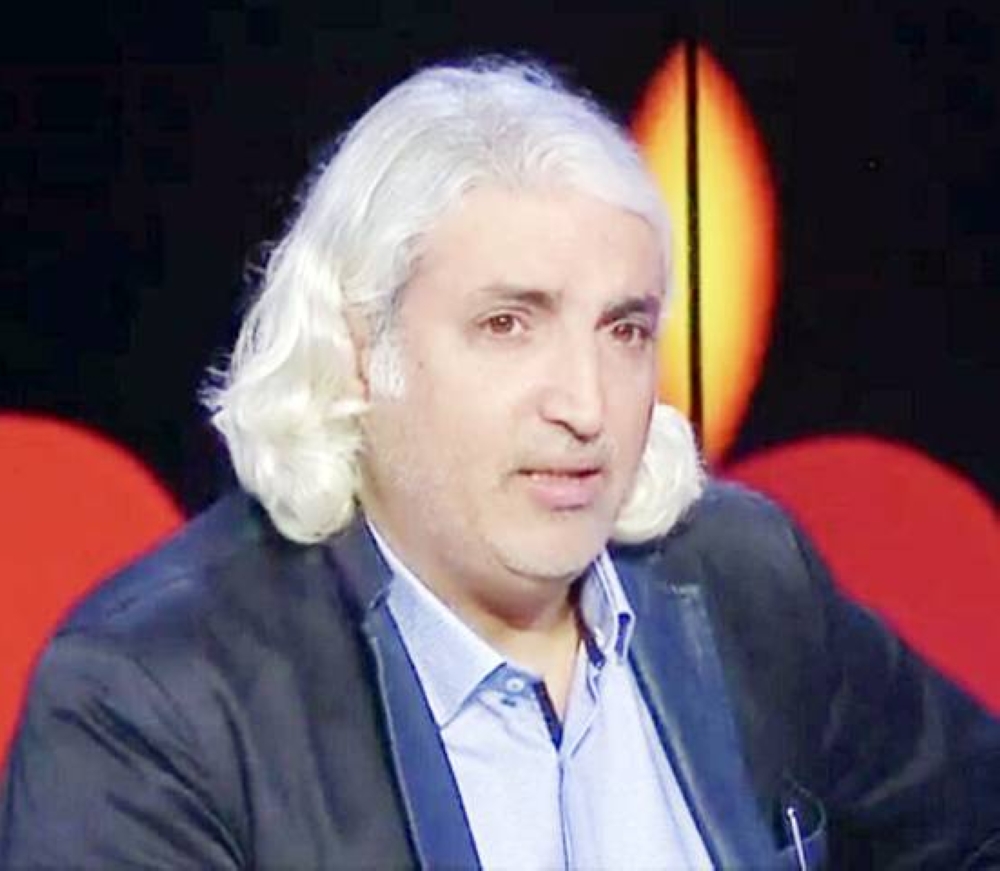
Abdo Khal... Spotted with pain and legends... "A human testimony"!
"As a child, I almost fell into the well; as an adult, I almost fell into the word 'eternity.'" - Zorba, Nicholas Kazantzakis. While the writer

"As a child, I almost fell into the well, and when I grew up, I almost fell into the word of eternity.".
Zorba, by Nikos Kazantzakis.
While the great writer Abdo Khal, with the accumulation of his wonderful novelistic output, has crossed the bridge, in the expression of salvation, I leave the critical reading to those preoccupied with this field, wishing that this paper be a human testimony, which I record through my close knowledge of Abdo, and our friendship that has extended for more than two decades, so that the reader may know something of his intimate personal side, his private worlds, and his radiant psychological treasure, which stands behind the splendor of his words!
In the city of Abha, in southern Saudi Arabia, at the beginning of the year 2000, I was just a young man writing a weekly column for Al-Watan newspaper. A few years before that, I had published poems in various newspapers and magazines, here and there, and on the then-nascent online forums in Saudi Arabia. That was all I had to offer at the time, and my knowledge of Abdu was limited to phone calls and, of course, reading his published works. I learned then that Abdu was coming to my city of Abha, invited to a discussion at the Literary and Cultural Club. I called him immediately and said, "Abdu, please don't make any plans after the event. I'll show you this charming little city." And we agreed! By the way, Abha is one of the most beautiful rural mountain cities, not only in Saudi Arabia but in the Arab world as well. It sits at an altitude of about three thousand feet above sea level, a cold and rainy city, shrouded in fog for most of the year. I thought to myself, this was a great opportunity to take Abdu on a proper tour, to places known only to the locals. The evening arrived, and indeed... when it was over, Abdo apologized to everyone gathered around him for the warm welcome, and we left together in my car. We set off for the ring road, which we call the "belt road," and I said, "I'll show you the beginning of Abu Khayal," a captivating spot overlooking the city from the southwest. From its height, you can see the fog as it returns to engulf the city, creating a breathtaking, surreal scene. We set off... and then what? Only five minutes had passed, and I was driving, talking to Abu Washal, but he didn't answer! I turned around... and there he was, barely able to speak, on the verge of losing consciousness! Instead of the drive, I rushed to the emergency room of the nearest hospital. At the door, the nurses immediately took him to the resuscitation equipment before transferring him, via feeding tube, to a bed in the emergency department to be kept under observation. We spent the entire night in the most beautiful conversation imaginable; Abdo was feeling shy. I'll never forget his words, apologetic and laughing: "Abdullah, it's alright... I'm just a relic of war and legends." He tried his best to convince me to return to my home and family. He swore he was fine, that he was used to these sudden health setbacks, but I refused and stayed with him until his flight to Jeddah was about to depart the following morning. He insisted on leaving, on his own initiative, and don't expect to convince Abdu once he's decided to do something, even on his deathbed. He left, I took him to the airport, and he departed! Even today, Abdu and I still reminisce about our first meeting and get to know each other, telling our friends about it and laughing. As for the situation itself—Abdu's health collapse—it would be repeated years later, on another occasion, under different circumstances, and I'll come back to that later!
In any case, Abdu has a long history, since childhood, of illness and near-death experiences (perhaps this explains the ever-present theme of death in Abdu's stories). He himself recounts that, as a child, he fell gravely ill, weakening him to the point of near death. His mother would place his entire body in a hole the size of his height and then bury him up to his chin with earth. For a month or more, she would repeat this ritual daily for several hours each day. This was a common practice in traditional medicine in the Jizan region and elsewhere. Abdu remembers this daily burial and describes how, one day, a bird landed on his head and nearly pecked his eyes, but he was powerless to shoo it away. After some time, the young boy recovered somewhat, and his mother changed his name to "Abdu" (his original name was "Abdulrahim") to break the spell of his suffering—an ancient Arab custom, as is well known
After that night in Abha, our friendship deepened, and cultural events brought us together year after year. We met once in Beirut, perhaps in 2004, when I had just published my first poetry collection, "Your God." I gave him a copy, with the joy and innocence of a first work, and I will never forget his warmth and genuine happiness, and his talk of the euphoria of his first book. We spent a great deal of time together in Beirut's happy nights, when we used to visit and never miss its exhibitions or its sightseeing without reason. Those were the years, free from worry. This was before that expansive city was hijacked by conflicts, militias, and assassinations, driving away those who had sought refuge in its vastness, and transforming it into a place of fear! A number of our dear Lebanese intellectual friends were angered by Adonis when he said, in essence, with Zahi Wehbe, that Beirut was once a horizontal city, but had ceased to be so! And I think that now, after the very sad circumstances of the present, they agree with him!
I moved to Jeddah in April 2006, marking the beginning of the most beautiful and cherished period in my friendship with my dear and esteemed friend, Abdu. I met a wonderful group of friends from outside the sometimes exhausting cultural scene. We met weekly, sharing a passion for music and football, far removed from the world's nonsense. I brought Abu Washal (Abdu) along to their gathering. From the very first moment, Abdu captivated them with his spontaneity, good nature, and pure heart. His companionship with the group deepened, leading to several trips outside Saudi Arabia. And how sweet travel was with him! This slender man, despite his health issues, transformed into a source of comfort and joy in the company of others, adding to the flavor of the journey!
As for Abdo and me, since that time we have been almost inseparable, and I say that this stage is the clearest, in which I discovered Abdo’s inner, mythical human being up close, and I do not know what to say about him and what is enough for him, but I assure you that any words I write, or description or nature, that I try to bring closer to you, will not even come close to the truth of his meaning, and all I can say is: Abdo is a complete and dazzling being, of human beauty, spontaneous, childlike, honest!
Abdo has an angelic relationship with his two older sisters, whom he treats like his own mother after her passing, may God have mercy on her. He never turned his back on them, even when they were somewhat self-sufficient with their own families. He tirelessly shouldered their burdens and hardships without complaint, boasting, or pride. I know that if I were to mention his meticulous attention to their every detail, even if they weren't in need, he would be angry with me! Listen to Abdo speaking to them both, or to one of them alone, and you will hear a torrent of tenderness and affection! I once said to him, "By God, my friend, even amidst the hustle and bustle of your life, your loyalty and greatness in maintaining this bond with your sisters is truly remarkable." He replied sharply, "What are you saying! I have no credit in this. They are my paradise, my mothers after my own mother." This is a living embodiment of the common proverb among most of our people, which reflects the chivalry of an Arab towards his family: "He who is not good to his family is not good to anyone.".
As for Abdo and his relationship with his family—his wife and children—he is their provider, their friend, their lover, and their paternal father on one hand, and their little child on the other! His wife, his life partner, the virtuous and talented artist Hanan Al-Juhani, is someone Abdo constantly describes as a "blessing." He adds that she has endured him and the hardships of his arduous life with him, "not just with patience, but with love." As for his children, what a remarkable relationship! I have never seen him treat them or speak to them with the authority of a father, but rather with the warmth of a lifelong friend, and this has instilled in them some of his friendly nature! Several months ago, we were invited to the film festival at the King Abdulaziz Center (Ithra) in the eastern part of the country, and we boarded the same flight from Jeddah to Dammam. Coincidentally, his son, Maan, who had recently joined Saudi Arabian Airlines, was part of the flight crew. Ma'an kept coming and going to our seats throughout the flight. We joked with him, and he asked what we needed. Suddenly, I noticed Abdu's eyes welling up, and I thought I understood his feelings. I said to him, "You can't be blamed, my friend. It's truly moving to see your children, all grown up! The child you gave birth to, raised, and nurtured... and here he is today, serving you on your first flight together!" He paused for a moment, then said, "That's true, but it's not about that, Abdullah!" He went on to talk about his son's dreams and his passion for cinema, which we were about to experience, specifically directing. But circumstances hadn't allowed him the opportunity, and life's obligations were pressing, especially after his marriage. Then he looked up to see if his son was nearby, leaned closer, and whispered, "The plane is full of young directors from his generation and his friends. It's a tough trip for both of us, Abdullah!" I found nothing to say to this intensely burning, paternal feeling other than the usual, repetitive refrain: "Losing dreams is painful. I understand, but life is ahead of you, my friend, don't be sad!" He didn't reply! He remained silent for a minute, then changed the subject, launching into his lighthearted comments and giggling. This was one of Abdo's habits; he quickly soothed his pain with laughter!
Another significant relationship, perhaps the most important in Abdo's heart and life, was his bond with his only daughter, Joy. The older this exceptionally intelligent girl grew, the more attached Abdo became to her. She was the spark of his soul, the one who organized his affairs, and the keeper of his secrets. When Joy went to study in France, he was nearly consumed by longing for her! Mention this little angel's name in any conversation, and you'll get whatever you want from Abdo. It became the last, and only, way to get him to relinquish his stubbornness, especially regarding matters concerning his health!
Abdo Khal is a son of the Hindawiya neighborhood in Jeddah, and this neighborhood represents a lifelong treasure for him. His connection to it, his memories there, and his friends is endless. It is the very foundation of his childhood, the playground of his youth, and the beginning of his young adulthood. Incidentally, he has been working on a novel of the same name (Hindawiya) for twenty years, and if you ask him, "Why don't you finish it and publish it?" he answers immediately, with certainty, "If I finish it and publish it... I will die.".
Abdo is never absent from the neighborhood itself. He is accustomed to its alleys and meets his friends there from time to time. You will see the truth of Abdo’s connection to this strange Hindawiyya. In the month of Ramadan, you will find him there at night, at a “Markaz” here, or a “Basta” there, in the challenges of the games of “Dominoes” stones, or the card game “Baloot”, until Suhoor.. and sometimes the sunrise!
There is much more to say, but there is something readers should know... the events of the International Book Fair, which almost claimed him as a victim during that dark period, when the extremist "morality police" were running rampant in the fair and throughout the country, before the joyous transformation that Saudi Arabia is witnessing with its great Vision 2030, under the leadership of the brilliant young Crown Prince Mohammed bin Salman, in recent years, which has created a surprising and great reality! Here are two incidents from the book fair, and you can imagine, by comparison, what was happening outside of it, in those terrible times: The first... I, Abdo, and the critic and writer Dr. Mu'jib Al-Zahrani were strolling through the fair in 2008, and we heard the internal announcement of a book signing for the Saudi writer Halima Muzaffar, so we headed towards her platform to support her, only to be surprised by her isolation and the men not being allowed to approach, in the presence of members of the religious police. We argued with them to get signed copies. The writer saw us from afar and gave the copies to the security guard to hand to us. I simply waved and said, "Thank you, Halima." In the blink of an eye, the religious police arrested us. In front of the crowd at the book fair, they dragged us, like criminals, to their headquarters. The charge: "greeting a foreign woman!" I won't speak about myself or my standing, but imagine that a novelist of Abdo's stature, a critic, a writer, and a university professor of Dr. Mu'jib's position, was treated in such a humiliating way! For the record, His Excellency the Minister of Culture at the time, Dr. Abdulaziz Khoja, appeared on television in an interview with Professor Ahmed Adnan and offered us his apology—a respectable and courageous precedent!
The second incident occurred the following year, 2009, and is what I alluded to at the beginning of this article. On Abdo's last night at the book fair, we were together as usual. Throughout our movement between the publishing houses, extremist religious zealots kept stopping us to attack Abdo, who responded fearlessly. Even when we decided to leave the fair for dinner, they followed us to the outer courtyard. With even greater pressure, they surrounded Abdo again, hurling insults and accusations of heresy, and nearly assaulting him. Yet, by God, he was a thousand times more profound than them in his conscious, sincere faith and spirituality! We barely managed to escape them and continued on. All the way to the restaurant and then the hotel, Abdo complained of a headache, which we thought was just a normal one. Upon arriving at the hotel, I tried to convince him to postpone his flight until dawn. He said "Okay," and we each went to our rooms. Unfortunately, Abdo didn't sleep. In the middle of the night, he went to the airport, boarded the flight, and his headache was worsening, but he was stubborn and defiant. He arrived in Jeddah, and as soon as he entered his home, he collapsed! His family called an ambulance, and they rushed Abdo to the hospital, completely unconscious. The doctors discovered he had suffered a severe stroke. They were utterly astonished at how he had endured the pain of that headache, its gradual escalation, and then managed to board the plane! When Abu Washal awoke, he was unable to speak. The stroke had taken hold, but he miraculously survived, and it is hoped that he will regain some of his speech with time. Even today, the effects of the stroke still impact Abdo's speech. Anyone who knew him and his fluent speech before the stroke knows the stark difference afterward! In short, the extremists nearly destroyed him because of his strong will, but he was and remains stronger than them, even if their blind hatred touched him!
The following year, 2010, Abdo won the Booker Prize for his famous novel "Throwing Sparks," a small act of justice, one of the few acts of fate. This was one of life's greatest responses to its enemies, and a victory for one of its most devoted sons of meaning and beauty! The announcement of Abdo's win over the loudspeakers at the Riyadh Book Fair—the same fair that almost fell victim to its own fanatics and extremism—was a mad moment, like scoring a decisive penalty kick in a heated final. That night, the entire audience at the fair erupted in a single cry of love and pride for Abdo and his writing. And I always say to Abdo, who was at the ceremony in Abu Dhabi, UAE: "If only you had seen what happened, my friend, if only you had seen! You would have felt solace to the ends of the earth!"
This is a small indication of Abdo's impact on Arabic writing, and on us in Saudi Arabia in particular, and especially on the generations that followed him. Abdo, who started independently from the hijacking of ideologies, left and right, was the conscious and organic link between our generations, those who came after him and those who were cut off, and the literary movement in Saudi Arabia since its inception. Apart from the double spread that the Booker Prize achieved for him, Abdo Khal was, and still is, a high example of hard work and progress!
Finally... this is an old gesture, revived for his servant, brimming with joy and pride:
Do you remember when I told you: that the night, the night of this vast existence, stretching out in the corners of the universes, and painting the galaxies with its absolute blackness, with a swift stroke, with the finest feather, from its raging wing! Do you remember when I told you: that when the night was about to invade our defenseless galaxy, it glimpsed within it our small planet Earth, spinning around itself, with sad confusion, stuck in its blue color, then it decided to start with it, it said: I will teach its creatures to count the nights and days, and to observe the stars, and the moods of creatures! Before he could do anything, he saw a folded piece of paper lying on the side of a road, made of mud, written by a very thin boy, speckled with pain and legends, as he tried to create the features of a subjugated woman and her fate, in a story he had not yet finished. He wrote to her: “What harm would it do if I had found you by chance, in my youth, and we had gone out on a walk of love, and returned only to our graves, and the matter and life had ended, in a short walk, during which perhaps we would have plucked the world, and played with it a little, and returned to the earth, to be two adjacent ears of corn. I beg you, what harm would it do?!”.
Well, my friend, I want to tell you: when you write, it's as if you've stepped ahead of the night and seen the sorrow of our human world in its first tragic clarity! And so you capture the wonder of the world, my friend, whenever you begin to create a new novel. So write... write, and save us from our planet!


Culture and Art
The Cashio family sues Michael Jackson for molestation: shocking details
Michael Jackson's second family has turned the tables, filing a lawsuit accusing him of sexual assault in the homes of Elizabeth Taylor and Elton John. Learn the details and the heirs' response.

In a shocking legal development that has reopened dark chapters of the past, four people who were considered for years to be among the closest confidants of the late pop star Michael Jackson have filed a lawsuit accusing him of rape and sexual abuse against them when they were children. The surprise lies not only in the nature of the accusations but also in the identity of the plaintiffs, who belong to the Cashcio family, often described in the media as Jackson's "second family," and who were his first line of defense for decades.
Details of the lawsuit and the alleged locations
The lawsuit, filed on February 27 by brothers Edward, Dominic, and Aldo Cacciu and their sister Marie Nicole Porte, contained harrowing details in a 23-page complaint. The plaintiffs described the late singer as a "serial child predator," alleging that he drugged and sexually abused them for over a decade, beginning in the 1990s when they were between seven and eight years old.
Perhaps the most controversial aspect of the lawsuit is the location of the alleged assaults. Besides the famous Neverland Ranch, Edward Cashio claimed to have been assaulted at Elizabeth Taylor's Swiss home and Elton John's UK home during stops on the Dangerous World Tour between 1992 and 1993. The lawsuit also mentioned assaults on Dominique in France and attempted assaults on sister Marie Nicole in multiple locations, including New York, Las Vegas, and even Bahrain during Jackson's stay there between 2005 and 2006. The lawsuit was careful to point out that Taylor and John were unaware of these alleged incidents in their homes.
A reversal in the family's historical position
This legal move marks a dramatic shift in the relationship between the Cashichion family and Michael Jackson's estate. Historically, members of this family have been cited as proof of Jackson's innocence, having lived and traveled with him for years. Brother Frank Cashichion even published a memoir in 2011 staunchly defending the "King of Pop" and denying any wrongdoing, making these current allegations a shock to the singer's fans and those following the legal proceedings surrounding his estate.
Legal context and impact of the case
This lawsuit adds to a series of legal challenges facing Michael Jackson's estate, bringing back memories of the infamous 2005 trial that ended with his acquittal on all child molestation charges after a five-month ordeal. Despite his death in 2009, Jackson's artistic legacy continues to face serious hurdles in the face of renewed accusations, which directly impact his global image and the artistic projects associated with his name.
The heirs' response: an attempt to extort money
For its part, Michael Jackson's estate responded firmly through attorney Marti Singer, who described the lawsuit as a "desperate attempt" to capitalize on the situation for financial gain. The defense statement revealed that family members had previously filed substantial financial claims, including a request for $213 million followed by another for $40 million, suggesting that this reversal of position after 25 years of staunch defense raises serious questions about the true motives behind the lawsuit.
Culture and Art
Majed El Masry reveals the truth about the fabrication of Ramez Level the Beast prank
Actor Maged El Masry admitted to knowing the host of Ramez Level El Wahsh beforehand, but denied knowing the details of the prank. Learn the full story and see the list of victims.

In a move that put an end to the constant speculation surrounding Ramadan prank shows each year, Egyptian actor Maged El Masry the debate about whether the artists and guests were aware of the nature of the prank they would be subjected to on the show "Ramez Level the Monster" before filming. These statements shed light on the behind-the-scenes workings of one of the most-watched and controversial programs in the Arab world.
Majed Al-Masri's confessions: Partial knowledge and a real injury
In recent media statements, Maged El Masry revealed the details of his participation, confirming that the element of surprise wasn't entirely absent, but it wasn't complete either. El Masry explained, "I knew from the beginning that I was going on a show hosted by Ramez Galal, but I didn't know any details about the nature of the prank or what would happen inside it.".
Al-Masry pointed out that knowing the host's identity didn't prevent physical harm, confirming the prank's violence and seriousness at certain points. He added, "Ramez drove me crazy, and I was actually injured, but thank God it passed without further incident." Regarding his relationship with Ramez Galal after the prank, Al-Masry emphasized the depth of their friendship, saying, "Ramez is like a little brother to me, and we've always been colleagues and friends," which explains the guests' acceptance of the difficult situations they face.
The phenomenon of Ramez Galal's programs: A history of controversy and success
Ramez Galal's prank shows have been a Ramadan staple for many years, evolving year after year in terms of scale and production value. Viewers are always divided between those who believe these shows are merely pre-arranged performances and those who genuinely believe the celebrities' spontaneous reactions. Maged El Masry's comments attempt a middle ground, asserting that while the guest may know the host's identity, they remain unaware of the "terrifying scenario" that awaits them, thus preserving the authenticity of the reactions stemming from fear and surprise.
List of victims of "Ramez Level the Monster"
This season of "Ramez Level the Monster" features a wide array of stars from the worlds of art and sports in Egypt and the Arab world, reflecting the program's immense popularity and its ability to attract big names despite the harshness of the pranks. Among the most prominent names who fell victim to Ramez's pranks this year are:
- Stars of the arts: Ahmed El Sakka, Ghada Adel, Ghada Abdel Razek, Diab, Ahmed Malek, Asmaa Galal, Caroline Azmy, Rahma Mohsen, Mustafa Gharib, Liqaa El Khamissi, Samah Anwar, and Shaimaa Seif.
- Sports stars: Egyptian national team star Zizo, Al-Ahly club star Yasser Ibrahim, and sports critic Omar Al-Dardiri.
- Popular singing stars: Singer Hamo Beka.
The question remains open every year about the limits of humor and danger in this type of program, but the record viewership numbers confirm that it is still the main entertainment meal for the Arab viewer after breakfast.
Culture and Art
Hind Saeed Saleh responds to accusations of disobedience and clarifies the truth behind her statements
Hind Saeed Saleh breaks her silence and responds to accusations of disobedience after fragmented statements about her late father, artist Saeed Saleh, circulated, emphasizing the depth of her relationship with him and the truth of his piety.

Hind Saeed Saleh, daughter of the late Egyptian comedy legend Saeed Saleh, expressed her deep resentment and anger at what she described as a systematic smear campaign targeting her recently. She faced harsh accusations of "disrespect" and of tarnishing her father's image. This came after social media users circulated statements attributed to her, taken out of context, concerning her father's religious observance and performance of prayers.
The truth about the fragmented statements
In a decisive response via her official Facebook account, Hind clarified that the uproar was based on misinformation, stating, "I was surprised by a widely circulated image from an anonymous page containing excerpts from a previous interview I gave." She emphasized that the original statement was from an interview she conducted in 2024, where she spoke candidly about the spiritual and psychological transformation her father underwent during his imprisonment. She pointed out that this ordeal led him to draw closer to God, contrary to the claims made by some that he did not pray.
A barrage of insults and a message to the critics
The late artist's daughter revealed the psychological distress she suffered as a result of these rumors, confirming that she was subjected to a barrage of insults and false accusations of being a "disobedient daughter" who was exposing her father after his death. Visibly moved, she commented, "Only God knows the intentions, and He knows the extent of my love for my father, the depth of my grief, and the unwavering longing I feel for him, no matter how many years pass." She addressed her attackers with a scathing message: "Thank you for the free favors, and I remind you that there is no barrier between the supplication of the wronged and God.".
Saeed Saleh... an icon that will never fade
This controversy serves to highlight the immense place Saeed Saleh holds in the hearts of Arab audiences. The late actor was not merely a passing figure; he was a cornerstone in shaping the consciousness of Egyptian and Arab comedy during the second half of the 20th century. His plays, particularly "Madraset El Moshaghbeen" (School of Mischief) and "El Eyal Kebret" (The Kids Have Grown Up), marked a historical turning point in comedic theater, establishing a school of thought based on improvisation and quick wit, which allowed him to reign supreme in comedy for many years.
An artistic influence that spans generations
The "Sultan of Comedy" passed away in 2014 at the age of 74 from a heart attack, leaving behind a vast artistic legacy of over 500 works spanning cinema, theater, and television. Among his most memorable films are "Salam Ya Sahby" (Peace Be Upon You, My Friend), "Al Mashbouh" (The Suspect), and "Al Halafout" (The Scoundrel), the latter co-starring his longtime collaborator Adel Imam. Saeed Saleh's life, with its successes, failures, and personal moments, remains a rich source of fascination for the public, who continue to engage with everything related to him with love and curiosity. This explains the extreme sensitivity surrounding any statements that touch upon his personal life.
-

 Local News 3 days ago
Jeddah Airport alerts for travelers due to airspace closure and flight disruptions
-
Local News 5 days ago
Saudi Arabia approves regulations for the continued presence of Gulf vehicles: duration and penalties
-
Local news one week ago
The Ministry of Interior begins procedures for a royal pardon for common law prisoners
-
Local news one week ago
The deadline for property registration in Hail and Riyadh is Thursday
-
Sports one week ago
Tickets for the Al-Ahli vs. Al-Hilal King's Cup match postponed: New date
-
Local news one week ago
Under the patronage of the Minister of Information, an agreement was signed between the Ministry of Information and Waves Marketing Company
-
Culture and Art 6 days ago
The Devil's Prisons series was halted: The full story of "The Emperor's" being moved to YouTube
-
Local News 5 days ago
Saudi Energy: A new identity for electricity that aligns with Vision 2030