Culture and Art
The explosion of storytelling and humanity's relationship with myth
No grave is large enough to bury (words), and it is impossible to do so. Let the coffins of our conversations be stars that the universe can contain; there, and only there, will they shine

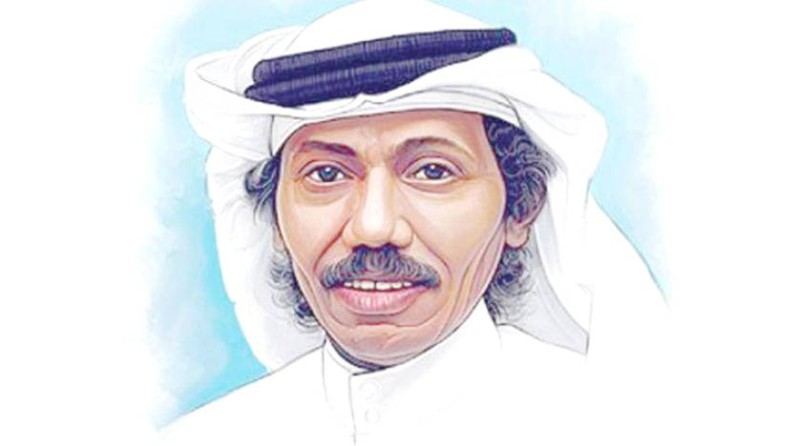
No grave is big enough to bury (the words), and it is impossible to do so.
Let the coffins of our conversations be stars that the universe can accommodate; there, and only there, will they shine to guide us to the effective path for understanding existence, as the myth did in the beginning.
***
The relationship of humanity with myth is a relationship that began with the first creation, and that creation continued to spread the seeds of its existence through successive religions until it reached the major signs of the end of humanity through the sign of the beast, according to the literary concepts of the myth of reality in the Islamic concept.
That is why I find myself repeating that we are remnants of myths that we inhabit and that inhabit us.
When I came to believe in that saying, I began to sense its presence in our lives, and I found that it enveloped everything like a periphery and permeated our practices as a behavioral foundation produced by ancient myths that we practice without realizing that they are remnants of a mythical act that has turned into behavior.
I find myself drawn to defining culture as any action or statement that has settled within society and turned into a behavior or belief practiced by the individual without examination or review.
If we enter through this door, we will find that myth dwells within us and we dwell within it as a belief and behavior, as an act whose source we do not know.
It all started in that early childhood.
In a village nestled on the edge of a huge valley, and from a farming family that knew the details of the land and what its interior produced in terms of fruits, its members had to learn the pains of the fields and treat them before they were reflected in their lives.
From early childhood, I stood on the barren, watered, dry, cracked, thirsty, and dusty land. The land is a being that grieves and rejoices, and the farmer must deal with each of its states according to its circumstances, bringing forth all the myths that have passed through time in order to restore to it some of its joy.
If the drought spreads, poverty will spread among the people. Songs will be brought forth to revive the dead land, an act that is a revival of the legend of the eagle. In a bygone era, the earth and the sky quarreled, and in further enmity, the sky cut off its water from the earth. Years passed, and every year the earth's pain multiplied as the area of drought expanded until there was no longer a place with fruit or trees. Animals and birds died, and humans perished. Faced with this death, the eagle took pity on the earth and its creatures, so it flew high towards the sky and began to sing to it and plead with it to end its quarrel with the earth. Because of the sweetness, freshness, and melodiousness of its singing, the sky turned away from the earth and poured down its rains, so the trees sprouted and bore their fruits, and the earth regained its joy, and its creatures returned to walk on its surface.
In my early childhood I was fortunate to have lived within myths as a story and as an act, because the child's memory is a soaring and inquiring memory from the beginning, and before reaching the dream, since reaching it means the obligation, so that the individual has been provided with what is required and what is not required, while the previous childhood is a penetration of what is required and what is not required.
In my childhood, my question was: if I walked in a straight line, where would I end up?
There was no one to answer my perplexing questions except my mother - may God have mercy on her - who possessed no knowledge except what was said or what she had been fed to answer the huge existential questions, except for the myths passed down by the village in order to silence the insatiable hunger for questions leaping from the tongues of their children.
She sat me down in front of her and said:
If you were to walk on your face—and it would take years—you would fall into a sea of darkness.
In my imagination, the sea of darkness became associated with the night.
The night in the villages is so dark that you cannot see the back of your hand. Any meager light coming from somewhere, whether from a lantern or a star deep in the sky, creates fantasies in the mind of that child, who thinks they are jinn who have come to take his life or kidnap him to the seventh earth.
The seventh earth exists as a scare tactic, implying that those who inhabit it are jinn, and that whoever is kidnapped at night will never see light, as they will live in eternal darkness.
During the nights of the year, we cannot go far or walk in the curves of the village. Even when Ramadan comes, the dark nights turn into a piece of safe night. The absolute belief that God chains up the jinn and devils in Ramadan makes one walk without being afflicted by worries. What happens on nights other than Ramadan was terrifying, while the same action that occurs on other nights turns into real terror.
Life in the village was nothing but a collection of myths through which everything that happened on the ground was explained. One morning, the earth shook and the people shouted for a few moments until it calmed down. They ended up remembering the myth of the bull and knew that the bull had grown tired and wanted to relieve one of its horns from the weight it carried.
My name is Abdul Rahim, and this name has taken many forms because of the legend.
I have the right to say that I lived the legend emotionally and culturally.
Each of us sits with his mother or father and asks how they chose his name, and if the story begins, it will lead you to what was happening to you before you knew anything.
My mother - may God have mercy on her - told me that the one who named me was my older brother, who came to her and said to her:
If you have a son in your womb, name him Abdul Rahim.
Abdul Rahim is a saintly man, one of God's righteous saints. He has a shrine that is visited by the villagers. Popular memory has made the movement of his grave a sign of the Day of Judgment, as it is believed that this righteous man's grave moves annually by a handspan towards meeting the Prophet, may God bless him and grant him peace, in Medina. The grave continues to travel distances until Abdul Rahim's grave reaches the Prophet's grave, may God bless him and grant him peace, at which point the Day of Judgment will occur. This is why they encourage this journey through a chant they sing annually or when they visit his grave, singing:
O Abdul Rahim, O Sabir, be patient
God is with the patient.
In a later stage, the name was influenced by the customs, as the people of Tihama change all names ending with one of the beautiful names of God to (His servant) by deleting the name or attribute and attaching the third-person pronoun (the letter ha) to the name so that its owner may be blessed with all the beautiful attributes and names of God.
Because the area was submerged in a mythical vessel, my name was changed again, as my childhood was marred by numerous diseases, beginning with polio and a succession of diseases known in the area as diseases that a child either had to overcome or his life would end inside a small grave. Many were the coffins that were taken out with every trip to the village cemetery.
And for this reason, my mother - may God have mercy on her - considered me a project of death that must be cut off before the pain became prolonged. As for her, she had trained herself to grieve by losing five of her sons whom she buried in the cemetery at different ages. It pained her to see this child going through the throes of illnesses and coming out of them to continue his journey to a new illness. His pain pained her. She received advice from one of her knowledgeable neighbors to change her son’s name so that he would be saved from death, and my name was changed (which is the nickname that has stayed with me for the rest of my life, as I am not known by any other name among family and relatives).
***
The jinn were known early on through stories and through daily life. The nights in the villages are very dark, and we were told that the day is shared between us humans and the jinn, who come out of their dwellings at night and return to them with the first appearance of the sun.
There are warnings not to go to ruined places at night, as the jinn may kidnap you and you will not return to your family. The advice is made especially strong for beautiful girls, as a jinn may fall in love with her and lure her with tricks into space, kidnap her, and take her down to the seventh earth. There are many stories (of men and women) that the jinn kidnapped them, and the story does not stop there, but continues to tell the stories of these kidnapped people, with some of them returning to explain what happened to them.
The people of the Tihami villages confirm that the jinn share their lives in many things, including eating and drinking. We do not urinate or cleanse ourselves with the bones or skins of dead animals, nor do we urinate on animal dung, as it is their food, nor do we step on a shadow. If a storm blows and leaves fly, their flying means that a jinn has become angry and called upon his family to blow with him to throw dust in the eyes of humans, and every flying leaf is a hiding place for a jinn who participates in blowing, so no human should hold it.
The joyful aspect that the villager is waiting for is that the Prophet Al-Khidr will pass through him. The lucky one is he who passes through him and fulfills his dreams. The presence of the Prophet Al-Khidr is concentrated in the depths of valleys or next to wells and on the Night of Power.
Many villagers believe in the existence of the "name ring" and the possibility of obtaining it. In popular memory, the ring is the ring of the Prophet Solomon, and finding it grants its owner all the wishes he desires. Those seeking wealth also have their other legends, which involve following snakes, especially the "snake of the jewel." This snake carries a priceless jewel with it wherever it goes, which is like its eyes with which it sees. If it reaches the place where it placed the jewel and moves in search of food, whoever sees that jewel must place a cow's tail on top of it and flee immediately, leaving the village for three days. If he stays, he is certain to die.
The legend continues to be present even in death, for there is a mythical creature called the "grave robber." If this creature is harmed by someone, it comes out at night to him, threatening him and shouting at him:
My halal with you
And after you.
If the person threatened is near death, his children or relatives must protect his grave for three days and nights, otherwise the mythical animal (the grave robber) will dig up the dead person's grave and eat him dead... and the curse will continue to haunt his descendants.
There are many myths I have lived through. When the moon is eclipsed, women bang and clatter plates to alert the moon that it has lost its way. Likewise, with a solar eclipse, women turn the mills upside down, indicating that they will die of hunger if the sun disappears, as a kind of appeasement and plea for mercy.
If I wanted to continue mentioning the lifestyle of the villagers, it would take too long, especially since it is linked to a legend that happened somewhere in this world.
I will not be certain of returning every behavior to the time period in which it originated, since our actions are a narrative legacy passed down by nations and incorporated into their lives as a devotional behavior at the beginning, and with the passage of time it has turned into a life and living behavior practiced without its religious reference.
The villager cannot extinguish the fire without mentioning the name of God, for fear of harm that may befall him from extinguishing the fire. This is related to the Zoroastrian religion and keeping the fire burning as it is a symbol of divine light.
The word (Nahi) is prevalent on the tongues of some people in the villages of Tihama, meaning to guarantee what you say or to submit to what you say. Professor Hamza Ali Luqman, in his book Legends from the History of Yemen, states that (Nahi) was a god worshipped in Yemen. Because of the enormous abundance of legends and their transition from a state of worship to a state of behavior, I find myself constantly repeating that we are remnants of legends, a phrase that has stayed with me for a long time, as has been the case with recording and documenting these stories. Whenever I immerse myself in reading a legend, I come across an act and an ancient worship that has turned into a behavior or habit in our current lives.
I became fond of the comparison between behavior and the search for a mythical reference for it. However, the abundance of myths and their changing state from one place to another alerts you to the existence of a dilemma. The first myth, because it was not written, became subject to addition and deletion from one narrator to another. Often, the myth or story has one essence, but it is distorted on the tongue of the one who narrates it, either in response to his social or religious circumstances or according to his whims and his lack of harmony with the narrative he heard. So you find him adding something of his own. When this addition is transferred to another person, and the latter narrates the story, the addition of the narrator who preceded him becomes an essential building block of the story. Perhaps he also adds another building block or omits another event, and the story is transferred from one society to another according to this addition or deletion.
This characteristic is not immune to either awareness or unconsciousness. We see that Jean de La Fontaine (1621-1695), in his introduction to his fables (Fables of La Fontaine), drew much of it from Aesop's fables and wanted his fables to be revived by his touches, radiating vitality, novelty, and fun. He did not merely write them in verse, but added amusing details of his own to the narrative structure. He also added dozens of other fables that made them a means to say much of what he wanted to say in his own way. We also note that the myth, in its initial formation, was written in a poetic form, not a narrative one. This brings us back to the fact that poetry is a stifling tool because it adheres to the conditions of poetry, while narrative gives the narrator a wider space than the poetic space. If the myth is transformed from a tightly constructed structure in poetry, it becomes loose in narrative, especially when the myth becomes common property narrated by the elite and the masses. The common narrators have greatly harmed the construction of the myth in terms of addition and subtraction, and adapting the myth to their lived reality.
The existence of religion also caused the myth to be stripped of being a story of gods and to become a story of humans. This is why we notice that the myths that were narrated after the entry of Islam are fundamentally distorted, as the god turns into a king and the gods of evil turn into jinn. We also notice that the god who is angry with the transformation by the greater god is adapted to the fact that a magician performed the transformation.
It is very difficult - for me - to find a unified structure for any myth, as it turns into fragments of scattered tales that are shared by humans as stories or as actions whose true structure has disappeared and from which thousands of tales have been generated, whose true feature is that they remain and that they have crossed time and are still remaining.
The first part of a paper delivered by the author at the Sheikh Ibrahim bin Mohammed Al Khalifa Center in Bahrain


Culture and Art
Trial of those accused in the dog attack on Zeina and Ahmed Ezz's children
Details of the referral of actress Zeina's neighbor to criminal trial after a dog attacked her children with Ahmed Ezz. The prosecution acquits Zeina and reveals the defendants' negligence in controlling the animal.

The Egyptian courts have witnessed a significant development in the case that recently captured public attention, concerning the attack on the children of actress Zeina and actor Ahmed Ezz by a vicious dog inside a high-end residential compound. The Public Prosecution issued a decisive decision to refer the actress's neighbor and relative (the actual owner of the dog) to urgent criminal trial, charging them with negligence and failure to take precautions in supervising a dangerous animal, thus endangering the lives of the children.
Details of the horrifying incident
The incident unfolded on a quiet day that suddenly turned into chaos and panic inside a five-a-side football pitch for children. While twins Ezz El-Din and Zein El-Din were playing football, a large, unmuzzled dog, unleashed, charged at them and began a vicious chase. The attack resulted in one of the boys falling to the ground and sustaining bruises from the impact as he tried to escape, while the other suffered minor scratches and cuts. The onlookers, stunned and screaming, rushed to the scene to intervene.
Prosecution investigations and conclusive evidence
Investigations conducted by the Public Prosecution, supported by reviewing CCTV footage from the area surrounding the playground and eyewitness testimonies, revealed that the dog was with the neighbor's son and that control over it was completely lost at the critical moment. The investigations also established that the accused failed to take the necessary precautions to control the animal in a public space designated for children's play. Surprisingly, the investigations revealed that the second party initially attempted to deny ownership of the dog, but the security investigations resolved the matter and identified the actual owner, thus placing full legal responsibility on him and the father of the child who was with the dog.
Zeina's innocence and the background of the conflict
In a related development, the prosecution decided to dismiss the complaint filed by the other party against the artist Zeina, in which he accused her of slander, defamation, and assault. The investigation revealed that the artist's reaction stemmed from a natural maternal instinct and a legitimate act of self-defense for her young children immediately following the incident, thus invalidating the charges against her.
Context of the crisis and its societal significance
This incident takes on special significance beyond being merely a quarrel between neighbors, for several reasons. First, it brings renewed attention to the twins of Zeina and Ahmed Ezz, whose lives have long been the subject of media scrutiny due to their protracted legal battle over paternity, making any harm they face a major topic of public discussion. Second, this incident comes at a time of escalating debate in Egypt regarding the "law on the possession of dangerous animals and dogs," particularly after repeated dog attacks in upscale residential compounds. This has recently prompted the Egyptian legislature to increase penalties for owners of aggressive animals that cause harm to others.
The referral of the accused to trial in this case is a deterrent judicial message confirming that living in upscale areas does not grant immunity from the law, and that the safety of children in common spaces is a red line that cannot be compromised, thus turning an incomplete children's game into a judicial precedent awaiting the court's final word.
Culture and Art
Hussam Junaid retires from performing concerts during Ramadan: Details
Syrian artist Hussam Junaid has announced his retirement from performing live concerts due to the decline of the music scene, while confirming he will continue releasing recorded songs. Learn more about the details and reasons behind his decision.

In a surprising move that sparked widespread controversy in Syrian and Arab artistic circles, the famous Syrian artist Hussam Junaid his retirement from performing at concerts and public and private events, attributing his decision to what he described as the negative changes taking place in the artistic scene, coinciding with the arrival of the holy month of Ramadan.
Details of the sudden retirement decision
Junaid announced his retirement from performing live concerts via his official social media accounts, where he addressed a heartfelt message to his fans and followers. The Syrian artist wrote, "To everyone who supported Hussam Junaid from 2009 to 2026, may God never deprive me of you. Today was my last day performing live. Thank God, I have decided to retire from live concerts." Junaid clarified that this decision does not mean his complete disappearance, but rather a shift in his career path, emphasizing, "I will definitely continue to release songs on my YouTube channel and across all platforms, as I am committed to a production company, poets, and composers.".
Reasons for the decision: Preserving the artistic heritage
Junaid's decision wasn't impulsive; it seems to be the culmination of accumulated concerns about the current artistic environment. He justified his move by expressing a desire to preserve his image and artistic standards, saying, "Those who love Hussam Junaid certainly wouldn't accept a decline in his artistic level. My voice and artistry are far superior to what's currently available, and it won't last because there are discerning listeners." This statement reflects a sense of dissatisfaction among a segment of professional artists regarding the recent decline in concert organization standards, audience quality, and the overall atmosphere surrounding commercial events. They prefer to withdraw while at the peak of their careers rather than participate in artistic trends that don't align with their legacy.
Artistic context and career of Hossam Junaid
Hussam Junaid is one of the most prominent voices in the Syrian popular and classical music scene. Over the past decade, he has secured a leading position in concerts and festivals in Syria, Lebanon, and the Arab world. This decision comes at a time when the artistic landscape is undergoing radical transformations, with many artists beginning to rely more heavily on digital platforms and revenue from live streaming and YouTube, rather than depending entirely on demanding concerts that may sometimes fall short of an artist's legacy.
The shift towards digital production
Junaid's confirmation that he will continue releasing songs on YouTube indicates an awareness of the demands of the digital age. This approach allows the artist complete control over the quality of his artistic output, free from the pressures of promoters and the potentially unsuitable conditions of live performances. Junaid apologized to concert promoters, saying, "I love you all from the bottom of my heart, and I apologize to all the promoters I made promises to. I hope you will accept my decision positively." He concluded his message by wishing his fans a blessed Ramadan: "I love you all. You are my family, the ones I grew up with, and you are the ones who raised me. Ramadan Kareem to you all.".
Reactions and timing of Ramadan
The public reacted strongly to this decision, with many linking the timing of the announcement to the start of Ramadan, considering it a positive step towards devoting oneself to worship and self-reflection—a practice followed by some Arab artists during the holy month. Reactions ranged from shock and sadness at his absence from the stage to full support for his decision, which aims to protect his artistic legacy from the vulgarity prevalent in some aspects of the current art scene.
Culture and Art
Austrian girl accuses Mahmoud Hegazi of harassment: details and breakdown
In her first media appearance, the Austrian woman accuses artist Mahmoud Hegazi of harassment and threatening her with his influence, breaking down in tears alongside Tamer Abdel Moneim. Learn the full details of the incident.

In a significant development in a case that sparked widespread controversy on social media and within the artistic community, the Austrian woman accusing Egyptian actor Mahmoud Hegazi of harassment broke her silence in her first media appearance, revealing shocking details about the incident and its subsequent psychological repercussions. This came during a phone interview with the program "Al-Basma" (The Fingerprint), hosted by actor Tamer Abdel Moneim on the "Al-Shams 2" channel.
Details of the threat of influence and fame
The young woman recounted the details of her relationship with the artist Mahmoud Hegazi, explaining that it began as a normal friendship before turning into what she described as a "shocking and painful" experience. She asserted that the artist exploited his position, saying, "Hegazi threatened me with his influence and fame, constantly repeating the phrase 'I'm an artist and I'm famous,' in a blatant attempt to pressure and intimidate me into silence.".
The girl also made sure to deny the rumors circulating about her relationship with the artist’s wife, stressing categorically that she does not know her and has never spoken to her, and that the whole matter was related to her personal acquaintance with Hegazi only.
Breakdown, tears, and confidence in the Egyptian judiciary
The phone interview was deeply emotional, with the young woman breaking down in tears live on air, expressing the immense psychological pressure she was under. Despite her distress, she affirmed her complete faith in the integrity of the Egyptian judiciary to restore her rights, saying, "I believe the truth will prevail." She added that her shock was compounded because she had considered Hegazi a trusted friend before the incident.
In a related context, the girl expressed her deep love for Egypt and its people, noting her great admiration for the leader Adel Imam, and revealed her wish to obtain Egyptian citizenship, reflecting her emotional connection to the country despite the crisis it is going through.
The psychiatric perspective and the repercussions of the crisis
The meeting wasn't limited to the girl's account; it also included input from her treating physician, who revealed the girl's deteriorating psychological state following the incident. The doctor explained that the patient seemed "detached from reality," suffering from severe bouts of sadness and difficulty expressing what she had experienced. She emphasized that the journey to psychological recovery would require time and specialized support to overcome the trauma.
Celebrity issues and their societal impact
This incident has once again brought to the forefront cases involving celebrities, which typically garner widespread media and public attention. Such accusations spark societal debates about the importance of separating artistic life from personal conduct, and the necessity of transparent investigations to uncover the truth. These cases represent a true test of how media and legal mechanisms handle ethical crises, as the public and the artistic community await the outcome of the official investigations in the coming days, amidst continued assurances that the rule of law applies to everyone.
-

 Culture and Art, 1 week ago
The "Between and Between" exhibition in Jeddah: 5 artists reshape Saudi memory
-
Local News 5 days ago
Saudi Arabia's National Arabic Language Policy: 8 Principles to Promote Identity
-
Culture and Art, 1 week ago
Shakira's concert in Jeddah: Details of the international star's first concert in Saudi Arabia
-
Local News 5 days ago
Adopting the National Policy for the Arabic Language: Strengthening Identity and Vision 2030
-
Local News 5 days ago
The Riyadh-Rin-Bisha dual carriageway, spanning 559 km, has been completed
-
Culture and Art, 1 week ago
Ramez Level the Monster: Details of Ramez Galal's program in Ramadan 2026
-
Local news one week ago
Launch of the new Dammam project with investments of 98 billion riyals
-
Local News 4 days ago
The Supreme Court calls for the sighting of the crescent moon of Ramadan 1447 on Tuesday evening