
Culture and Art
Soft power is a weapon in hands that do not know how to use it
No cultural, intellectual, or artistic project can express a national identity except by adhering to its roots, and by the smooth flow of its branches, limbs, and fruits

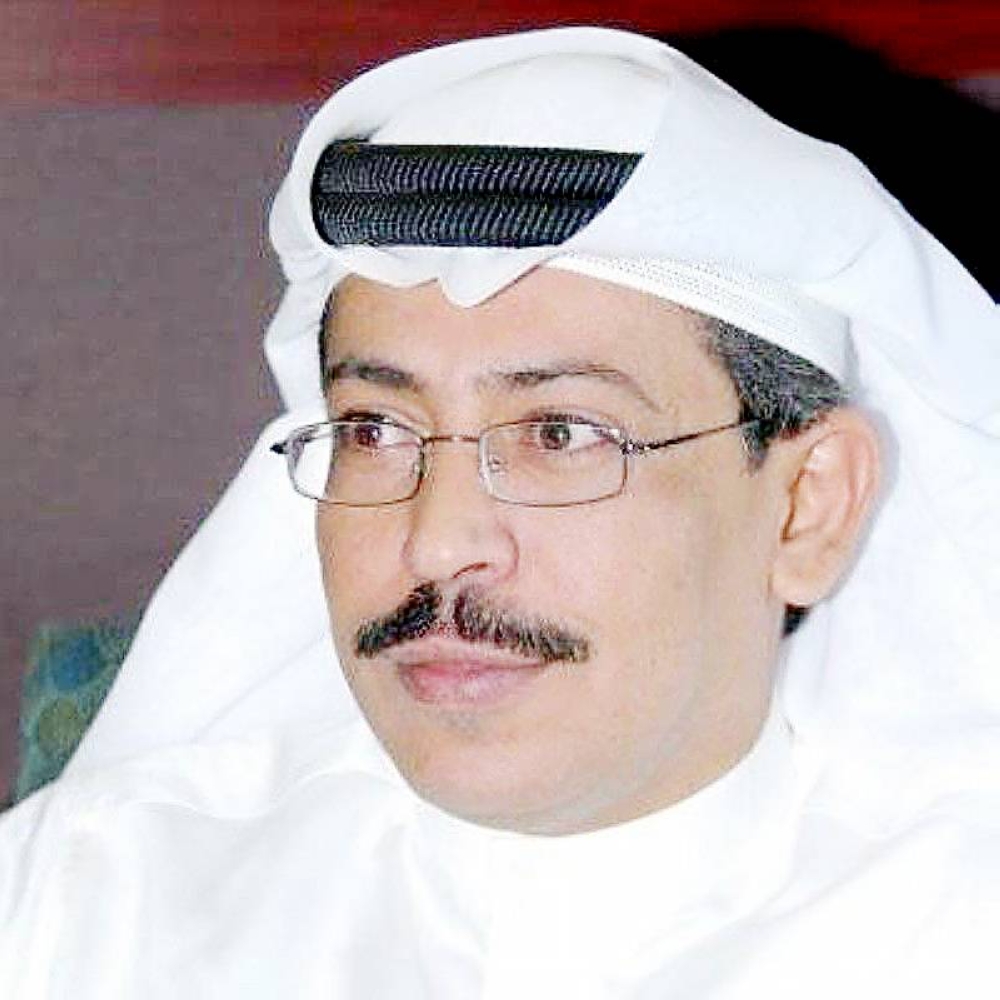
No cultural, intellectual, or artistic project can express a national identity except by adhering to its roots, and by the smooth flow of its branches, twigs, and fruits in all spaces. Perhaps the term soft power will become present in the second decade of the third millennium, due to the inability of hard power to usurp identities and change cultures, let alone erase them. There are models and indicators that show the progress of our soft power in the Arab world, albeit cautiously, but it needs material and legislative components to strengthen its presence, prove its parity, boldly cross the borders of others, and raise the efficiency of elites to perform their role. Some misuse this power due to their limited capabilities, lack of awareness, or prejudice. This review examines some aspects of soft power in the Arab world, through the perspectives of several intellectuals who have observed the advantages and challenges facing this rapidly developing, albeit cautious, force. Poet Hashem Al-Jahdali observes that the term "soft power" is one of the most ambiguous and unclear terms. While relatively recent, it emerged to fill a void in political discourse, which often relies on coercive means, particularly weapons and money. He explains that since the term's inception, the world has been in dire need of it, perhaps even practicing it without the technical connotations it later acquired.
Al-Jahdali argued that soft power is represented in the spiritual, historical, cultural, artistic, intellectual, aesthetic, sports, tourism, media, and food culture of any country, and it tries to impose it on others without violence.
He stressed that UNESCO is working to be the center of the circle to document this heritage, while international politics is its broad field, in light of the multiplicity of circles of polarization, as if there is a battle against prevailing values and the lack of values, which necessitates that every country fortify itself against the other who wants to completely obliterate its heritage without any justification.
He added: In a confused world like this, culture and national identity must regain their role by creating a balance between the past, present, and future. The media bears the responsibility of spreading them, without limiting the bet to the past only, and without building a bridge between the past and the future so that we do not live in the atmosphere of (a series about Bedouin life) nothing more and nothing less.
Writer Lotfi Naaman affirmed that soft power has had a significant presence and role in the Arab world since early times, and continues to do so, despite appearances to some. He pointed out that since Arab countries ventured into various fields of this power, they have successfully activated its influential tools: arts, culture, thought, and a sophisticated press and media that keeps pace with the spirit of the age. He noted that the continued pioneering experience of Egypt in the arts, Lebanon and Morocco in culture and thought, and Saudi Arabia and the Gulf states in media, among others, are clear evidence of this. He explained that each country has the capacity to employ and innovate in the tools of this soft power, even though its strength is a distinctive characteristic of each individual nation.
He considered social media to be the most prominent manifestation of the new soft power weapon, through which its principles can be disseminated. He expressed concern that the unchecked use of social media could lead to the emergence of those incapable of employing this power, and the rise of those who lack understanding, thus diminishing the positive impact of soft power and its targeted, informed messages, due to the negative influence of ignorance and the pretense of knowledge.
Novelist Ali al-Muqri considered soft power a fluid concept dependent on political and cultural backgrounds, and its application varies according to general social conditions. While it was practiced differently during the Cold War, or what is known as the conflict between capitalist and socialist states, than it is today, the nature and objectives of this power have evolved.
Al-Muqri noted that some Arab countries have begun to focus on establishing an infrastructure that qualifies them for an advanced position in this field, given that countries like Egypt and Lebanon were at the forefront in possessing this power in the past, and the political activity of local and Arab forces was accompanied by broad cultural activity at all levels, such as the spread of songs, cinema, books, literature and arts in general, in addition to open social life and press and personal freedoms.
He believes that at the moment, there seems to be a renaissance in these fields in Saudi Arabia, the UAE and Qatar, but this renaissance lacks some necessary foundations or a clear methodology in how to practice it and legislation that promotes it. He pointed out that one of the Arab countries tried to activate the field of book publishing through translation, but it entrusted the task to its cultural attaché in one of the Arab countries, which reduced the chance of success of this goal, since no one reads books that are published with official labels and in a style that does not take into account the arts of publishing.
He added: Some Arab countries previously used London and Paris as platforms for disseminating their media propaganda. Some succeeded in this, while others failed, and their impact remained limited, as these efforts did not contribute to spreading any particular idea widely due to the absence of open social structures that support such attempts. He pointed out that any propaganda effort, especially in the cultural sphere, cannot achieve the desired success without integration with other aspects—political, social, and economic. With the decline of these aspects in Egypt, Lebanon, and also Kuwait, the soft power that was a prominent feature of these countries has also declined. Al-Muqri suggested that the main reason for this decline is the absence of major development projects.
Al-Rumaihi: The Kingdom enhances its soft power with a knowledge society
Professor of Political Sociology, Dr. Muhammad Al-Rumaihi, explained that since academic Joseph Nye coined his concept of “soft power” in his book “Committed to Leading in 1990,” and returned to it repeatedly and extensively in his second book “Soft Power: The Means to Success in Foreign Policy” (2004), the concept of “soft power” is something American academics proudly refer to, boasting of that great and influential power (cinema, music, books, modern technology, the system of government, the independent judiciary, and even jeans), which they see as the tools that demolished the Berlin Wall before the real tools and bulldozers began to demolish it! The concept has also been widely used in international literature.
Al-Rumaihi emphasized that the concept of “soft power” is present in political literature around the world and in diplomatic conferences, and it means “the power that a society possesses in order to convince others, not only of the correctness of its path, but also of the necessity for others to voluntarily follow its example”; that is, to subdue others without the need for what is known as “hard power.”.
He pointed out that the Gulf states possess numerous sources of soft power today, whether administrative, developmental, or cultural, and each country has, so to speak, a surplus of soft power. The Gulf states share some of these sources of soft power, while others differ. There is a clearly defined developmental model stretching from Dubai to Riyadh, from Manama to Muscat, and from Doha to Kuwait, albeit to varying degrees. This model has witnessed remarkable progress in planning and construction, with wide roads, towering buildings, and rapid transportation systems that rival, and perhaps even surpass, those found in the capitals and cities of developed countries. This developmental model is a positive indicator of soft power, particularly its free-market economic model, modern education, and advanced technological management that prioritizes efficiency and speed.
In recent years, the Kingdom has become an attractive venue for conferences and meetings at a high level of representation, as well as a hub for global investment. The knowledge society has recorded steady growth, given that the Kingdom is the largest country in terms of area and population in the Gulf Cooperation Council countries, and is witnessing the activation of the 2030 development vision conceived and adopted by Crown Prince Mohammed bin Salman, which includes a huge development revolution in all fields, whether in infrastructure or in soft power in its various forms.
He pointed out that about a year ago, the Kingdom sent (a young man and a young woman) into space, and the world was amazed by that scene. Its students also won 22 awards in international scientific competitions with the participation of 80 countries, and their share was abundant and exceeded that obtained by major countries with long-established scientific traditions, such as Britain, for the pre-university stage. These are examples of a number of projects, whether material or moral, that can be observed in the development of the modern Kingdom. Global public opinion (and even Arab opinion) has shifted from criticizing what is happening in the Kingdom (and most of the criticism was political and had purposes) to almost continuous praise for the development process that is taking the country to compete with major countries, which has provided the Kingdom with a remarkable soft power.
He attributed this success to the presence of a leadership with a clear vision, who knew where they wanted to take society, a leadership that was both scientific and courageous, and also to the presence of a large number of highly educated people who were the product of modern scientific institutions, which came to produce cinema and series, to publish books, and to make outstanding progress in the use of technology to provide services to the citizen, and became a model for others.
All of the above, along with the foreign policies adopted by the Kingdom in recent years, which are building bridges between East and West, near and far, can comfortably be described as the Kingdom’s “soft power”.


Culture and Art
The death of artist Huda Shaarawi “Umm Zaki” and her funeral in Damascus
The Syrian Artists Syndicate mourned the passing of the esteemed actress Huda Shaarawi, famous for her role as "Umm Zaki" in Bab Al-Hara. Learn about her artistic career and the details of her death.
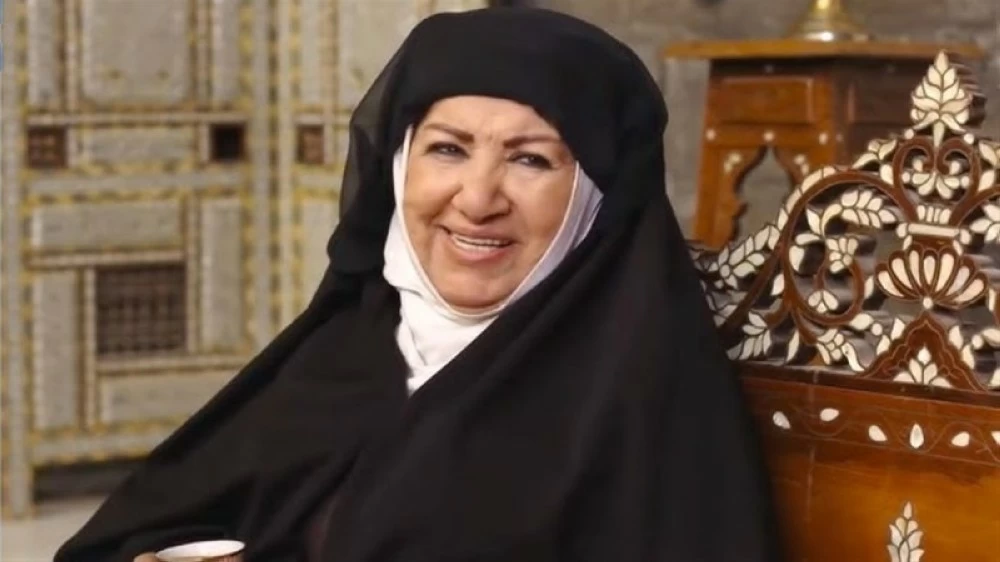
Funeral procession for the artist Huda Shaarawi in Damascus
The head of the Syrian Artists Syndicate, Mohsen Ghazi, announced the death of the esteemed Syrian actress Huda Shaarawi at the age of 85, after a long and distinguished career spanning decades, during which she left an indelible mark on the memory of the Arab public. He confirmed that the funeral procession for the late actress will depart after noon prayers from the Lala Pasha Mosque in Damascus, and she will be laid to rest in the family cemetery, thus concluding an important chapter in the history of Syrian art.
An artistic journey from radio to television
Huda Shaarawi was born in the historic Shaghour neighborhood of Damascus on October 28, 1938, and her passion for art began at a young age. Her true breakthrough came through the airwaves of Damascus Radio in the 1950s, where she participated in numerous radio programs that honed her talent and vocal expression. With the launch of Syrian Arab Television in 1960, Shaarawi was one of the founding names who transitioned to the small screen, becoming a familiar face to Syrian and Arab households. Her roles spanned both theater and television, and she performed in comedic and tragic works that demonstrated her exceptional artistic abilities.
“Umm Zaki”... the character who captured the hearts of millions
Despite her long and illustrious career, the character of "Umm Zaki" in the popular series "Bab Al-Hara" remains the iconic role synonymous with Huda Shaarawi. She portrayed the role of the "daya" (midwife) and traditional herbalist in the old Damascene quarter with unparalleled skill, transforming the character into a cultural symbol that transcended the series' boundaries. With her authentic Damascene accent, her folk wisdom, and her interventions in the affairs of the neighborhood's residents, "Umm Zaki" became an integral part of the collective memory of the Arab viewer. This role not only brought her widespread fame but also cemented her status as an artist capable of embodying the most subtle nuances of the traditional Damascene character.
Artistic legacy and lasting influence
Huda Shaarawi's career wasn't limited to "Bab Al-Hara"; it encompassed dozens of prominent television, theatrical, and cinematic works, including the series "Yawmiyat Mudir Aam" (General Manager's Diaries), "A'ilat Khams Nujoum" (Five-Star Family), and "Maraya" (Mirrors). Her death came as a shock to the artistic community in Syria and the Arab world, with her fellow artists and artistic institutions rushing to mourn her, praising her talent, character, and dedication to her work. Her passing is considered a great loss to Syrian drama, which has lost one of its cornerstones and a part of its living memory. Huda Shaarawi will remain in the hearts of her fans as a genuine artist who managed to enter every Arab home and leave an indelible mark.
Culture and Art
Huda Shaarawi: Farewell to “Umm Zaki,” the icon of Syrian drama
The tragic passing of Syrian actress Huda Shaarawi, "Umm Zaki" from Bab Al-Hara. We review her journey from a daring childhood to an indelible mark on the history of Arab art, and her tragic end.
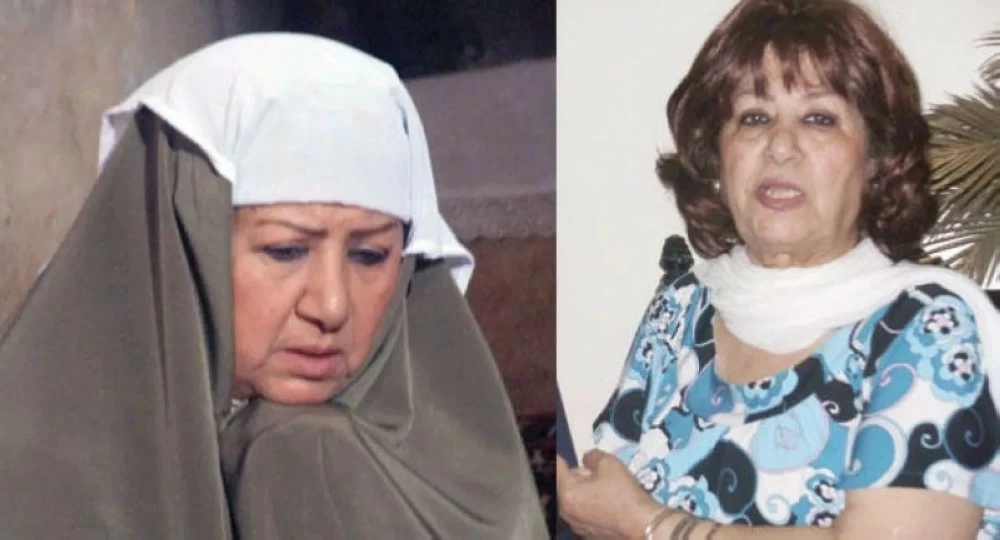
On a sorrowful Damascus morning, the curtain fell on the life of one of the most prominent icons of Syrian drama, actress Huda Shaarawi, who was found dead in her home, leaving behind a profound shock in the artistic community and across the Arab world. This tragic and solitary end stood in stark contrast to a career brimming with fame and success that spanned more than seven decades, during which she gifted art and audiences with unforgettable moments of life, laughter, and tears.
The passing of Huda Shaarawi was more than just the news of an artist's death; it marked the end of an era in the history of Syrian drama, a genre that shaped the consciousness of generations. Shaarawi grew up in a time when Syrian drama was building its glory, becoming a leading artistic force in the Arab world. She witnessed and participated in this golden age, as Syrian productions moved from local screens to every Arab home, carrying with them authentic stories and unforgettable faces, of which Huda Shaarawi was one of the most prominent. She lived through the transformation of art from black and white to the era of mass production, maintaining her presence as a constant artistic force representing authenticity and quality.
A rebellious childhood and a bold beginning
Huda Shaarawi was born in 1938 in the historic Shaghour neighborhood of Damascus, in a conservative environment that did not consider art a suitable profession for women. But her passion was stronger than any social convention. At the age of nine, she took her first step towards her dream by joining Damascus Radio, with a confident voice and rare determination. She faced strong family opposition that even amounted to a ban, but she did not give up. In an unprecedented move at the time, she submitted a formal request to appear on television, breaking down barriers and opening the doors to fame that remained open for 72 years of continuous contribution.
“Umm Zaki”: A character that transcended the screen
Although her artistic career includes more than 50 television works and significant theatrical and cinematic roles, such as her role as "Umm Taysir" in the popular comedy series "Five-Star Family," the character of "Umm Zaki" in the series "Bab Al-Hara" was the crowning achievement of her career. "Umm Zaki" was not merely the neighborhood midwife or the nosy woman; she became an Arab cultural icon. Huda Shaarawi was able to imbue the character with soul and authenticity, making her a mirror of the simple, strong, witty, and cherished Damascene woman, the keeper of her neighborhood's secrets. The character's influence transcended the borders of Syria, with the name "Umm Zaki" and her sayings becoming part of everyday speech in many Arab countries, demonstrating art's ability to cross borders and create universal symbols.
A lasting legacy and a painful end
The role of “Umm Zaki” was a testament to Huda Shaarawi’s ability to touch the hearts of the public. She transformed from a seasoned actress into a part of the collective Arab memory. For this reason, the news of her passing alone in her home was so painful and heartbreaking, a tragic end for an artist who lived her life among and for the people. Huda Shaarawi has departed physically, but she left behind a rich artistic legacy and the immortal character of “Umm Zaki,” which will remain alive in the memory of millions, a testament to a beautiful era of authentic art and to the story of an exceptional woman who defied the odds to create her own legend.
Culture and Art
Syrian artist Huda Shaarawi was killed in Damascus; investigations are underway
The Syrian Ministry of Interior announced the murder of renowned artist Huda Shaarawi at her home in Damascus. Details of the incident and the ongoing investigation into the crime, which has shocked the artistic community, are forthcoming.
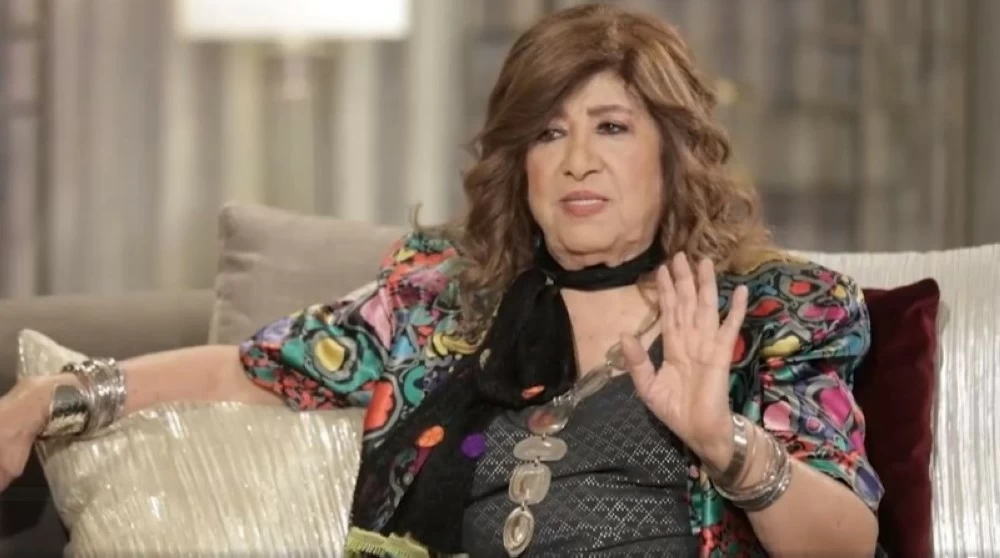
The Syrian Ministry of Interior announced the opening of a comprehensive investigation into the murder of renowned artist Huda Shaarawi, who was found dead in her home in the historic Bab Sreijeh neighborhood in the heart of Damascus. In an official statement, the Ministry confirmed that internal security units and criminal investigation teams immediately began the necessary procedures, cordoning off the crime scene and collecting forensic evidence to document all field findings. The aim is to uncover the circumstances surrounding this tragic crime, which has shocked the Syrian artistic community and society at large.
Background of the event and the importance of the late artist
The late Huda Shaarawi was one of the most prominent stars of Syrian drama, with a career spanning decades during which she delivered unforgettable performances. Her name and persona became synonymous with the Arab audience, particularly through her iconic role as "Umm Zaki" in the popular series "Bab Al-Hara," a character who embodied the quintessential Damascene woman with her wisdom and strength of character. Shaarawi began her artistic career in the 1960s, participating in dozens of television, radio, and theatrical productions, making her an integral part of Syrian and Arab artistic memory. Her tragic death is not only a loss to the arts but also raises deep concerns about the safety of public figures in the country.
Local and regional impact of crime
Locally, the incident sparked widespread shock, with social media flooded with expressions of grief and condemnation. Fellow artists and official artistic institutions mourned her passing, demanding the swift apprehension and prosecution of the perpetrators. This crime underscores the ongoing security challenges facing the Syrian capital, despite the relative stability achieved in recent years. Regionally, the Arab public reacted with sorrow to the news, given the high esteem in which Syrian drama and the late artist were held. The incident is seen as part of the tragedies that have befallen Syria, which have not spared its artistic and cultural icons.
Investigations continue and public anticipation
The Ministry of Interior clarified that the investigations are still in their initial stages, and that specialized teams are working around the clock to analyze evidence and question potential witnesses in order to determine the motives behind the crime and identify those involved. A sense of anticipation prevails among the Syrian public regarding the results of the investigations, with great hope that the authorities will be able to achieve justice for the family of the deceased artist and her fans, and put an end to such crimes targeting prominent figures in society.
-

 Local News 4 days ago
Landslide in Riyadh: Details of the incident in Al-Sahafa neighborhood and containment efforts
-
 Local News 5 days ago
The death penalty was carried out against a citizen who stabbed another to death in Tabuk
-
 Culture and Art, 1 week ago
Ramez Galal in Ramadan 2026: Details of the bloody prank show
-
 Local News 6 days ago
First birth on the Riyadh train: A heartwarming story at Andalus station
-
 Culture and Art 4 days ago
Haifa Wehbe's absence in Riyadh: A photo crisis or a strained relationship with the media?
-
 Local News 4 days ago
Riyadh collapse: Emergency plans to secure water after a main pipeline burst
-
 Culture and Art 4 days ago
City Kitchen series: A drama of conflict and the middle class during Ramadan
-

 Culture and Art 4 days ago
The series "Kasra": Dawood Hussein in a moving social drama this Ramadan