
Culture and Art
Poet Lina Al-Tayyibi: Critics' celebration of my femininity and beauty has wronged my writing
Ever since the poet Lina Al-Tayyibi took over the care of “Mint of the Family,” she has been fascinated by the herb whose fragrance leaps over the walls

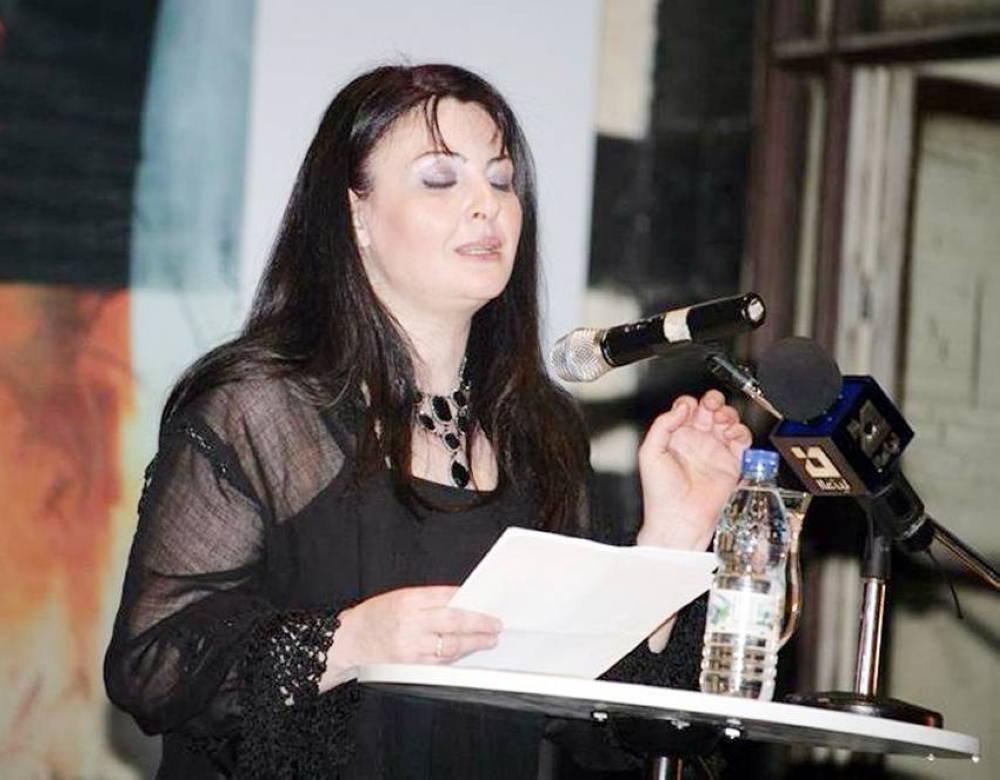
Ever since poet Lina Al-Tayyibi took charge of "The Mint of the Family," she has been captivated by the herb whose fragrance leaps over walls and perfumes neighbors' doors. For this adventurous poet, words are verdant, fragrant, flavorful, and tasteful. From them, a silence is born, completing her prayer. She dreams of many wings so she can soar to wider horizons. Between what Syria is going through today and what this poet, whose spirit is imbued with the fragrance of homelands, aspires to, we journey through the emotions and literary experiences of this space's guest. Here is the text of the interview:
• When did the spark of creativity ignite in Lina Al-Tayyibi's soul?
•• I grew up in my grandfather’s house. The family library at that time contained books of different orientations and diversity. The book of Al-Mutanabbi was based on the book of Nizar Qabbani, and with them, as I remember at that time, was a book by Ansi Al-Hajj.
A library that brought together Al-Qasimi in “The World Is Not a Mind” alongside Mustafa Mahmoud and Abdul Rahman Al-Badawi, novels with consumerist frameworks and translated creative novels.
My grandmother, who only completed the fifth grade of elementary school, was an avid reader who devoured all books. My aunt wrote poetry, and so did my other aunt; they wrote in a style similar to Qabbani, and then my uncle in his love poems, a struggle between the old and the new, between tradition and modernity.
I remember that I used to imitate my aunt Mona at first; I was very influenced by her. But my first poem was written when I was 11 years old, and it was an attempt at meter and rhythm, and I wrote it about Lebanon.
• What writing skills gave you the courage to publish?
•• The home first had a profound impact on my development. My diverse and sometimes contradictory readings, my openness to opposing viewpoints to understand his point of view, and consequently my refusal to be complacent with the prevailing or existing norms, my belief that difference is not always better, but that a genuine belief in difference can create something better.
• Who deserves credit for your experience?
I can't say there's one single person who deserves credit, but rather a constellation of poets: Al-Maghout with his rebellious spirit, Unsi al-Hajj with the mysticism of his words, and Said Akl with the elegance of his vocabulary. Then, later on, came the poets of the prose poem of that era, such as Nouri al-Jarrah, Amjad Nasser, Salah Faiq, and Sarkon Boulos. But the female element was absent at that time, except in terms of shaping my culture. I didn't find any real influence from the pioneering women of that era, such as Nazik al-Malaika, May Ziadeh, Ghada al-Samman, or others. Perhaps the poet who caught my attention at that time was Saniya Saleh, who was overshadowed by Al-Maghout's brilliance. As for the one who published my work for the first time in an official newspaper, it was the poet Shawqi Abi Shaqra in the newspaper "An-Nahar," and this step was one of my most important motivations, especially when he asked me to go to the accounting department to collect my payment. That day, that amount meant a lot to me, even though it was a small amount, and even though my family were well-off, but when I held the (sweat) of my writing, nothing in this world was worth it.
• In an environment that included Al-Maghout, Mamdouh Adwan, Ali Al-Jundi, and Nadhir Al-Azma, weren't you hesitant to write?
•• I was raised between Lebanon and Syria, between my grandfather’s family home in Lebanon and my mother’s home in Damascus. Lebanon was more open to poetic experiences and to culture in general. There, Arab intellectuals used to meet in almost permanent conferences and festivals. Perhaps that’s why I belonged to the broader concept. Until the publication of my first collection (Sun in a Closet), and despite my presence in poetry before the publication of the collection, I was hesitant to say the words “I am a poet.” But after the publication of the collection, I found my collection standing on the library shelves alongside poets I had been hesitant to call. At that time, I admitted to myself that I wanted to be distinguished and I did not want to be a number.
• Whose taste is associated with, or intersected with?
Muhammad al-Maghout and Ansi al-Hajj were both Sufi poets. Ansi al-Hajj always captivated me with his elegance—of course, I'm not speaking about him personally, but there was an intertwining of the person and the text. Al-Hajj possessed a flowing yet impactful language, imbued with a profound philosophical depth. Later, I even encountered the work of those who published after me, or whose experiences I came across later due to geographical distance.
• How did the reader and critic receive your texts?
The praise, sometimes for me as a woman, sometimes for me as beautiful (at that time), was a criticism that greatly wronged me and negatively affected me. There was a kind of celebration of the female form rather than the poet, with phrases like "silk fingers etching the ink of the poem." But amidst this, there were those who criticized me for criticizing the prose poem, and there were those who celebrated my work neutrally or criticized me neutrally.
• What was the first collection of poems and when was it published?
•• Sun in a Closet, 1988.
• Did the first edition place a burden on you, and how did you overcome it?
Typically, no writer or artist surpasses a completed stage until they encounter the light. The moment you publish a book or exhibit your paintings, a new starting point is immediately established within you, just as when you construct a building. After "Sun in a Closet," I felt I had become a poet with a distinct presence, but I also had that fear of not surpassing myself... for the celebration of a firstborn is usually not the same as the celebration of a second.
• Why have some described you as a rebellious poet?
I don't know if I'm a rebel! What I do know is that since childhood I've adopted the principle that what I'm afraid to say publicly shouldn't be done in secret. This has nothing to do with any religious or philosophical interpretation; it means that I also wouldn't write a poem that breaks a widely accepted taboo if I couldn't at least discuss that taboo with those around me. The decision has to come from within, and when it does, I become a hurricane.
• How does your poetry triumph over spatial alienation and emotional estrangement?
One day, while I was at the Medellín International Poetry Festival in Colombia, the festival committee gave me a list of the areas where I would recite poetry. They said: The focus has been on evenings for you in places far from the city and almost remote. There live old people who have been left alone, suffering from loneliness. We found in your translated poems a beautiful meaning of loneliness, and how a person can make a whole world out of a small room. Spatial alienation is not necessarily emotional alienation, but the feeling of loneliness in a world teeming with humanity is alienation.
• Through what eyes do you see the world?
•• Dark and unjust, where human brutality has killed, and in order to survive we must cling to our inner selves.
A quote by Nietzsche has become very much associated with my memory since the beginning of the Syrian revolution: “Beware when you fight monsters, lest you become one of them, and always remember when you stare into the abyss, the abyss is staring back at you.”.
• How do you interpret the distance between the specters of September and the events of December?
We need a major overhaul, a mending of the cracks within us all. Speaking for myself, I've lost so much. I've lost that spirit of mine, that woman who fears for the swallow's song in winter. Blood mixed with dust has become commonplace. The wounds of the soul are deep and terrifying. When I look around me now, and consider the overall picture, yes, we removed the dictator and triumphed, but our people need repair and rebuilding. Our souls are wounded, and the scars of the little dictator are still present in each of us to a great extent (of course, I'm not generalizing). But I know we must temper our emotions for the sake of Syria's future. We need to build bridges with others and understand their perspectives, which seems to require a great deal of work among the intellectuals of the Syrian people.
We Syrians must unite, setting aside our differences, whether intellectual or ideological. This requires time and a system that strikes deep within.
• What text would you like to write?
•• This is a novel I've worked on for a long time, but I've always neglected it due to emotional fluctuations, mostly related to Syria, as well as my whims. I hope to finish my novel, which is almost complete and currently undergoing careful reading and revision.
• What does it mean for a poet to be in a relationship with an artist?
I was connected to an intellectual before he was an artist, and culture is the essence of our lives. My dreams of homelands where the sun shines unite me with Naseer Shamma, and we were also united by principles. Pain and joy, elation and sorrow, brought us together, and these are concepts that transcend the artist and the poet.
• Are you reassured about Syria, and what are you afraid of for it?
Now, as we say, "Syria is on the brink of disaster," but I have hope in its intellectuals. We have grown accustomed to facing fierce attacks over the past 14 years. Let's say, as Gustave Le Bon put it in *The Crowd: A Study of the Popular Mind*, "The masses are irrational." I believe that Syrian intellectuals must now stand up for Syria first and foremost, setting aside any ideologies. The Syrian people need the awareness that the previous regime successfully suppressed among a significant segment of the population.
This is a difficult phase, and its full implications are not yet clear. It is wise not to become complacent, nor to succumb to fear. I fear for Syria because of us—the Syrians—if we do not come together. If we do come together and understand one another, we will build the future together. I also fear the extremism that the previous regime fostered.
• Which way did the sun turn from your closet?
•• Perhaps she is still waiting for me to open the closet... and the time has come.


Culture and Art
The truth about the sale of Sherine Abdel Wahab's YouTube channel: A decisive legal response
Sherine Abdel Wahab's lawyer denies selling her official YouTube channel and warns against dealing with those who have taken over the accounts. Details of the legal crisis and ongoing investigations are available here.

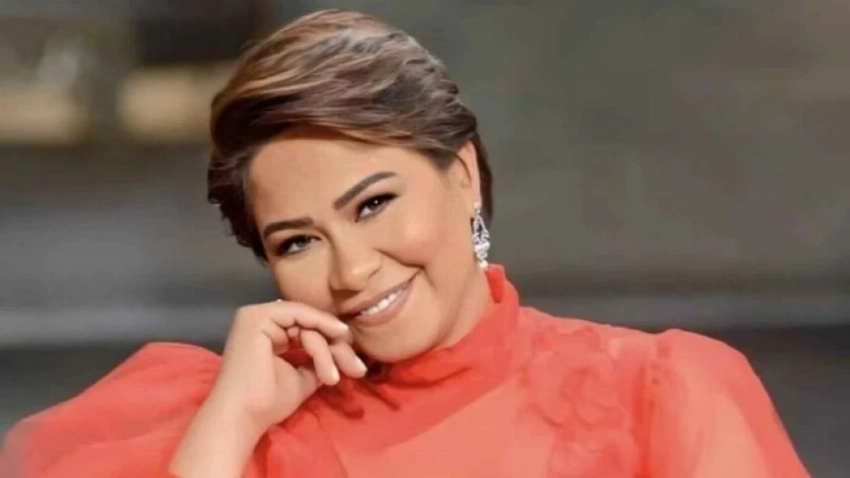
Yasser Qantoush, the lawyer and legal representative of renowned Egyptian singer Sherine Abdel Wahab, has put an end to the recent controversy surrounding reports of the sale of the artist's official YouTube channel. Qantoush categorically denied the veracity of these reports, asserting that the artist has not relinquished her digital rights nor entered into any agreement to sell the channel.
Details of the legal dispute and ongoing investigations
The official statement issued by the artist's legal office clarified that the Public Prosecution in Cairo is continuing its extensive investigations into case number 455 of 2025, Misdemeanors (Economic Cases, Al-Basateen). These investigations are part of the artist's efforts to reclaim her stolen rights. The statement emphasized that Sherine Abdel Wahab is not a party to any sale transaction, but rather a victim of the illegal seizure of her digital assets.
The office indicated that the person who was previously responsible for managing the artist’s official pages is facing charges of seizing the channel and exploiting it to generate financial profits without obtaining legal permission or authorization from the original rights holder, which is a clear violation of intellectual property rights and the laws regulating digital transactions in Egypt.
The importance of digital platforms and the impact of the crisis
This issue is particularly important given Sherine Abdel Wahab's significant artistic standing both locally and regionally. In today's world, official YouTube channels and social media platforms are the primary artery connecting artists to their audiences, and the main source for releasing new work and generating revenue. Therefore, losing control of these platforms not only represents a financial loss, but also hinders direct communication with millions of fans across the Arab world and negatively impacts the marketing strategy for any new artistic endeavor.
Previous legal stance and stern warnings
The legal statement was based on the strength of the artist’s legal position, pointing to previous court rulings that cleared Sherine Abdel Wahab of the accusations that some had tried to attach to her in previous periods, which strengthens her position in the current dispute to recover her rights.
In closing, legal advisor Yasser Qantoush issued a stern warning to the public, as well as all companies and media and advertising agencies, against interacting with any pages currently bearing Sherine Abdel Wahab's name on YouTube, TikTok, or X (formerly Twitter). He emphasized that the exclusive ownership of these accounts belongs solely to the artist, and that their current management is without her official authorization.
The office affirmed its intention to take all strict legal measures and prosecute any entity or individual proven to be dealing with the perpetrators of these pages, or contributing to profiting from them illegally, holding violators fully legally responsible, both criminally and civilly.
Culture and Art
The series "Rouh OFF" was permanently canceled by a decision of the Actors' Syndicate
The Actors' Syndicate has decided to permanently halt the airing of the series "Rouh OFF" during Ramadan due to violations of regulations and the use of blogger Umm Jasser. Learn the full details.
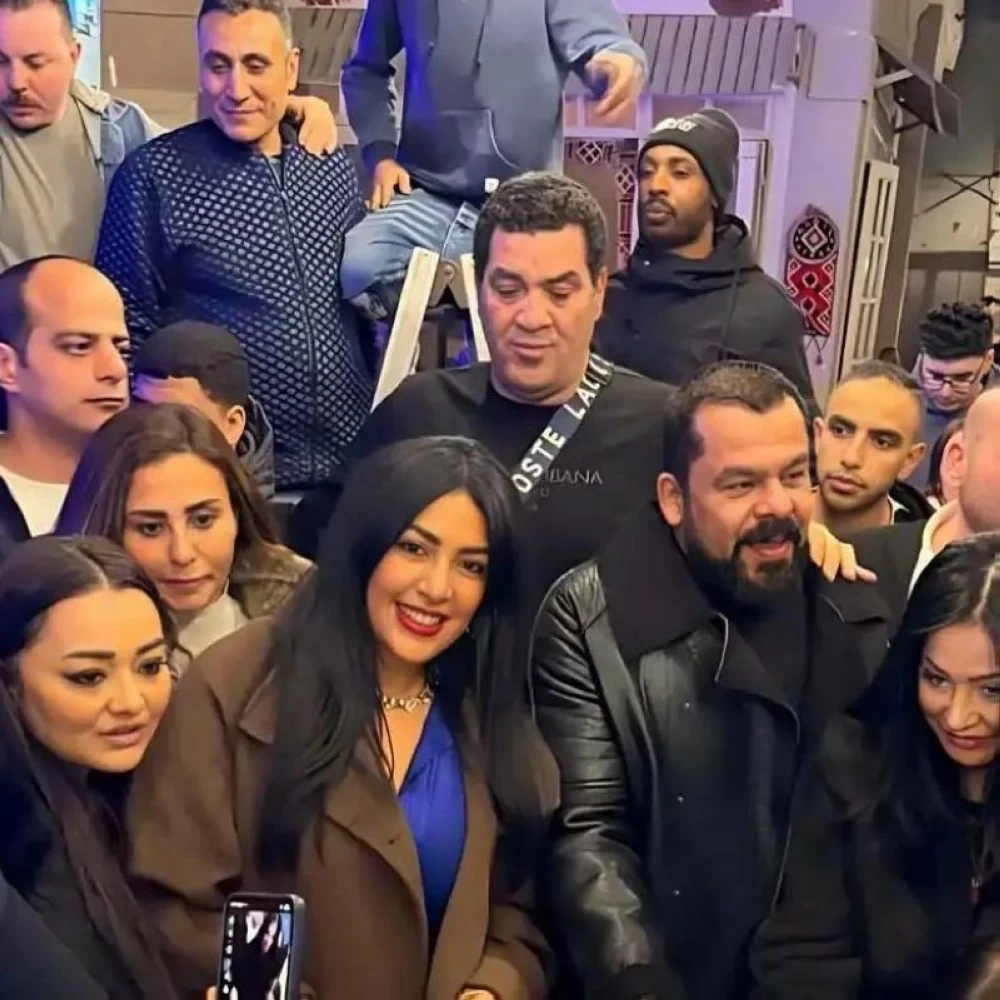
In a decisive move aimed at regulating the artistic scene in Egypt, the Actors' Syndicate, headed by Dr. Ashraf Zaki, issued an official decision to permanently halt the production and filming of the series "Rouh OFF," prohibiting its broadcast during the upcoming Ramadan season or at any other time. The syndicate confirmed that this decision is final and irrevocable, following the proven violation by the production company of serious breaches of the regulations and laws governing artistic work in Egypt.
Reasons for the decision and ignoring the warnings
The union explained in its press release that the suspension decision was not arbitrary, but rather a result of producer Bilal Sabri's disregard for a series of official warnings and notices previously issued to him. The union had demanded that the production company adhere to legal procedures and obtain the necessary permits, but the producer persisted in flouting regulations, necessitating decisive intervention to uphold the union's prestige and the rights of its members.
The union investigations revealed that the main reason for the crisis was the circulation of a video clip showing the producer contracting with the famous blogger known as “Umm Jasser” to participate in the work, which is a clear violation of the union law that prohibits employing those who are not registered in the union’s lists or who do not have official work permits, especially in light of the existence of thousands of academic graduates who are waiting for the opportunity.
Context of the crisis: The union confronts the "blogger phenomenon"
This decision comes within the context of a broader campaign led by the Actors' Syndicate to address the phenomenon of social media celebrities (bloggers and TikTokers) entering the field of acting without talent, academic training, or legal permits. The syndicate consistently emphasizes that art is a creative profession with its own sanctity, and that allowing non-specialists to practice it simply because of their online fame harms public taste and reduces opportunities for professional and syndicate-affiliated actors who have dedicated years to study and training.
Legal significance and impact of the decision on the industry
This decision sends a strong message to all production companies in the Egyptian market: the syndicate will not tolerate any violations of Law No. 35 of 1978 and its amendments, which regulate the work of artistic syndicates. The decision emphasizes that protecting the profession and guaranteeing the rights of its members are top priorities, and that any attempt to circumvent the laws for quick "trends" will be met with deterrent penalties, potentially including expulsion or permanent suspension.
The crew of the suspended series
It's worth noting that the series "Rouh OFF" featured a stellar cast before its cancellation, including Munther Rayahneh, Mirna Walid, Salah Abdullah, Nancy Salah, Tarek El Nahry, Sherif Baher, Mohamed Soliman, Taher Abu Leila, and Reda Hamed. The show also heavily relied on rap and festival music stars, featuring artists such as Samir Afrato, Felix, Resha Costa, Samara, Fifty, Sadat, and the Power High band, indicating its direct target audience of young people.
Culture and Art
Details of the Rice Night concert in Riyadh Season featuring Lebanese stars
Ragheb Alama, Assi El Hallani, and Carole Samaha have arrived in Riyadh to perform at Laylat Al Arz (Night of the Cedars) as part of Riyadh Season. Find out more details about the highly anticipated concert and its date at the Abu Bakr Salem Theater.
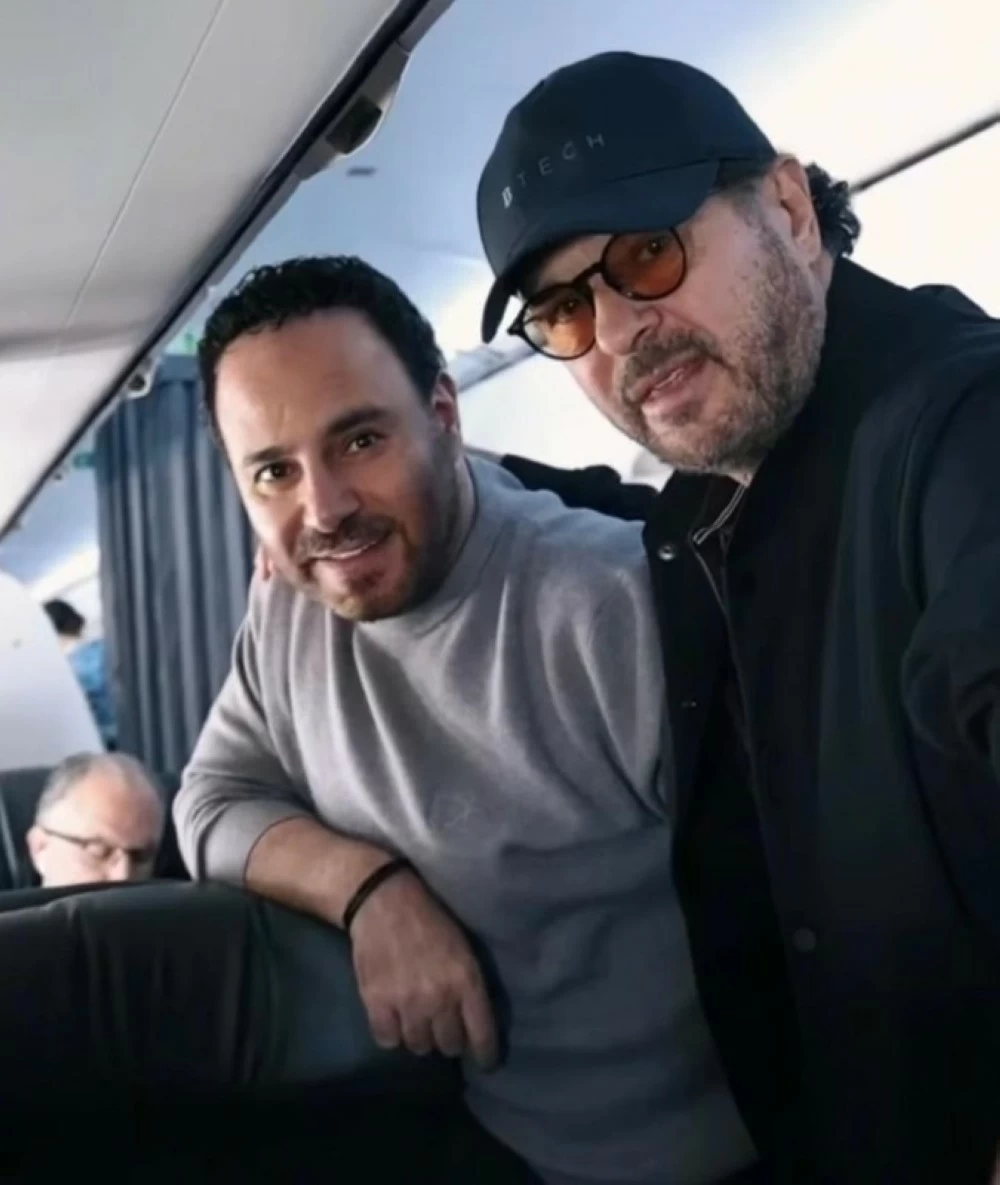
Amidst an atmosphere brimming with excitement and anticipation, the plane carrying Lebanese singing stars Ragheb Alama, Assi El Hallani, and Carole Samaha landed in the Saudi capital, Riyadh, in preparation for one of the biggest musical evenings, titled "Laylat Al-Arz" (Night of the Cedars). This highly anticipated concert is scheduled for February 5th, as part of the packed schedule of events at Riyadh Season, which continues to attract global attention.
A night of musical entertainment with a Lebanese flavor
This evening marks a significant milestone in the concert calendar at the Abu Bakr Salem Theater, which has recently hosted some of the Arab world's biggest stars. The concert's title, "The Night of the Cedars," carries profound symbolic meaning, referencing the cedar tree at the center of the Lebanese flag, promising an evening that blends national pride with authentic musical artistry. The trio is expected to present a diverse selection from their extensive repertoire, with the audience anticipating a fusion of Assi El Hallani's signature energetic Lebanese dabke songs, Ragheb Alama's modern romantic ballads, and Carole Samaha's powerful stage presence.
Riyadh Season: A Destination for Arab Art
This concert is more than just a fleeting event; its significance stems from its role as part of Riyadh Season, which has successfully transformed the Saudi capital into a global entertainment and cultural destination. Such concerts play a pivotal role in fostering cultural and artistic exchange, offering Saudi and Arab audiences residing in the Kingdom the opportunity to enjoy live performances by their favorite stars. The concert also reflects the musical diversity that the season's organizers are committed to providing to satisfy all artistic tastes.
Behind the scenes of the arrival and the stars' reactions
On the social media front, artist Carole Samaha documented moments of travel and arrival, sharing spontaneous snapshots with her colleagues Ragheb and Assi, commenting with the touching phrase: “When the sons of the Cedars come together,” which received widespread interaction from the public who praised the brotherly spirit between the artists.
Intense artistic activity
In a related context regarding the stars' schedule, artist Ragheb Alama's activities are not limited to the Riyadh concert only, but the superstar is preparing to head later to the United Arab Emirates, to perform a huge concert on February 14 on the occasion of Valentine's Day at the Dubai Autodrome Motor City, where he promises his audience there to present a collection of his latest artistic releases in addition to his classic masterpieces.
-

 Local news one week ago
Landslide in Riyadh: Details of the incident in Al-Sahafa neighborhood and containment efforts
-
 Culture and Art, 1 week ago
Haifa Wehbe's absence in Riyadh: A photo crisis or a strained relationship with the media?
-
 Local news one week ago
Riyadh collapse: Emergency plans to secure water after a main pipeline burst
-
 Culture and Art, 1 week ago
City Kitchen series: A drama of conflict and the middle class during Ramadan
-

 Culture and Art, 1 week ago
The series "Kasra": Dawood Hussein in a moving social drama this Ramadan
-

 Local news one week ago
Applying for the 1447 Opportunities Program for Teachers via the Fares System
-
 Local News 7 days ago
Ramadan 2026 discounts in Saudi Arabia: Offers valid for 54 days
-
 Culture and Art 6 days ago
The death of artist Huda Shaarawi “Umm Zaki” and her funeral in Damascus