
Culture and Art
Handicrafts: From Establishment to Empowerment
The Year of Handicrafts (2025) is a designation that reinforces the importance of this authentic craft in the lives of Arabs, and its participation in all aspects of human life

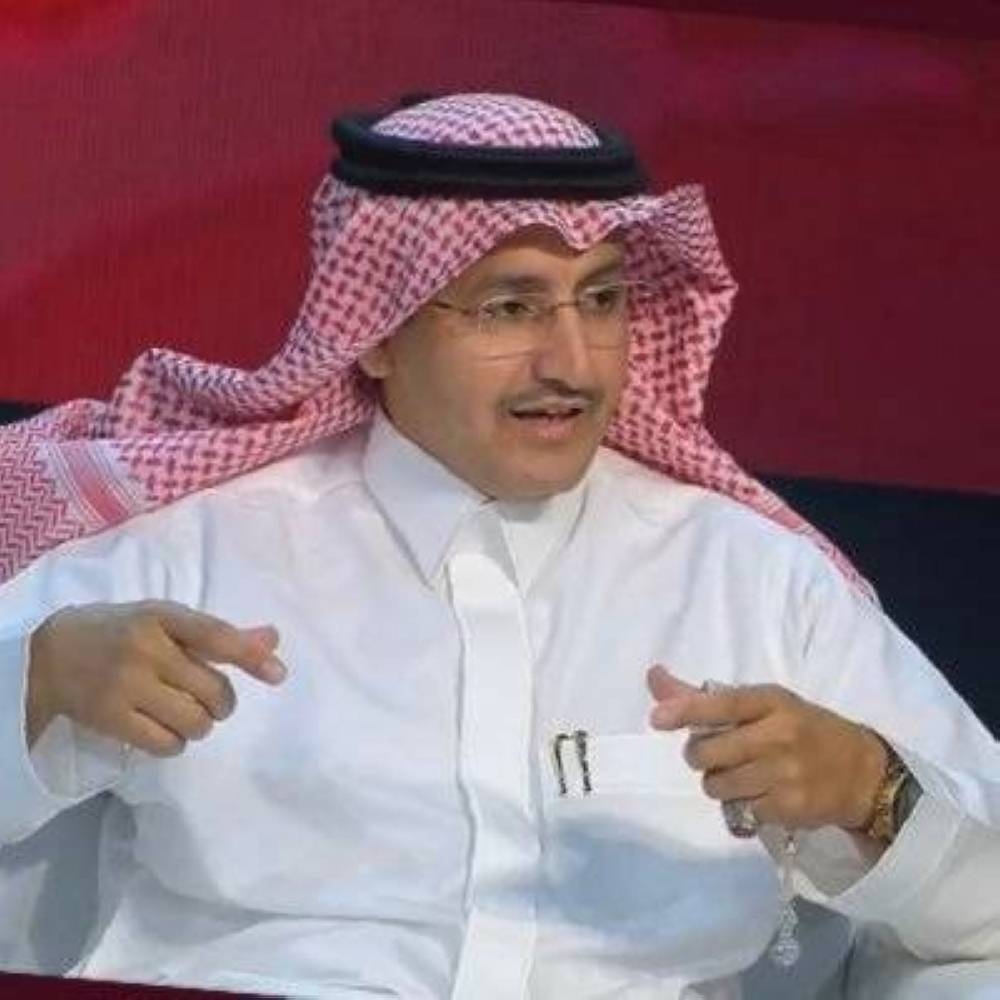
The Year of Handicrafts (2025) is a designation that reinforces the importance of this authentic craft in the lives of Arabs, and its participation in human life in all its details, from clothing and housing, to the equipment of the caravan, and whatever the mount needs, whatever it may be.
Before the establishment of the Supreme Commission for Tourism at the beginning of the new millennium, handicrafts were not an integrated or organized sector. Rather, they enjoyed special care from their owners and some sectors, and they were not a commodity that could contribute to covering a small part of the costs of manufacturing them. Their only gateway to being present in the cultural scene was the participation of craftsmen in the Janadriyah Heritage and Culture Festival through the regional pavilions. Likewise, they did not reach a stage of development to be ready for marketing.
After the establishment of the Supreme Commission for Tourism in 1421 AH, one of its departments was the Culture and Heritage Program, which included handicrafts as a cultural element. During the establishment period, this department was built with a small number of employees. The Supreme Commission for Tourism, under the leadership of its Secretary-General at the time, His Royal Highness Prince Sultan bin Salman bin Abdulaziz, adopted the building of this department. The Commission prepared the handicrafts strategy through its own efforts within the Commission, and with the consultation of specialists and those interested in cultural affairs from officials within the Kingdom, and with experts from Arab countries. This resulted in a transformative strategy for building this cultural pillar, and it was adopted as a qualitative strategy that led to the building of a large cultural economic sector. It also paid attention to changing the mental image of this field when it adopted the name (Bari’) to be an alternative to the title of craftsman. There are dimensions to this that need to be discussed in a wider space and this is not the place for it in this article.
The development of the handicrafts sector went hand in hand with other sectors embraced by the Supreme Commission for Tourism. These efforts resulted in the announcement of the International Conference on Tourism and Handicrafts in the Islamic World in 2006, in cooperation with the Research Centre for Islamic History, Art and Culture in Istanbul (IRCICA), which was held under the patronage of the Custodian of the Two Holy Mosques, King Abdullah bin Abdulaziz (may God have mercy on him), and was opened by His Royal Highness Prince Naif bin Abdulaziz, Minister of Interior and Chairman of the Board of Directors of the Supreme Commission for Tourism (may God have mercy on him), which included an exhibition on handicrafts, a commercial market and working papers presented over seven days.
The development of this sector has had a significant impact on reviving handicrafts that had been displaced by modern machinery, nearly causing skilled hands to disappear from the cultural landscape. This sector has received substantial support from the government. Soon after, royal directives were issued mandating that gifts for state guests consist of locally made handicrafts, marking a qualitative leap in the development of these products. Today, handicrafts have become a major sector, providing employment opportunities for artisans. This industry has been revived under regulations designed to protect it and establish requirements for its practice. These collaborative efforts between the government and citizens led to the inscription of the Sadu weaving craft on UNESCO's Representative List of the Intangible Cultural Heritage of Humanity. Subsequently, other elements, such as Al-Qatt Al-Asiri, were also inscribed on the global list.
As evidence of the care for handicrafts and the support for their production in a way that contributes to enhancing the local cultural product, the Crown Prince - may God protect him - adopted the G20 logo that made Al-Sadu an international symbol during the G20 summit in Riyadh in 2020.
The handicrafts sector is no longer just an ordinary sector; it enjoys the generous patronage of the Custodian of the Two Holy Mosques and His Royal Highness the Crown Prince. The Ministry of Culture, represented by the Heritage Commission, has adopted the handicrafts sector, which has played a significant role in developing handicrafts and their products, providing training to make them a valuable component of the labor market, and marketing them through international and local festivals and exhibitions. The Banan Festival, sponsored by the Minister of Culture, is a prime example of this success. Now in its second year, it has brought local handicrafts to the global stage, with participation from several countries. Furthermore, the establishment of the Royal Institute of Arts has contributed to transforming these crafts from individual, professional endeavors into institutes and colleges that have graduated national talents who contribute to the development and sustainability of this important element of national heritage. In addition, there are non-profit organizations dedicated to supporting handicrafts, and they are incorporated into university curricula.
This article was not just a brief overview of the construction of handicrafts, but rather a proud expression of the achievements of the nation's sons at various levels in collecting and preserving this cultural heritage, which today stands as a testament to the great support and care from our leaders, may God preserve them, in the Ministry of Culture's adoption of the designation of 2025 as the Year of Handicrafts, as one of the elements of national heritage and the cultural identity of the Kingdom of Saudi Arabia. The designation of years that have established the cultural importance of national heritage may result in the inclusion of a general education subject that focuses on introducing intangible national heritage, and local universities in the regions will establish the importance of research into national heritage according to their geographical scope, to enrich libraries and document heritage and its related elements.


Culture and Art
The death of the poet Thuraya Qabil, "the voice of Jeddah" and the Khansa of the twentieth century
The pioneering Saudi poet Thuraya Qabil, author of the first collection of poetry by a woman and composer of masterpieces of Hijazi song, has passed away. Learn about the life and cultural impact of this 20th-century Khansa.
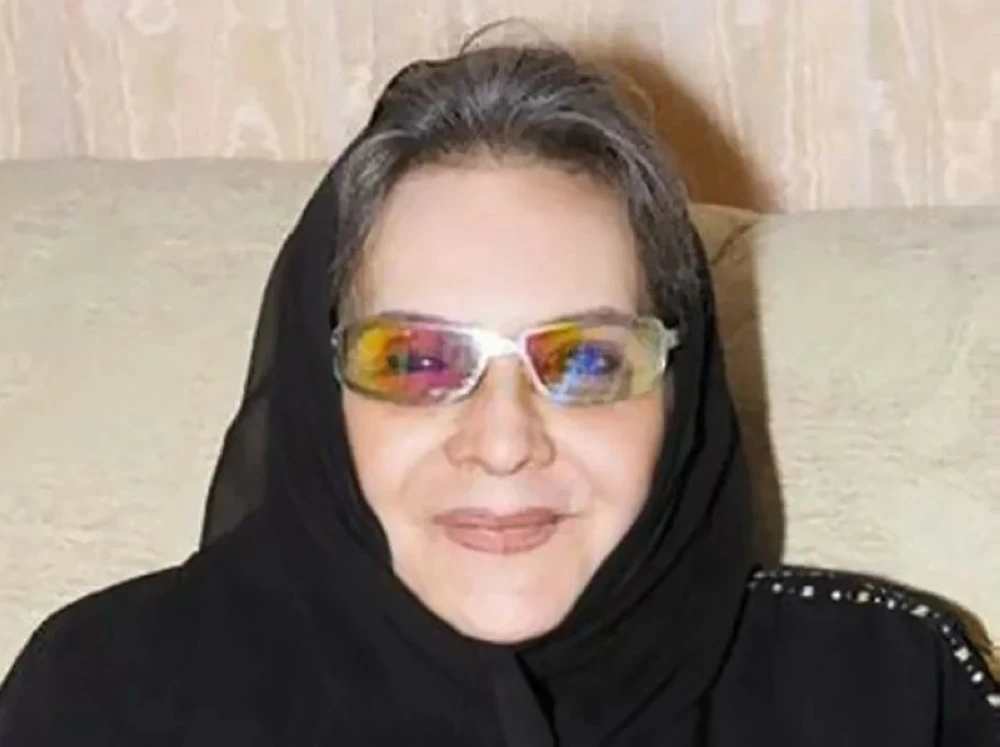
Thuraya Qabil passed away today after battling health problems in recent years. With her passing, the Arab cultural scene loses a pioneering female voice, whom the late writer Mohammed Hassan Awad described as "the Khansa of the twentieth century" due to the depth of her poetry and her literary boldness that was ahead of her time.
Born in the heart of historic Jeddah
The deceased was born in the prestigious Qabil family home in the Al-Mazloum neighborhood in the heart of Jeddah. She hailed from a long-established merchant family whose name is synonymous with the city's most famous commercial street, Qabil Street. Thuraya Qabil lost her father at a young age, and the responsibility of raising her fell to her aunt, Adila Qabil, who had a profound influence on shaping her strong character. She did not limit herself to traditional education but traveled to Beirut to pursue further studies, earning a degree from a private college. This contributed to her cultural broaden her horizons and nurtured her literary talent at an early age.
Literary leadership and social boldness
Thuraya Qabil is a true pioneer of the women's literary movement in the Kingdom. She inscribed her name in history as the first Saudi poet to publish a printed collection of classical Arabic poetry, "The Weeping Meters," which was published in Beirut in 1963. Her career was characterized by boldness and confidence, as she was the first to publish her literary work under her own name in newspapers and magazines, bypassing the pseudonyms that were prevalent at the time, thus paving the way for many female writers after her.
A distinguished journalistic career
Besides poetry, the late writer had a long and distinguished career in journalism. She moved between the corridors of the press as an editor and opinion writer for major Saudi newspapers such as Okaz and Al-Riyadh. She also served as editor-in-chief of Zeina magazine between 1986 and 1987, and wrote influential articles in the Meccan newspaper Quraish and the Saudi newspaper Al-Bilad, as well as the Lebanese newspaper Al-Anwar during the 1960s, expressing societal concerns and women's issues.
Icon of Hijazi song
Thuraya Qabil shaped the hearts of Arab and Saudi listeners through her colloquial poems, which became timeless musical masterpieces. She formed an exceptional artistic duo with the late Fawzi Mahsoum , enriching the musical repertoire with unforgettable works such as "Min Ba'd Mazh wa La'b" (After Joking and Playing), "Jani Al Asmar" (The Dark-Skinned One Came to Me), and "Ya Man Bi Qalbi Ghala" (O You Who Are Dear to My Heart). Her lyrics were also sung by the Talal Maddah in masterpieces like "Adini Ahd Al Hawa" (Give Me a Promise of Love) and "Tamanait Min Allah" (I Wished from God). Her lyrical poetry was distinguished by its genuine emotion and use of authentic Hijazi vocabulary, rightfully earning her the title "Voice of Jeddah."
Culture and Art
Jamal Sinan and Ibrahim Al-Hajjaj: Details of the new 2026 project
Learn about the details of the new collaboration between producer Jamal Sinan and artist Ibrahim Al-Hajjaj, scheduled to be filmed after Ramadan 2026, in addition to the list of stars of the series "Diary of a Married Man".
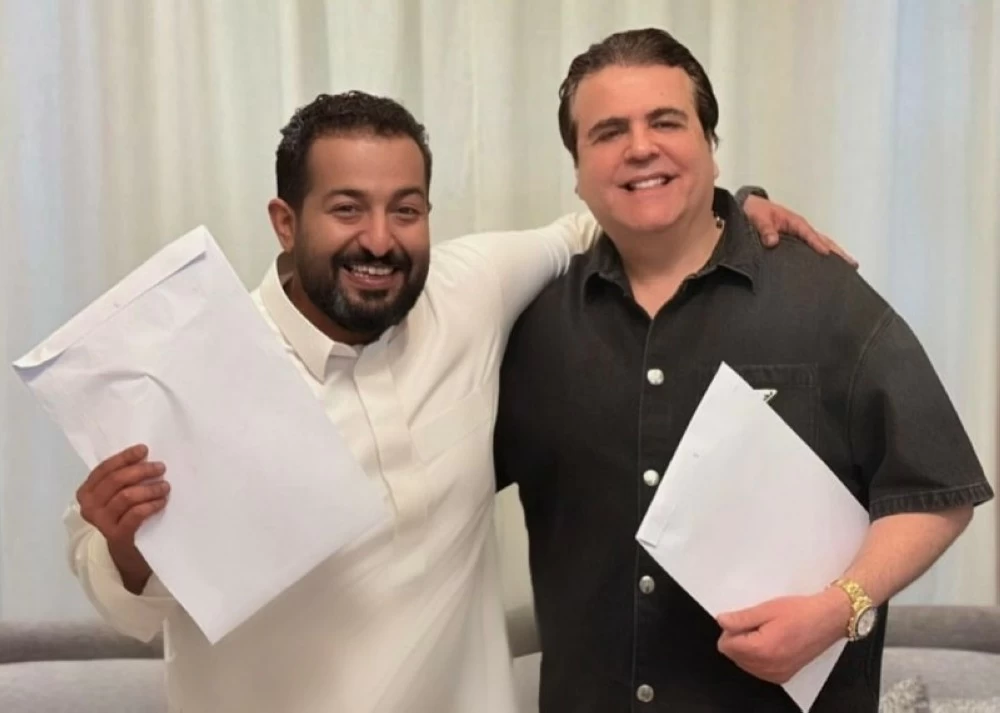
In a move reflecting the ongoing development of the Arab entertainment industry, renowned Lebanese producer Jamal Sinan, owner of Eagle Films, announced a new artistic project that will reunite him with rising Saudi star Ibrahim Al-Hajjaj. Filming for this highly anticipated project is scheduled to begin immediately after the conclusion of the 2026 Ramadan drama season, making it one of the most prominent projects planned for the upcoming season.
Details of the technical collaboration and partnership
Jamal Sinan confirmed the announcement on his official Instagram account, sharing two photos of himself with Al-Hajjaj from behind the scenes of the production. In his caption, Sinan confirmed that the upcoming project will be a short series, describing it as "exciting and unique," which has piqued the public's curiosity about the role Al-Hajjaj will play, especially after his string of successes in film and television. This collaboration reflects the eagerness of Arab producers to attract Saudi talent, who have established a strong presence on the regional scene in recent years, in line with the artistic renaissance taking place in the Kingdom.
Ibrahim Al-Hajjaj in Ramadan 2026
On another note, Ibrahim Al-Hajjaj is preparing to enter the Ramadan 2026 television season with the series "Diary of a Married Man." The show is a social comedy that explores the everyday ironies and humorous situations that arise in married life, a genre in which Al-Hajjaj has previously excelled. This series further cements Al-Hajjaj's position as one of the most prominent comedy stars in the Gulf, capable of carrying leading roles that appeal to a wide audience.
The cast of "Diary of a Married Man"
The Ramadan series features a stellar cast alongside Ibrahim Al-Hajjaj, including Fatima Al-Sharif, Aida Al-Qasai, Fatoun Al-Jarallah, Faisal Al-Dukhi, Nawaf Al-Shubaili, Najla Al-Abdullah, Nada Ibrahim, Saeed Saleh, Mohammed Al-Qahtani, and Reem Safia. Written by Nawaf Al-Muhanna and directed by Abdulrahman Al-Salman, the series promises a harmonious blend of experience and youthful energy.
Notable cinematic activity
It's worth noting that Ibrahim Al-Hajjaj's most recent artistic endeavor was on the big screen in the Saudi film "Ambulance," which was recently released on digital platforms. The action-comedy film starred a number of prominent actors, including Basma Dawood, Hassan Asiri, Faisal Al-Dukhi, and Egyptian star Ahmed Fahmy. It was written by Alberto Lopez and directed by Colin Tough. This versatility across film, television drama, and digital platforms demonstrates Al-Hajjaj's artistic intelligence and his ability to adapt to diverse roles.
Culture and Art
Hani Mehanna issues a formal apology following the controversy surrounding his remarks about Faten Hamama and Shadia
Musician Hani Mehanna issues an official apology statement after the decision to refer him for investigation and ban him from media appearances due to his statements about Faten Hamama and Shadia, justifying the mistake by citing his age.
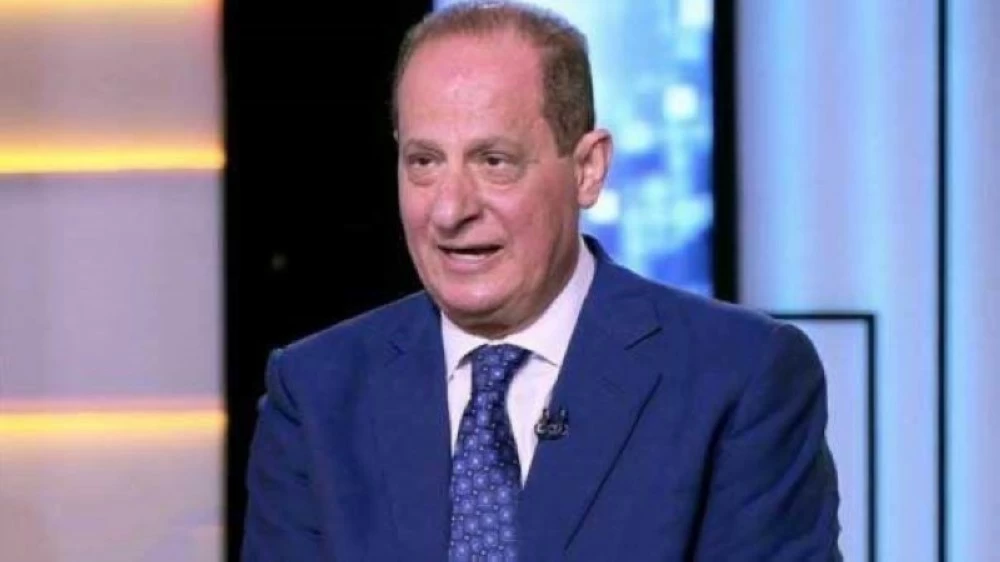
In a swift turn of events that have recently captivated Egyptian public opinion and the artistic community, renowned musician Hani Mehanna issued an official statement offering a sincere apology for his recent remarks that touched upon the legacy of the late actresses Faten Hamama and Shadia. This apology follows a wave of widespread controversy and strict disciplinary measures taken by media and professional bodies in Egypt.
Details of the official apology
Through his personal Facebook account, Hani Mehanna broke his silence, confirming that he was closely following the wave of anger and criticism that swept across social media and artistic circles following his recent television appearance. In his statement, Mehanna emphasized his deep and longstanding respect for the Egyptian and Arab public, as well as for his colleagues and prominent figures in the artistic community, indicating that what happened was entirely unintentional.
Reasons for the error: age factor and air pressure
In an attempt to clarify the situation, musician Hani Mehanna attributed the confusion that occurred in the narration of information to two main factors: the first is the factor of advancing age, which may sometimes lead to the overlapping of names and situations in memory, and the second is the pressure of live broadcasting, which imposes a fast pace that requires the immediate retrieval of information, which may trap the speaker in the snare of unintentional inaccuracy.
The place of Faten Hamama and Shadia in artistic memory
This incident is particularly sensitive given the immense artistic value of both Faten Hamama, the "Lady of the Arab Screen," and Shadia, the beloved icon. These two figures are not merely names in the history of Egyptian cinema; they are symbols of Egypt's soft power, holding a sacred place in the hearts of millions. Therefore, any discussion touching upon their biographies or personal lives is often met with extreme sensitivity and fierce defense from the public and critics alike, which explains the strong reaction to Mohanna's statements.
Disciplinary decisions and organizational context
Mahna's apology coincided with decisive official moves to regulate the media landscape. The Supreme Council for Media Regulation issued a decision to refer the musician for investigation and ban him from appearing in the media, while the Syndicate of Artistic Professions referred him to a disciplinary board. These decisions reflect the commitment of relevant institutions in Egypt to upholding professional and ethical values and ensuring that deceased artistic figures, who no longer have the right to respond, are not harmed, thus reinforcing the principle of media responsibility.
A call for tolerance and turning the page
Hani Mehanna concluded his heartfelt statement with a sincere apology to the souls of the two great artists and their families, appealing to his vast audience to understand the situation and forgive this unintentional mistake. Mehanna based his request for forgiveness on his long and distinguished artistic career, which testifies to his respect and appreciation for everyone he has worked with in the arts, hoping that this apology would put an end to the dispute.
-
 Culture and Art, 1 week ago
Haifa Wehbe's absence in Riyadh: A photo crisis or a strained relationship with the media?
-

 Local news one week ago
Riyadh collapse: Emergency plans to secure water after a main pipeline burst
-
 Culture and Art, 1 week ago
City Kitchen series: A drama of conflict and the middle class during Ramadan
-

 Culture and Art, 1 week ago
The series "Kasra": Dawood Hussein in a moving social drama this Ramadan
-

 Local news one week ago
Applying for the 1447 Opportunities Program for Teachers via the Fares System
-

 Local news one week ago
Ramadan 2026 discounts in Saudi Arabia: Offers valid for 54 days
-
 Culture and Art 6 days ago
The death of artist Huda Shaarawi “Umm Zaki” and her funeral in Damascus
-

 Technology 6 days ago
ICAN 2026 Conference Conclusion: Initiatives to Enhance Saudi Arabia's Leadership in Artificial Intelligence