Culture and Art
Tunisian-Djiboutian Zeinab Heddaji: Narration is them, and poetry is me
The experience of the poet (Tunisian-Djiboutian) Zeinab Heddaji, who was born in the Tunisian governorate of Gabes in 1992, is rich due to the diversity of her interests

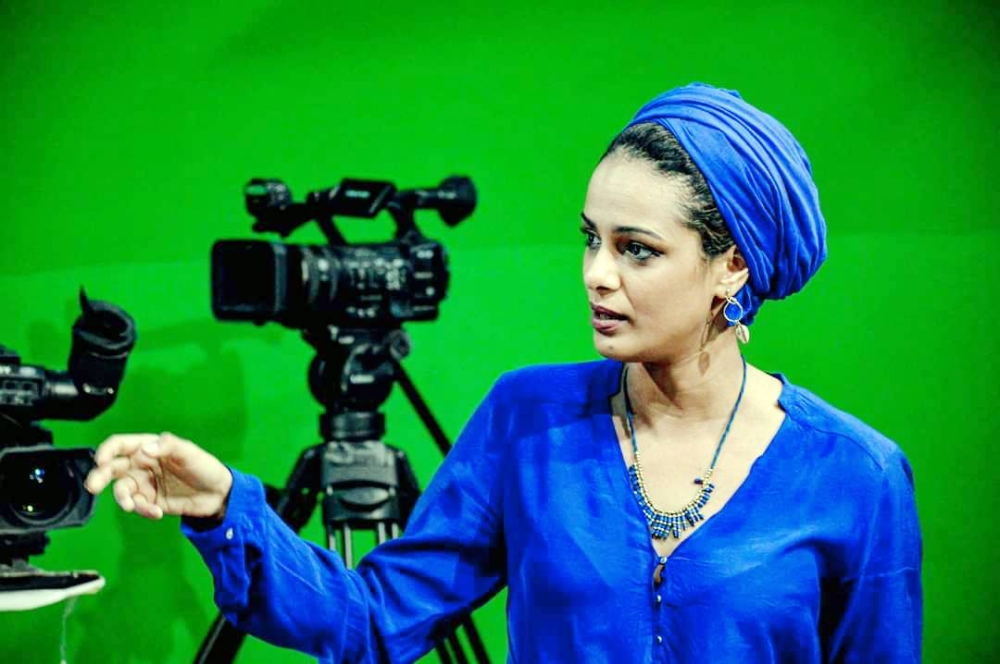
The experience of the Tunisian-Djiboutian poet Zeinab Heddaji, born in the Tunisian governorate of Gabes in 1992, is rich due to the diversity of her interests and her commitment to the quality of her work and creativity. She is a poet, a narrative writer, a storyteller who captures images with a successful lens, and a media professional obsessed with preserving shared humanity. Between her special studies in law and political science and the general cultural and creative scene, we embark with our guest on this enjoyable journey, with all its apparent, symbolic, and significant aspects. Here is the text of the interview:
• What about the founding stage, and who breathed into your soul the glow of culture, poetry, and writing?
My journey with the world of words began in my childhood in Tunisia, where I found refuge and solace in reading. I gratefully remember my father's encouragement through children's magazines like "Al-Arabi Al-Saghir" and "Majid," those colorful pages that opened wide the doors of my imagination. My teachers then discovered my talent for written and oral expression and encouraged me to hone it. Theater played a pivotal role in developing this talent, as I learned the art of elocution, faced an audience with confidence, and acquired the ability to improvise.
• Did Abu al-Qasim al-Shabbi’s poetry contribute to shaping the taste of the sons and daughters of Tunisia, thus strengthening their relationship with poetry?
There is no doubt that Abu al-Qasim al-Shabbi represents a cornerstone in the construction of Tunisian cultural identity. His words, brimming with sincerity and emotion, continue to touch our hearts and instill in us a love of poetry and a struggle for freedom and beauty. I gratefully recall the gift my father gave me on Independence Day, when I was a young student: a book of al-Shabbi's complete works. It was like a magical window that opened new horizons for me into the world of poetry.
Al-Shabbi represents a significant stage in the history of Tunisian poetry, as poetry at that time served as a tool for inspiring action and spreading awareness. Today, the Tunisian cultural scene is rich with contemporary poetic voices, particularly in the realm of prose poetry, such as Radwan Al-Ajroudi, the late Samia Sassi, Sofiane Rajab, Sabri Rahmouni, and many others. These poets present their human experiences in diverse forms and themes, and in styles different from those offered by Al-Shabbi. This evolution is a natural reflection of the vitality of poetry and its capacity for renewal.
• What are the most prominent features of the beginnings, and were there any struggles?
Although I was a lucky child with my family's support for my creative world, my beginnings weren't without the challenges I faced in real life. I was different from my peers, often misunderstood because of my extreme sensitivity. I remember how easily I would cry at the smallest things, and how I endured bullying because of my thinness and curly hair. This bullying was an early lesson that made me deeply aware of the meaning of being different.
Before I discovered my talent for writing, the world felt like a harsh place, a closed hell where I couldn't express myself or find space for my opinions. Adding to that, my father's work forced our family to move constantly, leaving me in a perpetual state of anxiety and instability. I always knew that leaving was coming, and each time I had to leave friends and places before I'd even grown accustomed to them.
Amidst these challenges, writing was the only constant in my life, a safe haven I could escape to, a place to express myself, and a source of solace amidst life's hustle and bustle. Writing was my gateway to the world, the space where the pen granted me a sense of stability and belonging.
Who took your hand towards the light?
•• At a pivotal moment in my life, I realized that external support, however great, cannot alone overcome crises or illuminate the path to creativity. The true light that guides the way comes from within.
Creative writing, like any art form, requires a personal decision; no one can write for you or create in your style. You alone are responsible for crafting your words, creating your worlds, and leaving your unique mark on the world around you.
So, if there was a hand that took me towards the light, it was my will, my belief in myself, and my determination to transform my feelings and thoughts into living words that carry me towards a new horizon.
• Between your interest in media, photography, and writing stories and poems, where do you find yourself?
Each of these art forms offers me a different window for self-expression and connecting with others, and each holds a special place in my heart. Media is the voice of reason, where I convey messages objectively and contribute to the dissemination of knowledge. Photography is the eye of the soul, capturing hidden beauty and fleeting moments that words cannot describe. As for writing, it is my outlet for narrating life's stories and analyzing the inner workings of the human psyche.
But if there is a space where I feel absolutely free, it is poetry. In poetry, I find a refuge where I can say what direct language cannot, and express my feelings in images deeper and far removed from reality. It is my own world, where I put my feelings onto paper without constraints. That is why I say: narrative is "us" or "them," but poetry is "me.".
• Between the spaces of Tunisia and Djibouti, a transition from one identity to another, don't you fall into a confusion of identities?
I don't see my move between Tunisia and Djibouti as a confusion of identities; rather, I consider it an enriching journey that added new dimensions to my personality. Tunisia, the land of my childhood and the source of my memories, is where the first vestiges of my personality were formed, and where my love of language and passion for writing were instilled in me. As for Djibouti, it is the new space that embraced me and gave me the opportunity to discover a new culture and interact with a different world, which enriched my vision of life and broadened my horizons.
If we want to discuss the confusion surrounding identities, we must acknowledge the profound impact of globalization on our lives. It is reshaping the concept of cultural identity, transcending geographical boundaries and influencing our understanding of belonging. What is happening today in Kyiv casts a shadow over the Arab world and resonates in Paris.
In this changing reality, I believe the real challenge no longer lies in reconciling traditional cultural identities, which are fading, but rather in upholding our shared humanity and defending our human values in a world fraught with challenges. The true dilemma, in my view, lies in how to remain true to our principles amidst the rapid transformations our world is undergoing.
• What did you think of Djiboutian society?
If I were asked to describe the people of Djibouti in one word, it would be "kindness." When I arrived in Djibouti in 2019, I was alone and didn't know anyone, but I was surprised by how warmly and welcoming I was. I quickly became one of them, and some people are even surprised when I tell them I'm Tunisian, perhaps because I look similar to the locals.
Djiboutian society is characterized by its ethnic diversity, encompassing Somalis, Afars, Arabs, and others, which has fostered a spirit of tolerance and openness. Due to its strategic geographical location, people have become accustomed to interacting with various cultures and ethnicities, strengthening their ability to accept and coexist with others.
As a journalist and photographer, I found Djibouti to be a rich source of inspiring human stories, shared with me honestly and spontaneously by its people. These stories were more than just local narratives; they offered a window into worlds of challenges and dreams that deserve to be told and documented. My writing and photography were profoundly influenced by my experience here, as my lens began to capture this unique blend of culture and humanity, which broadened my perspective to capture the deepest details of everyday life.
I took it upon myself to introduce the Arab world to this important Arab country, which, despite its pivotal strategic location, receives little media attention. Djibouti is not just a small Arab state in the Horn of Africa; it is a strategic artery in the Bab el-Mandeb region, a region of profound Arab significance and geopolitical importance. Through my writing and photography, I strive to bridge this media gap and highlight Djibouti's role on the regional and international stage, on the one hand, and the richness of its human stories, on the other.
• What type of work do you do in Djibouti, and is there any immunity for your text from indoctrination and politicization?
In Djibouti, my work spanned journalism, photography, and human interest stories. I documented the stories of Djiboutian society through my camera and pen, striving to highlight the human and cultural aspects often overlooked by traditional media coverage. My focus was on the stories of ordinary people making a living, away from the big political headlines, allowing me to convey a more comprehensive and realistic picture of this diverse society.
Regarding your question about immunity from indoctrination and politicization, I believe the greatest challenge for any writer or journalist is maintaining the integrity of the text and protecting it from external influences. I try, as much as possible, to place humanity and reality at the heart of my work, far removed from any political or ideological agenda. For me, writing is not a means of defending one ideology or attacking another, but rather a platform for conveying truth and experience as they are.
Of course, no text can be completely immune to the influence of personal attitudes or general contexts, but my goal has always been to adhere to transparency and respect the reader, while ensuring that the voice of the people remains the focus, far from any bias that might undermine the credibility of the text.
This combination of realism and humanism is what makes the texts closer to the public, and enables them to transcend political or ideological divisions, to reach the essence of the common human experience.
• When did you feel the need to look for another writing activity, or another activity that would replace waiting for the text?
I felt the need to seek other means of expression when I realized that written texts, however beautiful and profound, cannot always convey the full vibrancy of a moment. That's when the camera came along as a complement to the pen. Photography became a parallel visual language, allowing me to capture emotions and stories that words sometimes fail to express.
Unlike text, a photograph is a universal language understood by all without translation. A single image can convey as much meaning as pages of text, transcending linguistic and cultural boundaries to reach the heart directly. The camera doesn't wait for words or the perfect moment; it captures the moment as it is, in its raw truth and beauty.
This combination of writing and photography has allowed me to convey my experiences and the stories of others in a more comprehensive way, combining words and images, and creating a more impactful and integrated experience.
• Has your writing style changed due to travel?
•• Certainly, travel reshapes a writer. My style has become more open and richer, combining the different experiences I've had in various places.
• How do you see the extent of Arab-African cultural exchange?
Cultural exchange between Arab and African nations remains below its potential. Despite the fact that over 100 million people in Africa speak Arabic, according to the Center for African Studies, meaning that Arabic serves as a vital bridge between the continent's cultures, this exchange remains limited and underutilized. The Arab world and the African continent share a long history of cultural interaction, but this interaction needs to be revitalized and strengthened through initiatives from all parties involved.
There is a need to develop more joint events and projects that bring together artists and creators from various Arab and African countries, with the aim of building bridges of mutual understanding and cultural exchange. Art and literature are the most powerful tools in this field, as they can play a vital role in bringing different cultures closer together and fostering dialogue between the peoples of the two continents. Writing, poetry, music, and cinema can serve as channels for expressing shared concerns and developing an exchange of knowledge that contributes to strengthening unity and cooperation between the Arab and African worlds.
With the development of social media and digital platforms, it has become possible to transcend geographical boundaries and expand this cultural communication more quickly and effectively, opening up new horizons of cooperation and understanding between our peoples.
• How many languages do you write in, and which one is closest to your heart?
I write in Arabic, French, and occasionally English, particularly in journalism and other professional fields. However, my primary language of creative expression is Arabic, stemming from my belief in the importance of producing in our native tongue first and foremost. I see a pressing need to revitalize the Arabic literary scene, which is sometimes criticized for its stagnation within the creative industries. For me, Arabic is the language capable of conveying the most subtle details and emotions, and it is an effective means of expressing my thoughts and dreams in an authentic and profound way.
What is lacking in the Arab female writer?
Arab women writers lack the institutional support that would provide them with opportunities for publication and participation in major cultural events. There is also a pressing need to solidify the position of creative women in our Arab societies, as some communities still suffer from a lack of recognition for women's creativity. A woman may sometimes need to dedicate herself fully to completing a creative project, and if she is burdened with daily responsibilities and does not receive sufficient support from her family or partners, the process becomes even more difficult. Therefore, providing a supportive environment that offers creative women the necessary opportunities for growth and innovation is crucial for the development of the Arab cultural landscape.
• Are critics flattering the writer out of sympathy for her femininity?
I believe the opposite is closer to reality; perhaps this sometimes happens with women's creative output simply because they are women. As for favoritism, the Arab cultural scene generally suffers from it, regardless of whether the writer is male or female. Critics are required to be objective above all else, and any bias, whether positive or negative, hinders the proper evaluation of a literary work. Therefore, the real challenge lies in criticism overcoming these obstacles and giving critical evaluation its true value, free from any personal or gender-based considerations.
• Which poets from the Kingdom do you read?
Lately, I've become particularly interested in Saudi women poets. I read Fawzia Abu Khalid, whose texts are characterized by their sweetness and intellectual depth. I also follow the poetry of Huda Al-Daghfaq for its transparency and originality, and I was impressed by the poems of Ashjan Al-Hindi, which I discovered during the first Carthage Poetry Days. In addition, I was captivated by the texts of Asiya Al-Ammari, with her contemporary and innovative style that carries a distinctive feminist tone.


Culture and Art
Mohamed Youssef Ozo reveals his rare illness after the series "Sahab Al Ard"
Artist Mohamed Youssef Ozo breaks his silence and reveals his diagnosis of ankylosing spondylitis after criticism of his appearance in the series "Sahab Al Ard", explaining the details of his treatment and suffering.

In a poignant moment of candor that put an end to many questions, Egyptian artist Mohamed Youssef, known artistically as “Ozo,” broke his silence to reveal to the public the truth about his health condition, following the controversy surrounding his obvious hunched back during his outstanding performance in the series “Sahab Al Ard,” which aired during the 2026 Ramadan drama season. This appearance, which attracted attention, was not just an acting performance, but rather concealed a real story of pain.
The nature of the disease: What is ankylosing spondylitis?
Ouzo explained via his official Facebook account that he is battling a rare autoimmune disease known medically as ankylosing spondylitis. Medically, this disease is a chronic type of arthritis that primarily affects the spine, causing inflammation and stiffness of the vertebrae. Over time, this can lead to some vertebrae fusing together, which explains the changes in posture and difficulty moving that the public has noticed.
The young artist confirmed that he is currently undergoing an intensive treatment program based on “biological therapy”, which is one of the latest medical protocols used to control the activity of the immune system, with the aim of stopping the deterioration of the condition and stabilizing the disease at its current level, to ensure that he can continue to practice his professional and personal life.
Behind the scenes of the medical trip and the role of the union
In a related context, Mohamed Youssef revealed his persistent efforts to find radical solutions, noting that he did not hesitate to explore both cosmetic and therapeutic surgery options to improve the appearance of his spinal curvature. He was accompanied on his search by Dr. Ashraf Zaki, head of the Actors' Syndicate, a gesture reflecting the syndicate's ongoing support for its members during health crises. Despite his strong desire to undergo surgery, the specialist advised postponing the procedure for a full year due to the complexities of his medical condition, even though the typical recovery period for such surgeries does not exceed six months.
Despite these obstacles, Ozu showed great determination to complete his treatment journey, confirming his intention to consult another doctor who has a vision that balances the cosmetic necessity and the precise medical considerations of his complex condition.
A message of awareness and apology to the public
Away from the cameras, Ozu emphasized that his decision to conceal his illness for so long stemmed from his desire to avoid seeking public sympathy, preferring to endure the excruciating pain with patience and silence. He noted that he resorts to assistive methods such as hydrotherapy and manual therapy to alleviate the stiffness and daily pain.
He concluded his speech with a noble message in which he apologized to everyone who criticized his appearance or the way he walked in the series without knowing the truth about his illness, stressing that what people see as a superficial difference is in fact a daily battlefield that he silently wages, thus highlighting the importance of societal awareness of the invisible suffering of others, and the need to be patient before passing judgment on the outward appearance of artists and public figures.
Culture and Art
Updates on Hani Shaker's health condition after he was admitted to intensive care
Details of artist Hani Shaker's health condition after undergoing emergency surgery and being transferred to intensive care. His manager reveals to Okaz the cause of the bleeding and the latest updates on his medical condition.

Recent news regarding the health condition of the great Egyptian artist Hani Shaker, nicknamed “Prince of Arab Singing”, has sparked widespread concern in artistic and public circles, after the announcement that he was urgently transferred to intensive care following a sudden health crisis that required immediate surgical intervention.
Details of the health crisis and surgical intervention
In an exclusive statement to Okaz newspaper, the manager of artist Hani Shaker revealed the precise details of the crisis, confirming that the artist suffered a sudden and severe hemorrhage in his colon, which necessitated his immediate transfer to the hospital and an emergency surgery to stabilize the situation. He explained that Shaker is currently in the intensive care unit, where he is under close and continuous medical supervision by a team of senior doctors to ensure the stability of his vital signs.
Relative stability and precautionary monitoring
Regarding the developments in his condition, the business manager indicated that there is a noticeable gradual improvement in the health condition of the Prince of Arab Singing, but the medical team preferred not to rush his exit from intensive care, preferring to keep him under observation for an additional period as a precautionary measure to ensure that no complications occur and to make sure that the wound heals and the bleeding stops completely before transferring him to a regular room.
Union support and a prolific artistic career
In a related development, the Egyptian Musicians Syndicate has been closely monitoring the condition of its former head. Nadia Mustafa, a board member and the syndicate's official spokesperson, called on fans and the Arab public to pray for the renowned artist's speedy recovery, emphasizing that the syndicate is following all details concerning his health condition closely and wishing him a swift recovery and return to entertaining his audience.
Hani Shaker is considered one of the most prominent figures in classical and contemporary Arabic music, boasting a decades-long artistic career during which he presented hundreds of works that have shaped the consciousness of the Arab public. This crisis serves to highlight his immense popularity among his fans, as his name trended on search engines and social media platforms immediately after the news broke.
Previous health challenges and artistic determination
It's worth noting that this isn't the first time Hani Shaker has faced health challenges recently. He previously performed a huge concert in the United Arab Emirates, his first public appearance after undergoing delicate spinal surgery. He appeared seated while singing, a scene that reflected his strong determination to fulfill his artistic commitments and his respect for his audience despite the pain. He also delivered a moving message to the audience, expressing his gratitude for their support, which he considers an essential part of his recovery journey.
Culture and Art
Diab refuses to work with Ghada Abdel Razek and chooses Mona Zaki to star in his film
Diab sparks controversy in Ramadan 2026 with his statements about Ghada Abdel Razek, and reveals his ideal partner and details of his new series, "Kimia" with Mustafa Gharib.

Egyptian artist Diab widespread controversy in artistic circles and on social media platforms following his recent bold statements, in which he revealed his firm decision not to collaborate artistically again with star Ghada Abdel Razek . This came during his appearance on the prank and talk show "Ramez Level the Monster," which aired during Ramadan 2026, where Diab opened up to the public, speaking candidly about his career choices and relationships within the artistic community.
Past conflicts and their impact on the future
Diab explained that his decision not to work with Ghada Abdel Razek again stemmed from a previous experience they shared, which he described as unsatisfactory both professionally and personally. These statements highlight the importance of chemistry and compatibility between actors in dramatic works, as harmony behind the scenes is a crucial factor in the success of any artistic endeavor. Disagreements or discomfort on set often negatively impact the quality of the final product, prompting artists to make crucial decisions about their future partners to ensure a healthy and creative working environment.
Mona Zaki... the dream partner
In another context, when asked which leading actress he would most like to co-star with in a film, Diab didn't hesitate to choose the renowned actress Mona Zaki , preferring her to other options such as Mai Ezz El-Din, Mai Omar, and Mai Kassab. This choice reflects Diab's appreciation for Mona Zaki's considerable talent, a true icon of Egyptian cinema. He sees her as the ideal partner for delivering a work of art with significant dramatic weight, highlighting Diab's ambition to create films that rely on powerful acting and a well-crafted plot.
Comedy and competition in Ramadan 2026
With great candor, Diab praised the talent of the young artist Mustafa Gharib , emphasizing that he possesses a remarkable ability to make audiences laugh, surpassing even his own personal capacity. He expressed his profound admiration for Gharib's spontaneous comedic style. This praise comes at a time when the artistic community is witnessing the rise of a new generation of comedians who are making a significant impact on both television drama and film.
The series "She Kimia" and skin transformation
In the current Ramadan 2026 season, Diab presents a completely new face to his audience through the series "Heya Kimya" (She's Kimya) . In this work, Diab decides to break away from the villainous roles he excelled in for years, presenting a comedic character that showcases hidden facets of his talent. The series stars a distinguished cast, most notably Mustafa Gharib, Mariam El Gendy, the veteran actor Sayed Ragab, Mohamed Abdel Azim, and Michel Milad. Written by the talented writer Mohab Tarek and directed by the creative Islam Khairy, the series is expected to achieve great popular success due to its exceptional artistic ensemble.
-

 Local News 3 days ago
Jeddah Airport alerts for travelers due to airspace closure and flight disruptions
-
Local News 5 days ago
Saudi Arabia approves regulations for the continued presence of Gulf vehicles: duration and penalties
-
Local news one week ago
The Ministry of Interior begins procedures for a royal pardon for common law prisoners
-
Local news one week ago
The deadline for property registration in Hail and Riyadh is Thursday
-
Sports one week ago
Tickets for the Al-Ahli vs. Al-Hilal King's Cup match postponed: New date
-
Local news one week ago
Under the patronage of the Minister of Information, an agreement was signed between the Ministry of Information and Waves Marketing Company
-
Culture and Art 6 days ago
The Devil's Prisons series was halted: The full story of "The Emperor's" being moved to YouTube
-
Local news one week ago
Saleh Al-Maghamsi appointed Imam of the Prophet's Mosque: Details of the Royal Decree