Culture and Art
Ibrahim Al-Blihi: I have no regrets... and ideas change
It is to the credit of the thinker Ibrahim Al-Buleihi that he was the first to courageously confront the structure of backwardness, and perhaps he paid a heavy price, as he liberated us


It is to the credit of the thinker Ibrahim Al-Buleihi that he was the first to bravely confront the structure of backwardness, and perhaps he paid a heavy price, as he freed us from chronic dogmatism, drew our attention to the illusory superiority, and made us aware of the facts and causes of weakness that we had long refused to acknowledge. Despite the criticism and reactions he faced from all spectra, including the heralds of enlightenment, you can discern from his features an overwhelming happiness, for within him there is a certain satisfaction, given that he opened the window to the sunlight before others, lit candles in the midst of darkness when he was alone, and built a bridge for those who wanted to move from a narrow shore to wider and more diverse shores. Perhaps he wanted to shock and be shocked, because he was confident that interaction and movement were coming and the matter was a matter of time.
Here we glimpse his voluntary isolation, hoping to give us some of his positive energy that strengthens our intentions to continue the journey.
• Do the thinker's convictions change?
•• Yes, ideas do change, but the more profound one's thinking and saturation with the nature of thought and the nature of human knowledge, the more prepared one is for change.
• What if some of your theories turned out to be speculative?
•• The basic principle is that human knowledge is speculative. Whoever believes that he possesses the absolute truth is outside the scope of scientific thinking. Therefore, the possibility of error is present with regard to any position, opinion, or idea.
• How do you see our shift from a pulpit-based discourse to a philosophical approach?
•• Philosophical discourse is an individual discourse, and philosophy cannot become the culture of a society, including (Athens), which persecuted philosophers and executed (Socrates). It is a mistake to imagine that Greek or Athenian society accepted philosophy; this is one of the great historical illusions.
• When does a thinker reap the fruits of his ideas?
•• The thinker does not expect a quick response, and often the thinker dies without finding any response, and there are as many examples of this as there are thinkers in history.
• Have you ever felt “regret” because of your initiative to champion thought and philosophy in our country?
On the contrary, I did nothing to regret, as the attempt to enlighten is a goal worth enduring hostile reactions.
Where did the structure of backwardness come from?
•• Backwardness does not stem from errors in judgment, but rather from the claim of infallibility, the illusion of perfection, and the belief in possessing absolute truth. Error is a fundamental human characteristic, and this characteristic must be dealt with realistically, positively, and rationally. Therefore, a crucial distinction must be made between errors of judgment and errors of negligence.
• What did you mean by your book “A Disabled Civilization”?
•• In my book (A Disabled Civilization), I tried to point out that despite the enormous progress that civilization has made in ideas, sciences, arts, and technologies, and the flourishing of means has reached its maximum extent, it still suffers from a structural defect that has kept it disabled, as it has focused attention throughout the world on the economic aspect and on the tools and means of conflict. This aspect has become inflated and has swallowed up all available energy. The economy is not satisfied with swallowing up all available energy, but economic conflicts and competitions also unleash the worst of human nature’s capabilities. It is enough to look at what is spent in the world on military aspects to realize the enormous distance that separates humanity from the level of civilization that befits a civilized human being.
How do you see reality?
Human life remains preoccupied with the demands of the struggle for survival. Human energy is concentrated on the economic and military aspects, and this isn't limited to nations; individuals are consumed by the necessities of survival, learning for jobs, prestige, and opportunities rather than for knowledge, enlightenment, and ethics. Similarly, societies are consumed by the pursuit of economics—production, marketing, and competition. Therefore, we can rightly describe contemporary civilization as an economic civilization suffering from a profound structural flaw. Scientific achievements are harnessed for economic purposes more than any other. Perhaps medicine is the only field that truly cares for humanity, yet patients in the wealthiest countries may die at hospital doors because they cannot afford treatment. This focus on the economy has made everything contingent on the availability of money.
• Is the problem with humans or the environment?
•• Man automatically focuses on the requirements of survival, but he is in dire need of someone to repeatedly remind him that man is not only a biological being, but first and foremost a moral being, and then a cognitive being. His life must be based on a system of ideals befitting man, and generations must be raised to strive diligently to adhere to the values of truth, goodness, and beauty in order to reduce animosity and diminish conflict.
Which paradoxes worry you?
One of the greatest paradoxes of human life is the stark contrast between possessing immense and terrifying power and neglecting wisdom. The world is engaged in a frantic race to build power, yet it remains utterly oblivious to the cultivation and acquisition of wisdom. In conflicts, wisdom is lost. Moreover, no nation is immune to the follies, recklessness, and aggression of other nations. The entire global atmosphere is rife with folly, aggression, and a mentality of dominance. If you are not a wolf, the wolves will devour you.
• How can we reconcile the collective and the individual?
•• The most intractable dilemma is that power is collective, cumulative, and limitless, while wisdom is only individual and rare. Hence the paradox intensifies. Imagine America’s capabilities and listen to Biden when he talks about the most complex issues, and you will feel the enormous paradox.
What is Western civilization looking for?
From its very beginnings, Western civilization has been driven by a frantic race to build power, not to seek wisdom. Its initial impetus was Columbus's voyage, motivated by the pursuit of dominance in the conflicts between nations. Conflict, it seems, stimulates human intellect while suppressing wisdom. It unleashes the worst aspects of human nature. Conflict and rivalry may make people stronger, but they also make them less wise and more foolish.
• How can these problems be addressed?
Capabilities are the fruit of the integration between the creativity of the few and the production of the many, and the transformation of flashes of extraordinary intellect into a lethal weapon through the organized integration between the creative energy of the few and the productive energies of the masses of workers in companies that turn ideas into products. However, many of the greatest inventions resulted from wars and the search for more power. Therefore, there is a terrible and dreadful imbalance between the capabilities of nations and the wisdom with which these capabilities are managed.
Where does the individual's problem lie?
•• In overlooking the fact that what he is now in terms of amazing civilizational development is not inherent in his formation, but rather is the product of slow accumulation, as the anthropologist Richard J. Klein pointed out in his book (The Human Journey). Man is the product of the sudden leap with contemporary civilization with its unique global character, and this leap was not achieved because of a mental leap, but rather because humanity found out how to mobilize energies in one direction to turn individual flashes of genius into reality.
When can we break free from the structure of backwardness?
•• Man is a cultural being, and his cultural development has taken time for eternity. Therefore, there is a huge distance between turning the stone into a cutting tool, more than two million years ago, and then ending with this cultural growth with the invention of artificial intelligence, venturing into outer space, and achieving amazing inventions. But this was not achieved except after humanity spent a long time, steeped in its length, weakness, and stumbling, as the development of human culture took time for eternity.
People should realize that they are cultural beings, and that an individual is distinguished only by what he adds to his capabilities in terms of perceptions, knowledge, competencies, skills, and habits.
• What do you mean by the idea of a “productive mistake”?
•• Contemporary philosophers affirm that one of the greatest achievements of human thought is the affirmation and dissemination of the concept of fallibility. Error is inherent and spontaneous, while correctness is the fruit of effort and focus. Humans are surrounded by the possibility of error in everything they say and do. Therefore, the famous sociologist Vilfredo Pareto points out that errors are not an absolute negativity, but rather contain great, fruitful positive seeds that blossom with the efforts of attempts at correction. No sooner does a researcher announce a discovery than others rush to verify it. Through this mobilization, the human mind is enriched and human knowledge is developed. Therefore, Pareto affirms that “error is fruitful and full of seeds of corrections.”.
• What is the effect of recognizing shortcomings and flaws and limiting self-praise?
•• When a person realizes the authenticity, priority, and spontaneity of error, in all important situations, he sharpens his thinking, mobilizes his energy, focuses his attention, and brings up all possibilities. Grasping the correct idea is like catching a runaway prey. It is not achieved automatically, but rather requires preparation, mobilization, and the use of the best available tools and means. All sciences are nothing but the correction of perceptions and a retreat from chronic general errors. The clearest example of this general human error is the discovery that the Earth is not the center of the universe, but rather just a small planet that revolves around the sun. It is a grave error that has remained prevalent throughout the centuries.
What are the consequences of denying the spontaneity of error?
Denying the priority, originality, and spontaneity of error leads to confusion, hesitation, fatigue, and sterility. It drives people to refrain from action and to abstain from taking initiative, thus planting the seeds of idleness, inertia, and backwardness. Correct action is the fruit of realizing the priority of error and focusing attention on avoiding it. I intend to publish a book on (the originality of human shortcomings), and the topic of the originality of error will be among its topics.
• Is error inherent in humankind? •• Error may arise after exhausting all effort in verification. Human beings are inherently limited, and errors occur after exerting maximum effort. Legal scholars and jurists have addressed issues of error. Libraries are replete with books discussing errors that occur despite maximum effort, such as the mistakes of military commanders. Here, we find Bill Fawcett, a specialist in tracing history, who has two books: one titled "Generals' Mistakes Throughout History" and the other "One Hundred Mistakes That Changed the Course of History." Professor Lloyd Jeff Dumas has a book titled "Human Error and Dangerous Technologies." Nigel Blundell traces human history to document "The Greatest Mistakes in the World"—which has two Arabic translations—beginning with a chapter on the Great Fire of London, caused by a fire that initially broke out in a bakery. Here, we recall the common saying, "Most fires start from a tiny spark." In general, the primacy, spontaneity, and inherent nature of error have been extensively addressed in history, medical culture, philosophical thought, ethical thought, legal thought, and administrative thought.
• You differentiate between success and making others succeed. What is your starting point for this? •• Individual success in any field is a success available to anyone who devotes their strong, spontaneous, and immersive attention to the field, and uses the means, knowledge, and tools necessary in the field. As for making life successful, this is a great matter that differs from individual success in life. Making life successful differs qualitatively from individual success in life. There are many successful people in the struggles of life, but in numbers. The success of one of them in the competition and jostling is a reason for the failure of others who had the bad luck of being in his way, so he removed them from his way and pushed them to failure. As for making others succeed, the results vary. The capable and sincere teacher may be a reason for the success of generations of students, but how rare are the likes of this exceptional teacher whose success results extend to others.
• What about a tax for resisting enlightenment?
•• Everyone who champions enlightenment bears the brunt of rigidity and fanaticism, and the resulting harassment, ostracism, and defamation, simply for seeking to spread enlightenment and light as many candles as possible on the path to it. But greater than all of these, with a broader impact and more lasting results, is when an exceptional leader rises up and changes the course of an entire society, transforming it from fragmentation to unity, from weakness to strength, from fear to security, and from poverty to prosperity. This is the success that King Abdulaziz achieved for this society when he unified it and set it on the path of growth and flourishing.
The great success that King Abdulaziz achieved for this society should be kept in mind, as he saved it from neglect that lasted throughout the centuries.


Culture and Art
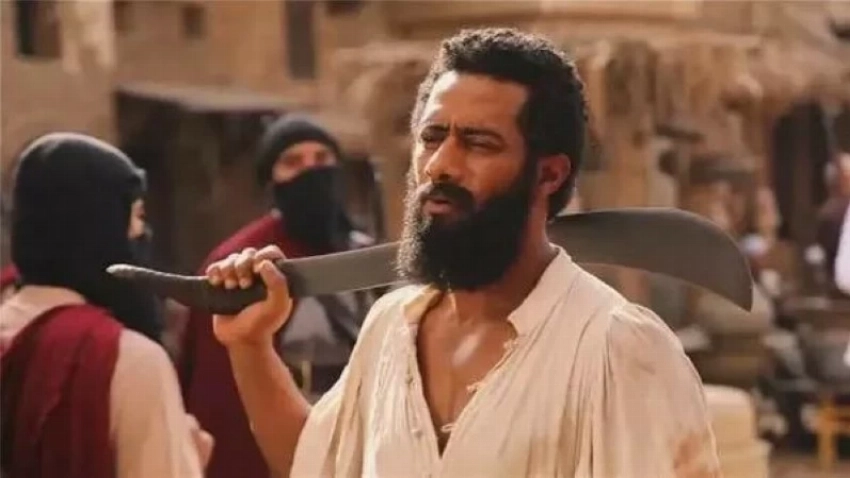
The release date for the film "Asad" starring Mohamed Ramadan and Mohamed Diab is summer 2026
Find out when the film "Asad" starring Mohamed Ramadan and directed by Mohamed Diab will be released. Learn about the historical plot, the cast, and behind-the-scenes details of this highly anticipated summer 2026 film.

Egyptian star Mohamed Ramadan has officially announced the final release date for his new and highly anticipated film “Asad”, putting an end to speculation about its release date, and confirming that the film is ready to compete in the summer of 2026.
This announcement came via a brief message posted by Ramadan on his official Facebook account, where he wrote: “God willing, summer 2026,” in a clear indication that the audience is in for a different cinematic experience that combines suspense and historical drama.
Exceptional artistic collaboration with Mohamed Diab
The film "Asad" holds special significance in artistic and cinematic circles, not only because it stars Mohamed Ramadan, who enjoys a wide fan base, but also because it represents a unique artistic collaboration with the internationally acclaimed director Mohamed Diab . Diab is considered one of the most prominent Arab directors to have achieved global recognition, especially after his great success directing the Marvel series "Moon Knight," in addition to his previous films that have garnered critical acclaim at international festivals.
This collaboration between Egypt’s number one box office star and a director with a global vision raises expectations for the film, which is expected to offer a visual and narrative quality that differs from what is prevalent in commercial cinema, making it one of the biggest anticipated productions in the Arab region.
The film's story and its social dimensions
The film "Lion" unfolds as a thriller, action-packed drama set in a bygone historical era. According to available information, the work sheds light on profound human issues, most notably racial discrimination and the unjust treatment suffered by society during that period.
The film is not just an entertainment work, but carries important social messages about justice and equality, presented in an epic “action” format that suits the nature of the roles that Mohamed Ramadan excels at, but with a different directorial vision.
A battalion of stars and filmmakers
The film boasts a stellar cast of Arab filmmakers and stars, significantly enhancing its chances of both critical and commercial success. The screenplay was penned by the talented trio of Sherine Diab, Mohamed Diab, and Khaled Diab , renowned for their masterful scripts and realistic dramas.
The cast boasts a strong lineup, featuring the renowned actor Maged El Kedwany and the brilliant Razan Gamal , alongside Ali Qassem, Ahmed Dash, Islam Mubarak, and Kamel El Basha . On the technical side, the team includes some of the brightest names, guaranteeing high artistic quality. Ahmed Bashari , Ahmed Hafez (who recently worked on international projects) is the editor, Ahmed Fayez Reem El Adl is the costume designer , and the score is composed by the talented Hisham Nazih .
A humanitarian gesture: Donating a TikTok account
Away from cinema, Mohamed Ramadan continued to stir up positive controversy on social media platforms, as he recently announced an unprecedented step by deciding to donate his official verified account on the “TikTok” application to one of his followers.
In a post, Ramadan explained that this move is a gesture of appreciation to his audience, emphasizing that true stardom on this platform belongs to the followers and original content creators, and that he doesn't see himself in competition with them, but rather as a supporter. Ramadan is expected to choose the winner of the account soon, a move that reflects his astute management of his relationship with his vast audience.
Culture and Art
Details of a lawsuit against the TV series "Immunity" starring Hend Sabry
A legal crisis is engulfing the TV series "Immunity," starring Hend Sabry. The family is suing the show's producers and has issued a warning to the Actors' Syndicate, alleging a breach of privacy. Here are the full details.

The artistic scene witnessed a new legal escalation in recent hours that threatens the stability of the upcoming drama season. Lawyers Mohamed Abdel Moneim and Ahmed Saeed, representing the family of the "Mana'a" family, filed an urgent lawsuit in the Economic Court against the producers of the series, which stars Hend Sabry. Not content with resorting to the courts, the defense also issued a formal warning to the Actors' Syndicate, a move reflecting the seriousness of their objection to what they described as a blatant violation of the family's privacy.
Details of legal action and defense of rights
The family's legal team explained that this action is a necessary measure to defend their clients' moral and intellectual property rights. The lawsuit is based on the fact that the series delves into intimate details of the family's life without prior authorization or legal consent, which constitutes a clear violation of intellectual property and personal rights laws. The lawyers pointed out that the drama includes allusions and dramatic treatment that directly harm the family's reputation, exposing its members to significant material and moral damages. They demanded that the series be taken off the air and that those responsible be held accountable if the harm is proven.
The creators' response: Between reality and dramatic imagination
In contrast, the production team of the series "Immunity" has maintained official silence regarding the legal proceedings. A source within the production stated that they are unaware of the details of the lawsuit. However, screenwriter Amr El-Daly, the series' author, had previously settled the debate surrounding the nature of the story, asserting that the events of the series belong entirely to "dramatic fiction." El-Daly explained that the only resemblance to reality lies in a single plotline inspired by a true event, while the remaining details, characters, and dramatic structure bear no relation to the original story. This is a defense commonly employed by drama creators to distinguish between real-life inspiration and artistic interpretation.
The recurring debate between drama and reality
This incident opens a thorny issue that recurs frequently in Egyptian and Arab drama: the age-old conflict between artistic freedom and the individual's right to privacy. Works inspired by true stories or that touch upon the lives of well-known figures often provoke the ire of heirs or families, placing economic courts in the complex task of distinguishing between the author's inherent right to create fiction and what constitutes a violation of others' privacy. These cases have a significant impact on the entertainment industry, potentially leading to the postponement of major productions or the complete revision of scripts to avoid legal action.
The role of the union and the expected impact
The warning issued to the Actors' Syndicate takes on particular significance in this context, as the syndicate typically plays a mediating role to bridge differences before crises escalate and reach the courts, thus disrupting production. This issue is expected to spark widespread debate regarding the ethical and legal standards of adapting real-life events, especially given the involvement of a star of Hend Sabry's stature. This will undoubtedly bring significant media and public attention to the series even before its release, and this legal controversy could either translate into free publicity for the project or pose a genuine obstacle that threatens its very existence.
Culture and Art
Bassem Samra rejects "The Giants 3" and attacks fake stardom
Bassem Samra reveals in “Secret Ink” the reasons for his refusal to participate in the third part of the series “Al-Atawla”, criticizes paid stardom via social media, and comments on Ahmed El-Sakka’s separation.

In bold statements reflecting the current state of the art scene, the esteemed Egyptian artist Bassem Samra asserted that the standards of true stardom have been distorted for some, stressing that survival belongs to the fittest and to works of high artistic value, not to those who possess electronic armies on social media platforms.
Stardom: Between talent and trend
During his appearance on the program "Secret Ink" with journalist Asma Ibrahim, Samra addressed a sensitive issue plaguing drama and film producers: the phenomenon of "paid stardom." He explained that the reliance of some rising stars, or even established ones, on social media "committees" to inflate their success is a false notion that means nothing to him. These statements come at a time when the artistic community is witnessing widespread debate about the impact of fake follower counts and views on production companies' choices, which could be unfair to genuine talents who deserve opportunities based on their acting abilities, not their digital engagement.
The future of "the old guard" and the rejection of repetition
Regarding the popular drama series "Al-Atawla," which resonated widely with Egyptian and Arab audiences by bringing together stars like Ahmed El Sakka and Tarek Lotfy, Bassem Samra revealed a surprising stance on the show's continuation. Samra bravely admitted that the overwhelming success of the first season wasn't replicated with the same momentum in the second, attributing this to technical reasons that might be related to a change in the writer and a shift in the dramatic vision.
Out of concern for his artistic legacy, he categorically refused to participate in a third season of "Al-Atawla," explaining that the series would become "mere repetition," lacking spirit and novelty. This stance reflects an artistic awareness of the importance of timing in concluding drama series before they lose their appeal, a dilemma faced by many Arab productions that fall into the trap of "stretching and prolonging" to capitalize on commercial success at the expense of artistic quality.
The lives of artists... a red line
On a personal note, Samra addressed the recent separation of his friend and colleague, actor Ahmed El Sakka, from media personality Maha El Saghir, describing it as "fate and destiny." Samra used this occasion to deliver a strongly worded message against the violation of celebrities' privacy, condemning the obsession with photographing artists during moments of vulnerability or personal crises. He pointed out that an artist's life is not the idyllic luxury the public imagines, but rather full of pressures and challenges, which necessitates respecting their personal space and not turning their private lives into fodder for gossip.
-

 Local News 3 days ago
Saudi Arabia approves regulations for the continued presence of Gulf vehicles: duration and penalties
-
Local News 6 days ago
The Ministry of Interior begins procedures for a royal pardon for common law prisoners
-
Local news one week ago
19 requirements to reduce dust from projects in Riyadh and fines for violators
-
Politics, one week ago
Trump plans to create a $2 billion alternative to the World Health Organization
-
Culture and Art, 1 week ago
Amr Diab appears with his four sons and a highly anticipated concert in Türkiye
-
 Local news one week ago
Three billion riyals deposited as Ramadan aid for social security beneficiaries
-
Local news 12 hours ago
Jeddah Airport alerts for travelers due to airspace closure and flight disruptions
-
Local News 5 days ago
The deadline for property registration in Hail and Riyadh is Thursday