Culture and Art
The influence of character, language, and places in Ahmed Al-Samari's novel "Al-Sarim"
Three years have passed since the publication of the novel (Al-Sarim) by the Saudi writer Ahmed Al-Samari, by (Athar) publishing house, and it still carries a trace of passion

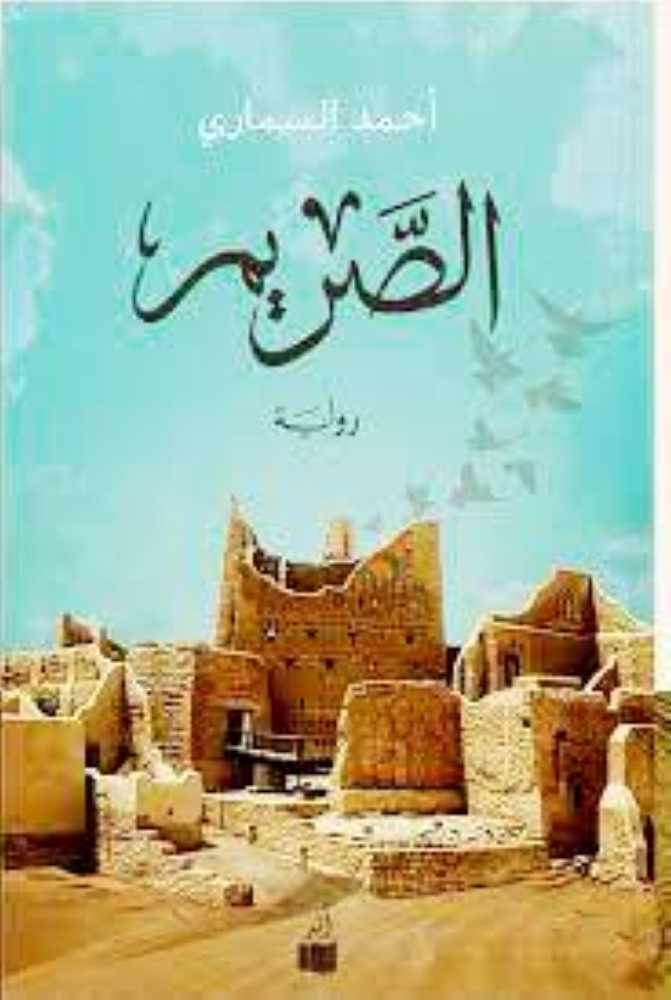
Three years have passed since the publication of the novel (Al-Sarim) by the Saudi writer Ahmed Al-Samari, published by (Athar) Publishing House, and it still carries a trace of reading passion among its recipients, as much as it refers to indications within the structures of the narrative, its texts and margins, in every reading that requires raising questions about writing, interpretations of discourse and making the recipient aware of several features, and textual relationships during the time of reading, and writing with its multiple interpretations.
In the context of including a foreword at the beginning of the novel, the writer Ahmed Al-Samari points out that “this novel is inspired by real events, but the characters it includes and the situations it describes are fictional.” The novelist wanted this as a kind of clarification to avoid any confusion in the process of receiving the novel and the various reading interactions, questions, and interpretations.
In his dedication, Al-Samari refers to “the ancestors who lived through that difficult period of disasters and destitution in the history of Najd and the Arabian Peninsula, and whom only a few people remember.” It is therefore a novel that, through its approach to the patterns of its society, draws horizons of storytelling and the integration of other genres within it, as the writer finds comfort in the lives, places, and cultures of different environments, and visions, sayings, and proverbs that fall within the fabric of anthropological studies, but from the point of view of narrative fiction, mixed with the style of description, the mentality of the traveler, and the answer of horizons. His intuitions are sharpened by a dense, economical, and descriptive language without being lengthy or boring.
“Al-Sarim” initially gives its reader a visual expanse of vision as they move between the lines of its phrases, its pages, and its four chapters, which seem to refer us to the nature of the annual seasons, with their effects and the fluctuations of life, climate, rituals, alienation, and the conditions and biography of the being during its movement from one state to another, driven by the circumstances of the novel’s times, the contexts of its dates and places, and the gathering of life’s elements in it with movement, striving, patience, and travel, and the character of the story that is documented through its narrator in several forms used by the narrator, as well as in the form of the speaker (Zaid Ibn Othman).
The narrator tells his story, and wisdom and vision almost overflow together in the last chapter of the novel, after he has experienced the harsh life with its various experiences, between joy and sorrow, alienation and patience, and a tendency to be deliberate and to think about the train of life and its journeys and what it overflows with in terms of sustenance, or the miserable moment in portraying poverty in the environments of (the Arabian Peninsula) and its extensions and oases of its many regions and the borders of its countries and their neighborings and its heritage and its living effect in the heat of meaning and the dew of the mornings that are joyful with the freshness of the narrative style that sometimes leans on (precise documentaries)
Sometimes, with tremendous ability and passion to trace the threads of the story and weave them together with aspects and pillars, the narrative often rests solely on its foundations, as required by the language of the narrative and the insight and experience of the narrator who tells and listens together to calls and content of more than dialogue, discourse, and cultural structure that coexist and converse, unite and differ, and sometimes intersect.
To the extent that (Al-Sarim) integrates its reader as a participant in diving and traveling through the spaces of its pages, and it has taken divisions through numbers that refer to spaces and situations for a browsing and deep dive, far in tracing the trace of the narrator’s language and the style of the story that relies on the circularity of the story and the entanglement of the situations of its people in the biographies of people and places and the familiarity of structures and elements and their contrast at times, according to the nature of the narrative construction of the lives of the characters and the travel of some of them in the expanses, cities and deserts of the peninsula and the Empty Quarter, where Al-Samari’s novel touches the horizon of the tried story in a context of alienation and displacement from the original place, to the conditions of the character’s life and its impact on the life and environments that surrounded it and in which it lived and in which it has homes and memories, and homes of longing, and passion for toil and work for the purpose of sustenance, and living in multiple spaces and places, to the extent that the novel is rich with the biography of its places in parallel with the biography of its characters and their roles that combine in the narrative to make the central character (Zaid) stand out In the greater part of the narrative, and in grasping the reins of the narrative language with its various elements, directions, and events, and as the novel (Al-Sarim) proceeds horizontally in its narration, the nature of the narrative and its structures take on important dimensions towards relying on the documentation of history, within a context of a smooth flow of dialogue scattered throughout the pages and chapters of the novel. The narrative language stands at the borders of the imaginary and the writer's or author's style in the methods of presenting and weaving the story into tales that are not devoid of employing allusions and the cultural heritage of the places where the character lives or resides for work and the purposes of a stable life. The narrative vision transforms from the first chapter, entitled (The dew is before him… and the dust is behind him), to refer to a poetic content in employing heritage and the diverse cultural significance of the narrative places, where the story spreads an atmosphere of stimulation for what follows the next page and what comes after it. The novelist also strives to suggest introductions from the heart of the overall theme of the work, so we find that the following introduction includes a phrase by Christopher Sholes whose semantic features stimulate the reader towards This indicates “a story begins, a story ends, the days pass, and nothing lasts.” As a result, the individual character often monopolizes the narrative of the transforming event, and this affects the character's awareness of his surroundings without any display or additions that might disrupt the nature of the narrative. The reader finds himself facing a different kind of challenge, amidst the flow and streams of the story and its recollections on the tongue of (Zaid), and the outpouring of the cultural impact of the character's own thought within the context of narrative time and the transformations of the narrative in time, place, and multiple characters with various masks.
The novelist Al-Samari’s focus on building the opening of the four chapters of his novel with the same density and smooth style in reducing the phrase indicates a skill that also accompanies him in certain features of artistic construction, as in his novel following the novel (Al-Sarim), which I mean (Qantara), where he furnishes the theme of place but with a vision, language and perspective different from his previous novel, even if some visions and spatial areas are similar, such as the deserts, for example. However, the intense condensation here in stimulating the eye that delves into the lines of his novel and his phrases quickly leaves an effect on the reader who participates with passion, in addition to the effect of the character, as in the beginning of the second chapter “Zaid… and Al-Sarim,” where he narrates Zaid: “Whenever I remember my village, a flame ignites in my soul, how I wish it would be extinguished and put out forever.” Paragraph 1, p. (89)
In this context: The multifaceted element of place in the novel "Al-Sarim" is concentrated to refer to a particularity and personality in itself as a fictional place, a hostel, or a temporary or transient residence. The novel documents social and civic places in the culture of the society in which the traveler or wanderer looks through stations of alienation, in historical contexts, towards a basic goal such as a stable life, a loaf of peace, and a predetermined livelihood. The language of the narrative, in specifying the places of the character who narrates and the biographical situations he lived through, almost speaks with an intimacy tinged with longing, sorrow, and travel together, to build horizons for the stranger who carries the story in one bag and the luggage of travel in another: Kuwait, Al-Ahmadi, Riyadh, Jeddah, Al-Ahsa, Mecca, and other cities and towns, as the horizon of distant vision expands and extends to deserts, sands, and plains that evoke melancholy and stir the soul's yearnings as (Zaid) narrates and those around him listen, and the pronouns alternate in the narrative of the situation and the observations woven with the use of the technique of heritage and the sayings of proverbs and wisdom. Poetry and the multiple narratives in the features of the environments of the Gulf region and the Arabian Peninsula in general, in their diversity, as well as in terms of depicting warm dreams that approach the shadows of palm oases, amidst the wilderness drawn as a vast horizon and the deserts and their burning sands.
Yemeni writer


Culture and Art
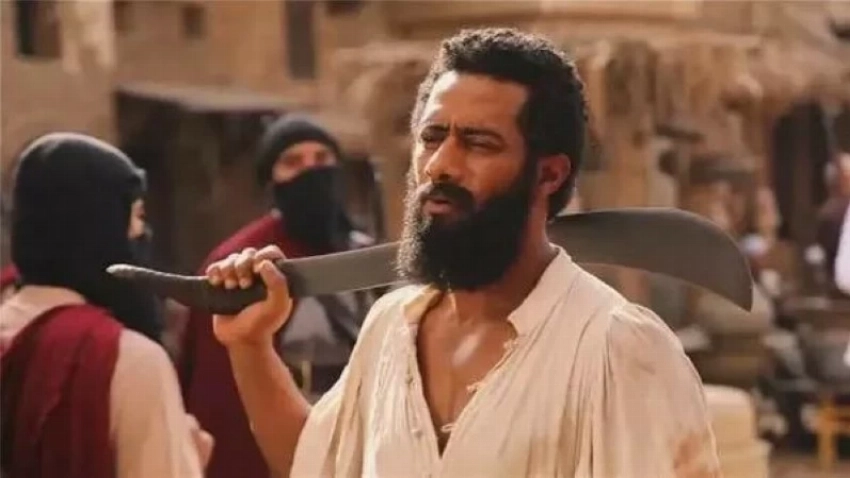
The release date for the film "Asad" starring Mohamed Ramadan and Mohamed Diab is summer 2026
Find out when the film "Asad" starring Mohamed Ramadan and directed by Mohamed Diab will be released. Learn about the historical plot, the cast, and behind-the-scenes details of this highly anticipated summer 2026 film.

Egyptian star Mohamed Ramadan has officially announced the final release date for his new and highly anticipated film “Asad”, putting an end to speculation about its release date, and confirming that the film is ready to compete in the summer of 2026.
This announcement came via a brief message posted by Ramadan on his official Facebook account, where he wrote: “God willing, summer 2026,” in a clear indication that the audience is in for a different cinematic experience that combines suspense and historical drama.
Exceptional artistic collaboration with Mohamed Diab
The film "Asad" holds special significance in artistic and cinematic circles, not only because it stars Mohamed Ramadan, who enjoys a wide fan base, but also because it represents a unique artistic collaboration with the internationally acclaimed director Mohamed Diab . Diab is considered one of the most prominent Arab directors to have achieved global recognition, especially after his great success directing the Marvel series "Moon Knight," in addition to his previous films that have garnered critical acclaim at international festivals.
This collaboration between Egypt’s number one box office star and a director with a global vision raises expectations for the film, which is expected to offer a visual and narrative quality that differs from what is prevalent in commercial cinema, making it one of the biggest anticipated productions in the Arab region.
The film's story and its social dimensions
The film "Lion" unfolds as a thriller, action-packed drama set in a bygone historical era. According to available information, the work sheds light on profound human issues, most notably racial discrimination and the unjust treatment suffered by society during that period.
The film is not just an entertainment work, but carries important social messages about justice and equality, presented in an epic “action” format that suits the nature of the roles that Mohamed Ramadan excels at, but with a different directorial vision.
A battalion of stars and filmmakers
The film boasts a stellar cast of Arab filmmakers and stars, significantly enhancing its chances of both critical and commercial success. The screenplay was penned by the talented trio of Sherine Diab, Mohamed Diab, and Khaled Diab , renowned for their masterful scripts and realistic dramas.
The cast boasts a strong lineup, featuring the renowned actor Maged El Kedwany and the brilliant Razan Gamal , alongside Ali Qassem, Ahmed Dash, Islam Mubarak, and Kamel El Basha . On the technical side, the team includes some of the brightest names, guaranteeing high artistic quality. Ahmed Bashari , Ahmed Hafez (who recently worked on international projects) is the editor, Ahmed Fayez Reem El Adl is the costume designer , and the score is composed by the talented Hisham Nazih .
A humanitarian gesture: Donating a TikTok account
Away from cinema, Mohamed Ramadan continued to stir up positive controversy on social media platforms, as he recently announced an unprecedented step by deciding to donate his official verified account on the “TikTok” application to one of his followers.
In a post, Ramadan explained that this move is a gesture of appreciation to his audience, emphasizing that true stardom on this platform belongs to the followers and original content creators, and that he doesn't see himself in competition with them, but rather as a supporter. Ramadan is expected to choose the winner of the account soon, a move that reflects his astute management of his relationship with his vast audience.
Culture and Art
Details of a lawsuit against the TV series "Immunity" starring Hend Sabry
A legal crisis is engulfing the TV series "Immunity," starring Hend Sabry. The family is suing the show's producers and has issued a warning to the Actors' Syndicate, alleging a breach of privacy. Here are the full details.

The artistic scene witnessed a new legal escalation in recent hours that threatens the stability of the upcoming drama season. Lawyers Mohamed Abdel Moneim and Ahmed Saeed, representing the family of the "Mana'a" family, filed an urgent lawsuit in the Economic Court against the producers of the series, which stars Hend Sabry. Not content with resorting to the courts, the defense also issued a formal warning to the Actors' Syndicate, a move reflecting the seriousness of their objection to what they described as a blatant violation of the family's privacy.
Details of legal action and defense of rights
The family's legal team explained that this action is a necessary measure to defend their clients' moral and intellectual property rights. The lawsuit is based on the fact that the series delves into intimate details of the family's life without prior authorization or legal consent, which constitutes a clear violation of intellectual property and personal rights laws. The lawyers pointed out that the drama includes allusions and dramatic treatment that directly harm the family's reputation, exposing its members to significant material and moral damages. They demanded that the series be taken off the air and that those responsible be held accountable if the harm is proven.
The creators' response: Between reality and dramatic imagination
In contrast, the production team of the series "Immunity" has maintained official silence regarding the legal proceedings. A source within the production stated that they are unaware of the details of the lawsuit. However, screenwriter Amr El-Daly, the series' author, had previously settled the debate surrounding the nature of the story, asserting that the events of the series belong entirely to "dramatic fiction." El-Daly explained that the only resemblance to reality lies in a single plotline inspired by a true event, while the remaining details, characters, and dramatic structure bear no relation to the original story. This is a defense commonly employed by drama creators to distinguish between real-life inspiration and artistic interpretation.
The recurring debate between drama and reality
This incident opens a thorny issue that recurs frequently in Egyptian and Arab drama: the age-old conflict between artistic freedom and the individual's right to privacy. Works inspired by true stories or that touch upon the lives of well-known figures often provoke the ire of heirs or families, placing economic courts in the complex task of distinguishing between the author's inherent right to create fiction and what constitutes a violation of others' privacy. These cases have a significant impact on the entertainment industry, potentially leading to the postponement of major productions or the complete revision of scripts to avoid legal action.
The role of the union and the expected impact
The warning issued to the Actors' Syndicate takes on particular significance in this context, as the syndicate typically plays a mediating role to bridge differences before crises escalate and reach the courts, thus disrupting production. This issue is expected to spark widespread debate regarding the ethical and legal standards of adapting real-life events, especially given the involvement of a star of Hend Sabry's stature. This will undoubtedly bring significant media and public attention to the series even before its release, and this legal controversy could either translate into free publicity for the project or pose a genuine obstacle that threatens its very existence.
Culture and Art
Bassem Samra rejects "The Giants 3" and attacks fake stardom
Bassem Samra reveals in “Secret Ink” the reasons for his refusal to participate in the third part of the series “Al-Atawla”, criticizes paid stardom via social media, and comments on Ahmed El-Sakka’s separation.

In bold statements reflecting the current state of the art scene, the esteemed Egyptian artist Bassem Samra asserted that the standards of true stardom have been distorted for some, stressing that survival belongs to the fittest and to works of high artistic value, not to those who possess electronic armies on social media platforms.
Stardom: Between talent and trend
During his appearance on the program "Secret Ink" with journalist Asma Ibrahim, Samra addressed a sensitive issue plaguing drama and film producers: the phenomenon of "paid stardom." He explained that the reliance of some rising stars, or even established ones, on social media "committees" to inflate their success is a false notion that means nothing to him. These statements come at a time when the artistic community is witnessing widespread debate about the impact of fake follower counts and views on production companies' choices, which could be unfair to genuine talents who deserve opportunities based on their acting abilities, not their digital engagement.
The future of "the old guard" and the rejection of repetition
Regarding the popular drama series "Al-Atawla," which resonated widely with Egyptian and Arab audiences by bringing together stars like Ahmed El Sakka and Tarek Lotfy, Bassem Samra revealed a surprising stance on the show's continuation. Samra bravely admitted that the overwhelming success of the first season wasn't replicated with the same momentum in the second, attributing this to technical reasons that might be related to a change in the writer and a shift in the dramatic vision.
Out of concern for his artistic legacy, he categorically refused to participate in a third season of "Al-Atawla," explaining that the series would become "mere repetition," lacking spirit and novelty. This stance reflects an artistic awareness of the importance of timing in concluding drama series before they lose their appeal, a dilemma faced by many Arab productions that fall into the trap of "stretching and prolonging" to capitalize on commercial success at the expense of artistic quality.
The lives of artists... a red line
On a personal note, Samra addressed the recent separation of his friend and colleague, actor Ahmed El Sakka, from media personality Maha El Saghir, describing it as "fate and destiny." Samra used this occasion to deliver a strongly worded message against the violation of celebrities' privacy, condemning the obsession with photographing artists during moments of vulnerability or personal crises. He pointed out that an artist's life is not the idyllic luxury the public imagines, but rather full of pressures and challenges, which necessitates respecting their personal space and not turning their private lives into fodder for gossip.
-

 Local News 3 days ago
Saudi Arabia approves regulations for the continued presence of Gulf vehicles: duration and penalties
-
Local News 6 days ago
The Ministry of Interior begins procedures for a royal pardon for common law prisoners
-
Local news one week ago
19 requirements to reduce dust from projects in Riyadh and fines for violators
-
Politics, one week ago
Trump plans to create a $2 billion alternative to the World Health Organization
-
Culture and Art, 1 week ago
Amr Diab appears with his four sons and a highly anticipated concert in Türkiye
-
 Local news one week ago
Three billion riyals deposited as Ramadan aid for social security beneficiaries
-
Local news 12 hours ago
Jeddah Airport alerts for travelers due to airspace closure and flight disruptions
-
Local News 5 days ago
The deadline for property registration in Hail and Riyadh is Thursday