Local News
The Ministry of Education sets guidelines for assigning individuals to educational positions
The Ministry of Education has established guidelines for assigning teachers and other educational staff to teaching positions

The Ministry of Education has set controls for the procedures of assigning teachers and supervisory and school staff to temporary positions to meet an urgent educational need and raise the percentage of specialization in schools during the new academic year, for no more than one semester.
The Ministry clarified in the guide for planning educational job occupants in education departments that the teaching load of a teacher assigned to more than one school in public education schools should not exceed 20 class periods for the ranks of teacher and practicing teacher, 18 class periods for the rank of advanced teacher, and 14 class periods for the rank of expert teacher, and that the teaching load of a teacher of people with disabilities assigned to more than one school or program of schools and programs of people with disabilities should not exceed 16 class periods for the ranks of teacher and practicing teacher, 14 class periods for the rank of advanced teacher, and 12 class periods for the rank of expert teacher.
The regulations stipulated that the assignment should be in accordance with the requirements of the educational interest when there is a shortage that cannot be filled from within the school, and that the decision should specify the beginning and end of the assignment unless it is terminated before that for the educational interest or because its cause has disappeared. The administration has the right to reassign, and the assignment should be through the approved electronic systems, and the assignment should be rotated among the subject teachers in the school.
She explained that the circumstances under which teachers are reassigned to fill teaching vacancies are: if a teacher's workload is 50% or less of their assigned teaching load according to their teaching rank; if a teacher is transferred externally or internally; if a teacher works in a single-building school (sharing the building but with independent administration); if the teacher requests reassignment to fill a vacancy, provided that no other, more qualified teacher is available; and after one academic year has passed since the teacher's last assignment, provided that this does not conflict with the above; if no other teacher is available at the school to fill the vacancy; and if a teacher fails to complete their assignment for any reason and no other teacher at the same school is available to fill the vacancy. She noted that a teacher on partial assignment is exempt from daily supervision, waiting periods, and extracurricular activities at the schools to which they are assigned if their total teaching load across all schools reaches 50% or more.
She pointed out that meeting the needs in the school or segment begins with the secondary stage, then the intermediate stage, then the primary stage, according to the classification of qualifications and according to the nearest availability, and assigning those who have the ability, competence and readiness from the teachers to meet the educational need after obtaining their written consent to teach outside their specialization in the event of the absence of a specialized teacher in the intermediate and secondary stage, according to the regulations and instructions regulating this, and benefiting from teachers who have additional approved qualifications.




Local News
The Director of Health in Socotra praises Saudi support for the health sector in the archipelago
The Director of Health in Socotra confirmed that Saudi support through the Saudi Program for the Development and Reconstruction of Yemen saved the medical sector, providing medicines, operational budgets and strategic projects.

The Director General of the Health and Population Office in the Socotra Archipelago Governorate, Dr. Issa Al-Shanqabi, praised the pivotal and strategic role played by the Kingdom of Saudi Arabia in rescuing and developing the health sector in the governorate. Al-Shanqabi emphasized that this generous support, provided under the direct guidance of the Custodian of the Two Holy Mosques, King Salman bin Abdulaziz, and his Crown Prince, Deputy Prime Minister, Prince Mohammed bin Salman, has been a cornerstone for the continued provision of medical services to the people of the archipelago during these exceptional circumstances.
Rapid response and high-level coordination
In exclusive statements to Okaz newspaper, Dr. Al-Shanqabi explained that the ongoing coordination between the local authorities and the Saudi Program for the Development and Reconstruction of Yemen, with close follow-up from the Ambassador of the Custodian of the Two Holy Mosques to Yemen, Mohammed Al Jaber, has yielded tangible results on the ground. This support has included providing a comprehensive operational budget, securing medicines and medical supplies for the Socotra Hospital to be provided to patients completely free of charge, and supporting vital logistical services, most notably the electricity system, thus ensuring the continuity of medical services with high efficiency and without interruption.
Expanding the service map to remote areas
Saudi support wasn't limited to the main center; the Director of Health in Socotra revealed a strategic expansion of interventions to include districts and remote areas. He noted the tangible response from the Saudi program in supporting and operating the Qalansiyah and Nuqad hospitals, which significantly alleviated pressure on hospitals in the capital, Hadibu, and spared citizens in those far-flung regions the hardship of travel. Al-Shanqabi also announced the commencement of technical studies for the restoration and operation of the 22 May Hospital, with support from the Saudi program, so that it can once again serve as a central health facility for all residents of the archipelago.
Strategic projects and an anticipated qualitative leap
Speaking about future sustainable projects, Al-Shanqabi emphasized that Socotra eagerly awaits the completion of the King Salman Medical Complex, currently under construction next to the King Salman Mosque. He described the project as an unprecedented leap forward in the history of healthcare services on the island, as it will be equipped to be a comprehensive medical facility similar to the medical city in Al-Mahra Governorate, thus enhancing the archipelago's health security and reducing the need for patients to travel abroad for treatment.
Sustainable human footprints
Dr. Al-Shanqabi concluded his remarks by emphasizing that the humanitarian contributions of the Kingdom of Saudi Arabia are well-known to the people of Socotra. He commended the pioneering role of the Saudi field hospital and the equipping of health centers in Amdhan, Nuqad, and other vital facilities. He expressed his deep gratitude to the Kingdom's leadership for this noble humanitarian support, which directly addresses the needs of the Yemeni people, and looked forward to further cooperation to ensure the sustainability and development of health services to meet the aspirations of the province's residents.
Local News
Public security warns residents near the US embassy in Amman
Jordanian Public Security calls on residents near the US Embassy in Amman to take precautions when they hear sirens, amid warnings of aerial activity and marches in the area.
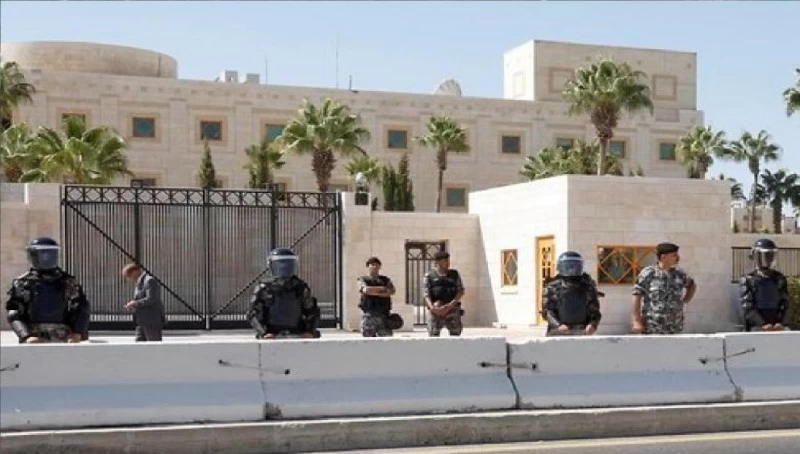
The Jordanian Public Security Directorate issued an important and urgent notice to citizens and residents living in the areas surrounding the US Embassy in the capital, Amman, calling on them to exercise the utmost caution and take the necessary preventive safety measures in the event of the sirens sounding.
Details of the warning and preventive measures
According to the official Jordanian news agency Petra, the Directorate stressed the importance of adhering to security instructions to ensure public safety. The Directorate explained that the primary procedure upon hearing the siren (a single, continuous beep) is to remain indoors and not leave until the threat has completely passed. It also emphasized the need to stay away from windows and glass doors, close them tightly to avoid injury from any potential shrapnel, and take shelter in safer areas within the house, such as hallways or stairwells.
Regarding drivers who may be on the roads when they hear the alarm, the directorate called for an immediate and safe stop of the vehicle, heading to the nearest building for shelter, and not remaining inside the car or in open areas.
Security context and US warnings
This precautionary measure coincides with a new security alert issued by the US Embassy in Jordan to its citizens and staff. The embassy indicated credible signs of continued aerial activity, including missiles or drones, in Jordanian airspace in the coming days. The embassy described the current security environment as "complex and rapidly changing," necessitating continued vigilance.
Regional background and importance of the measures
These warnings gain significance from the current tense regional context in the Middle East. Jordan, by virtue of its strategic geographic location, lies at the heart of current events, and the region has recently witnessed intensified military activity as a result of the ongoing escalation. These instructions are part of the Jordanian state's strategy to maintain the security and safety of its citizens and residents, and to ensure that civilians are not harmed by any debris that may fall as a result of intercepting aerial objects.
A message of reassurance
The Public Security Directorate concluded its statement by emphasizing that these measures are "precautionary and preventive" and are primarily aimed at maintaining public safety, stressing that they do not warrant panic or fear among citizens, but rather require awareness and adherence to official instructions to ensure that any emergency passes peacefully.
Local News
Al-Sudais: Ramadan is a source of inspiration and a catalyst for creating lasting impact
In his Friday sermon, Sheikh Al-Sudais emphasized that Ramadan is a comprehensive program for families and youth, and a station for purifying souls and creating a lasting impact, calling for investing the month in positive change.

In a spiritually uplifting atmosphere within the precincts of the Grand Mosque, the Imam and preacher of the Grand Mosque, His Excellency Sheikh Dr. Abdulrahman bin Abdulaziz Al-Sudais, affirmed that the blessed month of Ramadan transcends being merely a season for striving in fleeting acts of worship, becoming an integrated approach and a source of inspiration and creating a lasting impact in the lives of Muslims.
Ramadan: A comprehensive program for the family and community
During his Friday sermon, Sheikh Al-Sudais explained that the holy month of Ramadan represents a comprehensive program targeting all segments of society, from ambitious individuals to the Muslim family, which is the primary building block for future generations. He pointed out that this blessed season is a major opportunity for purifying the soul, refining behavior, and upholding noble Islamic values. He emphasized that the ultimate goal for which God ordained fasting is to achieve piety (taqwa), which is the foundation of righteousness and the well-being of both the individual and society.
Complementary roles: from child to woman
The Imam and preacher of the Grand Mosque detailed the roles assigned to each member of the family during this month, explaining:
- For children: An opportunity to instill the meanings of fasting and patience in their early awareness through engaging and attractive educational methods.
- For young people: a field to direct their vital energies towards active participation in Ramadan volunteering programs and community service.
- For the Muslim woman: She is described as the pillar of the family and the maker of stability in the home, making the month a season of renewal and change for the better.
Preserving the five necessities and the purposes of fasting
In discussing the objectives of Islamic law, Al-Sudais explained that fasting is not merely abstaining from food and drink, but rather a comprehensive act of worship aimed at regulating behavior and safeguarding one's limbs. He emphasized that one of the greatest objectives of this obligation is preserving the five necessities established by Islamic law: (religion, life, intellect, wealth, and honor). Fasting is an effective means of curbing desires, rectifying human conduct, and restraining the soul from forbidden acts, which positively impacts the security and stability of society.
Sustaining the impact after Ramadan
Sheikh Al-Sudais concluded his sermon by urging Muslims to maintain the positive impact of the holy month after its conclusion, warning against allowing worship to become merely seasonal, ending with the month's end. He emphasized that worship in Islam is a continuous way of life, and that the sign of acceptance of deeds is steadfastness in obedience and perseverance in good works. This transforms Ramadan from a mere annual tradition into an inspiring act of worship whose impact and rewards remain in this life and the hereafter, thus achieving lasting positive change in the Muslim's conduct.
-

 Local news one week ago
The Ministry of Interior begins procedures for a royal pardon for common law prisoners
-
Local News 6 days ago
Saudi Arabia approves regulations for the continued presence of Gulf vehicles: duration and penalties
-
Local news one week ago
The deadline for property registration in Hail and Riyadh is Thursday
-
Culture and Art 6 days ago
The Devil's Prisons series was halted: The full story of "The Emperor's" being moved to YouTube
-
Local news one week ago
Under the patronage of the Minister of Information, an agreement was signed between the Ministry of Information and Waves Marketing Company
-
Local News 5 days ago
Saudi Energy: A new identity for electricity that aligns with Vision 2030
-
Local News 5 days ago
The Food and Drug Administration is recalling Bebelac and Aptamil milk due to potential contamination
-
Local news one week ago
Registration is now open for domestic pilgrims for the 1447 AH season: Dates and conditions via Nusuk