
social responsibility
The Prince of Qassim honors a citizen and a security officer for rescuing a child in an accident
Prince Faisal bin Mishaal, the Governor of Qassim, honors citizen Sultan Al-Harbi and security officer Issa Al-Rashidi for their humanitarian act in helping a Sudanese girl who survived a tragic traffic accident.


In a humanitarian gesture reflecting the leadership's appreciation for noble deeds, His Royal Highness Prince Dr. Faisal bin Mishaal bin Saud bin Abdulaziz, Governor of Qassim Region, honored citizen Sultan Al-Harbi and security officer Issa Al-Rashidi. This honor was bestowed in recognition of their heroic and humanitarian act in assisting a young woman from a Sudanese family who was involved in a tragic traffic accident that claimed the lives of her family members.
The incident stemmed from a tragic traffic accident involving the family of Sudanese girl Al-Anoud Al-Tarifi, which resulted in the death of all but the child. Amidst this tragedy, the honorable actions of citizen Al-Harbi and security officer Al-Rashidi stood out, as they rushed to provide immediate assistance to the child, in a scene that embodies the highest ideals of solidarity and compassion that characterize Saudi society.
Close monitoring and comprehensive care
The attention wasn't limited to honoring her; it was preceded by a personal visit from the Prince of Qassim, who visited the child, Al-Anoud, in the hospital to check on her health. During the visit, His Highness reviewed the detailed medical report on her condition and directed that she receive all necessary medical and psychological care, emphasizing the importance of providing a supportive environment to help her overcome the psychological effects of this difficult ordeal.
Background of social solidarity
This recognition is not an isolated event, but rather an extension of a well-established approach in the Kingdom of Saudi Arabia, where the leadership places paramount importance on promoting the values of social responsibility and solidarity among all members of society, whether citizens or residents. Appreciating and honoring those who undertake humanitarian initiatives sends a powerful message to future generations, encouraging a culture of giving and proactive charitable work, which in turn strengthens national unity and a cohesive social fabric.
Importance and expected impact
Locally, this recognition strengthens trust between citizens, security personnel, and government institutions, and underscores that every noble humanitarian act is appreciated and commended. On a broader level, this initiative highlights the Kingdom's humanitarian face and affirms its commitment to caring for everyone residing within its borders, regardless of nationality, thus solidifying its image as a leading nation in humanitarian work. It also underscores the keenness of the wise leadership, represented by the Custodian of the Two Holy Mosques and his Crown Prince, to provide comprehensive humanitarian and healthcare services to all who need them, a point emphasized by the region's governor in his remarks.


social responsibility
Saudi winter aid for Gaza students through the King Salman Relief Center
The King Salman Relief Center continues to provide humanitarian support in Gaza, where it distributed winter clothes to students in Khan Younis as part of the Saudi popular campaign to support the Palestinian people.
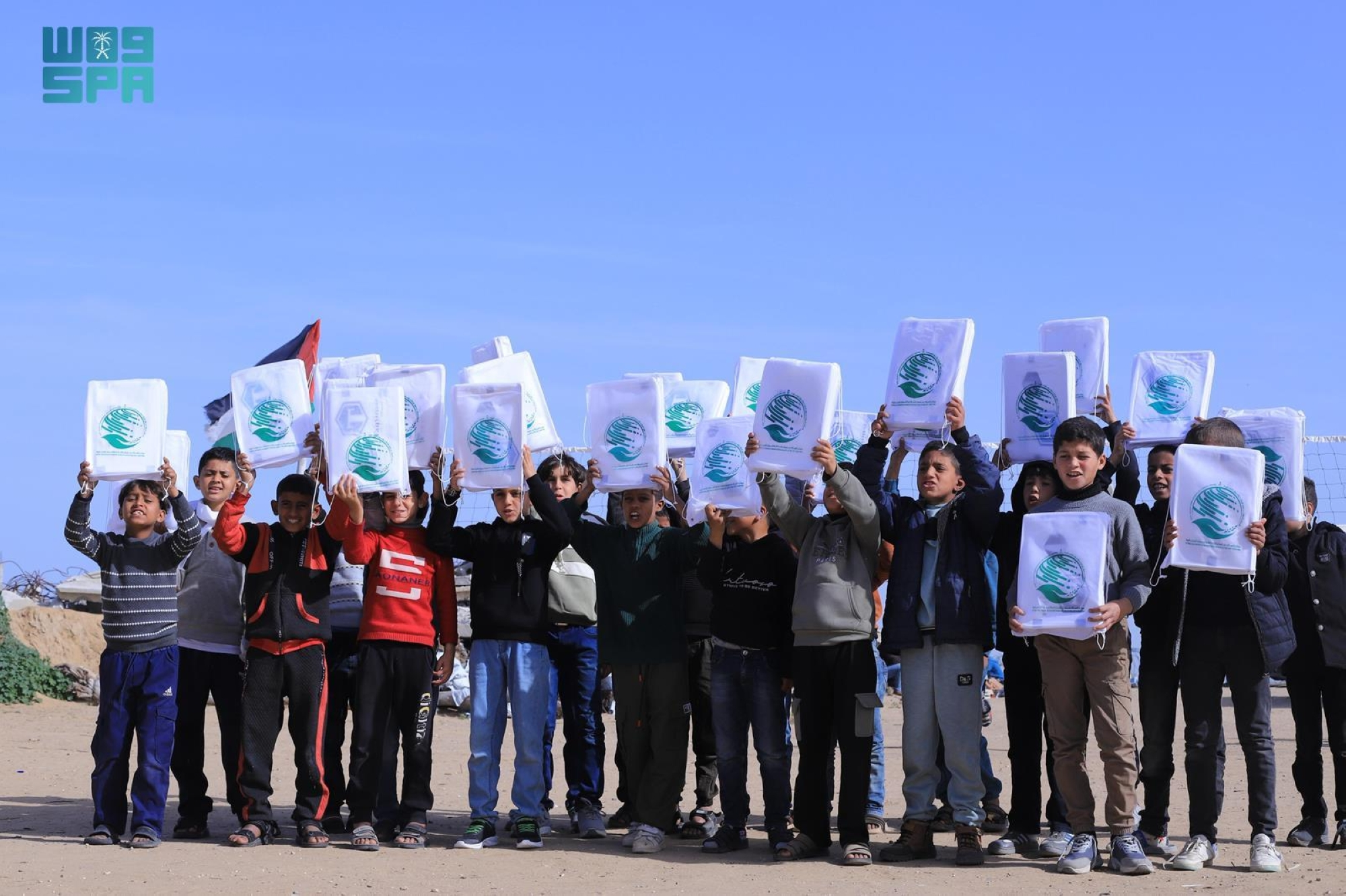
The Kingdom of Saudi Arabia, through its humanitarian arm, the King Salman Humanitarian Aid and Relief Center, continued its relief efforts to support the Palestinian people by distributing winter clothing to students in several educational institutions in the Khan Younis area of southern Gaza. This initiative is part of the "Saudi Popular Campaign to Aid the Palestinian People," underscoring the Kingdom's leading role in humanitarian work.
This support comes at a critical time as the Gaza Strip grapples with a worsening humanitarian crisis, leaving children facing immense challenges in continuing their education. With many schools and educational facilities destroyed, students are forced to attend classes in tents under exceptionally harsh conditions, exacerbating their suffering during the bitter winter. Providing winter clothing is not merely financial assistance; it is a message of hope that helps protect children from the cold and enables them to focus on their studies.
The King Salman Humanitarian Aid and Relief Center, established in 2015 by order of the Custodian of the Two Holy Mosques, King Salman bin Abdulaziz Al Saud, is a cornerstone of the Kingdom's humanitarian efforts worldwide. Historically, the Kingdom has consistently supported the Palestinian people across various forums and at all levels, with humanitarian aid being an integral part of its unwavering policy towards the Palestinian cause, aimed at alleviating suffering and strengthening the resilience of the Palestinian people.
The initiative was not limited to distributing in-kind aid; it also included implementing recreational and interactive activities for students, supervised by field teams from the Saudi Center for Culture and Heritage, the center's implementing partner in the sector. These activities aimed to alleviate the psychological burdens resulting from displacement and repeated traumas, bring smiles to children's faces, and encourage them to continue their education despite the harsh realities. This comprehensive approach reflects a deep understanding of humanitarian needs that extend beyond food and clothing to include psychological and social support.
At both the regional and international levels, these efforts highlight the pivotal role of the Kingdom of Saudi Arabia as a key player in international humanitarian work. Through the King Salman Humanitarian Aid and Relief Centre, the Kingdom sets an example of rapid and organized crisis response, underscoring its commitment to universal humanitarian principles. These initiatives also reinforce the Kingdom's image as a nation that supports stability and peace, and emphasize that humanitarian aid can serve as a bridge for communication and de-escalation in the world's most complex regions.
social responsibility
The Prince of Qassim visits a Sudanese girl who lost her family in a tragic accident
In a humanitarian gesture, the Prince of Qassim visited the Sudanese girl who was the sole survivor of a traffic accident that killed her family, directing that all forms of medical and psychological care be provided to her.
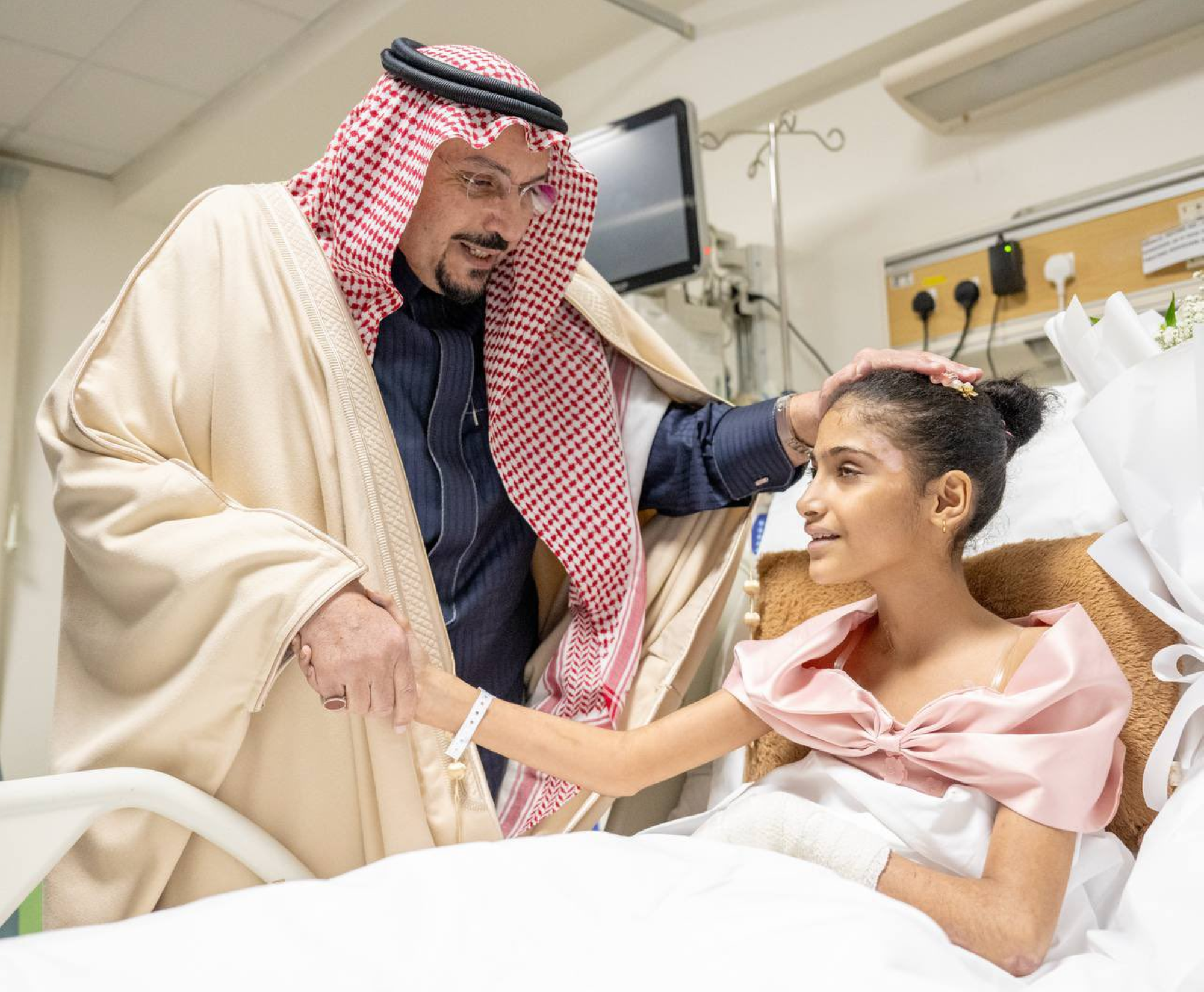
In a humanitarian gesture reflecting the deep bond between the leadership and society in the Kingdom of Saudi Arabia, His Royal Highness Prince Dr. Faisal bin Mishaal bin Saud bin Abdulaziz, Governor of Qassim Region, visited Sudanese child Al-Anoud Al-Tarifi in the hospital. This visit was to check on her health and offer her psychological and moral support after she survived a tragic traffic accident that claimed the lives of all her family members.
During the visit, His Royal Highness the Prince of the region reviewed the detailed medical report on the child's condition from the supervising medical team and listened to an explanation of the treatment and care plan provided to her. He immediately directed that all resources be mobilized and that all necessary advanced medical and specialized psychological care be provided to help her overcome this painful ordeal, emphasizing that the child is a daughter to everyone in this nation.
Deeply rooted human background
This visit reflects the Saudi leadership's unwavering commitment to supporting all those living in the Kingdom, citizens and residents alike, especially during times of hardship. Such gestures are an integral part of the social responsibility undertaken by the regional governors, who are keen to monitor the well-being of their communities and provide direct support, thus strengthening bonds of trust and belonging. The Kingdom's policy is based on the principle of comprehensive care, ensuring the provision of health and social services of the highest standards to all without discrimination. This was emphasized by the Governor of Qassim, who stated: "The wise leadership's commitment to providing humanitarian and health care to all who need it is a steadfast principle from which we will not deviate.".
Importance and societal impact
This visit is of paramount importance on several levels. Locally, it sends a powerful message of reassurance to the community that the state stands by its citizens and residents in the most difficult circumstances, reinforcing the values of solidarity and compassion. Regionally, this initiative showcases the Kingdom's humanitarian image, underscores the deep fraternal ties with the Sudanese community residing within its borders, and sets an example of social responsibility and care for victims of tragic accidents. It also highlights the efficiency of the Saudi healthcare system and its capacity to handle emergency and complex cases, providing psychological support as an essential part of treatment. This comprehensive care for the child, Al-Anoud, extends beyond her physical treatment to include securing her future and providing her with a safe and supportive environment after the loss of her family.
social responsibility
The King Salman Humanitarian Aid and Relief Center supports Yemen with 1.3 million liters of water
As part of its humanitarian efforts, the King Salman Relief Center pumped 1.3 million liters of water in Hodeidah and provided medical services in Hajjah, targeting thousands of individuals to address the crisis in Yemen.
The King Salman Humanitarian Aid and Relief Center continues its pivotal role in supporting the brotherly Yemeni people, as it implemented a package of vital projects in the governorates of Hodeidah and Hajjah during the past week, aimed at improving the living and health conditions of thousands of individuals affected by the humanitarian crisis.
The context of the humanitarian crisis in Yemen
This aid comes amid one of the world's worst humanitarian crises. For years, the conflict has led to the collapse of basic infrastructure, including water and sanitation networks and health facilities, leaving millions of Yemenis, especially displaced people, vulnerable to disease and epidemics and suffering from a severe shortage of basic resources needed for survival.
Vital water supplies in Hodeidah
In the coastal governorate of Hodeidah, one of the hardest-hit areas, the center implemented a water supply and sanitation project in Al Khawkhah District. In just one week, a total of 1.3 million liters of clean water were pumped. This amount was divided between 1.1 million liters of water suitable for domestic use and 234,000 liters of potable water. The project's importance lies in its role as a crucial line of defense against waterborne diseases, such as cholera, which has spread widely in Yemen. These water services directly benefited 16,100 individuals, contributing to improved health and human dignity.
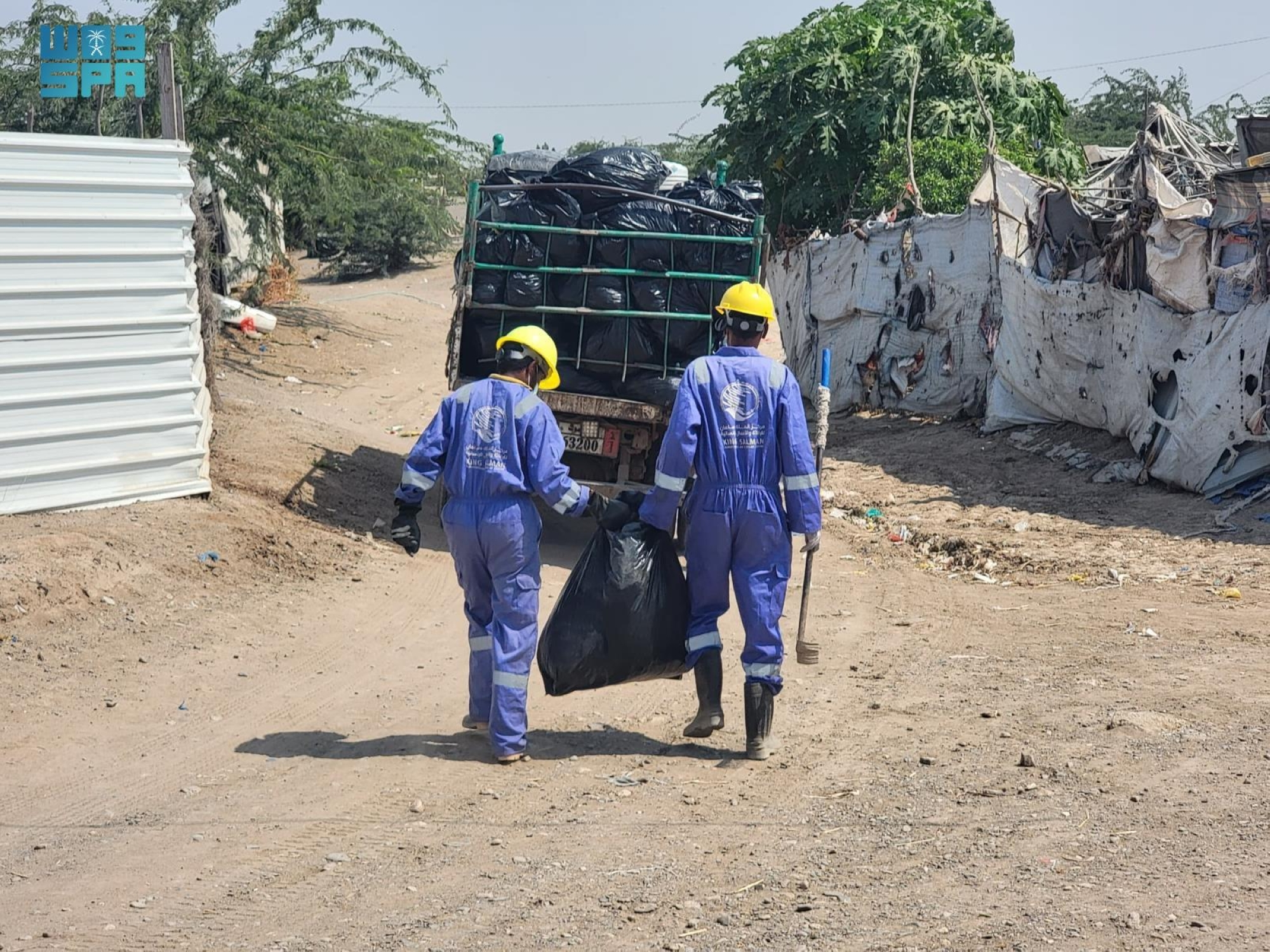
The efforts were not limited to providing water, but also included improving environmental sanitation, as 155 waste removal trips were carried out from the displaced persons camps, 36 sewage drying operations were conducted, in addition to the maintenance of 8 temporary toilets, which are necessary measures to reduce the spread of diseases and maintain a healthy environment for the population.
Mobile healthcare in Hajjah
In parallel with water supply efforts, the King Salman Humanitarian Aid and Relief Center continued to provide medical services in Hajjah Governorate through mobile clinics in Abs District. These clinics are a lifeline for remote communities and camps whose residents have difficulty accessing hospitals and fixed health centers.
During the same period, the clinics received 198 beneficiaries, providing them with a variety of services, including an infectious disease clinic that received 95 cases, an emergency clinic that dealt with 25 cases, and an internal medicine clinic that treated 68 patients. Medications were dispensed to 202 patients, and nursing care was provided to 92 others, reflecting the center's comprehensive approach to providing primary and emergency healthcare.
Regional and international impact
These ongoing projects reflect the commitment of the Kingdom of Saudi Arabia, through its humanitarian arm, the King Salman Humanitarian Aid and Relief Centre, to alleviating human suffering in Yemen. Their impact extends beyond the local level, saving lives and improving living conditions, to enhance regional stability by addressing the root causes of health and environmental crises. This aligns with international humanitarian goals that seek to ensure access to essential aid for those affected by conflicts worldwide.
-

 Local News 4 days ago
Landslide in Riyadh: Details of the incident in Al-Sahafa neighborhood and containment efforts
-
 Local News 5 days ago
The death penalty was carried out against a citizen who stabbed another to death in Tabuk
-

 Culture and Art, 1 week ago
Ramez Galal in Ramadan 2026: Details of the bloody prank show
-

 Local News 6 days ago
First birth on the Riyadh train: A heartwarming story at Andalus station
-

 Culture and Art 4 days ago
Haifa Wehbe's absence in Riyadh: A photo crisis or a strained relationship with the media?
-
 Local News 4 days ago
Riyadh collapse: Emergency plans to secure water after a main pipeline burst
-

 Culture and Art 4 days ago
City Kitchen series: A drama of conflict and the middle class during Ramadan
-

 Culture and Art 4 days ago
The series "Kasra": Dawood Hussein in a moving social drama this Ramadan