Local News
Transport Repair Workshop Classifications: The Complete Municipal Guide
Discover the new requirements for transport repair centers, from licensing requirements to professional classifications, a comprehensive guide for all municipalities.

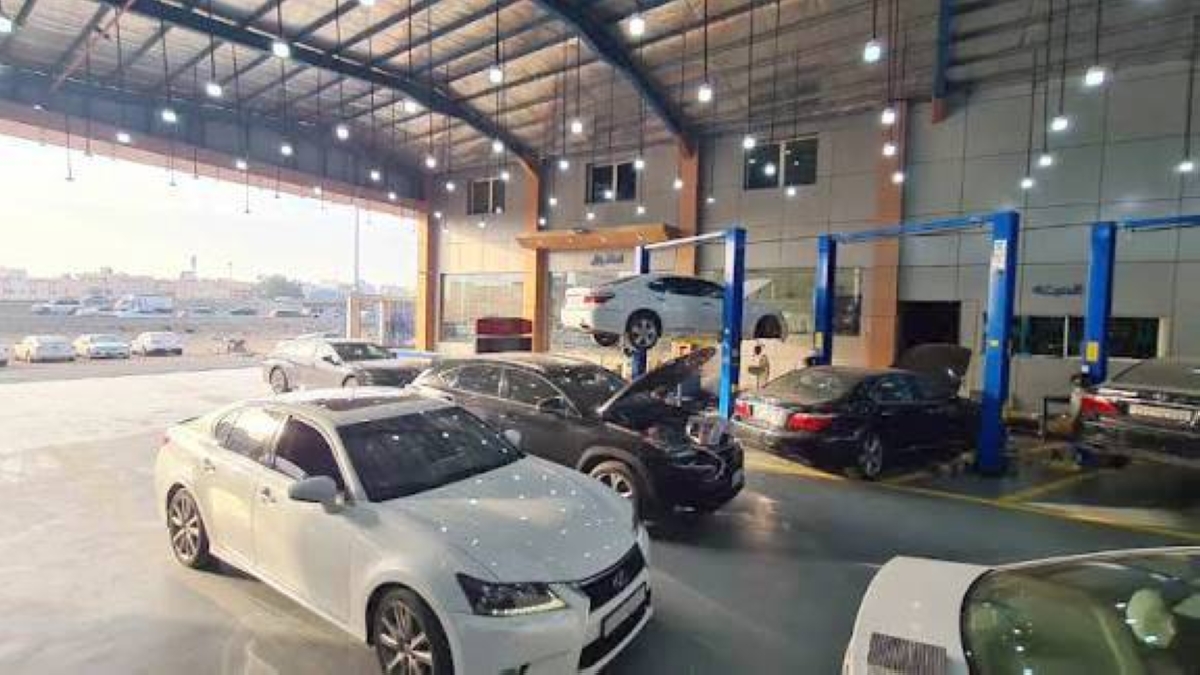
New requirements for transport vehicle repair centers and workshops
The Ministry of Municipalities and Housing has announced a set of technical and regulatory requirements for vehicle repair centers and workshops. These requirements include licensing requirements, professional classifications for workshops, architectural specifications, and basic equipment specifications.
Licensing requirements
The Ministry emphasizes the necessity for investors to adhere to the procedures for issuing, renewing, amending, canceling, and suspending municipal licenses, in accordance with the Municipal Licensing Procedures System and its implementing regulations. Approval from the Civil Defense is required before issuing the license, and a valid commercial registration certificate detailing the activities for which a license is sought must be submitted. Furthermore, approval from the authority supervising the commercial activity is also required.
Any activity conducted without a license or after its expiration is a violation . It is prohibited to conduct the activity outside the workshop premises or to use public sidewalks or adjacent outdoor spaces. If the workshop is closed by regulatory authorities, it may not be reopened until the violation has been rectified and official approval obtained.
New workshop classifications
The ministry has divided vehicle repair workshops into five main categories based on the nature of their activities. This division aims to streamline operations and provide more specialized services to customers.
- Category (A): This category includes workshops specializing in the comprehensive repair of all mechanical, electrical, and electronic vehicle systems. It also includes services for adapting vehicles for the elderly and people with disabilities, as well as chemical treatments such as rust removal and parts machining.
- Category (B): Relates to light mechanical and electrical repairs, simple electronics maintenance, and air conditioning systems.
- Category (C): Dedicated to workshops for repairing exterior structures, repainting and polishing.
- Category (D): Focuses on the maintenance of specific parts such as heat exchangers, exhaust systems, air suspension systems, brakes, glass installation, and seat upholstery.
Impact of the new regulations on society and investors
These requirements aim to improve the quality of services provided to citizens and ensure the safety of vehicles being repaired . When workshops adhere to the specified standards, this positively impacts road safety and reduces accidents caused by vehicle malfunctions.
For investors and workshop owners, these requirements provide a clear and organized framework that helps them deliver their services more efficiently and increases customer confidence . They also facilitate government oversight to ensure compliance with required standards and protect consumers from any violations that could negatively impact them.
Summary
This step is part of the government's efforts to improve the business environment and better regulate the car repair market, making it safer for everyone . By adhering to these requirements, a more professional working environment can be achieved, and the overall customer experience in the car maintenance and repair sector can be improved.




Local News
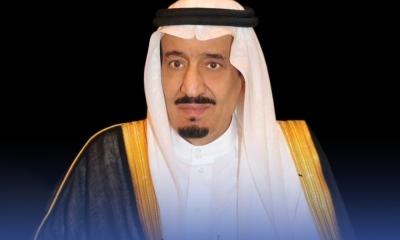
The Custodian of the Two Holy Mosques arrives in Jeddah from Riyadh
Custodian of the Two Holy Mosques King Salman bin Abdulaziz arrived in Jeddah today from Riyadh. Learn about the details of the reception and the list of accompanying princes and officials.

With God's protection and care, the Custodian of the Two Holy Mosques, King Salman bin Abdulaziz Al Saud, arrived today in Jeddah, coming from the capital, Riyadh. This step comes within the framework of the wise leadership's keenness to travel between the regions of the Kingdom to follow up on the affairs of citizens and directly supervise the progress of work in various sectors.
Reception ceremony at King Abdulaziz Airport
At the forefront of those receiving the Custodian of the Two Holy Mosques upon his arrival at King Abdulaziz International Airport in Jeddah was His Royal Highness Prince Saud bin Mishaal bin Abdulaziz, Deputy Governor of the Makkah Region, where an official reception ceremony was held for His Majesty befitting the status of the Custodian of the Two Holy Mosques, reflecting the warmth of the reception and welcome for his auspicious arrival to the Makkah Region.
The delegation accompanying the Custodian of the Two Holy Mosques
Accompanying the Custodian of the Two Holy Mosques - may God support him - was a high-level delegation of Their Royal Highnesses the Princes, namely: His Highness Prince Khalid bin Fahd bin Khalid, His Royal Highness Prince Mansour bin Saud bin Abdulaziz, His Highness Prince Khalid bin Saad bin Fahd, His Royal Highness Prince Sattam bin Saud bin Abdulaziz, His Highness Prince Faisal bin Saud bin Mohammed, His Royal Highness Prince Dr. Hussam bin Saud bin Abdulaziz, Governor of Al-Baha Region, and His Royal Highness Prince Dr. Abdulaziz bin Sattam bin Abdulaziz, Advisor to the Custodian of the Two Holy Mosques.
The accompanying delegation also included a number of senior state officials, namely: His Excellency the Chief of the Royal Court, Mr. Fahd bin Mohammed Al-Issa, His Excellency the Chief of Royal Protocol, Mr. Khalid bin Saleh Al-Abbad, His Excellency the Deputy Private Secretary to the Custodian of the Two Holy Mosques, Mr. Tamim bin Abdulaziz Al-Salem, His Excellency the Chief of Special Affairs to the Custodian of the Two Holy Mosques, Mr. Abdulaziz bin Ibrahim Al-Faisal, His Excellency the Chairman of the Board of Directors and Executive Director of the Royal Clinics, Dr. Saleh bin Ali Al-Qahtani, and His Excellency the Chief of the Royal Guard, Lieutenant General Suhail bin Saqr Al-Mutairi.
Leaving Riyadh and the farewell ceremony
The Custodian of the Two Holy Mosques had left Riyadh earlier in the day, and he was seen off at King Khalid International Airport by His Royal Highness Prince Faisal bin Bandar bin Abdulaziz, Governor of Riyadh Region, and His Royal Highness Prince Mohammed bin Abdulrahman bin Abdulaziz, Deputy Governor of Riyadh Region.
The administrative and strategic importance of Jeddah
It is worth noting that the Custodian of the Two Holy Mosques' presence in Jeddah carries significant implications on both the local and administrative levels. Jeddah is the main gateway to the Two Holy Mosques and a vital center in western Saudi Arabia. The Al-Salam Palace in Jeddah often serves as the headquarters for managing state affairs, receiving diplomatic delegations, and holding cabinet meetings during the leadership's visits. This reinforces the city's status as a summer administrative capital and a political and economic powerhouse, aligning with the goals of the Kingdom's Vision 2030, which prioritizes the Makkah region.
May God protect the Custodian of the Two Holy Mosques during his travels and stays, and may He perpetuate the blessings of security, safety and stability upon the Kingdom of Saudi Arabia under its wise leadership.
Local News
City buses: 8 shuttle routes to the Prophet's Mosque and Quba Mosque during Ramadan
Learn about the details of the Madinah bus project and the operation of 8 shuttle routes to transport worshippers to the Prophet’s Mosque and Quba Mosque during Ramadan to reduce congestion and facilitate movement.
As part of intensive preparations for the holy month of Ramadan and to facilitate the movement of visitors and pilgrims in Madinah, the Madinah Buses Project has announced the launch of its seasonal operational plan, which includes the operation of eight shuttle bus routes. This vital service aims to transport worshippers and visitors to and from the Prophet's Mosque and Quba Mosque, under the direct supervision of the Madinah Development Authority.
Route details and opening times
The project clarified that the service will be available daily throughout the holy month, with buses departing from 3:00 PM and continuing until one hour after the Taraweeh prayers, ensuring worshippers can return to their destinations easily and conveniently. The shuttle network covers several key locations and residential areas to serve the largest possible segment of residents and visitors, and includes the following stops:
- Al-Khalidiyah neighborhood.
- King Fahd neighborhood.
- Haramain High-Speed Railway Station (a strategic connection point for those coming from Mecca and Jeddah).
- Shatha neighborhood.
- Master of Martyrs.
- College of Peace.
- The sports stadium.
- The garden.
A direct and specific route has also been allocated starting from the “Al-Aliya Station” parking lot to transport worshippers directly to the Quba Mosque, reflecting the interest in linking historical Islamic landmarks with an advanced transportation network.
Reducing traffic congestion and improving quality of life
This initiative is part of a comprehensive strategy to manage crowds and regulate traffic in the central area surrounding the Prophet's Mosque. It is well known that Ramadan sees a massive influx of people to the mosque, which typically causes traffic congestion and challenges in securing parking spaces. Therefore, shuttle services are the ideal solution to reduce reliance on private vehicles, contributing to lower carbon emissions, an improved urban landscape, and saving time and effort for worshippers.
The context of development and serving the guests of God
The "City Buses" project falls within the Kingdom's ongoing efforts to achieve the goals of Vision 2030, specifically the Guests of God Service Program, which aims to enhance the quality of services provided to pilgrims and visitors. Madinah, as the second capital of Islam and home to the Prophet's Mosque, is a central focus of these development plans. The connection between the Prophet's Mosque and Quba Mosque holds immense religious and historical significance, as visitors are keen to pray at Quba Mosque following the Sunnah (Prophetic tradition). Therefore, providing safe and reliable transportation between these two sites is essential to enriching the spiritual experience for visitors.
Local News
Cabinet: Founding Day is a source of historical pride and the adoption of the biosecurity strategy
Chaired by the Custodian of the Two Holy Mosques, the Cabinet affirms that the founding day is a source of pride in the history of the state, congratulates on the approach of Ramadan, and approves the National Strategy for Biosecurity and several international agreements.

The Custodian of the Two Holy Mosques, King Salman bin Abdulaziz Al Saud, chaired the Cabinet session held today (Tuesday) in Riyadh. The Cabinet began its session by extending its congratulations to all citizens and Muslims worldwide on the approaching holy month of Ramadan, praying to God Almighty to accept everyone's good deeds and to perpetuate the blessings of security and safety upon the Kingdom under the leadership of the Custodian of the Two Holy Mosques.
Pride in the founding day and historical depth
In the context of national occasions, the Cabinet affirmed that the Kingdom's celebration of its National Day, which falls on February 22, represents a profound expression of pride in the deep-rooted foundations of the Saudi state, which extend back nearly three centuries. The Cabinet noted that this day commemorates the pillars of justice, unity, and stability established by the imams and kings, making the Kingdom a leading model among nations. This celebration serves to connect current generations with their glorious history, reinforcing national identity and the authentic values upon which the state was founded.
Record successes in serving the guests of God
The Council discussed the efforts made to serve pilgrims to the Two Holy Mosques, expressing its gratitude to God Almighty for granting the Kingdom success in managing the Hajj and Umrah seasons. The Council commended the Kingdom's projection of receiving 19.5 million pilgrims and Umrah performers from outside the Kingdom by 2025, a figure that reflects the rapid development in infrastructure, digital services, and logistics, in line with the objectives of the Kingdom's Vision 2030 and the Guests of God Service Program, which aims to facilitate the hosting of pilgrims and enrich their religious and cultural experience.
A firm stance towards the Palestinian cause
On the political front, the Cabinet reiterated the Kingdom's condemnation of the Israeli occupation authorities' decision to designate lands in the West Bank as "state land." The Cabinet affirmed that these illegal measures undermine the prospects for peace and constitute a blatant violation of the historical rights of the Palestinian people. The Cabinet emphasized the Kingdom's unwavering position calling for the establishment of an independent Palestinian state within the June 4, 1967 borders, with East Jerusalem as its capital, and urged the international community to fulfill its responsibilities to halt these violations.
Strengthening military industries and international partnerships
The Council commended the resounding success of the third edition of the World Defense Show in Riyadh, noting the strategic agreements and partnerships signed during the event. The Council affirmed that these steps directly contribute to supporting the localization of military industries, technology transfer, and strengthening local supply chains, which are fundamental pillars for achieving self-sufficiency and enhancing the Kingdom's defense capabilities in line with the objectives of the National Vision.
Strategic decisions and approvals
The Council concluded its session by issuing several important decisions, most notably approving the National Strategy for Biosafety and Biosecurity , which aims to strengthen the system for preventing and protecting against biological risks. The Council also approved regulations governing the continued presence of vehicles registered in the Gulf Cooperation Council (GCC) countries within the Kingdom, and amended the name of the "World Cup Esports Foundation" to the "Esports Foundation."
On the international relations front, the Council authorized a number of ministers to discuss and sign memoranda of understanding with several countries, including Japan in the areas of city management and traditional arts, Italy in the field of justice, Indonesia in the palm and date sector, Bahrain in government communication, and Algeria in digital government, in addition to agreements with China, Brazil and the African Centers for Disease Control.
-

 Culture and Art 6 days ago
The "Between and Between" exhibition in Jeddah: 5 artists reshape Saudi memory
-
Local News 4 days ago
Saudi Arabia's National Arabic Language Policy: 8 Principles to Promote Identity
-
Culture and Art, 1 week ago
Shakira's concert in Jeddah: Details of the international star's first concert in Saudi Arabia
-
Local News 3 days ago
Adopting the National Policy for the Arabic Language: Strengthening Identity and Vision 2030
-
Culture and Art, 1 week ago
The truth about Nancy Ajram's video and Epstein Island, and her legal response
-
Local News 4 days ago
The Riyadh-Rin-Bisha dual carriageway, spanning 559 km, has been completed
-
Local news one week ago
Launch of the new Dammam project with investments of 98 billion riyals
-
Culture and Art, 1 week ago
The truth about Wael Awni's conversion to Islam... The artist responds sarcastically to the rumors