Local News
Documenting landmines in Yemen: Saudi Arabia's humanitarian efforts
Discover Saudi Arabia’s humanitarian efforts in demining Yemen through the book “Mines of Happy Yemen,” which reveals the role of the Masam project in protecting civilians.

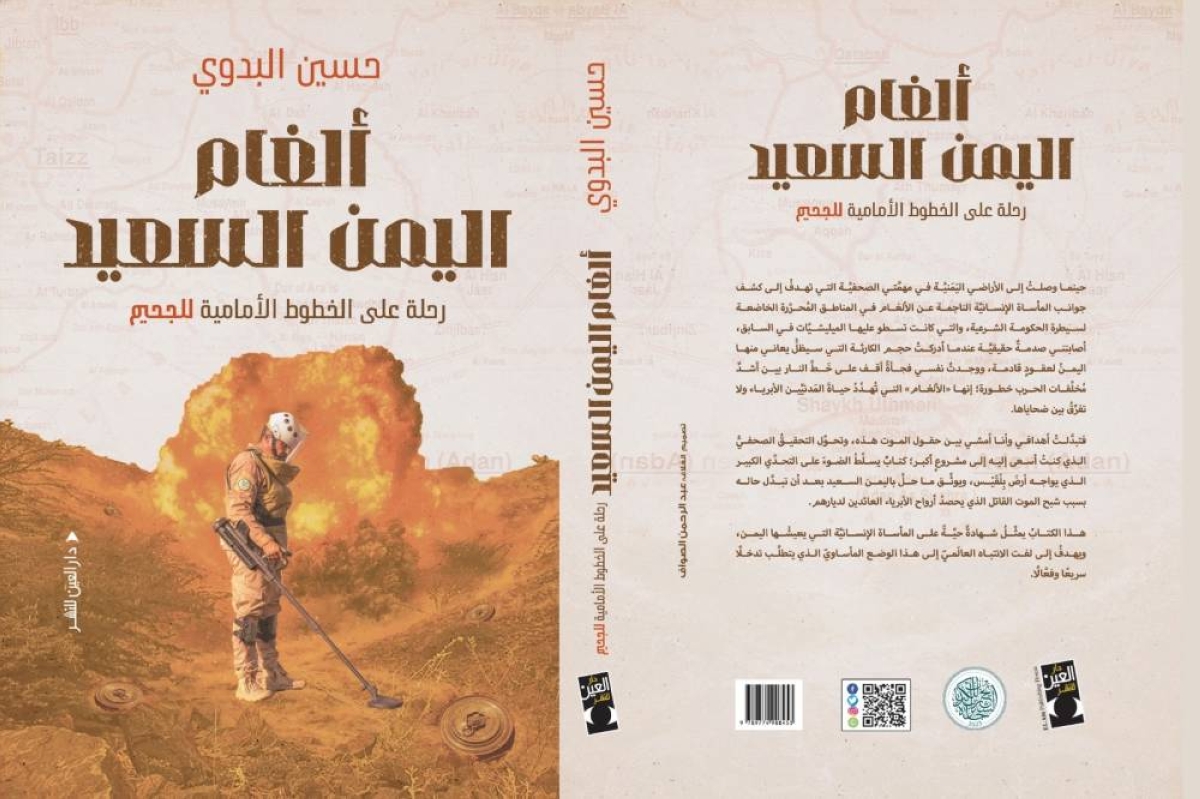
Saudi Arabia's tremendous efforts to remove landmines in Yemen: The book "Landmines of Happy Yemen" reveals the facts
In a new step to highlight Saudi Arabia's tireless efforts to protect civilians in Yemen from the danger of landmines, Dar Al-Ain Publishing House has released a book by Egyptian journalist Hussein Al-Badawi entitled "Landmines of Happy Yemen ." The book highlights the pivotal role played by the Saudi "Masam" project in demining and providing safety for Yemenis.
Project “Masam”: Great sacrifices for humanity
Over 333 pages, the author reviews the great efforts made by the “Masam” project since its launch in 2018. The book explains that the project was not just a passing initiative, but rather an embodiment of the humanitarian dimensions that the Saudi leadership had in mind, as the project teams made enormous sacrifices that reached the point of sacrificing themselves for the Yemeni people.
Statistics indicate that MASAM teams have managed to reach remote and rugged areas in the mountains and valleys of Yemen, where the Houthi group had planted mines indiscriminately and camouflagedly. This significant challenge has not deterred MASAM teams from continuing their tireless work to secure civilian lives and end their suffering.
Major challenges: lack of maps and sophisticated camouflage
The MASAM team faces a significant challenge due to the lack of accurate maps of planted mines. Furthermore, the Houthi group camouflages mines using various methods, such as disguising them as children's toys or rocks, making them even more difficult to detect and remove.
The book presents firsthand accounts from landmine victims who survived thanks to the efforts of “Masam”, and highlights the project’s role in raising community awareness of the dangers of this deadly scourge.
Saudi Arabia's pivotal role in protecting civilians
During his field trip through the minefields, the author documents the significant role played by the Kingdom of Saudi Arabia through the “Masam” project. This role was not limited to mine removal but also included providing psychological and material support to those affected and raising awareness among local communities about the dangers of mines and how to deal with them.
A secure future for Yemenis: Expectations and aspirations
As the Masam project continues its efforts, Yemenis look forward to a safer and more stable future. It is anticipated that these ongoing efforts will gradually lead to a reduction in the number of victims and an improvement in the quality of life for affected communities.
"Landmines in Happy Yemen" is not merely a book documenting events and efforts; it is a call to action for a future free from the fear and terror caused by landmines. It is a living testament to the power of human will to overcome the most difficult challenges and achieve peace and security for all.


Local News
Human Resources sets the date for the 2026 Founding Day holiday for both sectors
The Ministry of Human Resources announced that Sunday, February 22, 2026, is an official holiday for Founding Day, which includes the public, private and non-profit sectors, in celebration of the anniversary of the founding of the Saudi state.
The Ministry of Human Resources and Social Development in the Kingdom of Saudi Arabia has officially announced that next Sunday, February 22, 2026, will be an official holiday for all state employees, on the occasion of celebrating the glorious "Founding Day" anniversary.
The ministry explained in its statement that this holiday includes all employees in the public government sector, as well as those working in private sector establishments, in addition to employees of the non-profit sector, in implementation of the generous royal orders that set this date as an annual date to celebrate the anniversary of the founding of the first Saudi state.
The historical depth of the founding day
The celebration of Founding Day commemorates the Saudi state's more than three-century-long existence, symbolizing the Kingdom's deep historical and cultural roots. This anniversary dates back to 1727 CE (1139 AH), when Imam Muhammad bin Saud assumed power in Diriyah, thus establishing the first Saudi state, which laid the foundations for security, stability, and unity in the Arabian Peninsula after centuries of fragmentation and disunity.
The difference between Founding Day and National Day
It is important to distinguish between Founding Day and National Day; Founding Day (February 22) celebrates the beginning of the reign of Imam Muhammad bin Saud and the establishment of the first state, while National Day (September 23) celebrates the anniversary of the unification of the modern Kingdom of Saudi Arabia by the founding King Abdulaziz bin Abdulrahman Al Saud - may God have mercy on him - in 1932 AD. Both represent pivotal milestones in the history and development of the Arabian Peninsula.
Manifestations of celebration and national importance
This holiday holds immense importance as it strengthens national identity and connects current generations to their rich historical roots. The Kingdom typically witnesses extensive cultural and heritage events on this day, with citizens wearing traditional clothing that reflects the diversity of the Kingdom's regions, and artistic performances and traditional markets that recreate the lives of their ancestors during that era.
The approval of this holiday for all sectors (public, private and non-profit) confirms the inclusiveness of the occasion for all segments of society, and is an opportunity to strengthen national cohesion and draw inspiration from the stories of struggle and success written by imams, kings and citizens throughout history to build this proud nation.
Local News
Saudi leadership exchanges Ramadan greetings with leaders of Islamic countries
The Custodian of the Two Holy Mosques and the Crown Prince exchanged congratulatory messages on the occasion of the month of Ramadan with the leaders of Islamic countries, praying to God that it will return with goodness, blessings and security for the Islamic nation.

Within the framework of the continuous and deep communication that unites the Kingdom of Saudi Arabia with its brothers in the Islamic world, the Custodian of the Two Holy Mosques, King Salman bin Abdulaziz Al Saud, and His Royal Highness Prince Mohammed bin Salman bin Abdulaziz Al Saud, Crown Prince and Prime Minister, sent and received congratulatory messages with the kings, presidents and princes of Islamic countries on the occasion of the arrival of the holy month of Ramadan this year.
These messages conveyed the sincerest fraternal sentiments and heartfelt prayers, prompting the wise leadership to send reply messages of thanks to the leaders of Islamic countries, expressing their appreciation for the kind wishes and sincere prayers they offered during this blessed month. The Custodian of the Two Holy Mosques and His Royal Highness the Crown Prince prayed to Almighty God that this auspicious occasion would return to the entire Muslim Ummah with goodness, prosperity, and blessings, and that He would perpetuate the blessings of security and stability for all.
The depth of diplomatic and fraternal relations
This annual exchange of greetings underscores the Saudi leadership's commitment to strengthening the bonds of brotherhood and affection with the leaders and peoples of the Islamic world. As the Qibla of Muslims and the birthplace of revelation, the Kingdom places great importance on fostering unity and solidarity, particularly during significant religious occasions such as the holy month of Ramadan, which presents a valuable opportunity to reaffirm the values of tolerance and compassion that are central to Islam.
The Kingdom is the heart of the Islamic world
These telegrams and exchanged messages are of particular importance given the leading role that the Kingdom of Saudi Arabia plays on both the regional and international stages. Serving the Two Holy Mosques and their visitors, including pilgrims and other worshippers, during the holy month is an honor that the leadership cherishes, and this is reflected in the messages of friendship and respect exchanged with world leaders, who consistently appreciate the Kingdom's significant efforts in serving Islam and Muslims.
Calls for security and prosperity
In closing the messages, the wise leadership prayed to God Almighty to accept from everyone their fasting, prayers and good deeds, and to make this month a month of goodness, glory and empowerment for the Islamic nation, and to fulfill the aspirations of the Islamic peoples towards more progress and prosperity, overcoming all the challenges facing the region and the world, so that everyone may enjoy peace and prosperity.
Local News
The Custodian of the Two Holy Mosques arrives in Jeddah from Riyadh
Custodian of the Two Holy Mosques King Salman bin Abdulaziz arrived in Jeddah today from Riyadh. Learn about the details of the reception and the list of accompanying princes and officials.

With God's protection and care, the Custodian of the Two Holy Mosques, King Salman bin Abdulaziz Al Saud, arrived today in Jeddah, coming from the capital, Riyadh. This step comes within the framework of the wise leadership's keenness to travel between the regions of the Kingdom to follow up on the affairs of citizens and directly supervise the progress of work in various sectors.
Reception ceremony at King Abdulaziz Airport
At the forefront of those receiving the Custodian of the Two Holy Mosques upon his arrival at King Abdulaziz International Airport in Jeddah was His Royal Highness Prince Saud bin Mishaal bin Abdulaziz, Deputy Governor of the Makkah Region, where an official reception ceremony was held for His Majesty befitting the status of the Custodian of the Two Holy Mosques, reflecting the warmth of the reception and welcome for his auspicious arrival to the Makkah Region.
The delegation accompanying the Custodian of the Two Holy Mosques
Accompanying the Custodian of the Two Holy Mosques - may God support him - was a high-level delegation of Their Royal Highnesses the Princes, namely: His Highness Prince Khalid bin Fahd bin Khalid, His Royal Highness Prince Mansour bin Saud bin Abdulaziz, His Highness Prince Khalid bin Saad bin Fahd, His Royal Highness Prince Sattam bin Saud bin Abdulaziz, His Highness Prince Faisal bin Saud bin Mohammed, His Royal Highness Prince Dr. Hussam bin Saud bin Abdulaziz, Governor of Al-Baha Region, and His Royal Highness Prince Dr. Abdulaziz bin Sattam bin Abdulaziz, Advisor to the Custodian of the Two Holy Mosques.
The accompanying delegation also included a number of senior state officials, namely: His Excellency the Chief of the Royal Court, Mr. Fahd bin Mohammed Al-Issa, His Excellency the Chief of Royal Protocol, Mr. Khalid bin Saleh Al-Abbad, His Excellency the Deputy Private Secretary to the Custodian of the Two Holy Mosques, Mr. Tamim bin Abdulaziz Al-Salem, His Excellency the Chief of Special Affairs to the Custodian of the Two Holy Mosques, Mr. Abdulaziz bin Ibrahim Al-Faisal, His Excellency the Chairman of the Board of Directors and Executive Director of the Royal Clinics, Dr. Saleh bin Ali Al-Qahtani, and His Excellency the Chief of the Royal Guard, Lieutenant General Suhail bin Saqr Al-Mutairi.
Leaving Riyadh and the farewell ceremony
The Custodian of the Two Holy Mosques had left Riyadh earlier in the day, and he was seen off at King Khalid International Airport by His Royal Highness Prince Faisal bin Bandar bin Abdulaziz, Governor of Riyadh Region, and His Royal Highness Prince Mohammed bin Abdulrahman bin Abdulaziz, Deputy Governor of Riyadh Region.
The administrative and strategic importance of Jeddah
It is worth noting that the Custodian of the Two Holy Mosques' presence in Jeddah carries significant implications on both the local and administrative levels. Jeddah is the main gateway to the Two Holy Mosques and a vital center in western Saudi Arabia. The Al-Salam Palace in Jeddah often serves as the headquarters for managing state affairs, receiving diplomatic delegations, and holding cabinet meetings during the leadership's visits. This reinforces the city's status as a summer administrative capital and a political and economic powerhouse, aligning with the goals of the Kingdom's Vision 2030, which prioritizes the Makkah region.
May God protect the Custodian of the Two Holy Mosques during his travels and stays, and may He perpetuate the blessings of security, safety and stability upon the Kingdom of Saudi Arabia under its wise leadership.
-

 Culture and Art 6 days ago
The "Between and Between" exhibition in Jeddah: 5 artists reshape Saudi memory
-
Local News 4 days ago
Saudi Arabia's National Arabic Language Policy: 8 Principles to Promote Identity
-
Culture and Art, 1 week ago
Shakira's concert in Jeddah: Details of the international star's first concert in Saudi Arabia
-
Local News 3 days ago
Adopting the National Policy for the Arabic Language: Strengthening Identity and Vision 2030
-
Culture and Art, 1 week ago
The truth about Nancy Ajram's video and Epstein Island, and her legal response
-
Local News 4 days ago
The Riyadh-Rin-Bisha dual carriageway, spanning 559 km, has been completed
-
Local news one week ago
Launch of the new Dammam project with investments of 98 billion riyals
-
Culture and Art, 1 week ago
The truth about Wael Awni's conversion to Islam... The artist responds sarcastically to the rumors