Local News
Protecting Cultural Property: A Global Debate on Laws and Trafficking
Discover global efforts to protect cultural heritage from illicit trafficking by strengthening international and domestic laws at a prominent international conference.

International Conference on Combating Illicit Trafficking in Cultural Property
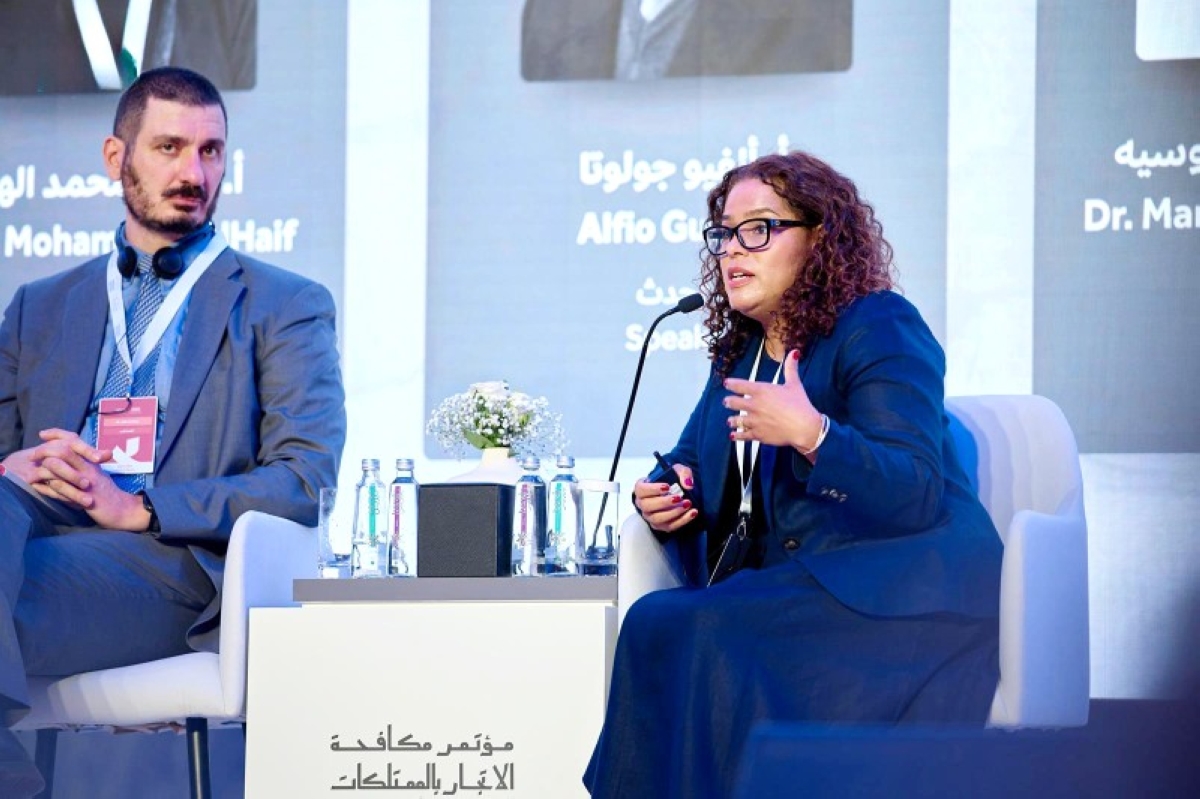
The Saudi Heritage Commission inaugurated the first session of the International Conference on Combating Illicit Trafficking in Cultural Property, under the theme "Strengthening Legal Frameworks at the National, Regional, and International Levels." The session featured a distinguished group of legal experts and specialists from around the world, who discussed national legislation and international agreements that form the legal basis for protecting cultural property from smuggling and illicit trafficking.
The importance of integration between national and international legislation
The session was moderated by Dr. Abdulrahman Al-Suhaibani, Vice President for the Cultural Sector at the Royal Commission for AlUla Governorate and Professor of Ancient Architecture at King Saud University. Dr. Al-Suhaibani opened the discussion by emphasizing the importance of integrating national legislation with international agreements to ensure comprehensive protection of cultural property. He noted that a robust legislative framework is a fundamental pillar in combating transnational crimes targeting human heritage.
International and regional experiences in protecting cultural property
The first session addressed key international and regional experiences in this field. Mohammed Mahnashi, head of the legal team at the Heritage Commission, presented a paper titled "Protecting Cultural Property in Accordance with the Saudi Antiquities and Urban Heritage Law." Mahnashi reviewed the development of the national legislative framework since the issuance of the Antiquities Law in 1972 and its update in 2014, including provisions that criminalize the trafficking of antiquities and define mechanisms for their recovery and the protection of their sites.
The presentation also reviewed the specific provisions of the Antiquities and Urban Heritage Law related to the trafficking and protection of antiquities. It focused on the latest update to the Antiquities Law, which reflects the Kingdom's commitment to protecting cultural property and includes a dedicated section to prevent the illicit trafficking of antiquities.
Strengthening the ratification of the 1995 UNIDROIT Convention
In the second paper, Dr. Marina Schneider, Senior Legal Advisor at the International Institute for the Unification of Private Law (UNIDROIT), presented on promoting the ratification of the 1995 UNIDROIT Convention, specifically in the Gulf Cooperation Council (GCC) countries. Schneider addressed the importance of promoting the ratification of international conventions as a step towards unifying global efforts to combat the illicit trafficking of cultural property.
The role of the Kingdom of Saudi Arabia in protecting cultural heritage
The Kingdom of Saudi Arabia plays a prominent and influential role in strengthening the legal frameworks for the protection of cultural property. The Kingdom strives to develop its legislation in line with international standards and enhances its capacity to combat crimes related to cultural heritage. This role reflects Saudi Arabia's commitment to preserving human heritage and promoting international cooperation to achieve this noble goal.
Saudi Arabia’s efforts are clearly demonstrated through its active participation and hosting of this important international conference, highlighting its position as a regional and international center for dialogue and cooperation on heritage and cultural issues.




Local News
Residents deported and 1,550 violators arrested for transporting passengers without a license
The Transport Authority announces the arrest of 1,550 violators and the deportation of residents for practicing passenger transport without a license (unlicensed taxis), and reveals fines of up to 20,000 riyals and the impounding of vehicles.

The Public Transport Authority in Saudi Arabia announced the results of its intensive field inspection campaigns targeting land transport activities across the Kingdom. These inspections, conducted between February 8 and 14, 2026, resulted in the identification of 1,550 violators of transport regulations. These campaigns are part of the Authority's efforts to regulate the transport sector and enhance compliance with applicable laws and regulations.
In its announcement, the authority confirmed the deportation of two foreign nationals for operating unlicensed passenger transport services, a practice known locally as "Kaddada." The authority clarified that the penalties for non-Saudis engaging in this activity include permanent deportation from the Kingdom, in addition to a fine of up to 12,000 riyals, to ensure that such violations, which negatively impact the quality of the sector, are not repeated.
Details of violations and deterrent penalties
Official statistics released by the authority revealed that violations observed last week ranged from various practices, with preparatory work related to "calling" tolls topping the list at 897 violations, followed by 653 violations related to the actual practice of transporting passengers without a valid license. These figures indicate the authority's seriousness in pursuing violators at airports, transport stations, and on public roads.
The Public Transport Authority outlined the strict penalties stipulated in the new system. The penalty for illegally soliciting passengers through unauthorized means is a fine of 11,000 riyals and vehicle impoundment for up to 25 days. If a driver is caught transporting passengers without a license, the fine increases to 20,000 riyals, and the vehicle impoundment is extended to 60 days, reflecting the firm enforcement of the regulations.
Context of organizing the transport sector and its economic and security importance
These campaigns are of paramount importance, extending far beyond simply collecting fines. Through regulating the land transport sector, the Kingdom aims to enhance safety and security for its users. Eliminating the phenomenon of unregulated transportation is a crucial step in protecting passengers from the security and social risks associated with riding with unknown drivers who are not subject to any institutional oversight and whose vehicles lack tracking devices or necessary insurance.
Furthermore, regulating the sector contributes to supporting the national economy by promoting fair competition among licensed companies, licensed taxi drivers, and approved ride-sharing applications. The presence of unlicensed drivers harms the interests of legitimate investors who adhere to the technical and regulatory requirements and standards set by the authority, thus necessitating decisive intervention to protect the market.
Banning arbitrary practices in the new system
The authority emphasized in its statement that the new road transport system has put an end to old practices, as it strictly prohibits anyone from engaging in transport activities without a license. The ban also includes all behaviors associated with unregulated transport, such as soliciting or calling out to passengers in arrival halls, pursuing them, obstructing their path, or gathering at their locations for the purpose of transporting them illegally.
The authority concluded its statement by emphasizing the continuation of monitoring campaigns to ensure that all carriers comply with the approved regulations and requirements, calling on the public and beneficiaries to cooperate with it by relying exclusively on licensed carriers to ensure safe and reliable journeys, and to contribute to raising the level of quality of services provided in the transport sector in the Kingdom.
Local News
Ramadan crescent sighting weather: Stable in central region and dust in Mecca
Learn about the weather details for Ramadan crescent sighting in Saudi Arabia. The Meteorology Department explains the chances of sighting the crescent moon in the central region and Tabuk, and warns of dust and rain in several areas of the Kingdom.
The National Center for Meteorology in Saudi Arabia issued an important weather forecast for Tuesday, coinciding with the Supreme Court's call for Muslims throughout the Kingdom to sight the crescent moon of Ramadan. This weather report is of paramount importance as it is the decisive factor in determining whether the crescent moon can be sighted with the naked eye or through astronomical instruments.
In detail, the National Center for Meteorology confirmed that, in preparation for the crescent moon sighting tonight, forecasts indicate generally stable weather conditions across the central region, which may enhance visibility in areas that include some of the most well-known moon-sighting observatories, such as Sudair and Tamir. Conversely, the center noted that skies will be partly to mostly cloudy over the western parts of the Tabuk, Al-Jawf, and Northern Borders regions, which may pose a natural obstacle for the moon-sighting committees in those northern provinces.
For his part, the official spokesman for the National Center for Meteorology, Hussein Al-Qahtani, explained additional details about the influencing weather elements, noting that the weather may witness activity in surface winds that stir up dust and sand, the effects of which extend to include the eastern parts of the Makkah and Madinah regions, which may lead to a decrease in the horizontal visibility in those locations.
Regarding other weather phenomena, the center noted in its daily report the possibility of light rain in the northern parts of the Kingdom. The report also warned of the potential for dense fog during the night and early morning hours, which could reduce visibility in the coastal areas of Makkah, Asir, and Jazan regions, as well as parts of the Eastern Province.
The weather on this day is of great interest both locally and internationally, as Saudi Arabia relies on the sighting of the new moon to determine the start of Ramadan. Weather conditions such as dust, clouds, and high humidity are among the most significant challenges facing those observing the crescent. Therefore, the stable weather conditions in the central region are a positive indicator for the expected observations this evening.
Local News
Ramadan Crescent Sighting Weather: Meteorological Report on Crescent Visibility
Check the weather forecast coinciding with the sighting of the Ramadan crescent in Saudi Arabia. The Meteorology Department explains visibility opportunities in the central and northern regions, and forecasts dust, rain, and fog.
The National Center for Meteorology issued a detailed report on the expected weather conditions for Tuesday, coinciding with the anticipation of millions in Saudi Arabia and the Islamic world for the sighting of the crescent moon marking the beginning of Ramadan. This report is of particular importance given the crucial role that weather conditions play in determining whether the crescent moon can be seen with the naked eye or through astronomical instruments.
The official spokesperson for the National Center for Meteorology, Hussein Al-Qahtani, explained that the weather will be generally stable over the central region, which may enhance visibility in those areas if the horizon is clear. Conversely, the report indicated that the sky will be partly to mostly cloudy over the western parts of the Tabuk, Al-Jawf, and Northern Borders regions, which may pose a natural obstacle for the moon-sighting committees in those northern and northwestern areas.
In a related development, the meteorological department warned of active surface winds stirring up dust and sand, with their effects extending to the eastern parts of the Makkah and Madinah regions. These weather phenomena are among the influential factors considered when determining locations for astronomical observations, as elevated areas far from light pollution and suspended dust are always preferred.
The center's report also included forecasts of light rain in the northern parts of the Kingdom, bringing pleasant winter weather coinciding with the start of the holy month. The report also warned of reduced horizontal visibility due to fog formation during the night and early morning hours in the coastal areas of Makkah, Asir, and Jazan regions, as well as parts of the Eastern Province, urging motorists on highways in those areas to exercise caution.
This close monitoring by the National Center for Meteorology comes within the framework of integrated efforts between government agencies to ensure the accuracy of the crescent sighting process, as the Supreme Court and sighting committees rely heavily on weather reports to guide observatories and explain the inability to see in some areas, reflecting the great importance of weather monitoring in religious and social events in the Kingdom.
-

 Culture and Art 6 days ago
The "Between and Between" exhibition in Jeddah: 5 artists reshape Saudi memory
-
Local News 4 days ago
Saudi Arabia's National Arabic Language Policy: 8 Principles to Promote Identity
-
Culture and Art 7 days ago
Shakira's concert in Jeddah: Details of the international star's first concert in Saudi Arabia
-
Local News 3 days ago
Adopting the National Policy for the Arabic Language: Strengthening Identity and Vision 2030
-
Culture and Art, 1 week ago
The truth about Nancy Ajram's video and Epstein Island, and her legal response
-
Local News 4 days ago
The Riyadh-Rin-Bisha dual carriageway, spanning 559 km, has been completed
-
Local news one week ago
Launch of the new Dammam project with investments of 98 billion riyals
-
Culture and Art, 1 week ago
The truth about Wael Awni's conversion to Islam... The artist responds sarcastically to the rumors