
Local News
The Prince of Najran launches the “Direct” program to save lives and health
The Prince of Najran launches a direct program to improve healthcare through modern technology. Discover how this program will bring about a qualitative shift in life-saving services.


Launch of the “Direct” life-saving program in Najran
The Governor of Najran Region, Prince Jalawi bin Abdulaziz bin Musaed, launched a new program called “Mubasher” (Direct) to monitor life-saving cases. The program was announced at his office in the governorate in the presence of several health officials.
What is the “live” program?
The “Mubasher” program is a modern technological system designed to improve healthcare services through dashboard used in hospitals and medical centers. This dashboard helps doctors and paramedics request and accept requests quickly via a mobile application.
The program allows for real-time monitoring of performance indicators, meaning that administrators can track each patient's condition and provide necessary assistance more quickly. This reduces medical referral times and increases the efficiency of available financial resources.
How does the program affect people's lives?
Reduced response time : Thanks to the advanced technology used in the “Direct” program, the time it takes paramedics to reach patients in need of emergency care can be reduced. This means that people experiencing critical conditions such as heart attacks or serious accidents can receive help more quickly, increasing their chances of survival.
Improving the quality of healthcare : Thanks to the ability to monitor cases in real time, doctors can make informed and rapid decisions about the appropriate treatment for each case. This contributes to providing high-quality healthcare for all patients.
Achievements and Awards
During the meeting, the Najran Health Cluster was commended for achieving first place among health clusters in the Kingdom in the Health Performance Award for the Public Health track. The cluster also received an award for the best initiative to promote inclusivity and provide remote pharmaceutical consultations.
Real-life practical examples
Everyday emergencies: Imagine someone involved in a serious car accident. Using the "Live" program, paramedics can receive an immediate notification and head to the scene as quickly as possible with the necessary equipment to save their life.
Early detection of diseases: The program also helps in promoting prevention and early detection of chronic diseases such as diabetes and high blood pressure, enabling patients to receive appropriate treatment before their condition worsens.
Summary
The “Direct” program represents a significant step towards improving healthcare in the Najran region and the Kingdom as a whole. Thanks to advanced technology and meticulous attention to detail, the program can make a real difference in people's daily lives and ensure they receive the care they need quickly and efficiently.








Local News
Power: The position of general manager is available to non-Saudis within the framework of Vision 2030
The Qiwa platform confirmed that the position of General Manager is open to expatriates, outlining the regulatory requirements. This decision aims to support the business environment and attract global talent, in line with Saudi Vision 2030.

The Qiwa platform, the regulatory arm of the Ministry of Human Resources and Social Development, issued an important clarification regarding a leadership position in the Saudi labor market, confirming that the position of "General Manager" is not among the Saudized professions and is available to non-Saudi employees according to specific regulatory controls. This announcement aims to address the circulating questions about the scope of Saudization decisions in senior management positions.
The platform clarified via its official account on the 'X' platform that changing an expatriate's profession to 'General Manager' requires a fundamental condition to ensure transparency and data consistency: the job title in the documented employment contract must match the data registered in the establishment's commercial register. These procedures aim to enhance governance and ensure the accuracy of official information, thus facilitating the monitoring of commercial activities and their compliance with regulations by regulatory bodies.
The general context within Saudi Vision 2030
This explanation falls within the broader framework of economic reforms underway in Saudi Arabia, in line with the goals of Vision 2030. The Vision aims to transform the Saudi economy into a more diversified and sustainable one, reducing its reliance on oil by empowering the private sector and attracting foreign direct investment. To achieve this, the Kingdom is working to create a flexible and competitive business environment capable of attracting top global talent and expertise to leadership positions, where these leaders can contribute to knowledge transfer, the development of national talent, and driving growth across various sectors.
The importance and expected impact of the decision
Domestically, this decision grants Saudi companies and institutions greater flexibility in selecting their executive leadership, allowing them to appoint the most suitable candidate based on experience and competence, regardless of nationality. This is expected to contribute to raising the level of administrative and operational performance of companies and enhancing their competitiveness in local and international markets. It also represents a step towards achieving a strategic balance between localization (Saudization) policies, which aim to provide job opportunities for citizens, and the critical need for specialized international expertise to drive major projects and ambitious economic initiatives.
At the regional and international levels, this decision reinforces the Kingdom's position as an attractive destination for investment and talent. It sends a clear message to investors and multinational corporations that the regulatory environment in Saudi Arabia has become more mature and transparent, supporting the attraction of the talent needed to manage their operations effectively. This contributes to making the Kingdom a leading regional business hub, capable of competing with major economies in the region and the world.
Local News
A job is a trust and a responsibility to the nation... An important message from the Prophet's Mosque
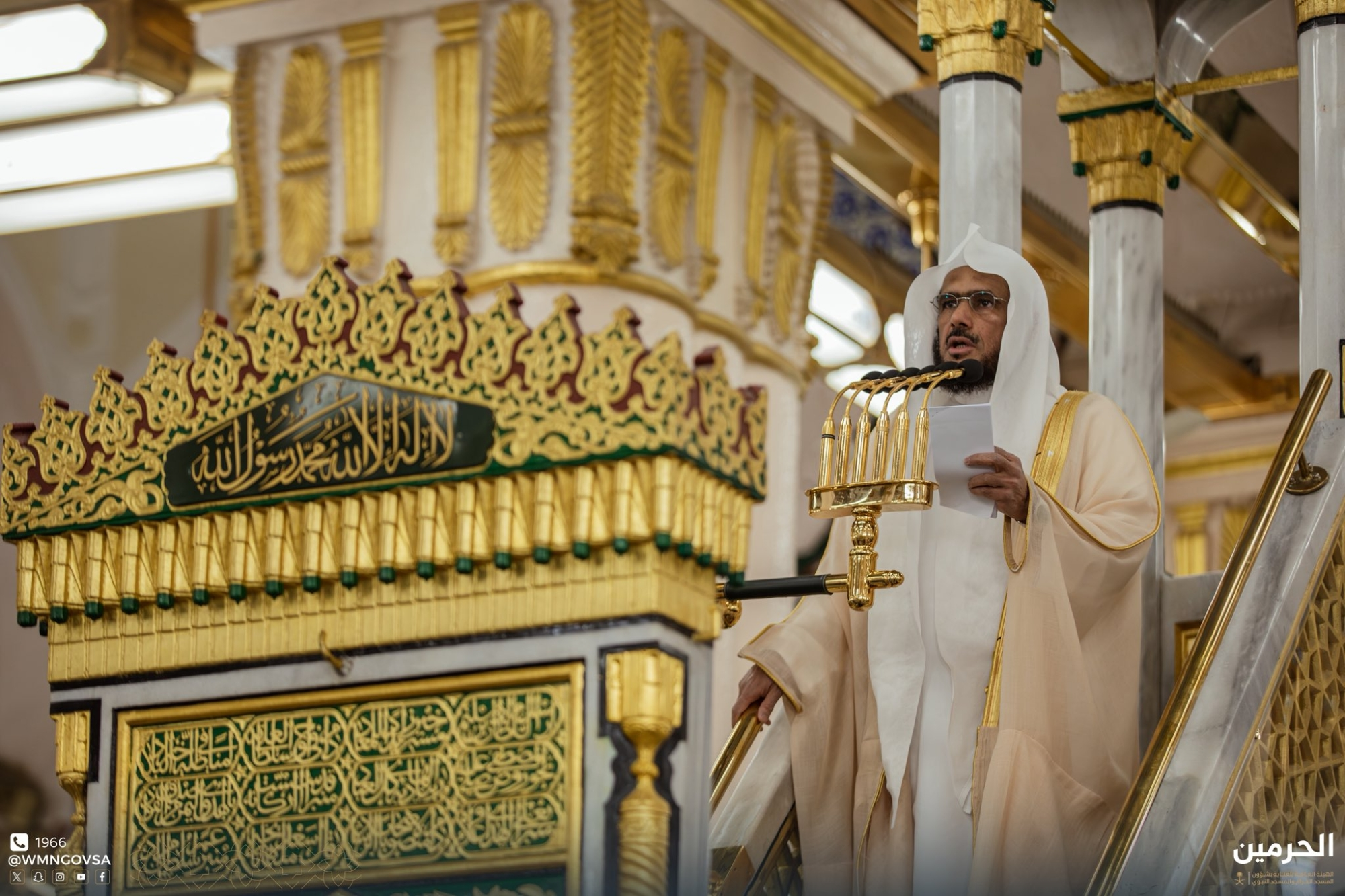
In a university sermon at the Prophet’s Mosque, Sheikh Abdulbari Al-Thubaiti stressed that employment is a trust and a responsibility that goes beyond attendance and departure, emphasizing its role in building the nation and serving the people.
The concept of work as a trust and worship
In a comprehensive sermon delivered at the Prophet's Mosque, the Imam and Khateeb of the Prophet's Mosque, Sheikh Dr. Abdulbari Al-Thubaiti, emphasized the profound Islamic concept of employment, stressing that it is a great trust and a weighty responsibility that transcends a mere administrative contract limited to attendance and departure. He explained that work transforms into an act of worship through which a Muslim draws closer to his Lord when he performs it with diligence and sincerity, mindful of the good intention to serve people and fulfill their needs.
The historical and religious context of work ethics in Islam
This sermon reinforces a principle firmly established in Islamic law, as the Holy Quran and the purified Sunnah of the Prophet urge the perfection of work and consider it an integral part of worship. Since the dawn of Islam, the value of work and professionalism has been an inseparable part of building Muslim society. Such messages delivered from the pulpit of the Prophet's Mosque acquire special significance, being the second of the two Holy Mosques and a beacon of religious and cultural influence for the entire Muslim world. Its sermons are broadcast and reach millions of Muslims worldwide, serving as a periodic reminder of fundamental values and principles.
The role of each individual in building the edifice of the nation
Sheikh Al-Thubaiti emphasized that every job, no matter how small it may seem to some, is a fundamental building block in the edifice of the nation and the people. The preacher in his mosque, the teacher in his classroom, the doctor in his clinic, the engineer on his site, the security officer in his field, and the administrator behind his desk—all form an integrated system that contributes to achieving progress and prosperity. He pointed out that an employee's awareness of this responsibility motivates him not to hinder people's interests or delay their transactions, but rather to promptly perform his duties with honesty and integrity, giving everyone their due.
Local and regional impact of commitment to job integrity
Domestically, this message aligns directly with the goals of the Kingdom's Vision 2030, which focuses on building a prosperous economy and a vibrant society. This necessitates raising productivity levels, enhancing professional efficiency, and upholding high work ethics. The sermon provides spiritual and moral support for these national aspirations and motivates employees in both the public and private sectors to be active participants in the development process. Regionally and internationally, this call exemplifies the Islamic concept of work, linking professional performance with spiritual reward, thus reinforcing the positive image of Muslim societies as productive forces contributing to human civilization.
The reward is commensurate with the deed, and the importance of humility
Sheikh Al-Thubaiti reminded the congregation of a divine principle: that reward is commensurate with deed. He explained that whoever makes things easy for others will find God making things easy for them, whoever shows mercy will find God showing mercy to them, and whoever makes things difficult for others will find God making things difficult for them. He urged employees to cultivate patience and humility, and to view their positions as means to serve others, not platforms for arrogance. He concluded his sermon by emphasizing that one's professional life is a recorded record for which one will be held accountable on the Day of Judgment, thus obligating every employee to leave a positive impact and a good reputation.
Local News
Smuggling attempt of 269,000 Captagon pills foiled at Al-Haditha border crossing in Saudi Arabia
The Saudi Zakat, Tax and Customs Authority announced the thwarting of an attempt to smuggle 269,411 Captagon pills at the Al-Haditha border crossing, which were tightly hidden inside food ghee containers.
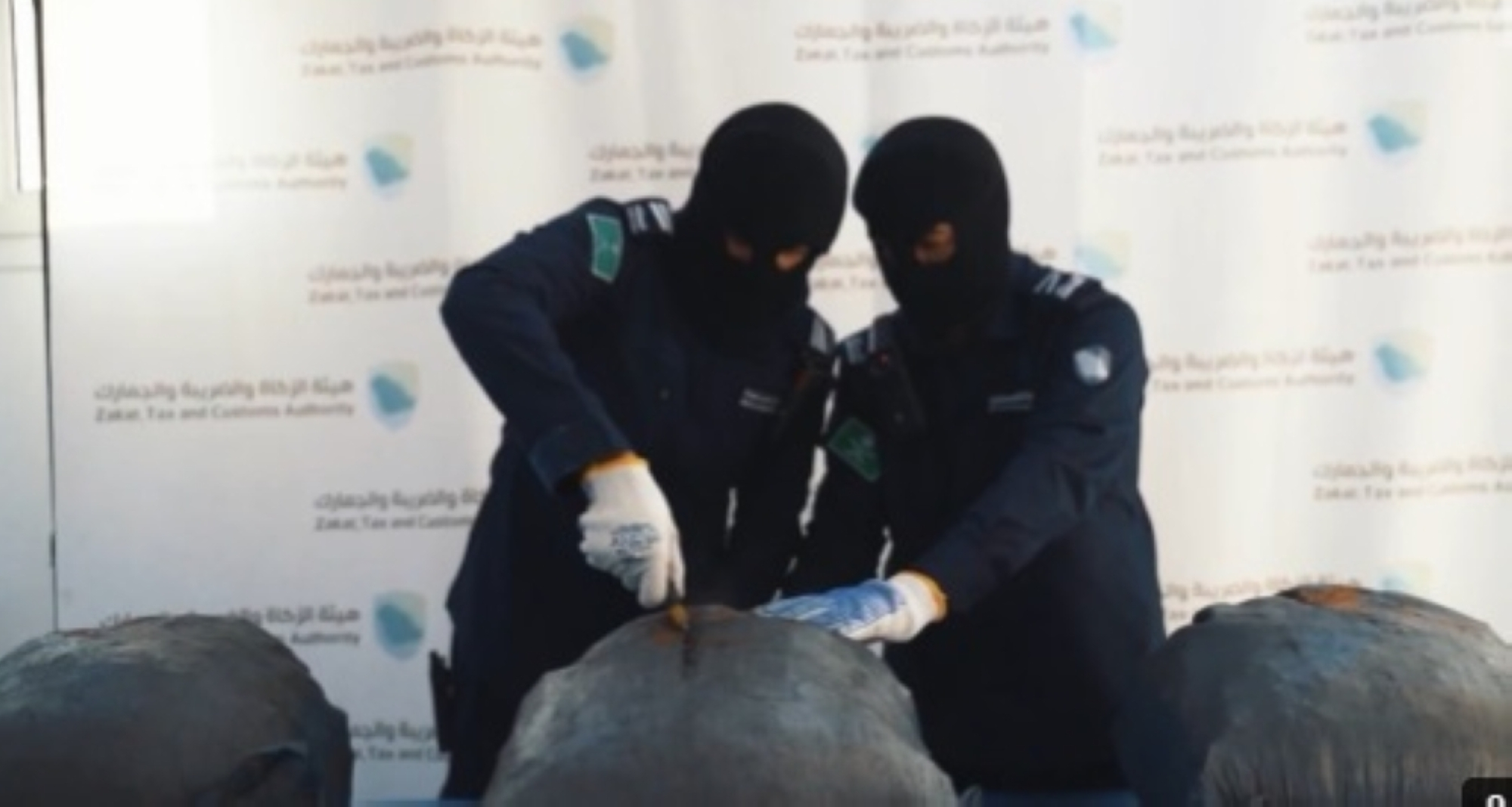
In a new blow to international smuggling networks, the Zakat, Tax and Customs Authority (ZATCA) at the Al-Haditha border crossing announced that it had thwarted an attempt to smuggle a large quantity of amphetamine pills, amounting to 269,411 Captagon pills, which were on their way into the Kingdom of Saudi Arabia.
Details of the fine-tuning process
ZATCA's official spokesperson, Professor Hamoud Al-Harbi, explained that the operation began when a shipment classified as "foodstuffs" arrived at the Al-Haditha border crossing. During routine customs procedures, the shipment aroused the inspectors' suspicions, prompting a thorough examination using the latest security technologies and live detection methods (police dogs). The examination revealed narcotic pills that had been professionally and ingeniously concealed inside containers of ghee. Part of the contents of the containers had been emptied, filled with the narcotic pills, and then resealed tightly for camouflage.
Al-Harbi added that immediately after the seizure, coordination was established with the General Directorate of Narcotics Control in a proactive step aimed at tracking down the criminal network responsible. This fruitful security cooperation resulted in the arrest of the recipients of the shipment within the Kingdom; two individuals were apprehended and legal proceedings are underway against them.
Ongoing efforts in the war on drugs
This operation comes within the framework of the Kingdom of Saudi Arabia's ongoing efforts to combat drug trafficking and protect its land, sea, and air borders. The Al-Haditha border crossing, which connects the Kingdom to Jordan, is one of the most important and busiest land crossings, making it a constant target for smuggling networks seeking to exploit it to bring in contraband. This operation demonstrates the high level of vigilance and preparedness of customs officials and their ability to detect evolving criminal methods.
The strategic importance of protecting society
The importance of such operations extends beyond security to encompass crucial social and economic dimensions. Domestically, thwarting the smuggling of these massive quantities helps protect youth and society from the devastating scourge of drugs, directly contributing to one of the key objectives of the Kingdom's Vision 2030: building a vibrant and secure society. Regionally and internationally, the Kingdom's success in disrupting the supply routes of these criminal networks strengthens regional security and underscores its role as an active partner in combating transnational organized crime.
The official spokesperson reiterated that ZATCA and all partner security agencies are committed to tightening customs controls on all imports and exports, and to standing firm against anyone attempting to compromise the security of the nation and the safety of its citizens. The authority also called upon citizens and residents to contribute to these national efforts by reporting any information related to smuggling through the designated official channels, such as the number (1910) or the email address (1910@zatca.gov.sa), emphasizing the complete confidentiality of informants and the availability of substantial financial rewards if the information is accurate.
-

 Local News 5 days ago
Landslide in Riyadh: Details of the incident in Al-Sahafa neighborhood and containment efforts
-
 Local News 6 days ago
The death penalty was carried out against a citizen who stabbed another to death in Tabuk
-

 Culture and Art, 1 week ago
Ramez Galal in Ramadan 2026: Details of the bloody prank show
-
 Local news one week ago
First birth on the Riyadh train: A heartwarming story at Andalus station
-

 Culture and Art 5 days ago
Haifa Wehbe's absence in Riyadh: A photo crisis or a strained relationship with the media?
-
 Local News 5 days ago
Riyadh collapse: Emergency plans to secure water after a main pipeline burst
-

 Culture and Art 5 days ago
City Kitchen series: A drama of conflict and the middle class during Ramadan
-

 Culture and Art 5 days ago
The series "Kasra": Dawood Hussein in a moving social drama this Ramadan