Local News
King Faisal University joins the Beijing Innovation Zones membership
King Faisal University enhances its global standing by joining the Innovation Zones in Beijing, a step towards a future full of innovation and development.

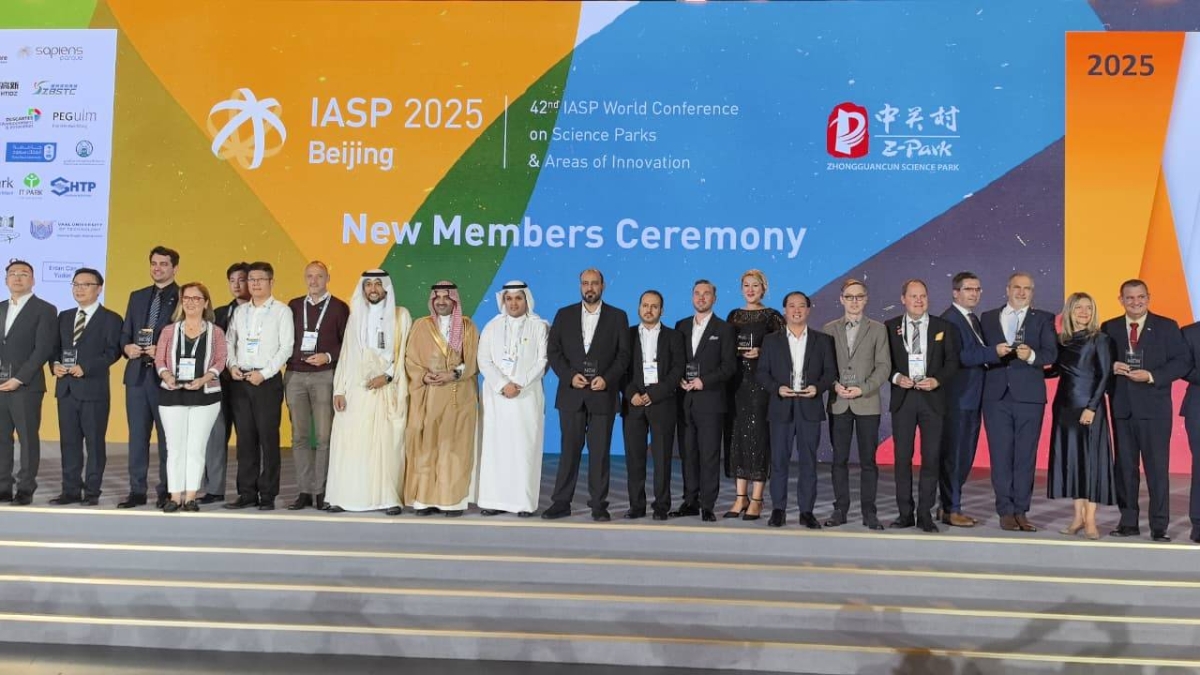
King Faisal University joins the International Organization for Innovation Zones and Oases
In a move that reinforces its position as a global innovation hub, King Faisal University has been granted membership as an Innovation Zone by the International Association of Innovation Zones and Parks (IASP). This occurred during the 42nd IASP World Conference, held in Beijing, China, from September 15-19, 2025.
Strengthening international presence
Dr. Abdulrahman bin Issa Al-Laili, Vice Rector for Graduate Studies and Scientific Research and Acting Head of the Innovation and Business Development Sector, explained that participating in this international conference represents an important step in strengthening the university's presence in global research and innovation networks. He emphasized that this step opens broader horizons for cooperation with research and innovation centers around the world.
These efforts are part of the Saudi Vision 2030 objectives, which aim to support the knowledge economy and enhance the Kingdom's position on the global innovation map. Vision 2030 serves as a strategic roadmap to diversify the Saudi economy and reduce its dependence on oil by strengthening non-oil sectors such as education, research, and development.
King Faisal University's role in innovation
King Faisal University's membership in the International Association of Innovation Parks and Areas (IASP) strengthens its position as a leading national platform for innovation. It allows the university to engage with a global network of prominent innovation parks and areas, facilitating the exchange of expertise and knowledge with prestigious international institutions.
This membership embodies the support provided by the Council of University Affairs and the Research, Development and Innovation Development Authority to empower Saudi universities to transform into platforms of leadership and knowledge. It also reflects the Kingdom's commitment to strengthening its presence on the global innovation stage by supporting and enabling educational institutions to become advanced research and development centers.
Looking towards the future
The Kingdom of Saudi Arabia is actively working to enhance its capabilities in scientific research and innovation as part of its comprehensive national strategy. By supporting universities and research institutions, the Kingdom hopes to achieve tangible progress that will positively impact the national economy and contribute to sustainable development.
King Faisal University’s joining the IASP is a strategic step towards achieving these ambitious goals, as it opens the door for the university to be an active and influential part of a global community that seeks to achieve scientific and technological progress.
In conclusion
This achievement marks a significant milestone for King Faisal University and the Kingdom of Saudi Arabia as a whole. It reflects the wise leadership's commitment to supporting higher education and scientific research as fundamental pillars for achieving comprehensive and sustainable development. This membership is expected to have a major positive impact on the university's and the Kingdom's journey toward a more innovative and prosperous future.






Local News
Results of the National Program for Identifying the Gifted and Talented, and the Global Mawhiba Achievement
The Ministry of Education announced the results of the National Program for Gifted Student Identification, which saw the participation of 89,000 students, coinciding with Mawhiba's entry into the Guinness World Records. Learn more about the details and the significance of this event.

The Saudi Ministry of Education announced today (Monday) the results of the National Program for Identifying Gifted Students , implemented through a strategic partnership between the Ministry, the King Abdulaziz and His Companions Foundation for Giftedness and Creativity (Mawhiba), and the Education and Training Evaluation Commission. This year's program saw wide participation, with over 89,000 male and female students from across the Kingdom, reflecting the growing interest and societal awareness of the importance of nurturing talent.
A global achievement in the Guinness Book of Records
In a related development, the Mawhiba Foundation achieved an unprecedented international milestone by setting a Guinness World Record . This achievement follows the foundation's success in registering the largest number of individuals for the mental abilities test in a single month, demonstrating the efficiency of the program's digital and organizational infrastructure and its capacity to accommodate the growing number of talented individuals.
Program objectives and selection methodology
The Ministry congratulated the students who passed the "Mawhiba Scale for Multiple Intellectual Abilities," emphasizing that the program primarily aims to identify gifted students in the fields of science, technology, and engineering. The methodology employed is based on an integrated system that ensures the highest standards of fairness and equity in selecting gifted students, and subsequently directing them to enrichment programs that align with their abilities and scientific interests.
Strategic context and institutional partnership
The National Program for Gifted Student Identification is the fruit of a long-standing collaboration between three entities (the Ministry of Education, Mawhiba, and the Evaluation Commission). This model was established to serve as the primary gateway for discovering the Kingdom's creative human capital. Students undergo scientifically standardized tests that measure linguistic, numerical, spatial, and scientific reasoning abilities, as well as mental flexibility, ensuring the accurate identification of latent talents that are not revealed by traditional achievement tests.
National importance and its alignment with Vision 2030
This announcement is particularly significant within the framework of the Kingdom's Vision 2030 , specifically as part of the objectives of the "Human Capability Development Program." Identifying these talented individuals is not the end goal, but rather the beginning of a long journey of nurturing and investing in the minds that will drive the transformation towards a knowledge-based economy. The annual results and international awards garnered by Saudi students in international forums (such as ISEF and the International Mathematical and Physics Olympiads) demonstrate that the outcomes of this program constitute a fundamental pillar of innovation and scientific research, thus enhancing the Kingdom's competitive position on the global stage.
Local News
Khaled Al-Yousef assumes the duties of Saudi Attorney General, succeeding Al-Muajeb
Dr. Khaled Al-Yousef assumed his duties as Attorney General of Saudi Arabia in the presence of his predecessor, Sheikh Saud Al-Moajeb, emphasizing the strengthening of governance and the development of legal competencies to achieve justice.

In a move reflecting the smooth institutional transition and ongoing development of the Saudi judicial system, Dr. Khalid bin Mohammed Al-Yousef officially assumed his duties today as Attorney General of the Kingdom of Saudi Arabia, with the rank of Minister. He began his tenure with a visit to the Public Prosecution headquarters in Riyadh, where he was received by members of the Public Prosecution Council, senior officials, and a number of its staff, headed by the former Attorney General, Sheikh Saud bin Abdullah Al-Muajab.
Official reception and confirmation of institutional work
The meeting was marked by an atmosphere of cordiality and mutual respect, as Dr. Al-Yousef met with the Public Prosecution leadership, accompanied by Sheikh Saud Al-Muajab, in a scene that embodies the integration of roles and the continuity of work in the service of justice. This reception follows the issuance of the Royal Decree last Thursday, which relieved Dr. Khalid Al-Yousef of his position as President of the Board of Grievances and appointed him Attorney General, succeeding Sheikh Al-Muajab.
Future vision: Governance and quality of outputs
During his meeting with members of the Public Prosecution, Dr. Khalid Al-Yousef outlined the features of the next phase, emphasizing that it requires concerted efforts and teamwork. Al-Yousef stressed several key pillars that will be priorities in the upcoming work strategy, most notably:
- Investing in talent: Focusing on developing and qualifying national legal personnel to the highest standards.
- Enhancing professionalism: Establishing governance principles and strict adherence to regulations to ensure quality performance.
- Institutional excellence: Raising the efficiency of judicial outputs to achieve effective justice.
Thanks to the leadership and support of the judicial system
The new Attorney General expressed his deepest gratitude and appreciation to the Custodian of the Two Holy Mosques, King Salman bin Abdulaziz, and to His Royal Highness Crown Prince Mohammed bin Salman, Prime Minister, for the precious royal trust bestowed upon them. He commended the unlimited support that the judicial system and the Public Prosecution receive from the wise leadership, which has contributed to a qualitative leap in the Kingdom's judicial and justice system.
A long-standing legal and administrative background
The appointment of Dr. Khalid Al-Yousef to this sensitive position is the culmination of a distinguished career in the judiciary. He previously served as President of the Board of Grievances, where he led numerous digital transformation and procedural development projects. His extensive administrative and judicial experience is expected to enhance the performance of the Public Prosecution, particularly in light of the objectives of the Kingdom's Vision 2030, which prioritizes the protection of rights, the promotion of transparency, and the achievement of criminal justice in accordance with applicable laws.
Al-Yousef concluded his speech by emphasizing that the ultimate goal is to protect rights and preserve freedoms in accordance with Sharia and the system, and to improve the performance of this vital facility to be a model to be emulated in efficiency and justice.
Local News
The Two Holy Mosques Affairs Plan for Ramadan 1447 AH: Modern Technologies and Integrated Services
The Affairs of the Two Holy Mosques has completed its preparations for Ramadan 1447 AH with a comprehensive operational plan that includes interactive maps, childcare centers, and governance of Iftar travel to serve the guests of God.

The General Authority for the Care of the Two Holy Mosques announced today (Sunday) the completion of all its operational and technical preparations for the holy month of Ramadan 1447 AH. These preparations are part of a comprehensive strategic plan specifically designed to manage the expected influx of visitors and ensure the provision of the highest quality services to pilgrims visiting the Two Holy Mosques.
Context of the event and its strategic importance
The month of Ramadan holds special significance in Saudi Arabia, representing the peak of religious seasons and witnessing the arrival of millions of pilgrims and worshippers from within the Kingdom and abroad. This operational plan aligns with the objectives of the Kingdom's Vision 2030, which aims to facilitate the hosting of visitors to the Two Holy Mosques and provide them with the best possible services, reflecting the Kingdom's leading role in serving the Muslim world. The success of the operational season during Ramadan is a vital indicator of the efficiency of crowd management and the quality of infrastructure in the holiest of places.
Operational plan axes and modern technologies
The authority explained that its plan for this year is based on three main pillars to ensure efficiency and flexibility:
- Asset and facility management: Enhancing operational and maintenance efficiency to ensure service continuity during peak times.
- Integrated coordination: Joint work with all relevant security and service agencies.
- Enriching the spiritual experience: Providing quality initiatives that enhance the reverence and comfort of visitors.
In a qualitative leap for digital services, the authority revealed the activation of three-dimensional interactive maps to facilitate visitor access to facilities, in addition to the use of digital sensor and detector systems to count visitors, providing accurate data that supports immediate decision-making in crowd management and organizing pathways.
Humanitarian services and new enrichment projects
In its plan for the year 1447 AH, the organization was keen to take into account humanitarian aspects extensively, and the initiatives included:
- Launching a service to transport the elderly from transport stations to ensure their comfort.
- Operating childcare centers in the Two Holy Mosques to provide a safe and supportive educational experience for families.
- Governance of breakfast travel in conjunction with the national platform "Ihsan" to reduce food waste.
- Developing interactive guidance screens that provide guidance services in five international languages.
Technical readiness and infrastructure
Regarding infrastructure, the authority confirmed improvements in the reliability of the electricity and power systems, enhanced efficiency of air conditioning and lighting systems, and ensured the readiness of escalators and elevators. Regular maintenance plans for the sound system and restrooms were also activated, along with intensified cleaning, sanitization, and environmental protection efforts to achieve the highest standards of safety and sustainability.
Expected impact of the plan
These intensive measures are expected to contribute to a smooth flow of crowds, particularly in the circumambulation area (Mataf), the area between Safa and Marwa (Mas'a), and the Prophet's Mosque (Rawdah), reducing waiting times and providing a safe and convenient environment for worship. These preparations underscore the Authority's ongoing commitment to implementing the directives of the wise leadership to dedicate all resources to serving the pilgrims, thus enhancing the Kingdom's positive image in managing the world's largest human gatherings efficiently and effectively.
-

 Local news one week ago
The Spears of Victory 2026 military exercises concluded in Saudi Arabia with international participation
-
Culture and Art 4 days ago
The "Between and Between" exhibition in Jeddah: 5 artists reshape Saudi memory
-
Culture and Art 6 days ago
Shakira's concert in Jeddah: Details of the international star's first concert in Saudi Arabia
-
Culture and Art, 1 week ago
The truth about Nancy Ajram's video and Epstein Island, and her legal response
-
Culture and Art, 1 week ago
Rawan Bin Hussain's first appearance after her imprisonment and deportation from Dubai
-
Local News 3 days ago
The Riyadh-Rin-Bisha dual carriageway, spanning 559 km, has been completed
-
Local news two days ago
Adopting the National Policy for the Arabic Language: Strengthening Identity and Vision 2030
-
Local News 3 days ago
Saudi Arabia's National Arabic Language Policy: 8 Principles to Promote Identity