
Local News
The Al-Qadisiyah High Performance Building project is nearing completion at 80%
Al-Qadisiyah Club is nearing completion of its high-performance building project, reaching 80% completion – a step towards a bright and professional future for its first football team. Discover the details now!

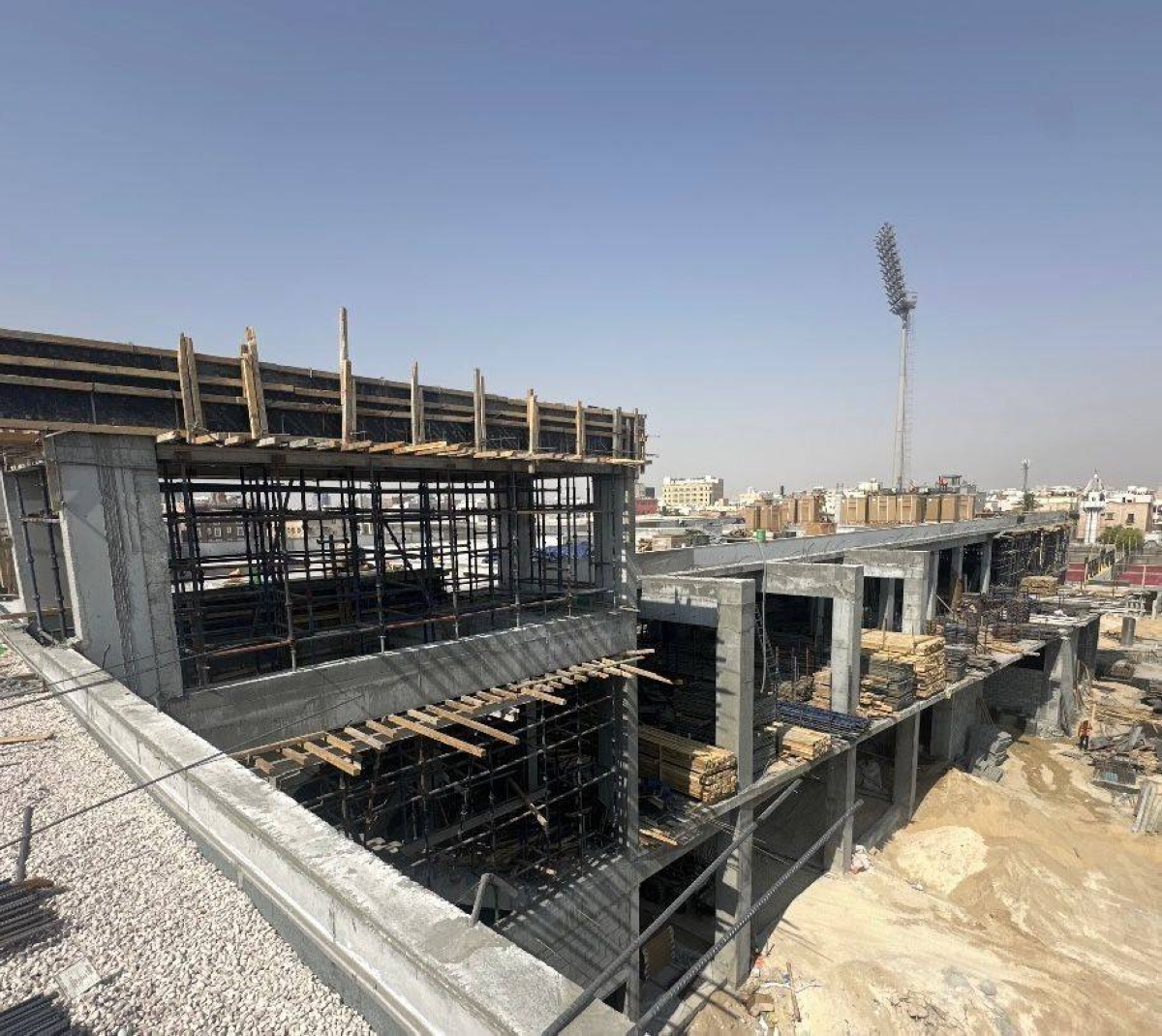
Al-Qadisiyah Club is nearing completion of its high-performance building project: a step towards the future
In its relentless pursuit of excellence and professionalism, Al-Qadisiyah Club continues to implement the high-performance building project dedicated to the first football team, which is one of the most prominent development projects within the club’s strategic plans.
The completion rate for this ambitious project has reached 80% so far, reflecting the club's tireless efforts to achieve its goals.
An inspection visit confirms progress
The project received an inspection visit from the English club's CEO, James Besgrove, who expressed his admiration for the progress of the work and praised the efforts made.
Besgrove confirmed that the project is steadily progressing towards its final stages of completion, which enhances the confidence of the public and management in achieving the desired goals.
Integrated engineering vision
For his part, Engineer Saud Al-Omari, the club’s Chief Operating Officer, explained that the work is proceeding according to a well-thought-out timetable and at an accelerated pace.
Al-Omari pointed out that the goal of the project is to provide an integrated and high-quality environment to support the first team system.
“The building will include state-of-the-art facilities including modern gyms, physiotherapy and rehabilitation centers, and administrative offices.”
The spaces will also include areas designated for technical and medical staff, which will contribute to enhancing the team's overall performance and keeping pace with global professional standards.
An ambitious strategy for the future
This project comes within the framework of Al-Qadisiyah Club’s strategy to develop sports facilities and create a professional environment that enhances the readiness of the first team and keeps pace with its future aspirations at the local and international levels.
“Providing such advanced infrastructure is a crucial step towards achieving sporting success.”
As the construction of the high-performance building nears completion, Al-Qadisiyah fans are looking forward to seeing the impact of this project on the first team's performance and achieving more victories and championships in the near future.


Local News
The Minister of Health honors the winners of the Saudi Care Model 2026 awards
Comprehensive coverage of the Minister of Health's awarding of prizes to the winners of the Saudi Healthcare Model Forum 2026, and details of the Al-Qassim Health Cluster's victory and the honored entities.

The capital city of Riyadh witnessed a significant medical event, as His Excellency the Minister of Health and Chairman of the Board of Directors of the Health Holding Company, Mr. Fahd bin Abdulrahman Al-Jalajel, presented awards to the winners of the third edition of the Saudi Healthcare Model Forum 2026. The ceremony was held at the Princess Nouf bint Abdulaziz International Conference Center in the Sofitel Riyadh Hotel, in the presence of leading figures in the healthcare sector and experts, to celebrate the qualitative achievements that contribute to realizing the objectives of the healthcare transformation program.
This recognition comes amidst the major transformations taking place in the healthcare sector in Saudi Arabia as part of Vision 2030. The Health Holding Company aims to enhance the efficiency of medical services and improve quality of life by implementing modern care models that prioritize prevention over treatment and place the patient at the heart of the healthcare system. These awards serve as a key incentive to foster competition among healthcare clusters and medical institutions to deliver global best practices.
Leading the winners was the Qassim Health Cluster, which received the forum's top prize this year, recognizing its outstanding overall performance and exceptional implementation of clinical pathways and therapeutic interventions. The cluster has effectively contributed to creating a sustainable impact that has positively affected the patient experience in the Qassim region, highlighting the success of health transformation strategies in the region.
Six Excellence Awards in Care Systems
The awards recognized winners across various healthcare system tracks. The First Jeddah Health Cluster and the Eastern Province Health Cluster both won the Excellence Award for Preventive Care. In the Elective Care System category, the Northern Borders Health Cluster was recognized, while the Al-Baha Health Cluster received the Excellence Award for Maternal and Child Care. For the Urgent Care System, the First Riyadh Health Cluster and the Tabuk Health Cluster were awarded, while the Najran Health Cluster received the Excellence Award for Chronic Disease Care. The Second Jeddah Health Cluster was distinguished for its implementation of the Palliative Care System.
Impact Industry Awards and Strategic Partnerships
In the Impact Industry Awards category, which focuses on promoting public health and prevention, the Minister honored several leading entities, including King Abdulaziz Medical City in Riyadh (Ministry of National Guard Health Affairs) for its retinopathy of prematurity screening program, and the Ministry of Defense Health Services for its "My Teeth" home healthcare service project. Also winning were "Lin Business Solutions" for its "Yamamah" platform, and the Saudi Red Crescent Authority for its healthcare zone project.
The recognition wasn't limited to the government sector; it extended to partners in success. Tawuniya Insurance won the Impact Award for its Comprehensive Care Program, and Al Hammadi Hospitals Group was recognized for its Pulmonary Embolism Response Teams project. The Third Riyadh Health Cluster was honored for its initiative to screen school students for amblyopia (lazy eye), and the Madinah Health Cluster was recognized for its integrated model for amputation prevention at the Center of Excellence for Diabetic Foot. This diversity among the winners reflects the integration of the public and private healthcare systems to achieve sustainable and comprehensive healthcare.
Local News
Health Minister: Average life expectancy in Saudi Arabia rises to 79.7 years
Health Minister Fahd Al-Jalajel revealed that the average life expectancy in Saudi Arabia has risen to 79.7 years and healthy life expectancy has increased by 3 years, with accident deaths decreasing by 60% within the framework of Vision 2030.

Saudi Health Minister, Professor Fahd Al-Jalajel, announced that the Kingdom of Saudi Arabia has achieved unprecedented accomplishments in the healthcare sector, exceeding many of the time targets set for the Kingdom's Vision 2030. In exclusive statements to "Akhbar 24" on the sidelines of the Saudi Healthcare Model Forum, the Minister revealed that the average life expectancy in the Kingdom jumped from 74 years in 2016 to 79.7 years, according to the latest reports, registering an increase of nearly 6 years in a decade, which reflects the effectiveness of the implemented health strategies.
A qualitative shift from treatment to prevention
The achievements were not limited to extending lifespan; they focused fundamentally on quality of life. Al-Jalajel explained that the modern concept of health in the Kingdom now revolves around “healthy lifespan,” which is the period a person spends enjoying good health and free from debilitating chronic diseases. Health transformation programs have successfully added three years to citizens’ healthy lifespans and reduced years of suffering from illness by a similar amount. This improvement is a direct result of decisive preventative policies, such as reducing salt content in food, banning hydrogenated oils, and intensifying early detection campaigns, which have contributed to delaying or preventing the onset of modern diseases such as diabetes and cardiovascular diseases.
The impact of Vision 2030 on safety and health indicators
In line with the strategic objectives of Vision 2030, the Kingdom has witnessed a dramatic improvement in public safety and preventative health indicators. The Minister noted a remarkable 60% decrease in road traffic fatalities, a figure that reflects the integrated efforts of the health system, security agencies, and traffic authorities to enhance road safety. Furthermore, deaths from chronic diseases have decreased by 40%, and deaths from infectious diseases by 50%, placing the Kingdom among the leading nations in managing health crises and preventing epidemics.
Restructuring the healthcare sector: Health Holding Company
Al-Jalajel addressed the massive institutional transformation underway in the sector, announcing the commencement of the actual transfer of health clusters from the Ministry of Health to the "Health Holding Company." The first phase included the transfer of three health clusters, representing 15% of the total, with the participation of more than 62,000 employees. This historic step aims to separate the regulatory and supervisory role (the Ministry) from the operational role (the Company), thereby enhancing efficiency and transparency and improving the quality of services provided to beneficiaries. The Minister affirmed that the transfer of all clusters will be completed by the end of 2027.
High readiness and a promising future
The Minister of Health concluded his remarks by reassuring the public about the epidemiological situation, confirming that no alarming strains of influenza have been detected, and that seasonal immunization programs are continuing. He emphasized that the new Saudi healthcare model is a true embodiment of Vision 2030, striving to build a vibrant society where individuals enjoy sustainable health, supported by an advanced healthcare system capable of responding to emergencies and promoting the concept of prevention over treatment.
Local News
Hafez 2025 Program: Water license growth of 1300% and environmental achievements
The Ministry of Environment reveals the achievements of the Hafez program for 2025: Water licenses increased by 1300% and violations were controlled by 900%, with response time reduced to 12 hours to ensure water sustainability.

The Kingdom of Saudi Arabia achieved an unprecedented leap in regulating the water sector during 2025, with the Ministry of Environment, Water and Agriculture revealing record figures achieved by the "Hafez" program for monitoring water resources and their uses. The Ministry explained that applications for water licenses witnessed a tremendous increase of 1300% compared to 2024, reflecting a radical shift in the level of regulatory awareness among beneficiaries and the success of the Ministry's efforts in governing this vital sector.
Operational efficiency and speed of completion
The achievement was not limited to increasing the number of licenses, but also included a comprehensive development of the regulatory and procedural work system. The Ministry confirmed that the quality and speed of procedures for addressing violations have witnessed a remarkable improvement, with the processing time reduced from 7 days to just one day by 2025. This development is attributed to the automation of enforcement forms through advanced field applications, increased efficiency of enforcement officers, and standardization of procedures, which directly contributed to improving the quality of regulatory outputs.
In a related context, the speed of field response to reports has increased significantly, as it has moved from 5 days previously to only 12 hours, which enhances the ministry’s ability to intervene quickly to protect water sources from encroachments and to deal with reports with high efficiency.
Strategic context: Protecting water security
These figures and achievements come within the context of the Kingdom's tireless efforts to achieve the objectives of the National Water Strategy and Vision 2030, which prioritize water security and the sustainability of natural resources. Given the Kingdom's geographical and climatic characteristics, preserving groundwater and surface water resources is a strategic challenge requiring both rigorous oversight and streamlined regulations. The transition from haphazard well drilling and water use to a licensed and digitally monitored system is a fundamental pillar for ensuring the sustainability of agriculture and providing water for future generations.
Strict field monitoring and comprehensive awareness campaigns
In terms of field monitoring, the “Hafez” program recorded an increase of over 900% in detecting water source violations compared to the previous year, indicating the effectiveness of field coverage and the use of digital tools to support compliance. Since the program's launch in May 2025, monitoring teams have conducted approximately 14,800 field visits, covering a distance of over 3.6 million kilometers across various regions of the Kingdom, reflecting the scale of the effort exerted to protect water resources.
In parallel with the monitoring efforts, the program intensified its awareness efforts to establish a culture of compliance, as it carried out more than 15,000 field awareness visits and sent more than 65,000 text messages (SMS) to farm owners and water source users, to introduce the systems and regulations and promote the concept of water sustainability.
Economic and environmental impact
Regulating water use through official permits not only protects the environment but also has significant economic implications. Obtaining proper permits ensures the sustainability of farmers' and investors' projects, avoids penalties and fines, and contributes to building an accurate database that enables decision-makers to manage the water budget efficiently. These findings confirm that the Kingdom is making steady progress towards achieving a sustainable water balance, supported by public awareness and modern monitoring technologies.
-

 Local News 7 days ago
Launch of the city's shuttle bus service in Ramadan 1447 AH: Routes and stations
-
Local news one week ago
Rabigh inaugurates the world's largest water innovation oasis and enters the Guinness World Records
-
Culture and Art, 1 week ago
The series "Rouh OFF" was permanently canceled by a decision of the Actors' Syndicate
-
Culture and Art 6 days ago
Yasser Galal and Radwa El Sherbiny: Details of a new artistic project that brings them together
-
Local news one week ago
Schedule of Taraweeh and Tahajjud prayers at the Two Holy Mosques for Ramadan 1447 AH
-
Local News 7 days ago
The Ministry of Education revokes the licenses of 74 private schools due to safety and quality violations
-
Local news one week ago
Saudi Arabia weather: Rain in Riyadh, the Eastern Province, and Qassim, and dense fog
-
Local News 6 days ago
Mohammed Al-Rasasmeh appointed as official spokesperson for the Ministry of Municipalities and Housing


