Local News
Deputy Governor of Mecca follows up on Hajj and Umrah plans for the end of Ramadan
Chaired by Prince Saud bin Mishaal, the Hajj and Umrah Committee discussed plans for the remainder of Ramadan to ensure the comfort of pilgrims and improve the efficiency of municipal services in Makkah.

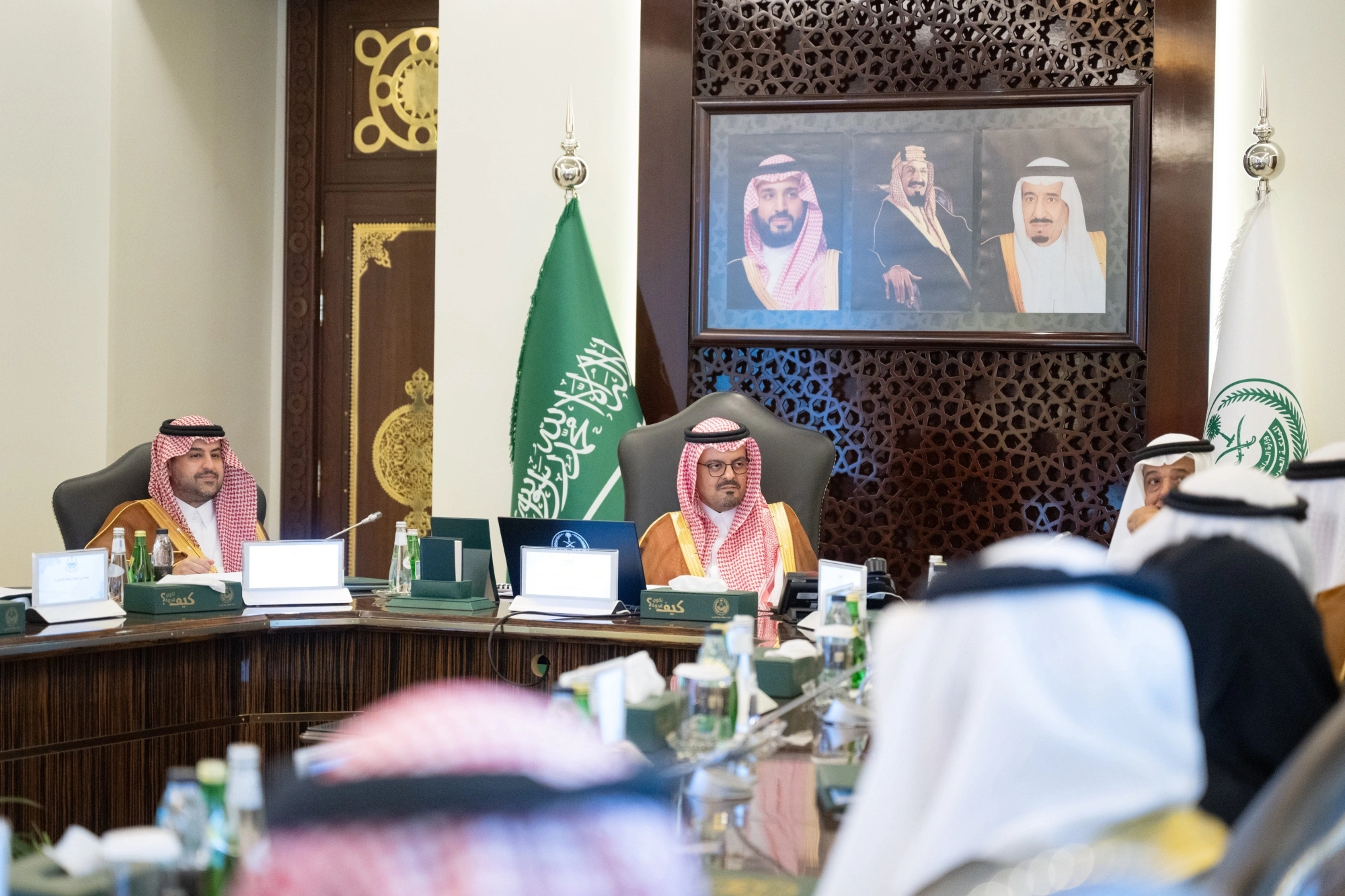
As part of ongoing efforts to ensure the highest quality services for pilgrims, His Royal Highness Prince Saud bin Mishaal bin Abdulaziz, Deputy Governor of Makkah Region, chaired a meeting of the Permanent Committee for Hajj and Umrah. This meeting was held under the direct guidance of His Royal Highness Prince Khalid Al-Faisal, Advisor to the Custodian of the Two Holy Mosques, Governor of Makkah Region, and Chairman of the Committee, to assess the readiness of relevant authorities for the next phase of the current Umrah season.
During the meeting, performance reports for the work carried out during the past days of Ramadan were reviewed, with a focus on evaluating the level of services provided to visitors of the Grand Mosque. The committee also discussed operational plans prepared for the remainder of the holy month, which typically sees a high volume of Umrah pilgrims and worshippers, particularly with the approach of the last ten days, which require the combined efforts of all security, service, and organizational personnel.
Prince Saud bin Mishaal conveyed the appreciation and thanks of Prince Khalid Al-Faisal to all the entities working in the field, praising their tireless efforts in providing a safe and accessible worship environment that ensures the performance of rituals with tranquility and reverence, in line with the directives of the wise leadership that gives the service of the Two Holy Mosques and their visitors the highest priority within the objectives of the Kingdom’s Vision 2030.
In a related context, the Holy Capital Municipality presented a detailed report on its field operations during the meeting. The report included plans to enhance public cleanliness and improve the efficiency of municipal services, as well as the implementation of extensive cleaning, disinfection, and environmental sanitation campaigns throughout Mecca, with a particular focus on the central area surrounding the Grand Mosque, which experiences the highest population density.
These meetings are of paramount importance given the religious significance of Mecca and the steady increase in the number of pilgrims, necessitating close coordination between various governmental and private sectors. The committee works to ensure smooth traffic flow, efficient crowd management, and integrated health and logistical services, guaranteeing a unique spiritual experience for pilgrims from both within the Kingdom and abroad.




Local News
The Custodian of the Two Holy Mosques' program for providing Iftar meals to fasting people in Italy and Namibia
The Ministry of Islamic Affairs is implementing the Custodian of the Two Holy Mosques’ program to provide Iftar meals for fasting people in Italy and Namibia, targeting thousands of beneficiaries as part of the Kingdom’s efforts to serve Muslims in 70 countries.
As part of the ongoing humanitarian and advocacy efforts undertaken by the Kingdom of Saudi Arabia to serve Muslims in all parts of the world, the Ministry of Islamic Affairs, Dawah and Guidance continued to implement the Custodian of the Two Holy Mosques’ program for providing Iftar meals to fasting people for the year 1445 AH, as the journey of goodness landed in both the Italian Republic and the Republic of Namibia, carrying with it messages of brotherhood and solidarity that characterize the holy month.
Breakfast tables in the heart of Rome
The Ministry launched the program's activities in the Italian capital, Rome, specifically at the Islamic Cultural Center (Grand Mosque of Rome), one of the most prominent Islamic landmarks in Europe. The event was held on the fourth day of Ramadan, in the presence of prominent figures, including the Secretary-General of the Center, Dr. Abdullah Radwan, and the President of the Center, Dr. Naeem Nasrallah, in addition to the active participation of members of the Embassy of the Kingdom of Saudi Arabia in Rome.
The program, in its Italian phase, aims to reach a wide segment of beneficiaries, with estimates indicating that it targets hundreds of fasting people during the holy month, reflecting the Kingdom’s keenness to address the needs of Muslim communities in non-Islamic countries, and to provide a spiritual atmosphere that brings them together at one table.
3000 beneficiaries in Namibia
In Africa, specifically in the Republic of Namibia, the Ministry implemented its Iftar program on the ninth day of Ramadan at the Windhoek Islamic Center. This program is an integral part of the Ramadan initiatives that the Kingdom has consistently carried out beyond its borders.
The program in Namibia aims to serve approximately 3,000 fasting men and women throughout the holy month. Iftar meals were held in a serene and spiritual atmosphere, reflecting the spirit of Islamic brotherhood and unity within the Muslim community of the capital, Windhoek, which had a profound impact on those present.
Historical context and the Kingdom's leading role
These initiatives are not spontaneous; rather, they are an extension of a long history of humanitarian and Islamic work undertaken by the Kingdom of Saudi Arabia since its founding. The Custodian of the Two Holy Mosques' program for providing Iftar meals to fasting Muslims is one of the largest and most specialized programs overseen by the Ministry of Islamic Affairs, covering 70 countries worldwide this year. These efforts underscore the Kingdom's leading role as the Qibla of Muslims and the custodian of the Two Holy Mosques, and reflect the keenness of its wise leadership to build bridges of communication with Muslims everywhere.
Social and international dimensions
The significance of this event extends far beyond simply providing meals; it carries profound social and international dimensions. On a social level, these communal meals contribute to strengthening bonds among members of Muslim communities, particularly in minority countries, and alleviate feelings of homesickness during Ramadan. Internationally, these programs reflect the Kingdom's soft power and its noble message of peace, love, and solidarity, thus enhancing the positive image of Islam and Muslims.
Thanks and appreciation
A large number of attendees and beneficiaries in both Italy and Namibia expressed their deep gratitude and appreciation to the Custodian of the Two Holy Mosques and His Crown Prince, appreciating this generous gesture that brings joy to the hearts of those fasting and contributes to meeting the needs of many, praying to God to protect the Kingdom and perpetuate the blessing of security and safety upon it.
Local News
The Saudi Ardah enters the Guinness World Records on its founding day with 925 performers
The Saudi Ardah dance at the Qasr Al-Hukm (Justice Palace) achieved a global milestone by entering the Guinness Book of Records as the largest group performance with 925 performers, as part of the Founding Day celebrations under the patronage of the Prince of Riyadh.

In a new cultural and national achievement reflecting the depth and authenticity of Saudi heritage, the Saudi Ardah (traditional sword dance) set a new Guinness World Record during the Kingdom's National Day celebrations. This exceptional event, held in the courtyards of the Qasr al-Hukm (Justice Palace) in the heart of Riyadh, witnessed the largest group performance of the Ardah, with 925 participants, in a magnificent display embodying national unity and pride.
Official sponsorship and professional organization
This grand celebration was held under the generous patronage of His Royal Highness Prince Faisal bin Bandar bin Abdulaziz, Governor of Riyadh Region, and in the presence of His Royal Highness Prince Mohammed bin Abdulrahman bin Abdulaziz, Deputy Governor of the Region. The Royal Commission for Riyadh City, in cooperation with the Riyadh Region Governorate, oversaw the organization of this massive event, ensuring compliance with all the stringent international requirements and standards set by Guinness World Records. This culminated in the successful completion of the documentation and monitoring procedures according to the approved official protocols.
Saudi Ardah: From battlefields to World Heritage lists
This achievement is not merely a record; it is an extension of the rich history of the Saudi Ardah, which was once a war dance performed by warriors before battles to boost morale and demonstrate strength. With the unification of the Kingdom, the Ardah transformed into a symbol of peace and celebration during national occasions and official holidays. This event further strengthens the status of the Ardah, which UNESCO inscribed in 2015 on the Representative List of the Intangible Cultural Heritage of Humanity, affirming its human and cultural value.
Symbolism of place and time
The event gained added significance due to its connection with "Founding Day," the anniversary commemorating the beginnings of the first Saudi state more than three centuries ago, and its location at the "Government Palace," a symbolic political and historical center of power in Riyadh. This combination of the site's historical importance and the occasion's sanctity contributed to a majestic atmosphere in the collective performance, where swords and drums blended in harmony, reflecting remarkable discipline and astonishing artistic skill.
Strengthening cultural identity globally
The inclusion of the Saudi Ardah dance in the Guinness World Records is a significant step in the Kingdom's cultural diplomacy, as it contributes to highlighting Saudi folk heritage on the international stage. This record underscores the Kingdom's commitment to presenting its heritage in a modern and organized manner befitting its global standing, thus strengthening the presence of Saudi culture as an influential soft power and preserving this legacy for future generations in a dignified manner.
Local News
King Faisal University ranks 77th globally in patents
King Faisal University continues its research excellence and achieves 77th place globally in US patents for 2025, with a strategic direction to transform innovations into economic projects.

King Faisal University continued to consolidate its scientific and research position on the international map, achieving a new qualitative achievement by maintaining its position among the top 100 universities worldwide in the number of US patents for 2025. This prestigious ranking issued by the US National Academy of Inventors confirms the university's commitment to global innovation standards.
World Ranking Details
According to the report, the university ranked 77th globally, having registered 49 new patents granted to it last year by the United States Patent and Trademark Office (USPTO). This office is one of the most rigorous and reliable authorities in documenting innovations worldwide, adding value to this achievement and reflecting the quality of the university's research output.
From laboratory to market: A strategy for economic transformation
Commenting on this achievement, the university's Vice President for Graduate Studies and Scientific Research, Dr. Abdulrahman Al-Laili, explained that this ranking is not merely a number, but rather a reflection of a qualitative and deliberate accumulation of research and innovation within the university. Dr. Al-Laili emphasized that the university has entered a new phase focused primarily on maximizing the economic and scientific value of these patents.
He noted that the university is currently developing advanced regulatory and investment frameworks aimed at accelerating the transition of research outputs from theoretical laboratory work to market realities and practical application. This approach not only serves the community but also enhances the university's financial sustainability by diversifying its sources of self-generated income.
Establishing startups and supporting the knowledge economy
In a practical step that translates this strategy into action, the university recently announced the initiation of procedures to establish five startups based on a number of patents registered in its name. This bold move aims to enable national technologies to access direct industrial and investment applications, creating new job opportunities and supporting local content.
Innovation in light of the Kingdom's Vision 2030
This achievement is particularly significant when viewed within the context of the scientific and economic advancements taking place in the Kingdom of Saudi Arabia. King Faisal University, through this approach, is directly contributing to the realization of the goals of Vision 2030, which places great emphasis on the transition to a knowledge-based economy. Increasing the number of patents and converting them into commercial products is a key indicator in the Human Capital Development Program and the National Strategy for Research, Development, and Innovation. This enhances the Kingdom's competitiveness in global innovation indices and reinforces the role of universities as engines of sustainable economic growth.
-

 Culture and Art, 1 week ago
The ban on the Hamdiya series in Iraq: Reasons and official response
-
Local News 5 days ago
The Ministry of Interior begins procedures for a royal pardon for common law prisoners
-
Culture and Art, 1 week ago
The series "Taht El Ard" (Underground) has been postponed and will not air during Ramadan 2026
-
Reports one week ago
King Salman Relief Center's Ramadan aid includes 9 countries
-
Local news two days ago
Saudi Arabia approves regulations for the continued presence of Gulf vehicles: duration and penalties
-
Local news one week ago
19 requirements to reduce dust from projects in Riyadh and fines for violators
-
Sports one week ago
Dates for the Al-Nassr vs. Al-Wasl match in the 2026 AFC Champions League quarter-finals
-
Culture and Art, 1 week ago
Details of the first episode of the series "Al-Maddah 6: The Legend of the End"