Local News
Air quality in the Eastern Province: 29 monitoring stations confirm clean air
The environmental compliance report confirms the clean air quality in the Eastern Province. Most monitoring stations recorded healthy green levels, with only a slight increase at 9 stations before the Eid holiday.


The National Center for Environmental Compliance announced highly reassuring results regarding air quality indicators in the Eastern Province, based on accurate data from its network of environmental monitoring stations spread throughout the region. These results coincide with preparations by citizens and residents to celebrate Eid al-Fitr, further enhancing confidence in the overall atmosphere, which is conducive to outdoor activities.
Dominance of the green zone and health indicators
Data released by the center showed that the vast majority of its 29 monitoring stations, geographically distributed to cover all cities and villages in the Eastern Province and along the Arabian Gulf coast, recorded readings within the "green zone." This zone globally indicates that air quality is healthy and completely safe for all segments of society, reflecting the success of efforts to maintain environmental standards.
In contrast, only nine stations recorded readings within the moderate "yellow zone," a range indicating acceptable levels of particulate matter that do not pose an immediate threat but require routine monitoring. These readings were primarily concentrated in inhalable particulate matter (PM2.5) indices at specific locations including Dammam, Al-Ahsa, Hafr Al-Batin, Jubail, Salwa border crossing, Qatif, Al-Sarar, Al-Khafji, and Al-Nairiyah.
Strategic context and the importance of environmental monitoring
Continuous air quality monitoring is of paramount importance in Saudi Arabia, aligning with the goals of Vision 2030, which aims to enhance quality of life and protect and sustain the environment. The National Center for Environmental Compliance is responsible for ensuring that all sectors adhere to environmental regulations, guaranteeing clean air and a pollution-free environment.
These stations operate according to the latest international standards for measuring five major pollutants that directly affect public health: ground-level ozone, sulfur dioxide, nitrogen dioxide, carbon monoxide, fine particulate matter (PM2.5), and coarse particulate matter (PM10). This precise monitoring helps in taking proactive measures to reduce any emissions that could harm the respiratory system of the population, especially sensitive groups.
Environmental awareness and the meanings of colors
The center is committed to promoting environmental awareness by explaining the meanings of the air quality index colors. While green indicates healthy air and yellow indicates moderate air quality, the other ranges (orange, red, purple, and brown) indicate varying levels of risk that require preventative measures. Current results confirm that the Eastern Province's air quality is free of hazardous indicators, reflecting a remarkable environmental stability over the past 24 hours and enhancing the region's readiness to welcome visitors and residents during the holiday period.




Local News
Directives of the Minister of Islamic Affairs regarding Eid al-Fitr prayer 1447 AH
The Minister of Islamic Affairs directs the preparation of Eid al-Fitr prayer areas for 1447 AH and the holding of the prayer 15 minutes after sunrise, with an emphasis on holding the Friday prayer if it coincides with the day of Eid.

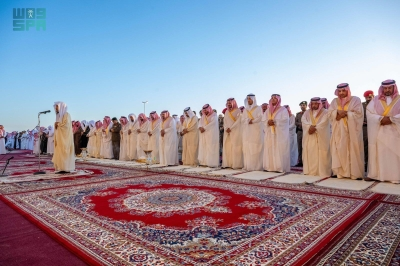
His Excellency the Minister of Islamic Affairs, Dawah and Guidance, Sheikh Dr. Abdul Latif bin Abdulaziz Al-Sheikh, issued an urgent directive to all branches of the Ministry throughout the Kingdom of Saudi Arabia, mandating the immediate completion of all necessary preparations and arrangements for the Eid al-Fitr prayer of 1447 AH. This directive comes as part of the ongoing efforts to prepare mosques and Eid prayer grounds to receive worshippers in an atmosphere of tranquility and devotion.
Setting prayer times and preparing prayer areas
The ministerial circular included a precise time for the Eid prayer, directing that it be held fifteen (15) minutes after sunrise, according to the Umm al-Qura calendar, in all regions of the Kingdom. The directive also emphasized holding the prayer in open-air Eid prayer grounds, in addition to large mosques in the regions, with the exception of mosques adjacent to prayer grounds or those located in uninhabited centers and villages, where the designated Eid prayer ground in those areas is sufficient.
The importance of reviving the Sunnah and taking care of mosques
The emphasis on holding Eid prayers in open-air prayer grounds stems from a revival of the Sunnah (practice) of the Prophet Muhammad (peace be upon him). Going out to the prayer ground on the two Eids is a confirmed Sunnah that manifests the rituals of Islam and brings Muslims together in a magnificent display of unity and solidarity. The Ministry of Islamic Affairs ensures annually that these areas are prepared and equipped with suitable carpets, advanced sound systems, and maintenance and cleaning services to guarantee the comfort and safety of worshippers during the prayer.
Dealing with the Eid holiday approval for Friday
In the context of legal and organizational arrangements, the directive addressed the situation where Eid falls on a Friday. His Excellency the Minister emphasized to the imams the necessity of holding the Friday prayer at its usual time in the mosques, and not limiting it to the Eid prayer. This is to facilitate matters for Muslims and to enable those who did not attend the Eid prayer or who wish to attain the reward of the Friday prayer to perform the obligatory prayer, which is in accordance with the established legal rulings on this matter.
Efforts made to serve worshippers
This early directive reflects the keen interest of the wise leadership – may God support them – represented by the Ministry of Islamic Affairs, in providing exceptional care for mosques and prayer areas, and ensuring the comfort of worshippers. The Ministry, through specialized field teams, monitors the readiness of these sites in terms of cleanliness, maintenance, and operation, guaranteeing that Muslims can perform their prayers in a healthy and safe environment. This highlights the Kingdom's shining example of serving Islam and Muslims and upholding religious rites.
Local News
Islamic Affairs directives regarding Eid al-Fitr prayer areas 1447 AH
The Minister of Islamic Affairs directs that Eid prayer grounds be prepared for Eid al-Fitr prayer 1447 AH and that it be held 15 minutes after sunrise, while emphasizing the holding of Friday prayer.

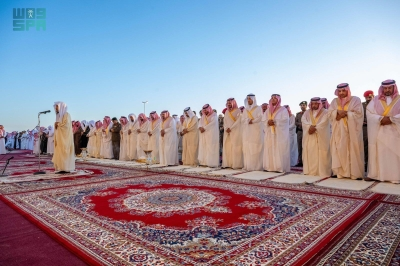
His Excellency the Minister of Islamic Affairs, Call and Guidance, Sheikh Dr. Abdul Latif bin Abdul Aziz Al Sheikh, issued an urgent directive to all branches of the Ministry in various regions of the Kingdom of Saudi Arabia, stipulating the need to immediately begin completing all the necessary preparations and arrangements to prepare the Eid prayer grounds and mosques to receive worshippers to perform the Eid al-Fitr prayer for the year 1447 AH.
The ministerial directive emphasized the paramount importance of maintaining mosques and ensuring their readiness in terms of cleanliness, upkeep, and operation, so that worshippers can perform their rituals in a spiritually uplifting and tranquil atmosphere. The directive also specified that Eid prayers in all approved prayer areas and mosques should be held 15 minutes after sunrise, according to the Umm al-Qura calendar, to ensure uniformity of timing and facilitate matters for citizens and residents.
In the context of spatial organization, the circular stipulated the adoption of holding prayers in open Eid prayer grounds, following the Sunnah of the Prophet, in addition to mosques in all regions, with the exception of mosques adjacent to prayer grounds or those not frequented by worshippers in some villages and centers that are satisfied with the main Eid prayer ground, in order to ensure that efforts are not scattered and to focus the services provided to the guests of God.
The directive addressed an important jurisprudential and organizational issue related to the coincidence of Eid with Friday, as His Excellency the Minister stressed to the preachers the necessity of holding the Friday prayer at its usual time and not being satisfied with the Eid prayer, for those who wish to attend the Friday prayer or who did not witness the Eid prayer, which reflects the Ministry’s keenness to apply the Sharia rulings accurately and to take into account the circumstances of all segments of society.
This early initiative by the Ministry of Islamic Affairs comes as part of its comprehensive strategy for the upkeep of mosques and prayer areas, a cornerstone of the Kingdom's mission to serve Islam and Muslims. Caring for Eid prayer areas extends beyond simply providing carpets and cleaning; it also includes inspecting sound and air conditioning systems and ensuring safety measures are in place to accommodate the large numbers of worshippers who flock to the mosques for this joyous occasion.
This directive reflects the great attention the wise leadership – may God support them – pays to mosques and their physical and spiritual upkeep, as the state dedicates all its resources to serving religious rites and facilitating their performance. Eid prayer is considered a manifestation of unity and cohesion among members of society, and therefore, proper preparation for it contributes to showcasing this ritual in a manner befitting the Kingdom's status as the heart of the Islamic world.
Local News
Air quality in the Eastern Province: Environmental compliance report before Eid
Learn about the air quality situation in the Eastern Province according to the report of the National Center for Environmental Compliance, where healthy green indicators dominate most stations.


The National Center for Environmental Compliance announced very reassuring results regarding air quality indicators in the Eastern Province during the past twenty-four hours, as the data showed that the "healthy" green zone dominated the vast majority of monitoring stations, promising clean air in conjunction with the preparations of citizens and residents to welcome the Eid al-Fitr holiday.
Results of automated monitoring and station distribution
Reports issued by the center, which operates a sophisticated network of 29 strategically located monitoring stations across the cities and villages of the Eastern Province along the Arabian Gulf coast, indicate that the overall air quality is exceptionally clean. Specifically, most stations recorded readings within the safe green zone, while only nine stations recorded relatively high readings, falling into the moderate yellow zone.
The areas that registered in the yellow zone included Dammam, Al-Ahsa, Hafr Al-Batin, Jubail, Salwa border crossing, Qatif, Al-Sarar, Khafji, and Al-Nairiyah. The center attributed this slight and limited increase primarily to inhalable particulate matter (PM2.5) levels, a natural phenomenon often associated with wind and dust movement in desert regions.
Global standards and measurement mechanism
The National Center for Environmental Compliance uses the latest global technologies to monitor and measure five key pollutants that determine air quality: ground-level ozone, sulfur dioxide, nitrogen dioxide, carbon monoxide, fine particulate matter (PM2.5), and coarse particulate matter (PM10). These standards are fundamental to ensuring environmental safety and human health. Air quality is classified using a color-coded system that ranges from green (healthy) through yellow (moderate) and orange (harmful to sensitive groups), to red, purple, and brown in critical cases.
The importance and impact of environmental monitoring
This announcement is particularly significant in the context of Saudi Arabia's ongoing efforts to improve quality of life, a key objective of Vision 2030. Maintaining clean air not only benefits public health and reduces respiratory illnesses but also enhances the Eastern Province's appeal as a major tourist and economic destination. Continued, rigorous monitoring and transparent data release underscore the commitment of relevant authorities to environmental protection and raising public awareness about environmental changes, enabling residents to take necessary precautions should indicators shift.
-

 Local News 6 days ago
Saudi Arabia approves regulations for the continued presence of Gulf vehicles: duration and penalties
-
Local news one week ago
The Ministry of Interior begins procedures for a royal pardon for common law prisoners
-
Local news one week ago
The deadline for property registration in Hail and Riyadh is Thursday
-
Local news one week ago
Under the patronage of the Minister of Information, an agreement was signed between the Ministry of Information and Waves Marketing Company
-
Culture and Art, 1 week ago
The Devil's Prisons series was halted: The full story of "The Emperor's" being moved to YouTube
-
Local News 6 days ago
Saudi Energy: A new identity for electricity that aligns with Vision 2030
-
Local News 6 days ago
The Food and Drug Administration is recalling Bebelac and Aptamil milk due to potential contamination
-
Local news one week ago
Registration is now open for domestic pilgrims for the 1447 AH season: Dates and conditions via Nusuk