Local News
Al-Talha complains of neglect..!
The village of Al-Talha, or what was formerly called “Talha Al-Malik”, is located near the Dhahran Al-Janoub Governorate and in the heart of historical geography

The village of Al-Talha, or what was formerly called “Talha Al-Malik,” located near the Dhahran Al-Janoub Governorate and in the heart of historical geography, is inhabited by the Al Mansour tribe of Yam, a Hamdani tribe with deep roots and profound authenticity and belonging.
The village of Al-Talha, as it was known in ancient times, was described by Al-Hamdani in his book "Description of the Arabian Peninsula" and by Ibn Khurdadhbih in his book "Routes and Kingdoms" as "Talha of the King." It witnessed a political and geographical presence in ancient times until the era of the blessed Saudi state, and it was included in what included cities, villages, and settlements in terms of development and prosperity.
The palaces of the ancient village of Al-Talha still stand proudly, bearing witness to the richness of the past and the fragrance of history written by the hands of the Al Mansour tribe. These palaces, with their ancient stones and steadfast walls, tell tales of glory and authentic heritage that have not been worn away by time.
With the rare tourist attractions that Al-Talha possesses, starting from its unique location and pleasant atmosphere throughout the year, to its distinctive heritage architectural character, all these assets could transform it into a heritage site and tourist haven that not only serves the people of the region, but also enhances the presence of local heritage on the national tourism map and honors the history of our ancestors who built these palaces with bare hands and an iron will.
Despite this rich heritage, Al-Talha is largely absent from the map of attention. The only tourist attraction that showcases its true character is the Al-Talha Heritage Palace, established by a young man from the tribe through his own efforts and with minimal support from relevant authorities. This young man, who loved his village's heritage so much that he made it his mission, continues to pay the price for this passion amidst the silence and lack of vision and support from the Dhahran Al-Janoub Municipality and the General Authority for Tourism and National Heritage.
This neglect also caused the village to lose its most important heritage landmark, its old mosque. The unique landmark, which was built more than five centuries ago, was a witness to the fragrance of history, the depth of roots, and the extension of memory, but unfortunately, it disappeared, and Al-Talha thus lost its most important spiritual and historical symbols.
Demolishing it is not just removing stones, but obliterating an irreplaceable part of the identity and spirit of the place, as it represented the local architectural heritage and religious and social legacy.
Today, Al-Talha, which still retains some of its authentic heritage, appeals with the eye of history and the mind of the present and cries out: Where are you, those who are in charge of drawing the map of heritage development?
Doesn't Al-Talha have the right to be included among the heritage villages?
Isn't it the duty of the concerned authorities to pay attention to their hidden treasure before memory swallows it up and oblivion folds it away?
Isn’t it fair that it receives the same attention as the archaeological and heritage villages in the region, the closest of which to Al-Talha village is Al-Souq village in Dhahran Al-Janoub Governorate, or what is called (Al-Hawza)?
Wednesday Market: Safe Trade in Times of Fear
Wednesday Market, or as it was known, "Souq al-Rubu'," was more than just a market where livestock, flour, cardamom, and dates were sold. It was a grand tale from the South, a testament to a time of goodness, tribal customs, and the era of "wajih," whose word was law and whose promises were respected without seal or signature. The market was a place for buying and selling, and simultaneously a platform for forgiveness, a forum for justice, a sanctuary, and a pact of honor governed by customs as firm as mountains. "Whoever enters it is safe," even if he killed an entire tribe; he would remain under the protection of the Al Mansour Yam tribe for twelve months, unharmed.
This is not just a story, but a document of honor in the conscience of the youngest child in the tribe.
The Wednesday market in the village of Al-Talha was a safe house, and “in the presence of the tribe” meant that you had entered into an unbreakable covenant.
The twelve months served as an opportunity for reconciliation, for arbitration, for wisdom to prevail instead of blind revenge. The market thus functioned as an instrument of social control and tribal peace, not merely a marketplace.
This information, this document, or this tribal acquisition... all confirm that the Talha community was not random, but was based on strict moral laws that gave security even to the enemy if he adhered to the sanctity of the place.
In short, in this market, the killer was protected and tried with an eye of justice, not with an eye of anger. “In the face of the Al Mansour Yam tribe,” twelve months he was not touched until custom had its say and justice had taken its course.
Today, since its unification by its founder, King Abdulaziz bin Abdulrahman – may God have mercy on him – the Saudi state has guaranteed security for all who reside on this land, the need for a market to provide security is no longer there. However, the market still deserves to be revived – not merely as a marketplace, but as a living memory and a bridge between tradition and the present. Its revival is not simply an economic boost, but a revival of a rich cultural and social heritage, one filled with rituals and bonds that cannot be bought or sold.
Yes, we want the market... we want it in all its details; with the scent of cardamom, the shouts of the vendors, and the footsteps of our ancestors on the acacia soil.
This market is not a thing of the past that has ended, but a present waiting for someone to awaken it.
The memory of "Al-Talha" is being demolished... and the alternative is a fish tank!
It never crossed my mind when I returned to my village of Al-Talha that I would find one of its landmarks had been erased from existence.
The entrance roundabout, in the middle of which stood a model of an ancient mud palace, a symbol of the region’s rich mountain heritage, suddenly disappeared… to be replaced by a fish tank!
This is a strange change that has no connection to the mountainous environment of Talha, and does not reflect the slightest understanding of the nature of the place or its history. Has the symbolism of the land run dry that we should draw inspiration from the sea to place in the heart of the mountains?
Or is the new plan merely an effort made without study or consultation with the townspeople?
This change, which clashes with reality, is an erasure of the place's identity, or an alteration incompatible with the mountainous nature and the preservation of visual and intangible heritage, especially in the southern villages that still resonate with the memory of the place. In an era where symbols have become a means of cultural communication, not only the basin itself but the very idea must be reconsidered.
Changing the entrance roundabout of Al-Talha from a heritage symbol like a mud palace that tells the story of the ancestors to a fish tank is a blatant example of the lack of cultural compass among some of those in charge of municipal decisions. Imagine a mountain village that embraces the clouds, and at its entrance a borrowed tank is placed that does not resemble it or its people, as if it were a painting with a strange frame attached to it!
"Wadi Al-Afyad" is dying due to the silence of the municipality and the tampering of man!
Wadi Al-Afyad, one of the landmarks or features of Al-Talha village and its water outlet, is a memory of nature and a breath of fresh air for the locals and visitors, and a place that future generations deserve as much as previous generations deserved it.
To leave it in this state and neglect it from all sides is a shortcoming that is not befitting of the place or its people.
The encroachments and tampering with it and its picturesque nature are sad. The matter has even reached the point where picnickers leave their food and drink waste behind them because they did not find places for waste, until the valley became a breeding ground for flies and mosquitoes. It has also become a site and place for “beekeepers” who place their beehives for months with their workers without respecting the sanctity of the place, and that there are families picnicking in it.
As for the Wadi Al-Afyad Dam, this beautiful masterpiece located at the head of the valley, it was built in the latest style, but it was left to neglect.
The dam is surrounded by mountains that form a captivating natural landscape. Safe pedestrian walkways could have been opened on its edges, traditional stone shelters and seating areas could have been built, barbecue areas could have been designated, a site for family campsites could have been set up, a platform for observation and photography could have been created, and perhaps a seasonal festival could have been held there to bring people together and celebrate the place and its people.
short..
The municipality of Dhahran Al Janoub is responsible, and its role is to maintain the place, plan for its development, put up awareness signs, provide containers, and appoint environmental monitors who inspect the sites and facilities continuously.




Local News
Developing the historic Al-Masqi Mosque in Asir in the Sarawat style
Learn about the development of Al-Masqi Mosque in Asir as part of the Prince Mohammed bin Salman Project for Historical Mosques. Its history dates back to the first century AH and it boasts a unique architectural style.

In a move reflecting the great importance placed on Islamic and architectural heritage in the Kingdom of Saudi Arabia, Al-Masqi Mosque in the Asir region has undergone a comprehensive development and meticulous restoration as part of the second phase of the Prince Mohammed bin Salman Project for the Development of Historical Mosques . This pioneering project aims to revitalize one of the oldest historical landmarks in the region, blending the authenticity of the past with modern technologies.
A historical depth spanning thirteen centuries
The Al-Masqi Mosque holds a unique place in the historical memory of the Asir region. Reliable sources indicate that its founding dates back to the Umayyad era, specifically between 73 AH and 75 AH (692-694 CE). This rich history makes it one of the oldest mosques not only in Asir but in the Arabian Peninsula. The renowned historian and traveler Al-Hamdani documented this mosque and the village in his seminal work, "Description of the Arabian Peninsula," describing it as "a large village with a congregational mosque." This confirms that the mosque was a vibrant cultural and social center from early centuries, serving as a meeting place for the inhabitants of neighboring villages to perform prayers, resolve disputes, and discuss their public affairs.
Sarat style: The genius of local architecture
The mosque underwent a restoration process that meticulously considered the architectural details of the "Sarat style," the dominant architectural style in the Asir highlands. This style is distinguished by its remarkable ability to adapt to harsh climatic conditions and rugged mountainous terrain. Construction relied on solid natural stones quarried from the region's mountains, and juniper wood, known for its durability and resistance to moisture and rain, was used for the roofs, doors, and windows. The mosque's walls are exceptionally thick, acting as natural thermal insulation, providing warmth for worshippers in winter and coolness in summer—a testament to the ingenuity of the people of Asir in harnessing nature for the benefit of architecture.
A national vision for preserving identity
The development of Al-Masqi Mosque is not limited to its construction; it is part of a larger national strategy within the Kingdom's Vision 2030 , which places great importance on heritage sites. The Prince Mohammed bin Salman Project for the Development of Historical Mosques aims to restore these landmarks to their rightful place as a fundamental component of Saudi cultural identity, promote religious and cultural tourism, and ensure the sustainability of these buildings for future generations.
The mosque in its new look
The mosque is located east of Al-Masqi village, near the city of Abha, approximately 32 kilometers away. Following renovations, its area has expanded to 409.25 square meters, with a capacity for 156 worshippers. It has been equipped with all modern amenities to ensure the comfort and tranquility of the worshippers, while fully preserving its heritage and authentic architectural features, restoring it to its former status as a beacon of faith, resonating with the call to prayer as it did centuries ago.
Local News
EgyptAir suspends flights to 11 Arab countries due to tensions
EgyptAir announces the suspension of its flights to 11 Arab destinations, including the Gulf countries, Lebanon, Iraq and Jordan, until further notice, due to the military escalation and the closure of airspaces.
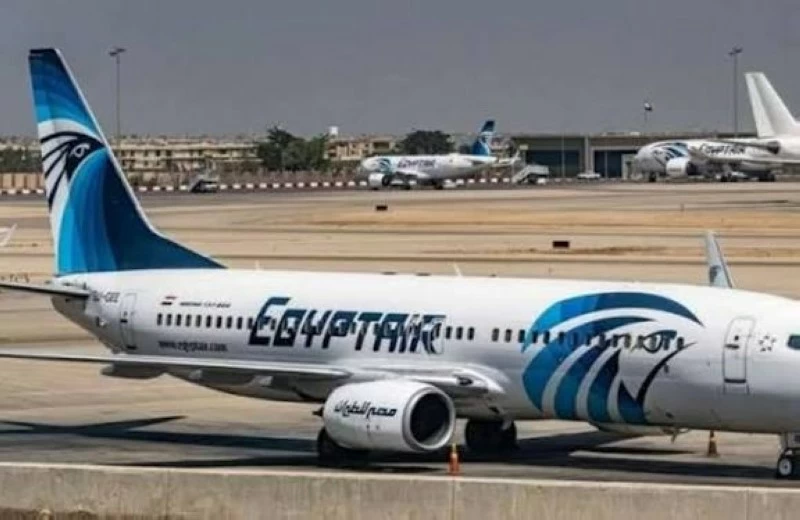
EgyptAir, the national carrier of the Arab Republic of Egypt, announced its decision to suspend all flights departing from Cairo International Airport to 11 major Arab cities, including destinations in the Gulf countries, Iraq, Lebanon, and Jordan. This decisive decision comes amidst the escalating military conflict in the Middle East and the subsequent precautionary measures, including the complete or partial closure of airspace in several neighboring countries, to ensure the safety of civil aviation.
Details of destinations included in the suspension
The official statement issued by the company clarified that the list of cities included in the flight suspension decision comprises vital and strategic centers in the region, namely: Dubai, Abu Dhabi, Sharjah, Beirut, Doha, Amman, Dammam, Bahrain, Baghdad, Erbil, and Kuwait . The company confirmed that this suspension will continue "until further notice," making the resumption of air traffic contingent upon the stabilization of the security situation and a decrease in regional tensions.
Regional context and ensuring passenger safety
This exceptional decision comes as a direct response to the geopolitical and military developments that have impacted air traffic in the region. With the escalation of confrontations and mutual threats between parties to the regional conflict (referring to tensions related to Iran and Israel), civil aviation authorities in countries located within or near the conflict zones are resorting to closing their airspace to commercial flights. This measure is a strict international protocol primarily aimed at protecting the lives of passengers and shielding civilian aircraft from the dangers of military operations, such as cruise missiles or drones.
Expected impacts on travel
This decision is expected to significantly impact travel between Egypt and the aforementioned Arab countries, particularly as these destinations are vital arteries for Egyptian workers abroad, as well as for tourism and trade. Air routes between Cairo and the Gulf cities, Amman, and Baghdad are among the busiest in the region, meaning that thousands of passengers could have their travel plans affected by this temporary suspension.
Tips for travelers and ongoing monitoring
EgyptAir urged its passengers booked on affected flights to review their bookings and contact customer service centers for updates. The airline stated that its central operations room is closely monitoring the situation in coordination with the civil aviation authorities in the relevant countries to assess risks continuously and make appropriate decisions that ensure the highest safety and security standards. EgyptAir confirmed that flights will resume as soon as the reasons for the suspension have been resolved and airspace has been safely reopened.
Local News
Local millet: A healthy and strategic choice for Ramadan tables
The Ministry of Environment emphasizes the importance of locally grown millet as a strategic choice for Ramadan meals. Learn about its nutritional benefits and its role in enhancing food security and Saudi Arabia's cultural heritage.

The Saudi Ministry of Environment, Water and Agriculture has affirmed that locally grown millet is a vital strategic choice for Ramadan meals, emphasizing its status as one of the Kingdom's most prominent agricultural crops. This affirmation stems from millet's high nutritional value and exceptional quality, as well as its integral role in the Kingdom's culinary and cultural heritage, particularly in the southern regions.
Millet has recently gained increasing importance as a healthy and ideal alternative to other grains. It is completely gluten-free, making it an excellent choice for people with wheat allergies or digestive disorders, which aligns with the nature of fasting and the need for easily digestible, high-energy foods. Millet also contains high levels of fiber, protein, and essential minerals such as iron and magnesium, helping to maintain stable blood sugar levels—a crucial health benefit during the holy month of Ramadan.
From an agricultural and geographical perspective, millet cultivation is a cornerstone of the Kingdom's agricultural sector, concentrated in the Jazan, Asir, Al-Baha, and Makkah regions. This crop is distinguished by its exceptional ability to withstand harsh climatic conditions and drought, in addition to its low water requirements compared to other crops, making it a sustainable crop that aligns with the region's environmental and water challenges.
In line with the Kingdom’s Vision 2030, supporting millet cultivation plays a pivotal role in enhancing national food security. The Ministry, through its Sustainable Rural Development (REEF) programs, is working to support small-scale farmers in increasing their production of local grains, with the aim of achieving self-sufficiency and reducing reliance on imports. Returning to local crops like millet is not merely a nostalgia initiative, but a strategic and economic step that supports the local economy and preserves biodiversity.
In conclusion, millet remains strongly present in the popular Saudi memory, as it is used in the preparation of many traditional Ramadan dishes such as porridge, bread, and soup, adding a special flavor that blends health benefits and the fragrance of history to the Iftar and Suhoor table.
-

 Local News 3 days ago
Saudi Arabia approves regulations for the continued presence of Gulf vehicles: duration and penalties
-
Local News 6 days ago
The Ministry of Interior begins procedures for a royal pardon for common law prisoners
-
Local news one day ago
Jeddah Airport alerts for travelers due to airspace closure and flight disruptions
-
Politics, one week ago
Trump plans to create a $2 billion alternative to the World Health Organization
-
 Local news one week ago
Three billion riyals deposited as Ramadan aid for social security beneficiaries
-
Local News 5 days ago
The deadline for property registration in Hail and Riyadh is Thursday
-
Sports one week ago
Tickets for the Al-Ahli vs. Al-Hilal King's Cup match postponed: New date
-
Culture and Art 4 days ago
The Devil's Prisons series was halted: The full story of "The Emperor's" being moved to YouTube